
What Is the Loudest Sound? The Real Answer Goes Beyond What Your Ears Can Handle
You’ve probably covered your ears at a concert or flinched at a car horn. That feels loud. It isn’t — not even close.
The question of what is the loudest sound has an answer that most people are completely unprepared for. We’re not talking about a speaker stack or a fighter jet. We’re talking about an event so loud it killed people from miles away, circled the entire planet multiple times, and technically stopped being “sound” altogether.
What was the loudest sound ever recorded? Around 310 decibels (Krakatoa in 1883).
Sound is measured in decibels. The scale is logarithmic (that is, a 10 dB increase is not a little louder, but 10 times louder). A normal conversation is at 60 dB. The loudness of a rock concert is about 110 dB. Gunshots are approximately 160 dB. The loudness of the pain is 130 dB.
That number is not as easily scaled as other numbers in our everyday lives. At that level, sound loses its sound-like qualities. It turns into a physical force — one that crushes lungs, levels buildings and travels around the world like a shockwave in search of a place to land.
In this article, you will learn what created the sound, what happened to the people in the vicinity, how the Tongan eruption of 2022 fits in, and what scientists found out about a black hole that is 240 million light-years away making a sound. The further you go the more bizarre the answers.
We’ll begin at the beginning.
What Is the Loudest Sound Ever Recorded?
The loudest sound ever recorded on Earth was from the volcanic eruption of Krakatoa in 1883 at approximately 310 dB. The figure alone is not particularly significant. Here’s a reference: a jet engine at close range is approximately 140 dB. The loudness of a rock concert reaches around 110 dB. Normal conversation is at 60 dB. The decibel scale is logarithmic, meaning that each 10-dB increase is a factor of 10 more intense. So 310 dB isn’t simply “really loud. It is in a class no man is intended to tread.
This question — what is the loudest sound — pulls in millions of curious people every year, and most answers barely scratch the surface. Let’s change that.
The Krakatoa Eruption: The Loudest Sound in Human History
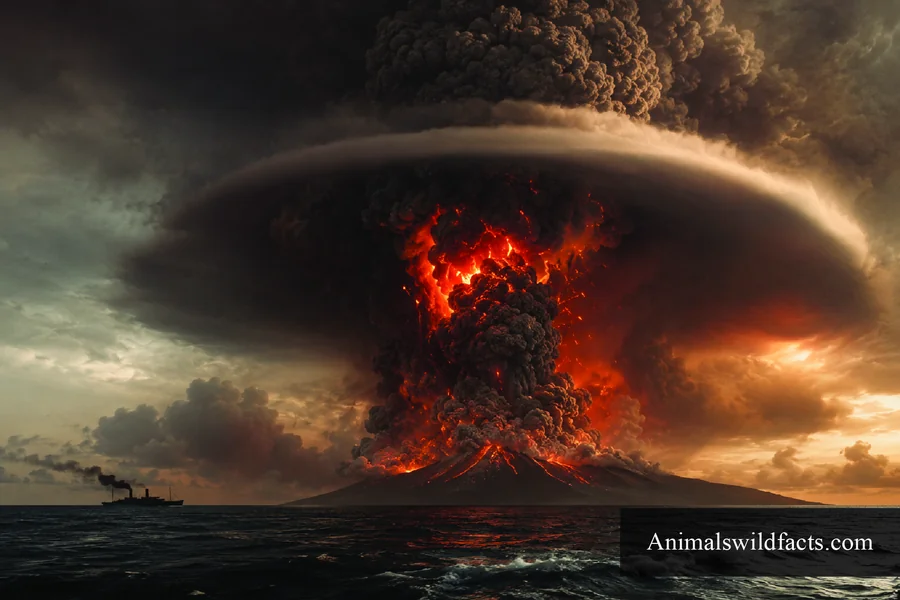
On the morning of August 27, 1883, on the Indonesian island of Krakatoa, a volcanic eruption produced what scientists believe to be the loudest sound ever recorded on the surface of the planet, estimated at 310 decibels.
Below human hearing, infrasonic pressure waves rippled through the atmosphere and rounded the globe four times. Tsunamis slammed into nearby islands and reached the edge of South Africa, causing most of the event’s 36,000 fatalities.
The eruption was heard at 100 miles and was estimated at 170 decibels, which would cause a permanent hearing loss. At 40 miles away, the boom was strong enough to rupture eardrums, sailors reported.
Reports from Australia, thousands of miles away, said that they heard what they thought was cannon fire. The explosion was so massive that it shook the island so hard that two thirds of the entire island collapsed and is believed to be one of the biggest geologic events ever recorded.
Here’s the thing, though: scientists debate whether 310 dB can even technically be called “sound.” At sea level, sound cannot exceed 194 dB. Beyond this limit, sound waves distort so intensely that they create regions of complete vacuum, and the excess energy transitions into shock waves. So at the source, Krakatoa wasn’t producing a sound you’d hear. It was producing a pressure wave that would kill you instantly.
Read Also: Archaeospheniscus Wimani
Decibel Comparison Table: What Is the Loudest Sound vs. Everyday Noise?
| Sound | Decibel Level (dB) | Effect on Humans |
| Normal conversation | 60 dB | Safe |
| Rock concert | 110 dB | Hearing risk with long exposure |
| Jet engine (close range) | 140 dB | Immediate hearing damage |
| Gunshot | 160 dB | Instant hearing damage |
| Krakatoa (100 miles away) | 170 dB | Permanent hearing loss |
| Krakatoa (40 miles away) | 194+ dB | Eardrum rupture |
| Krakatoa (at source, estimated) | 310 dB | Fatal — pressure wave, not sound |
The 2022 Tonga Eruption: The Loudest Sound of the Modern Era
The 1883 eruption of Krakatoa is often considered the loudest sound in history. But for the modern digital era, the answer is different.
Milton Garces, founder and director of the Infrasound Laboratory at the University of Hawaii, said: “If you were to reframe the question as, ‘What is the loudest sound recorded in the modern digital epoch?’, then without a doubt the loudest sound was from Tonga in ’22.”
The loudest sound since Krakatoa is believed to have been the Tonga eruption in 2022, whose sonic boom was heard all the way in Alaska, 6,200 kilometers away. Tonga also sent waves of sound and tsunamis tearing across the planet, with one pressure wave measured moving at over 1,100 kilometers per hour and reaching an altitude of 450 kilometers — that’s higher than the orbit of the International Space Station.
Scientists confirmed that the Hunga Tonga 2022 eruption produced the world’s most intense sounds in 139 years. The record holder goes to Krakatau, which shook the world with an even louder blast in 1883.
The Loudest Animals on Earth
If volcanic eruptions feel too extreme, the animal kingdom still holds some serious records.
The pistol shrimp can snap its claw shut so rapidly that it creates a bubble that collapses to produce a sonic blast reaching 218 decibels. This sound can stun prey and is one of the loudest noises produced by any animal. The sperm whale can generate sounds up to 230 decibels — clicks vital for navigation and hunting in the deep ocean.
On land, the howler monkey earns its name. The extra-large hyoid bones in their vocal tract house massive air sacs that amplify their voice to great heights — they are often regarded as the loudest of any land animal.
The Loudest Possible Sound on Earth Has a Hard Limit
This surprises most people: there is a physical ceiling on how loud a sound can get in Earth’s atmosphere.
The loudest possible sound in Earth’s atmosphere is 194 decibels. Beyond this point, the sound waves cause the air to become a nonlinear medium, leading to shock waves rather than traditional sound waves.
This is why Krakatoa’s 310 dB figure is so strange scientifically. Near the source, it was no longer sound in the conventional sense — it was moving air, fast enough to collapse buildings and rupture organs. The number still gets used because barometers far away detected the pressure waves. But calling it “sound” is, technically speaking, a shortcut.
Read More: Long Nosed Leopard Lizard
The Loudest Sound in the Universe Comes From a Black Hole
Now we scale up from volcanic eruptions to something truly incomprehensible.
The most powerful acoustic wave ever detected originated from the supermassive black hole at the center of the Perseus Galaxy Cluster, discovered in 2003 by NASA’s Chandra X-ray Observatory. This black hole was found to be generating colossal pressure waves that rippled through the cluster’s hot gas envelope, located approximately 240 million light-years from Earth.
The wave was identified as the deepest note ever recorded in the universe, corresponding to the musical note B-flat. Its frequency was calculated to be 57 octaves below middle C — so low that one cycle of the wave would take about 10 million years to complete.
You cannot hear it. Nobody can. What makes the sound loud is the ability of the gas to efficiently carry away the energy released by the black hole, which amounts to an energy comparable to 100 million exploding stars.
To bring the Perseus black hole’s note into the human hearing range, scientists had to scale the signals upward by 57 and 58 octaves — that means hearing them 144 quadrillion and 288 quadrillion times higher than their original frequency.
When NASA released this audio, the result was something between a deep groan and an eerie, hollow wail. It doesn’t sound like an explosion. It sounds like something vast, old, and slow — which is exactly what it is.
Short Answers
| Question | Short Answer |
| What is the loudest sound in the world? | The 1883 Krakatoa eruption — estimated at 310 decibels, heard 3,000 miles away. |
| Can a loud enough sound kill you? | Yes. Sounds above 185–200 dB can rupture organs and cause instant death. |
| What is the loudest sound a human can survive? | Most experts put the survivable limit around 185 decibels with serious physical injury. |
| What is the loudest animal on Earth? | The sperm whale — it produces clicks up to 230 decibels underwater. |
| What is the loudest man-made sound? | Saturn V rocket launches reached around 204 decibels near the launch pad. |
| Is the loudest sound in the universe on Earth? | No — a black hole in the Perseus cluster generates far more powerful sound waves. |
| Can sound travel in space? | Technically yes, in gas-filled regions like galaxy clusters, but not in vacuum. |
What Happens to the Human Body Near the Loudest Sounds?
This is where it gets sobering.
According to the Centers for Disease Control and Prevention, any noise louder than 120 decibels can immediately damage the tiny hair cells that help turn vibrations into what our brains perceive as sound. Most guns clock in at 140 dB. That’s already enough to cause permanent, irreversible hearing loss in a single exposure.
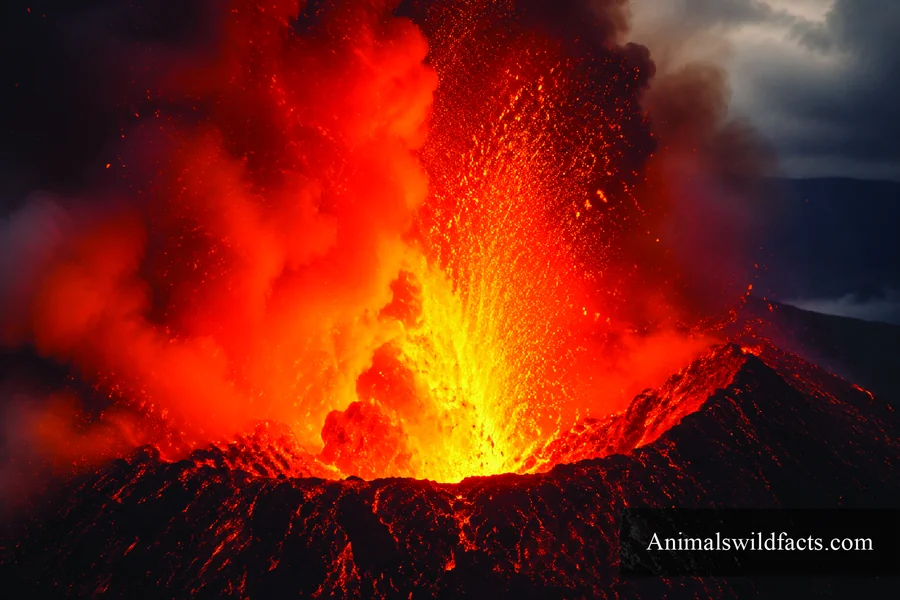
At extreme levels like 310 dB, the pressure can impact your organs and cause death. There’s no earmuff for that. At those energy levels, the wave doesn’t go through your ears — it goes through your body. The difference between a sound and a pressure blast stops mattering very quickly.
Hearing damage from loud sounds isn’t just about the decibel level either. Duration matters. Neglecting proper protection often results in permanent high-pitched hearing loss and tinnitus, or ringing in the ears — and most don’t realize there’s a problem until it’s too late.
Loudest Sounds Ranked: A Quick Reference
| Rank | Sound | Approx. dB | Category |
| 1 | Krakatoa eruption (1883) | ~310 dB | Natural (Earth) |
| 2 | Tonga eruption (2022) | ~256 dB (est.) | Natural (Earth) |
| 3 | Sperm whale clicks | 230 dB | Animal |
| 4 | Pistol shrimp snap | 218 dB | Animal |
| 5 | Saturn V rocket | ~204 dB | Man-made |
| 6 | Pistol shot | ~160 dB | Man-made |
| 7 | Rock concert | ~110–120 dB | Man-made |
Final Words
Most of us will never hear anything above 130 dB. That’s where pain starts. That’s also the point where you should be walking away fast.
The loudest sound in recorded history — Krakatoa at 310 dB — didn’t just break records. It broke the scientific definition of sound. At that scale, we’re not talking about vibrations in air anymore. We’re talking about raw energy reshaping the atmosphere. And in deep space, a black hole quietly produces pressure waves so large they take 10 million years to complete a single cycle — energy equivalent to 100 million stars exploding simultaneously.
The question of what is the loudest sound turns out to be less about volume and more about what happens when energy reaches a scale that physics can barely describe. And that, more than any number, is what makes it worth knowing.
FAQs:
Q: What is the loudest sound a human has ever heard and survived?
Survivors near Krakatoa reported hearing it from 100+ miles away at approximately 170 dB — painful, damaging, but survivable at that distance.
Q: Is 194 dB truly the maximum possible sound?
In Earth’s air at sea level, yes. Above 194 dB, a conventional sound wave can no longer exist — it becomes a shock wave with the air essentially “tearing apart” in its path.
Q: Did Krakatoa affect global temperature?
The eruption released 20 million tons of sulphur into the atmosphere and emitted aerosols that reduced global temperatures for years.
Q: Can the Perseus black hole sound ever reach Earth?
No. The waves travel through intergalactic gas, not through the vacuum of space between Earth and the Perseus cluster. Even if they could, we lack any biological ability to detect frequencies that low.
Q: What is the loudest man-made explosion ever?
NASA’s Saturn V rocket is a decorated record-holder and the most powerful spacecraft to successfully fly. The behemoth generates around 7.5 million pounds of thrust. The launch noise reached roughly 204 dB near the pad — loud enough to melt concrete and ignite nearby grass.
Q: What would 310 dB do to you?
At 310 dB, the pressure wave would instantly destroy every organ in your body — death would occur before your brain could register any sound at all.