Long Nosed Leopard Lizard: The Desert Sprinter You’ve Probably Never Heard Of
The long nosed leopard lizard is one of the lesser known reptiles of the American West. It runs quickly on hot sand, two legs. It will prey upon other lizards of similar size. It can also shed its tail to escape from the predator. Many people pass by without paying any attention. However, once you know what to look for, it’s not difficult to remember this cute little hunter of the desert! From its natural environment to its food, everything is covered in detail, giving you all the information there is to know about this interesting lizard and its elongated nose!
Let’s get into it.
What Is the Long Nosed Leopard Lizard?
The long nosed leopard lizard is a medium-sized desert reptile native to the western United States and northern Mexico. It’s scientifically known as Gambelia wislizenii. It is part of the family Crotaphytidae (collared lizards) and part of the order Squamata of Reptilia. The dark spots dotted across the back of the “leopard” are what led to its name. The ‘long nosed’ alludes to its long pointed nose.
Here’s a quick snapshot before we dig deeper.
| Feature | Detail |
| Common name | Long nosed leopard lizard |
| Scientific name | Gambelia wislizenii |
| Class | Reptilia |
| Order | Squamata |
| Family | Crotaphytidae |
| Diet | Carnivorous (insects, spiders, lizards, snakes, small rodents) |
| Size | 8.3 to 14.6 cm snout-to-vent; tail can be longer than the body |
| Lifespan | Around 5 to 7 years |
| Range | Western US and northern Mexico |
| Conservation status | Least Concern |
That covers the basics. Now here’s the fun stuff.
Why the Long Nosed Leopard Lizard Stands Out
There are many different desert lizards that appear similar at a glance. This one does not provide a blend that is acceptable once you are aware of its features.
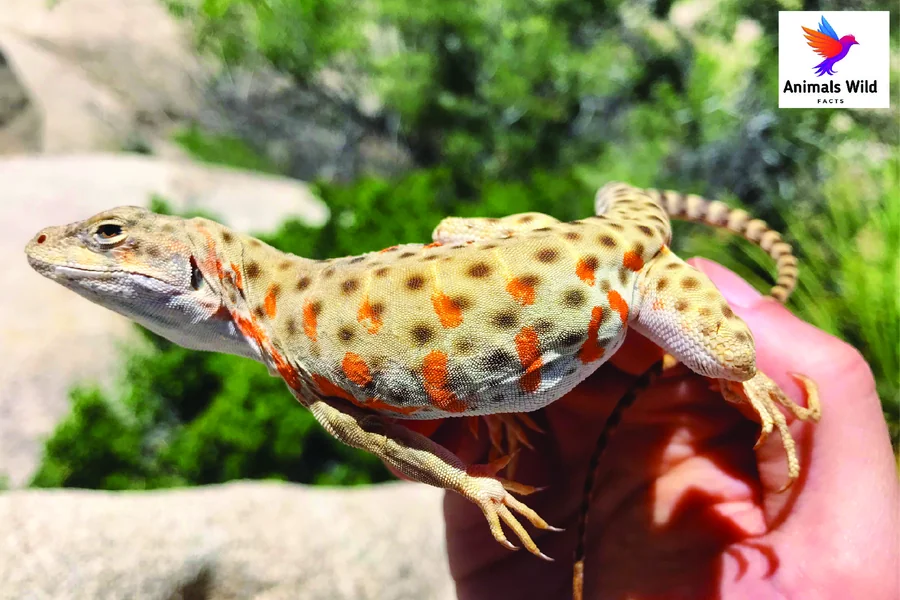
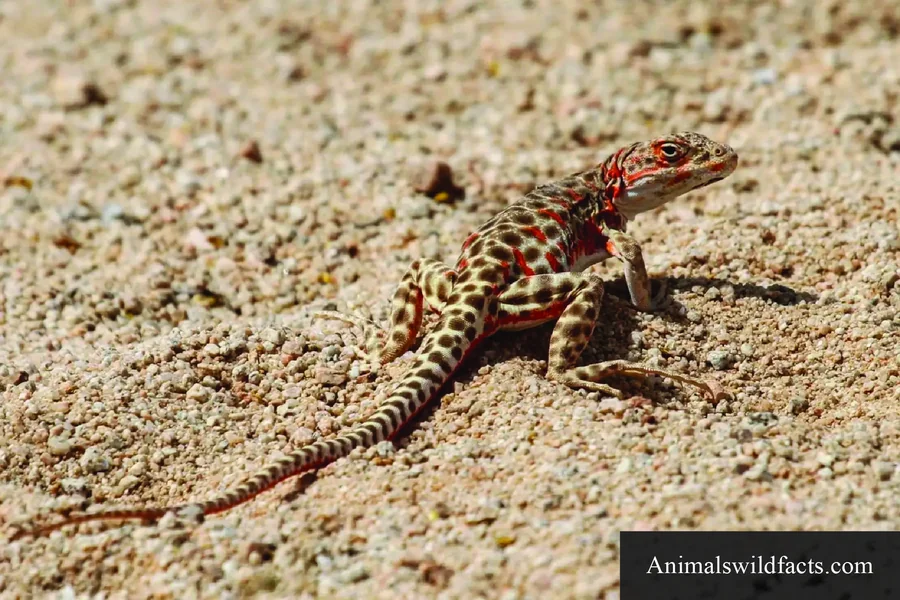
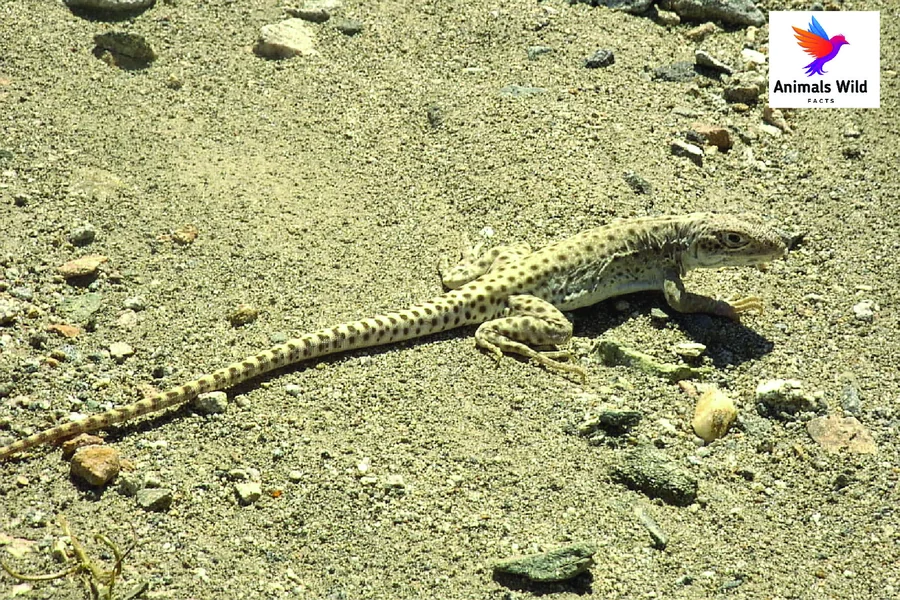
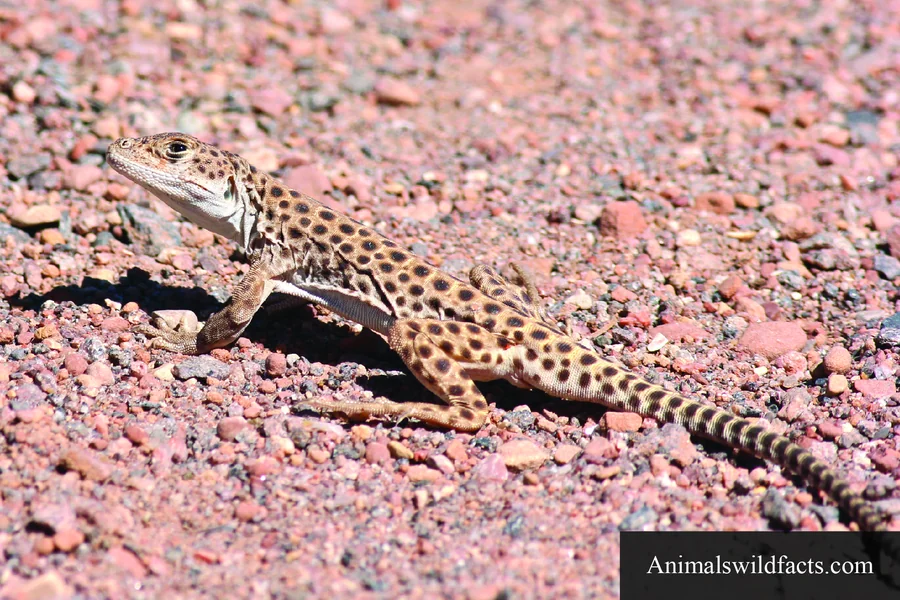
It has a long thin body, a large head and a tail that may be longer than the body. The base scales are white, cream or gray, with some brown or dark gray spots scattered irregularly across the body and head. Several people also have a dark back and tail. What is surprising about this is that it’s the females that are the bigger sex and not the males. The female grows from 15 cm snout-to-vent, the male is smaller, about 12 cm snout-to-vent.
The snout is the tell-tale sign. Pointed and elongated forward more than you would expect for a lizard of this size. That shape is how the species got its name, and is also used to capture fast moving prey.
It’s when the color comes in that it’s on display. At the time of mating, females will get a reddish-orange spot and bars down their sides and males will get a pink or rusty wash down the throat and chest. The whole voice tone can be changed also in both sexes. The dark phase almost loses all of the spots and the light crossbars are prominent; the light phase is gray, pink, brown, or yellowish.
Read Also: Top 10 Smartest Insects
Habitat: Where Does the Long Nosed Leopard Lizard Live?
The long nosed leopard lizard is a creature of open, dry country.It is not found in dense vegetation and brush. Rather, it selects level land dotted with low vegetation and abundant bare soil for its path. It prefers dry and semiarid habitats (bunch grass, sagebrush, creosote bush) and does not tolerate over-vegetated habitats due to restriction on running space.
It is seen throughout an extensive range of the arid North American continent. It grows from Oregon and Idaho to Baja California and northern Mexico, including Sonora, Coahuila and Zacatecas. It is found throughout Nevada. It can also accept a large range of elevations. Its habitat is from near sea level to approximately 6,000 ft.
Here’s a simple map of where it tends to live.
| Region | Presence |
| Great Basin (Nevada, Utah) | Strong |
| Mojave Desert (California, Nevada) | Strong |
| Sonoran Desert (Arizona, Mexico) | Strong |
| Northern Mexico (Baja California, Sonora) | Strong |
| Pacific Northwest dry zones (Oregon, Idaho) | Northern edge of range |
The key habitat needs are sparse shrubs, sandy or gravelly soil, and warm temperatures. It prefers sandy and rocky ground with low shrubs and dislikes thick vegetation that would block its escape from predators.
Long Nosed Leopard Lizard Behavior
This is where the long nosed leopard lizard gets interesting.
Is an explosive sit-and-wait hunter. It is an ambush predator that hides underneath a bush, with a spotted pattern that matches the background, and then, relying on its strong jaws, it does a quick pounce and seizes its prey. Its long hind legs enabled it to run quickly. On running at high speed it raises its fore-limbs and walks on two legs. It’s an almost cartoony shot to see one sprint across the sand.
It is active during the day, it is a diurnal species. It will commence its daily cycle early, sometime from 05:30 until 08:30, and it will then start to hunt actively and feed after a basking phase.
This lizard’s defense is layered if threatened. The first reaction is a “freeze” reaction: it lies under a bush, lies flat on the ground and remains still until it passes the danger. If that doesn’t work, it has one final solution. It can drop its tail when caught, is capable of caudal autotomy. It’s surrounded by plenty of predators. It is hunted by birds, snakes, coyotes, badgers and the kit fox.
What Does the Long Nosed Leopard Lizard Eat?
The diet of the long nosed leopard lizard is mostly meat. This is a carnivore through and through, and a bold one. It eats insects, spiders, lizards, snakes, small rodents, and soft leaves, blossoms, and berries, and it can take down a lizard nearly its own size.
Here’s the part that really sets it apart. It is also cannibalistic, eating smaller leopard lizards when the chance comes up. That pointed snout pulls double duty as a hunting tool. Its long nose makes its jaw quicker and better suited for catching vertebrate prey.
Here’s a quick breakdown of its menu.
| Food type | How often |
| Insects (grasshoppers, beetles) | Very common |
| Spiders | Common |
| Smaller lizards | Common |
| Snakes and small rodents | Occasional |
| Plant matter (leaves, blossoms, berries) | Occasional |
That appetite puts the long nosed leopard lizard near the top of its little desert food web.
Reproduction and Life Cycle
Breeding season is short and well defined. It breeds in May and June, and typically lays one clutch, consisting of 5-6 eggs, in June or July. The female chooses a safe place to deposit her eggs. No nest structure is built, but incubation occurs in a burrow and is approximately five to seven weeks. In warmer areas, more can be fitted in. In the southern parts of the range a female may lay up to two clutches per year.
Time buffers the next generation! Young hatch in August, when adults are slowing down their activity, potentially reducing the chance for the adults to cannibalize the young. This species lives about 5 to 7 years in the wild.
Fun Facts About the Long Nosed Leopard Lizard
Some additional information which will make this reptile even more memorable:
- It’s a small dino on its hind legs!
- He’s a big jumping machine. It is known to jump up to two feet, even straight up in the air to catch prey.
- It is able to see things that are larger than its stomach. Over the years, there have been instances where leopard lizards have been discovered suffocated by the prey that they had attempted to eat.
- Females are orange-red when carrying eggs, a conspicuous colour on the backdrop of the dull desert.
- Can remove the tail to get away and live.
- The species name wislizenii has a back story. It is named in honour of Frederick Adolph Wislizenus, a German-American surgeon and naturalist who captured the first specimen close to Santa Fe, New Mexico.
Is the Long Nosed Leopard Lizard Endangered?
Good news here. The long nosed leopard lizard is listed as Least Concern, though it is under moderate pressure from habitat destruction.
It’s important not to overlook its threatened relative in this comparison. Gambelia sila, or the blunt-nosed leopard lizard, is a threatened species that is extinct throughout much of its habitat because of agricultural activities, development, overgrazing, oil fields, and off-road vehicles. Fortunately, the long-nosed one hasn’t experienced such a dramatic decline yet.
Final Thoughts
The long nosed leopard lizard is proof that you don’t need to be huge or famous to be fascinating. It walks on two feet. It preys on animals almost equal to its size. It uses its tail for its survival and shines in an orange hue when it anticipates laying eggs. Plus, it lives in some of the most difficult nations in North America. The next time you’re walking in the desert and spot a flash of spots scurrying around your foot, take note. You could be seeing one of nature’s most efficient killers in the sand.
FAQs:
What is a long nosed leopard lizard?
It’s a medium-sized desert reptile native to the western US and northern Mexico, known for its spotted skin and pointed snout. Its scientific name is Gambelia wislizenii.
What does the long nosed leopard lizard eat?
It eats insects, spiders, lizards, snakes, small rodents, and some soft plant matter, and can hunt prey nearly its own size.
Where does the long nosed leopard lizard live?
It lives in open, dry deserts from Oregon and Idaho south into northern Mexico, including Baja California and Sonora.
Is a leopard lizard poisonous?
No. It can bite if cornered, but it is not venomous and poses no danger to humans.
How big does a long nosed leopard lizard get?
Females reach about 15 cm snout-to-vent and males about 12 cm, with a tail that can be longer than the body.
How long does a long nosed leopard lizard live?
Around 5 to 7 years.
Why is it called a long nosed leopard lizard?
The “leopard” refers to its dark spots and the “long nosed” describes its pointed, elongated snout.
What is the most poisonous lizard on Earth?
The Gila monster (Heloderma suspectum) is generally considered the most venomous lizard. Its close relative, the Mexican beaded lizard, runs a close second.