15 Animals That Live on Islands: Strange Survivors Few People Ever Meet
Animals that live on islands do things differently. Some grew huge. Some lost the ability to fly. Others shrank to fit small land with little food. Cut off from the mainland for thousands of years, these species adapted in ways you won’t see anywhere else. In this guide, you’ll meet 15 of them. You’ll see where each one lives and what it eats. You’ll also learn how it survives and why so many are at risk today.
Quick answer: Animals that live on islands include the Komodo dragon, Galápagos tortoise, kiwi, Tasmanian devil, ring-tailed lemur and Bornean orangutan. Many are endemic. That means they live nowhere else on Earth.
Why Animals That Live on Islands Matter
Island wildlife is easy to overlook. But losing it costs more than most people think.
Island species are often one of a kind. Many live nowhere else. If a kakapo, an Iriomote cat or a Javan rhino disappears, it is gone for good. No other population can step in.
Islands hold a large share of extinctions. Most recorded bird and reptile extinctions in the last few centuries happened on islands. Rats, cats, stoats and goats arrived with people. Island animals had no defense against them.
Each animal does a job. Giant tortoises spread seeds. Fossas keep lemur numbers in check. Coconut crabs clear fallen fruit and dead animals. Seabirds move nutrients from the ocean onto land. Remove one and the whole system shifts.
They help scientists learn. Darwin’s work in the Galápagos helped shape the theory of evolution. Island species still show how animals adapt to change. That knowledge helps us plan for climate shifts.
People depend on them. Wildlife tourism supports jobs in the Galápagos, Komodo National Park and New Zealand. Healthy reefs and forests also protect coasts and food supplies.
There is proof that action works. The island fox recovered in under 20 years. The nene came back from about 30 birds. Rangers and local communities made both happen.
What you can do:
- Keep a safe distance from wildlife on trips
- Choose tour operators that follow park rules
- Never bring plants, seeds or pets to island reserves
- Support groups that remove invasive predators
Protecting these animals protects ecosystems that took thousands of years to form.
Animals That Live on Islands: Full List
| No. | Animal | Home Island or Region | Class | Diet | Conservation Status |
| 1 | Komodo Dragon | Komodo, Rinca, Flores (Indonesia) | Reptilia | Carnivore | Endangered |
| 2 | Galápagos Giant Tortoise | Galápagos Islands | Reptilia | Herbivore | Varies by species |
| 3 | Marine Iguana | Galápagos Islands | Reptilia | Herbivore | Vulnerable |
| 4 | Ring-tailed Lemur | Madagascar | Mammalia | Omnivore | Endangered |
| 5 | Fossa | Madagascar | Mammalia | Carnivore | Vulnerable |
| 6 | Aye-aye | Madagascar | Mammalia | Omnivore | Endangered |
| 7 | Tasmanian Devil | Tasmania | Mammalia | Carnivore | Endangered |
| 8 | Kiwi | New Zealand | Aves | Omnivore | Varies by species |
| 9 | Kakapo | New Zealand | Aves | Herbivore | Critically Endangered |
| 10 | Bornean Orangutan | Borneo | Mammalia | Omnivore | Critically Endangered |
| 11 | Galápagos Penguin | Galápagos Islands | Aves | Carnivore | Endangered |
| 12 | Hawaiian Monk Seal | Hawaiian Islands | Mammalia | Carnivore | Endangered |
| 13 | Island Fox | Channel Islands (California) | Mammalia | Omnivore | Recovering |
| 14 | Philippine Tarsier | Bohol, Samar, Leyte, Mindanao | Mammalia | Carnivore (insectivore) | Near Threatened |
| 15 | Coconut Crab | Indian and Pacific Ocean islands | Malacostraca | Omnivore | Declining on many islands |
Why Island Animals Are So Different
Islands act like natural labs. Animals arrive by sea or air and then stay put. Over many generations they change to fit the space and food they have. Big animals often get smaller. Small animals sometimes get bigger. Birds with no predators may stop flying. Biologists call this island evolution. It also makes these species fragile. When a new predator or a fire shows up there is nowhere to run.
Detailed Look at Animals That Live on Islands
Komodo Dragon
Scientific Name: Varanus komodoensis
Class: Reptilia
Diet: Carnivore
The Komodo dragon is the largest living lizard on Earth. It is found on a few Indonesian islands. These are among the islands that include Komodo, Rinca, Flores and Gili Motang. It is well adapted to the dry savanna and hot hills. It grows up to 3 meters long when mature. The average weight is 70 kilograms. It hunts deer, wild pigs and water buffalo. It will also consume carrion and is able to detect a dead animal over several kilometers of distance. The tongue licks into the air to pick up a scent. It has venomous fangs in its lower jaw. The venom has anti-coagulation and hypotension properties. The animal that is bitten usually weakens rapidly. Young dragons spend the first few years of their life dwelling in trees. This ensures that they are not consumed by adults. The female deposits approximately 20 eggs in a mound nest or the burrow. Eggs develop into adults after 7-8 months. There is concern for the species’ Endangered status. The greatest threats are rising sea levels and loss of habitat. Interesting fact: Komodo dragons can sprint at 20 km per hour for a short period of time.
Galápagos Giant Tortoise
Scientific Name: Chelonoidis niger
Class: Reptilia
Diet: Herbivore
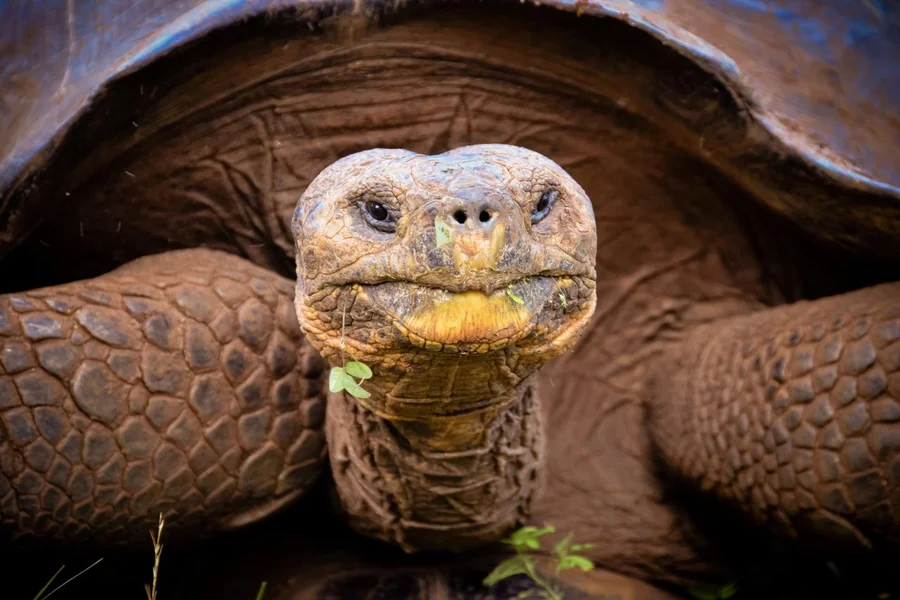
Galápagos giant tortoises are the largest tortoises alive. There are males that weigh over 400 kilograms. They are found in the Galápagos Islands, off the coast of Ecuador. The type is different for each island. On dry islands, the shells of tortoises are saddle shaped. This allows them to extend their necks to obtain cactus pads. Tortoises on wetter islands have dome-shaped shells and eat grass. In the dry season many walk up to the highlands to find fresh plants. They also have mud pools to lie in and cool down. A tortoise may pass a month without taking in a bite of food or a drink of water. Some can live for over 100 years. A female makes a nest and deposits a number of eggs in the ground. The eggs are heated by the sun. More females are produced in warmer nests. Thousands of tortoises used to be eaten by sailors. Eggs and young rats and pigs were later consumed. In 2012, lonesome George of Pinta Island passed away. It was believed that he was the final one in his line. Breeding programs do aid many island groups to recover today. Fun Fact: The name galápago comes from old Spanish meaning tortoise, hence the name for the islands.
Marine Iguana
Scientific Name: Amblyrhynchus cristatus
Class: Reptilia
Diet: Herbivore
The marine iguana is the only lizard that feeds in the sea. It is found on rocky shores of the Galapagos Islands. It absorbs the sun’s heat through its dark skin. After a cold swim the iguana lies on black lava rock to warm up. Swims down to feed on red and green algae. Males dive to 9 m and remain submerged for several minutes, the larger the more. The smaller ones subsist on bare rocks at low tide. Algae are important to the inflow of salt. Thus the iguana expels “salt” from the glands around its nose. White crusts can be found on its head frequently. Small patches of shore are held by males, which bob their heads at competitors. The females deposited eggs in sand burrows. The appearance of each group of islands is distinct. Others become red and green during their breeding season. Many iguanas are killed in strong years of El Niño due to the die-off of algae. Listed as Vulnerable. It is also threatened by oil spills and by feral cats.
Ring-tailed Lemur
Scientific Name: Lemur catta
Class: Mammalia
Diet: Omnivore
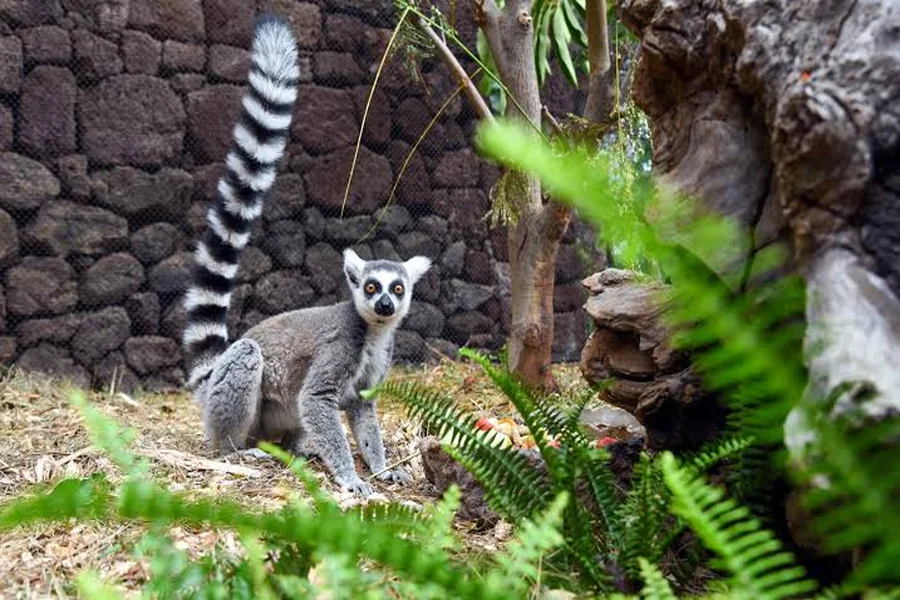
Ring-tailed lemurs live only on Madagascar. They remain in the dry forests and rockscreeps of the south and southwest. The typical troop size is 10 to 30 people. The females head and eat first. Female: Troops remain stationary; Male: moves between troops. The lemur is a fruit, leaf, flower and bark-eater. Tamarind tree is one of the favorite foods. It spends a great deal of time on the ground as compared to other lemurs. It walks with its tail up like a flag. The black and white rings aid in keeping the troop together. Males rub scent onto their tails and wave it at their rivals during a “stink fight. The troop is sitting in the morning with its bellies out and arms extended in the sun. This is warming them after a chilly night. Babies hold onto mommy’s tummy and then hop on mommy’s back. Wild numbers have been reduced by habitat loss and the pet trade. It is declared Endangered. Fun fact: Lemur is derived from the Latin word for ghost.
Fossa
Scientific Name: Cryptoprocta ferox
Class: Mammalia
Diet: Carnivore
The fossa is the largest meat eater on Madagascar. It looks like a small cougar but it is related to mongooses. Adults weigh about 6 to 10 kilograms. They live in forests across the island and hunt by day or night. Lemurs make up a large part of their diet. They also catch birds, rodents, reptiles and tenrecs. The fossa is a strong climber. Its ankles rotate so it can run down a tree headfirst. A long tail helps it balance on thin branches. Semi-retractable claws grip the bark. Most fossas live alone. Males and females meet to mate in trees. Mating can last for hours. Females give birth in a hollow tree or a burrow. Litters usually hold two to four pups. The pups stay with their mother for about a year. The fossa is listed as Vulnerable. Forest loss is the biggest threat. Farmers also kill some for taking chickens. Fun fact: the fossa is the top predator on its island because no big cats live there.
Aye-aye
Scientific Name: Daubentonia madagascariensis
Class: Mammalia
Diet: Omnivore
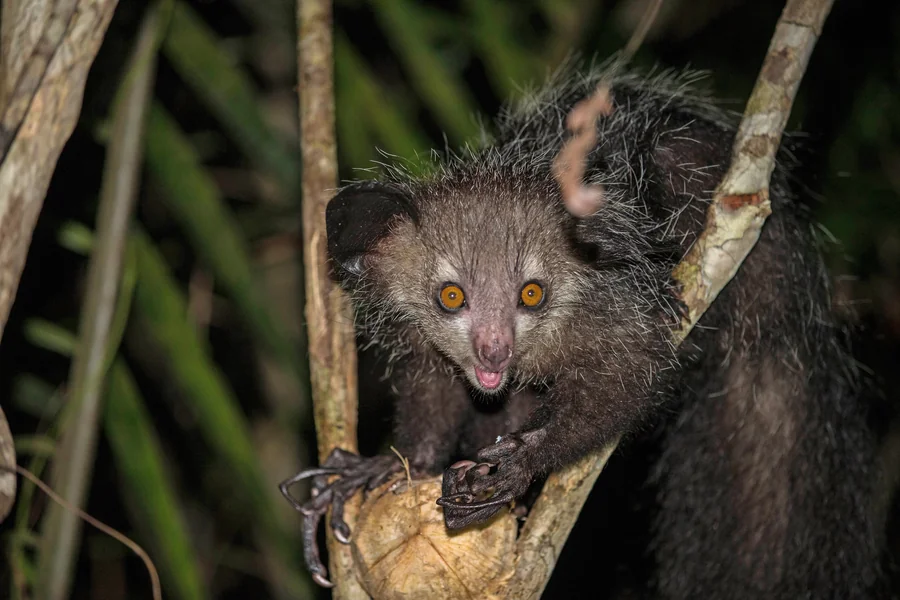
The aye-aye is the largest night-active primate in the world. It lives in the rainforests and coastal forests of Madagascar. It looks odd. It has big ears and black fur and a bushy tail. Its large eyes help it see in the dark. Its middle finger is long and thin. The aye-aye taps on tree trunks with that finger. Then it listens for hollow tunnels made by insect larvae. When it finds one it gnaws a hole with its front teeth. It then hooks out the grubs. Its teeth never stop growing. The aye-aye also eats seeds, nuts, fruit and nectar. It sleeps in a ball-shaped nest of leaves high in the trees. Each animal lives alone and marks a large range with scent. Females raise one baby at a time. Some people in Madagascar fear the aye-aye and kill it. This belief and forest loss have pushed the species to Endangered. Fun fact: scientists first thought it was a type of squirrel.
Tasmanian Devil
Scientific Name: Sarcophilus harrisii
Class: Mammalia
Diet: Carnivore
The Tasmanian devil is native to the island of Tasmania. It is the largest meat-eating marsupial alive. An adult weighs about 6 to 8 kilograms. It lives in forests and scrub and dens in burrows or hollow logs. Devils hunt at night. They eat wallabies, birds and small mammals. They also eat a lot of carrion. Devils even eat fur and bones so little goes to waste. Their jaws are strong for their size. They can crush bone. Their loud screeches gave them the name devil. Feeding fights get noisy. Females have a pouch that opens toward the back. They give birth to up to 30 tiny young. Only four can latch on and survive. Devils once lived on mainland Australia too. They vanished from there about 3,000 years ago. Since 1996 a contagious cancer called devil facial tumour disease has killed many. The species is listed as Endangered. Fun fact: when a devil is excited it can turn bright red in the ears.
Kiwi
Scientific Name: Apteryx
Class: Aves
Diet: Omnivore
Kiwi are flightless birds from New Zealand. They live in forests and scrub and grassland on the main islands. Kiwi are about the size of a chicken. They have tiny wings hidden under shaggy feathers. They are active at night. A kiwi has nostrils at the tip of its long beak. This is rare in birds. It pushes the beak into soil and sniffs out worms and insects. It also eats fallen fruit and seeds. During the day it rests in a burrow or a hollow log. A pair of kiwi often stays together for years. The female lays one huge egg. In many species the male sits on it for about 80 days. The egg can weigh up to a fifth of the female’s body. Introduced stoats, cats and dogs kill many chicks. Nearly all kiwi species are at risk. Fun fact: the kiwi has whisker-like feathers near its beak. Its sense of smell is among the best of any bird.
Kakapo
Scientific Name: Strigops habroptilus
Class: Aves
Diet: Herbivore
The kakapo is a large parrot that cannot fly. It lives only in New Zealand. Today the wild birds live on a few predator-free islands such as Whenua Hou and Anchor Island. The kakapo is the heaviest parrot in the world. Males can weigh up to four kilograms. Its green feathers blend with moss and leaves. It sleeps by day and moves at night. It climbs trees and then glides down with spread wings. It eats leaves, roots, seeds, fruit and bark. The kakapo breeds only every two to four years. This follows heavy fruiting of the rimu tree. Males dig shallow bowls in the ground and boom to attract females. The sound carries for kilometers. Females raise the chicks alone. Rats, cats and stoats nearly wiped the kakapo out. Rangers now track each bird. The population is only around 250. The species is Critically Endangered. Fun fact: kakapo can live for many decades and give off a sweet musty smell.
Bornean Orangutan
Scientific Name: Pongo pygmaeus
Class: Mammalia
Diet: Omnivore
The Bornean orangutan lives only on the island of Borneo. It lives in lowland rainforest and peat swamp forest. Adult males weigh up to 90 kilograms. They grow wide cheek pads and a throat sac. Males give long calls that can carry for about a kilometer. Their arm span can reach two meters. Orangutans spend most of their lives in trees. They eat mainly fruit. They also eat leaves, bark, insects and honey. Durian is a favorite. They drink water from tree holes using a leaf as a sponge. Each evening an orangutan builds a new nest of branches high in the canopy. Some even add a leaf roof against rain. Orangutans live mostly alone. A mother cares for her baby for six to eight years. Females give birth only about once every eight years. Logging, fires and palm oil farms have destroyed much of the forest. The species is Critically Endangered. Fun fact: the name orangutan means person of the forest in Malay.
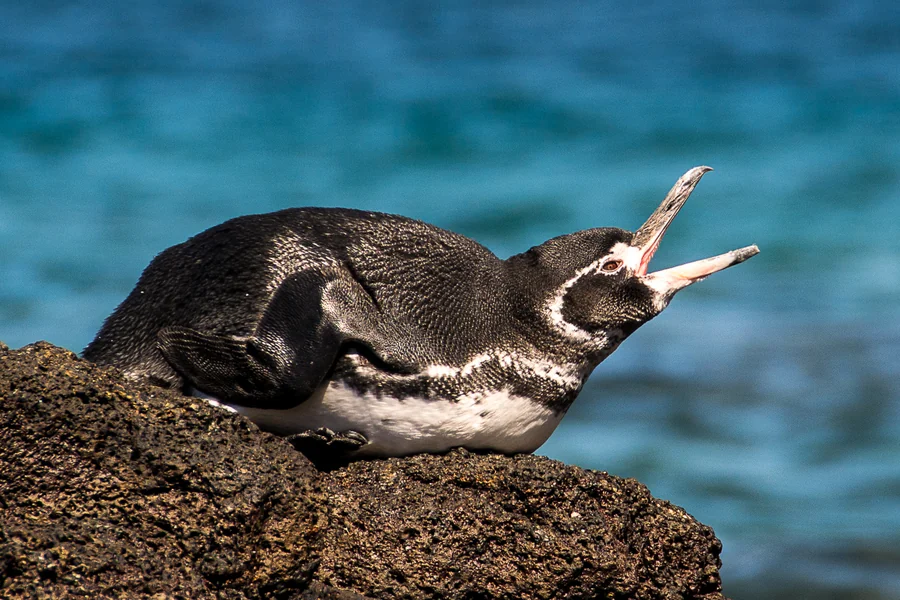
Galápagos Penguin
Scientific Name: Spheniscus mendiculus
Class: Aves
Diet: Carnivore
The Galápagos penguin is the only penguin found north of the equator. A small part of the population lives just across it. Most live on Isabela and Fernandina islands. The birds stand about 50 centimeters tall. Cold water from the Cromwell Current brings the fish they need. They eat sardines, mullet and other small fish. They hunt in groups close to shore. The islands are hot so the penguins have ways to stay cool. They hold their flippers over their feet to shade them. They also pant and stand in the shade of rocks. Pairs nest in lava caves and crevices. They can breed several times a year when food is plentiful. Both parents share the egg and chicks. El Niño years bring warm water and fewer fish. Then many birds starve. Fewer than 2,000 adults remain. The species is Endangered. Fun fact: they are among the rarest penguins on Earth. They molt and cannot swim until new feathers grow.
Hawaiian Monk Seal
Scientific Name: Neomonachus schauinslandi
Class: Mammalia
Diet: Carnivore
The Hawaiian monk seal lives only in the Hawaiian Islands. Most of them live on the remote northwestern atolls. A growing number live on the main islands. They are one of the few seals found in warm tropical water. Adults grow up to 2.4 meters long. They hunt on the sea floor for fish, eels, octopus and lobster. Some dives go deeper than 150 meters. Monk seals haul out on sandy beaches to rest. They often sleep for hours in the sun. Pups are born on beaches. A mother stays with her pup for about six weeks. She does not eat during that time. The pup then has to fend for itself. The Hawaiian name means dog that runs in rough water. Fishing nets and lines trap many seals. Disturbance on beaches also harms them. Roughly 1,500 remain. The species is Endangered. Fun fact: it is one of the most endangered seals in the world. Scientists tag many seals to track their health.
Island Fox
Scientific Name: Urocyon littoralis
Class: Mammalia
Diet: Omnivore
The island fox lives on six of the eight Channel Islands off California. Each island has its own subspecies. The fox is about the size of a house cat. It is much smaller than its mainland cousin the gray fox. Adults weigh about two kilograms. Small size suits islands with limited food. Island foxes eat fruit, insects, deer mice, lizards and bird eggs. They are active day and night. They den in rock crevices, brush and tree hollows. Pairs often stay together and share care of the pups. In the 1990s numbers on several islands crashed. Golden eagles had moved in and preyed on the foxes. Canine distemper hit Santa Catalina Island too. Biologists moved the eagles, brought back bald eagles and gave vaccines. Fox numbers rebounded. In 2016 federal officials delisted three subspecies and eased the status of a fourth. Officials call it one of the fastest recoveries for a listed mammal. Fun fact: the island fox is the largest native land predator on the islands.
Philippine Tarsier
Scientific Name: Carlito syrichta
Class: Mammalia
Diet: Carnivore (insectivore)
The Philippine tarsier lives on islands in the southern Philippines. These include Bohol, Samar, Leyte and Mindanao. It is tiny. It is about 12 cm in length and 130 kg in weight. It’s easy to carry in your hand. It is found in forest undergrowth and understory in low areas. Hangs on thin trunks and hunts for food at night. Each eye is about as big as its whole brain. Eyes do not move in the sockets. This means the tarsier has to twist its head almost 180 degrees to see around. It can jump up to three meters in order to catch insects. It also eats small lizards and spiders. It has large ears that can detect direction of sound independently. Tarsiers are monogamous, living in pairs or small family groups. A female gives birth to one baby a year. Threats include habitat destruction and over-collection for the pet trade. It is Near Threatened. Did you know it can make noises higher than human ears can hear?
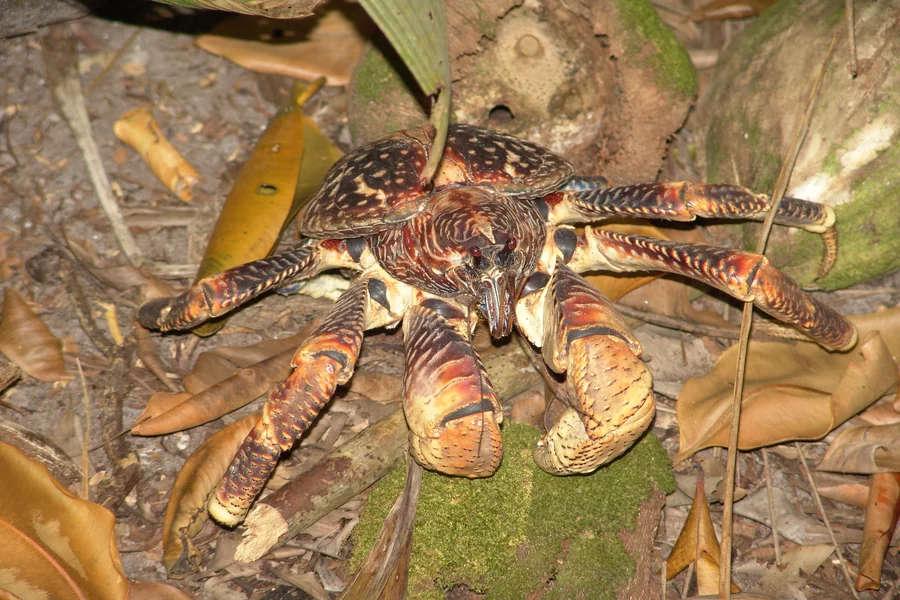
Coconut Crab
Scientific Name: Birgus latro
Class: Malacostraca
Diet: Omnivore
The coconut crab is the largest land-living arthropod. It is found on islands in the Indian and Pacific oceans. It is one of its strongholds at Christmas Island. The leg span of an adult may be as close as almost one meter with a weight of up to four kilograms. It inhabits burrows and crevices in rocks close to the coast. It has a nighttime feeding period and hides during the day. The crab is easily able to climb the palm trees. It eats fruit, seeds, coconuts and dead animals. It will crack a coconut with its strong claw after a while. Can also dismember small prey. Adults use a special air-breathing organ in their lungs. They do not tolerate submersion, so they should not be kept underwater. Hatching larvae of females are released in the sea at the shore. The larvae drift in the ocean for weeks. The young crabs then hide in empty snail shells. Later they increase their distance from the shell. Numbers have been reduced by hunting and habitat loss. In some cases they have been completely extirpated from certain islands. Did you know it’s also known as a robber crab due to old tales of it stealing shiny objects?
More Animals That Live on Islands (Quick List)
- Indri (Indri indri): This is the largest living lemur. It lives in the eastern rainforests of Madagascar. Its loud song carries for about two kilometers. It eats leaves and is Critically Endangered.
- Verreaux’s Sifaka (Propithecus verreauxi): This lemur lives in the dry forests of Madagascar. On the ground it hops sideways on two legs in a dance-like move. It eats leaves, flowers and fruit.
- Tuatara (Sphenodon punctatus): It looks like a lizard but belongs to its own ancient group. It lives on small islands off New Zealand. It shares burrows with seabirds and can live over 60 years.
- Kea (Nestor notabilis): This mountain parrot lives on New Zealand’s South Island. It is bold and curious. Keas open bags and pull at car parts to see what is inside.
- Takahe (Porphyrio hochstetteri): This bird cannot fly and lives in New Zealand. People thought it was extinct until a small group turned up in 1948. It eats tussock grass.
- Flightless Cormorant (Phalacrocorax harrisi): It lives only on Fernandina and Isabela in the Galápagos. Its wings are too small for flight. It dives for fish, eels and octopus.
- Galápagos Sea Lion (Zalophus wollebaeki): It rests on beaches and rocks across the islands. Pups are playful and bark often. Adults hunt sardines and other small fish.
- Blue-footed Booby (Sula nebouxii): It nests on the Galápagos Islands. It plunge-dives from the air to catch fish. Males show off their feet in courtship dances.
- Javan Rhinoceros (Rhinoceros sondaicus): This is one of the rarest large mammals on Earth. A single group survives in Ujung Kulon National Park on Java. It eats leaves and shoots.
- Proboscis Monkey (Nasalis larvatus): It lives in the mangroves and riverside forests of Borneo. Males have large noses and round bellies. It swims well and eats mostly leaves.
- Babirusa (Babyrousa): This wild pig lives on Sulawesi in Indonesia. Its upper tusks curve up through the skin of its snout. It eats fruit, roots and leaves.
- Hispaniolan Solenodon (Solenodon paradoxus): It is a night-active mammal from Haiti and the Dominican Republic. It has venom in its saliva, which is rare among mammals. It eats insects and small animals.
- Nene (Branta sandvicensis): This is the Hawaiian goose and the state bird of Hawaii. It has partly webbed feet that grip lava rock. Conservation work brought it back from about 30 birds.
- Iriomote Cat (Prionailurus bengalensis iriomotensis): It lives only on Iriomote Island in Japan. Only around 100 remain. It hunts in forests and wetlands and swims well.
- Aldabra Giant Tortoise (Aldabrachelys gigantea): It lives on Aldabra Atoll in the Seychelles. More than 100,000 roam the atoll. Some live well past 100 years.
Final Thoughts
Animals that live on islands show how far nature can go when it has space and time. A lizard grows to three meters. A parrot gives up flight. A fox shrinks to the size of a house cat. Each change tells a story of survival.
That story is also fragile. Small ranges and new predators have pushed many of these species to the edge. Yet the island fox, the nene and others prove that recovery is possible when people step in.
Pick one animal from this list and learn more about it. Share it with a friend. Choose wildlife-safe travel. Small steps add up, and they give the next generation a chance to see these species in the wild.
FAQs:
What animals live on islands?
Many do. Examples include the Komodo dragon, kiwi, Tasmanian devil, Galápagos tortoise, ring-tailed lemur and Bornean orangutan. Several of these live nowhere else on Earth.
What is an endemic island animal?
An endemic animal lives naturally in only one place. Lemurs are endemic to Madagascar. Kakapo are endemic to New Zealand.
Why do island animals look so different from mainland animals?
Isolation limits who can breed with whom. Over many generations the animals adapt to local food and space. This is why island foxes are small and Galápagos tortoises vary by island.
What is the largest animal that lives on an island?
Among land animals on this list the Bornean orangutan and Komodo dragon stand out. The Komodo dragon is the largest living lizard. It can reach three meters.
Are island animals more likely to go extinct?
Yes. Small ranges and small populations make them fragile. Invasive predators like rats, cats and stoats have driven many island species to the edge.
Which island animal can’t fly but is a bird?
The kiwi and the kakapo both cannot fly. Both live in New Zealand. Predators brought by people hit them hard.