Top 15 Animals That Live Near Rivers (Some Build Dams, Some Walk Underwater)
Most people don’t notice how much life there is in rivers. The animals that live near rivers include beavers, otters, hippos, crocodiles, and herons. Some construct houses in the bank. Some also hunt in the shallow waters or far upstream to breed. This is a guide to 15 river animals – scientific name, class, and diet. You’ll also receive some habitat notes and fun facts that will make each one easy to remember.
Why are Animals That Live Near Rivers Important?
Riverside animals are important because they help to keep rivers and the land around them functioning. If they are removed, the entire system suffers.
- They shape the habitat.
Beavers create dams which turn streams into ponds. Those ponds will retain water during dry seasons and provide habitat for fish, frogs and birds. Muskrats maintain waterways in wetlands. Hippos transport nutrients from land to water as they graze at night and sleep in the water during the day.
- They move nutrients around.
In salmon, the nutrients are brought back up the river from the ocean. Brown bears carry the fish up onto the bank leaving the surplus food. The scraps and the rest are eaten by birds or insects and deposited in the forest soil. In the vicinity of salmon rivers, trees grow with that assistance.
- They keep food webs in balance.
Heron, otters, and crocodiles help to keep the fish and rodent population under control. Capybaras and hippos eat plants and provide prey for other animals, such as jaguars and crocodiles. When one group is gone, the other groups feel it too. Excessive numbers of one species can be responsible for stripping a bank. If there aren’t enough, predators will be left with little to eat.
- They show how healthy the water is.
Some species are not able to survive in dirty water. American dippers require unpolluted streams with an abundance of insects. Clear water is essential for kingfishers to catch fish. Platypus requires a healthy bank in which to make burrows. These animals are absent, indicating a river issue, such as pollution or silt.
- They support people.
Rivers are vital to the livelihoods of millions of people. Fish runs are essential to a healthy community. Wetlands remove pollutants and help absorb floodwaters. The presence of the Ganges river dolphin is an indicator of a living river system in Bangladesh. Protect it and protect the fish and the fishers who fish in the same water.
- They face real threats.
Salmon and Gharials are blocked by dams. Nesting areas are lost due to sand mining. Dolphins are caught in fishing nets, otters are caught in fishing nets. The food they consume is polluted and the farm effluents pollute the food chain. This is the reason for the situation of gharial being Critically Endangered and Ganges river dolphin being Endangered.
What helps?
- Keep riverbanks planted with native trees and grasses
- Build fish ladders where dams block migration
- Cut back on runoff from farms and factories
- Support local rules that limit sand mining and unsafe fishing gear
Rivers are only as healthy as the animals that live in and around them. Protect the animals and you protect the water.
List of Animals That Live Near Rivers
Here is a quick list of animals that live near rivers:
| Number of Animals | Names of Animals That Live Near Rivers |
| 1 | North American Beaver |
| 2 | North American River Otter |
| 3 | Hippopotamus |
| 4 | Nile Crocodile |
| 5 | Capybara |
| 6 | Muskrat |
| 7 | Platypus |
| 8 | Common Kingfisher |
| 9 | Brown Bear |
| 10 | Great Blue Heron |
| 11 | Gharial |
| 12 | Ganges River Dolphin |
| 13 | American Dipper |
| 14 | Atlantic Salmon |
| 15 | Green Anaconda |
Habitat snapshot:
| Animal | Where It Lives | River Type |
| Beaver | Canada and the United States | Wooded streams |
| River Otter | North America | Rivers and marshes |
| Hippopotamus | Sub-Saharan Africa | Slow rivers and lakes |
| Nile Crocodile | Sub-Saharan Africa | Large rivers and swamps |
| Capybara | South America | Slow rivers and wetlands |
| Muskrat | North America | Reedy streams and ponds |
| Platypus | Eastern Australia and Tasmania | Cool streams |
| Common Kingfisher | Europe and Asia and North Africa | Clear slow rivers |
| Brown Bear | North America and Europe and Asia | Salmon rivers |
| Great Blue Heron | North and Central America | Shallow banks |
| Gharial | Indian subcontinent | Deep fast rivers |
| Ganges River Dolphin | Bangladesh and India and Nepal | Muddy river systems |
| American Dipper | Western North America | Cold mountain streams |
| Atlantic Salmon | North Atlantic region | Cold clear rivers |
| Green Anaconda | Amazon and Orinoco basins | Slow rivers and swamps |
Detailed Look at Animals That Live Near Rivers
North American Beaver
Scientific Name: Castor canadensis
Class: Mammalia
Diet: Herbivore
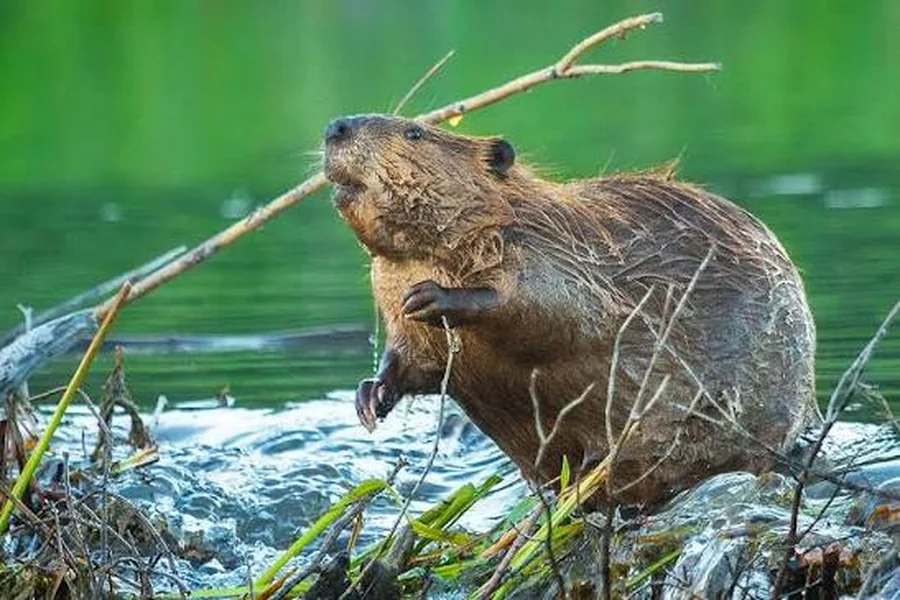
Beavers don’t just live near rivers. They rebuild them. The beaver gnaws on trees using its front teeth, and pulls the logs into the water. When it does, it fills them with mud and stones to form a dam. The dam regulates the flow of water and forms a pond. That pond is a defense against wolves and coyotes for the beaver’s lodge. The lodge has an underwater entrance. It is dry and warm inside, even in winter. North American beaver is found throughout the United States and Canada. They remain near to streams and wooded banks where food is readily available. They consume twigs and bark, and water plants. They have continuously growing front teeth. They chew on wood to keep them worn down. A beaver is able to hold their breath for about 15 minutes. Slaps its flat tail to communicate to the family. The voice is loud and clear. Fun fact: fish and frogs and birds make them their homes! For this reason scientists are calling beavers a keystone species.
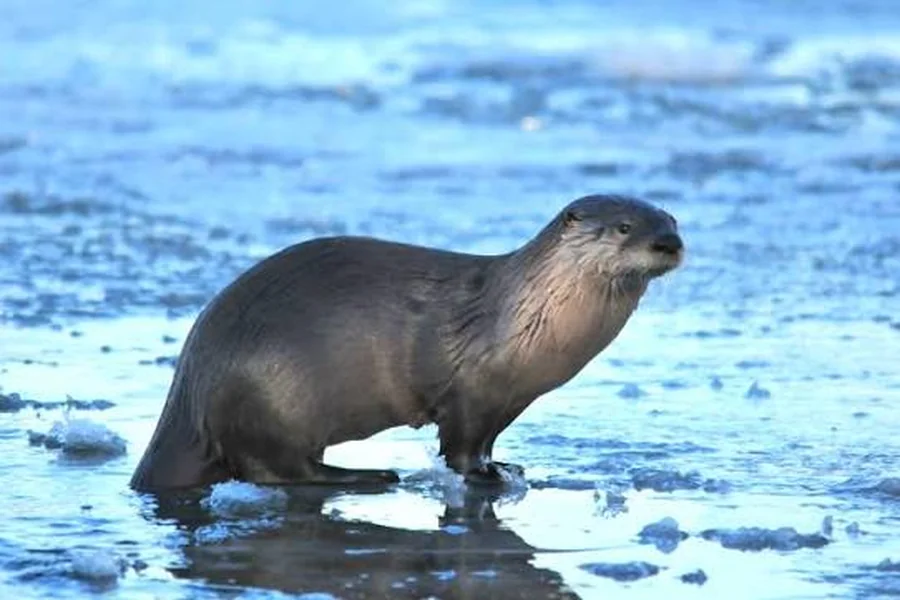
North American River Otter
Scientific Name: Lontra canadensis
Class: Mammalia
Diet: Carnivore
River otters look playful because they are. They run down muddy banks and snow covered hills for their enjoyment. Playing also hones skills, however. River otters in North America are found from the Gulf of Mexico to Alaska and inhabit rivers, lakes and marshes. They make nests in holes in the bank or in holes made by other animals. There is an underwater entrance to the den. They have webbed feet and a thick tail which enables them to be very fast swimmers. A thick coat will prevent cold water from getting into the skin. An otter can breathe underwater for several minutes whilst it is in pursuit of fish. It also consumes crayfish, frogs and turtles. Otters hunt mostly at dawn and dusk. The mother rears the young ones alone, and they learn to swim around two months old. Did you know a river otter will roll on grass after he swims? This fluffs the fur and dries it. Clean water is the result of healthy otters. They need fish and the fish need clear streams.
Hippopotamus
Scientific Name: Hippopotamus amphibius
Class: Mammalia
Diet: Herbivore
A hippo spends most of the day in the water. Hippos are found in rivers and lakes throughout sub-Saharan Africa. They are not able to swim at all. They would walk or bounce across the bottom of the river and would rise to breathe every few minutes. They go out of the water and feed on land at dusk. In a night, one hippo can consume approximately 35 kg of grass. It then makes its way back to the same river before dawn, just as it did the previous night. Males guard an area of water and mark it with dung. They use their tails to spread it out. Yes, that’s gross. It works though. A hippo has its mouth open wide to warn rivals. The big teeth back up the message. Did you know: hippo skin secretes a reddish oily substance which is known as blood sweat. It is a type of sunscreen and could have anti-germ properties. Hippos are one of the most dangerous big animals in Africa. Stay away and don’t venture onto the bank during the night.
Nile Crocodile
Scientific Name: Crocodylus niloticus
Class: Reptilia
Diet: Carnivore
The Nile crocodile waits. That’s its whole plan. It floats with only the eyes and nostrils above the surface. Then an animal comes to drink and the croc strikes. It lives in rivers and lakes and swamps across sub-Saharan Africa. The Mara River in Kenya and Tanzania is a famous spot. Every year wildebeest herds cross it and crocodiles gather at the crossing points. Adults can grow longer than four meters. They eat fish and birds and zebras and wildebeest. Crocs also swallow stones and scientists still debate why. The female digs a nest in the sand near the water and lays up to 60 eggs. She guards the nest for about three months. When the young call from inside the eggs she digs them out. Then she carries them to the water in her mouth. Fun fact: this gentle mouth is the same one that crushes bones. Stay back from the water’s edge in croc country.
Capybara
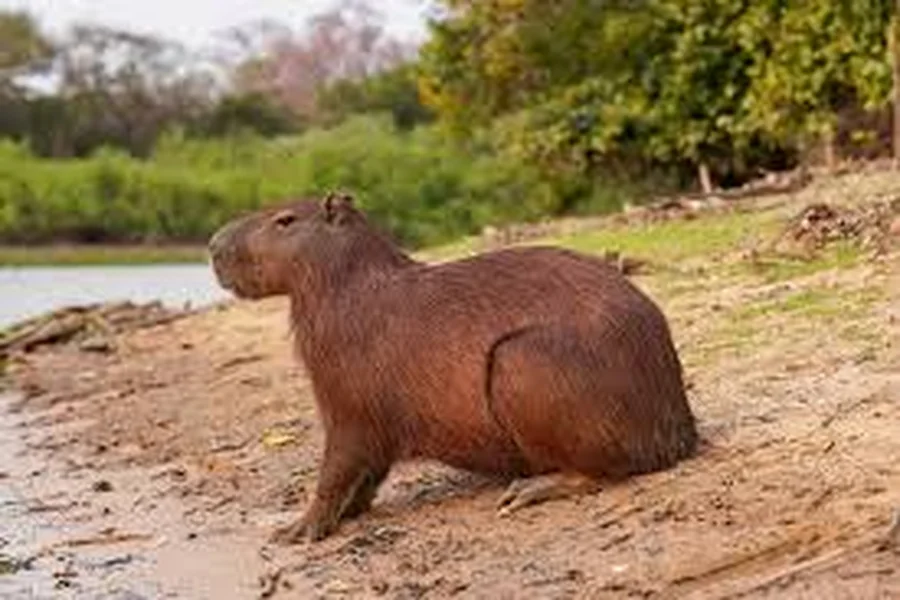
Scientific Name: Hydrochoerus hydrochaeris
Class: Mammalia
Diet: Herbivore
The capybara is the largest rodent on Earth. An adult can weigh around 60 kilograms. It lives near rivers and ponds and marshes in South America east of the Andes. Water is its safe place. The eyes and ears and nose sit high on the head so it can stay almost hidden while it floats. Partly webbed feet help it swim. When a jaguar or caiman comes near the capybara runs into the water and dives. Groups of 10 to 20 share the same patch of bank. They graze on grass and eat water plants too. Capybaras are calm around other animals. Birds sit on their backs and pick off insects. Monkeys have even been seen riding them. Fun fact: young capybaras can swim soon after birth. The group watches over them together. In dry months several groups gather at the same waterhole. Keep an eye out for them along the rivers of the Pantanal in Brazil. It’s one of the best places to see them.
Muskrat
Scientific Name: Ondatra zibethicus
Class: Mammalia
Diet: Omnivore
The muskrat looks like a small beaver with a thin tail. It lives in rivers and ponds and marshes across North America. It prefers slow water with plenty of reeds. Muskrats build dome-shaped lodges out of cattails and mud. Some dig burrows into the bank instead. Both homes have entrances under water. This keeps predators like mink and foxes away. A muskrat’s tail is flat from side to side and works like a rudder. Strong back feet with stiff hairs act as paddles. It can stay under water for about 15 minutes. Muskrats eat cattails and roots and also mussels and snails and small fish. They work most at night. In winter a family huddles together inside the lodge to keep warm. They also build small feeding huts on the ice. Fun fact: the name comes from the musky smell the animal uses to mark its territory. People in some areas trap muskrats for fur and meat. Their channels also keep wetlands open and give ducks a place to feed.
Platypus
Scientific Name: Ornithorhynchus anatinus
Class: Mammalia
Diet: Carnivore
The platypus looks like a mix of three animals. It has a duck-like bill and a beaver-like tail and webbed feet. It’s real though. It lives in streams and rivers of eastern Australia and Tasmania. The platypus is a mammal but it lays eggs. During the day it rests in a burrow dug into the bank. At night it dives for food. It closes its eyes and ears under water. So how does it find prey? The bill picks up tiny electric signals from moving shrimp and insect larvae. It sweeps the bill side to side along the river bed. A platypus eats a big share of its body weight each day. Males have a venom spur on each hind leg. The sting is very painful to people. Fun fact: European scientists who first saw a platypus skin in 1799 thought it was a fake. Clean rivers with healthy banks are key to its survival. Fewer trees on the bank means fewer burrows.
Common Kingfisher
Scientific Name: Alcedo atthis
Class: Aves
Diet: Carnivore (fish and water insects)
The common kingfisher is small but it’s easy to spot if you know where to look. Watch for a flash of blue over a slow river. It lives across Europe and Asia and North Africa. It likes clear water with branches that hang over it. The bird sits on a perch and stares at the water. When it spots a small fish it dives head first and grabs it with its bill. Then it flies back to the perch and hits the fish against the branch before swallowing it. A kingfisher also eats water insects and tadpoles. In spring the pair digs a tunnel into a steep riverbank. The tunnel can be nearly a meter long. The female lays six or seven eggs at the end of it. Fun fact: the bird’s eyes adjust for the way water bends light. That helps its aim. Muddy water makes hunting hard so a kingfisher is a good sign of a clean river. Cold winters can hit its numbers.
Brown Bear
Scientific Name: Ursus arctos
Class: Mammalia
Diet: Omnivore
Every summer salmon swim up rivers to spawn and brown bears are waiting. The brown bear lives across North America and Europe and Asia. The best show is in Alaska. Bears line up at places like Brooks Falls in Katmai National Park. They stand at the top of the falls with their mouths open. A salmon jumps and the bear catches it in the air. That might sound like luck but it’s a skill they learn over years. A bear can eat 20 or more fish in a day. It needs the fat. In winter it will sleep in a den for months without eating. Brown bears are omnivores. They also eat berries and roots and insects and sometimes deer. Fun fact: bears often eat only the fatty parts of a salmon and leave the rest on the bank. Birds and insects and even trees feed on what’s left. Nutrients from the fish end up in the forest soil. A river with salmon feeds a whole ecosystem.
Great Blue Heron
Scientific Name: Ardea herodias
Class: Aves
Diet: Carnivore
The great blue heron is a master of standing still. It wades in shallow water along rivers and marshes and waits. Its legs are long and its neck is longer. When a fish comes close the neck snaps out and the bill closes on it. The whole move takes a blink. Great blue herons live across North America and parts of Central America. They are tall birds that stand about 1.2 meters high. Their wings can span close to two meters. In flight the neck folds back into an S shape. Compare that with cranes which fly with the neck straight out. Herons eat fish mostly but they also take frogs and snakes and small rodents. They sometimes swallow a fish whole. At nesting time herons gather in colonies called rookeries. The nests sit high in tall trees near the water. Fun fact: a heron has special feathers that crumble into powder. It uses the powder to clean fish slime off its body. Look for them at dawn along quiet banks.
Gharial
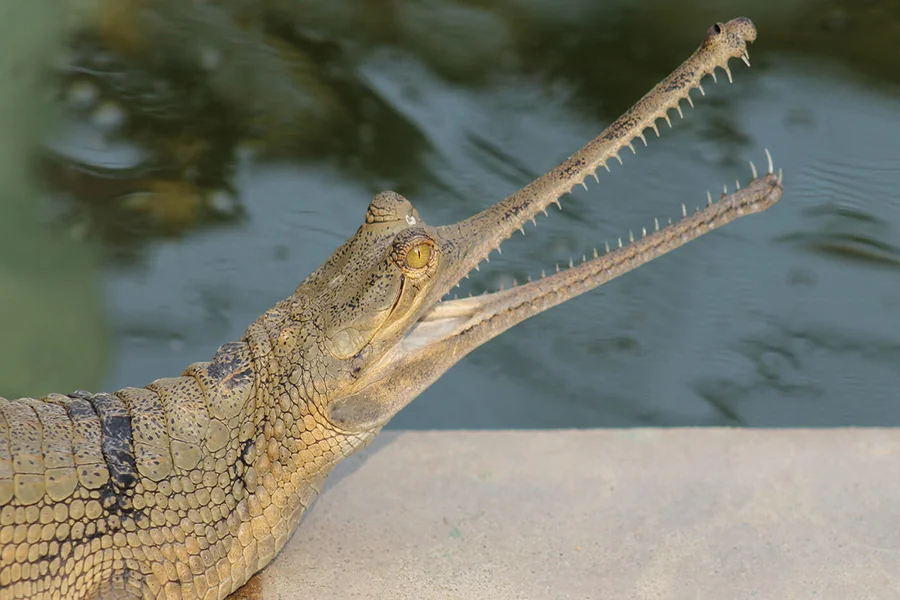
Scientific Name: Gavialis gangeticus
Class: Reptilia
Diet: Carnivore (mostly fish)
The gharial looks different from other crocodilians. Its snout is long and thin and lined with sharp teeth. That shape is made for catching fish. The jaws snap sideways through the water and trap a fish fast. Gharials live in deep fast rivers of the Indian subcontinent. The Chambal River in India holds the largest population. They spend most of their time in the water and only come out to bask on sandbanks and lay eggs. Males grow a bulb on the tip of the snout called a ghara. It looks like a clay pot. The male uses it to make a buzzing sound and blow bubbles when he wants a mate. Adults can reach about five meters in length. Fun fact: a gharial’s legs are too weak to lift the body so it pushes itself along the sand on its belly. Sand mining and dams and fishing nets have wiped out most of them. The gharial is Critically Endangered.
Ganges River Dolphin
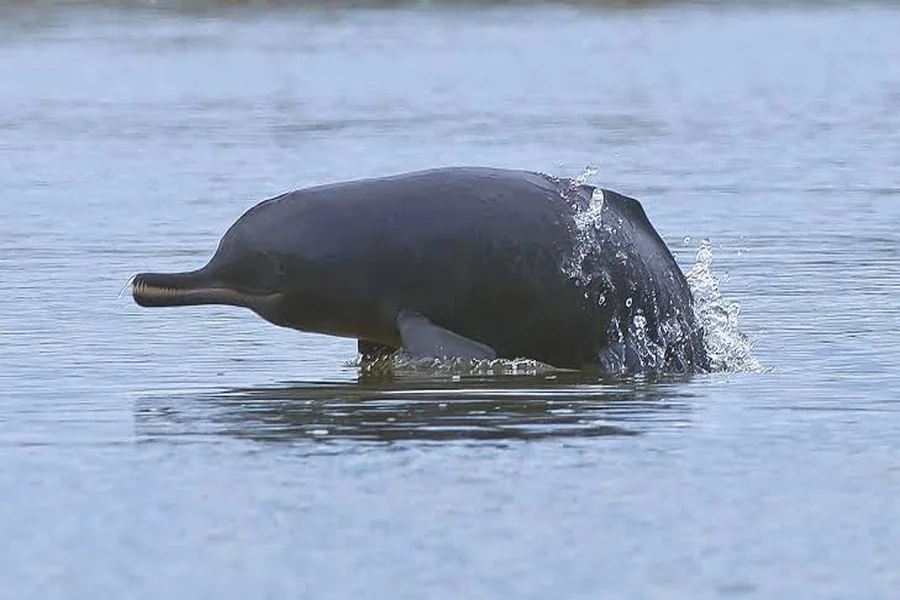
Scientific Name: Platanista gangetica
Class: Mammalia
Diet: Carnivore
Bangladesh has a river dolphin and most people never see it. Locals call it shushuk. It lives in the Ganges and Brahmaputra and Meghna river systems across Bangladesh and India and Nepal. The water there is muddy so the dolphin can’t rely on sight. Its eyes are tiny and have no lens. It uses echolocation instead. It sends out clicks and listens for the echo. This tells it where fish and prawns are hiding. It often swims on its side with one flipper brushing the river bed. The long thin snout sweeps through the mud. A dolphin has to come up for air every minute or two. That’s when you might see it. The Sundarbans in Bangladesh is a good place to look. Fun fact: it spends its whole life in fresh water. Most dolphins don’t. Dams and fishing nets and river pollution have cut its numbers. Sound from boat engines also confuses its echolocation. The species is listed as Endangered.
American Dipper
Scientific Name: Cinclus mexicanus
Class: Aves
Diet: Insectivore
The American dipper is a small gray bird that walks underwater. It lives along fast cold streams in the mountains of western North America. It stands on a rock and bobs up and down. That’s where the name comes from. Then it dives in. It grips the stream bed with its feet and flaps its wings to stay down. It hunts aquatic insect larvae and also takes small fish and fish eggs. A clear membrane covers the eye like a goggle. The white flash it makes when it blinks may be a signal to other dippers. A thick coat of feathers and an oil gland keep the cold out. Dippers build a ball-shaped nest of moss. They hide it on a ledge or behind a waterfall. Fun fact: the dipper sings all year even in winter. Its song rises over the sound of rushing water. It needs clean streams full of insects so scientists use the bird to check river health.
Atlantic Salmon
Scientific Name: Salmo salar
Class: Actinopterygii
Diet: Carnivore
A salmon is born in a river and heads to the sea. Many years later, it comes back to the same river to spawn. It is one of the great journeys in nature that one is making on that trip. Atlantic salmon spawn in gravel beds in cold clear streams throughout the North Atlantic. The young fish remain in fresh water for 1-4 years. They feed on insect larvae. Afterward their color and form change and they swim out to sea. At sea they eat small fish and krill and they grow rapidly. The adults spawn when it is time for spawning and it is in their home river. Scientists believe they use their sense of smell. On the way up they leap over rapids and small waterfalls. There are some jumps which are more than 2 meters high. Did you know that many Atlantic salmon live to spawn again while Pacific salmon do not? However, numerous rivers have dams that prevent the passage of the fish. With the help of fish ladders, they pass through. People are trying to reopen the (no longer used) paths, since the number of wild salmon decreases every year.
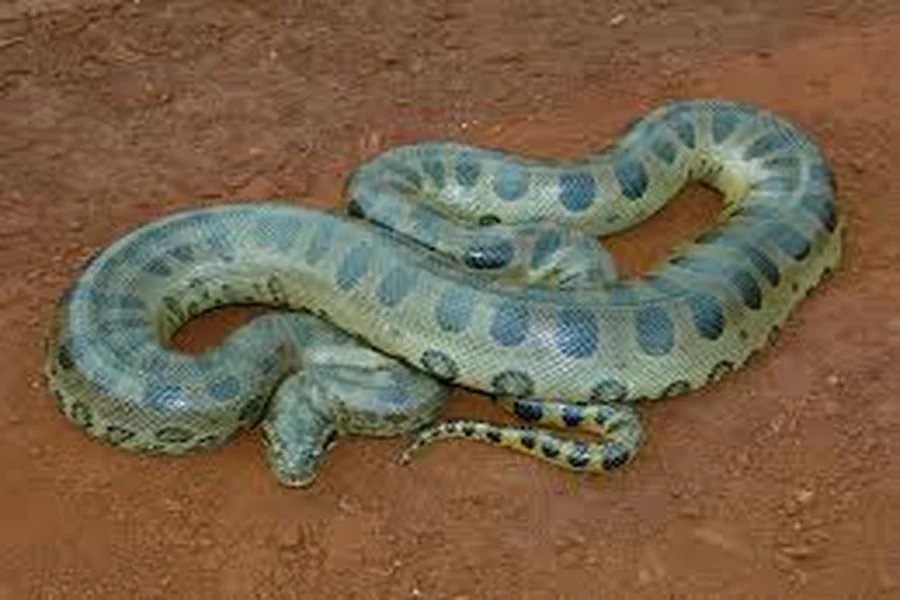
Green Anaconda
Scientific Name: Eunectes murinus
Class: Reptilia
Diet: Carnivore
The green anaconda is the heaviest snake in the world. Can grow over 5m in length and weigh over 90kg. It inhabits slow rivers, swamps and flooded forests of the Amazon and Orinoco basins in South America. Most of its life is spent in the water. The eyes and nostrils are located at the top of the head to allow the head to lie almost flat with only the eyes and nostrils visible. Then it waits. A capybara, a caiman or bird approaches it and the anaconda lunges and snatches it. It coils around the prey and crushes it. Contrary to the myth it doesn’t crush bones. Squeezes to stop blood from flowing. It then consumes the animals whole. The snake will live for weeks on a large meal. Interesting fact: Anacondas do not lay eggs, but give birth to live young. A female can give birth to over 20 babies at a time. The young immediately swim and go hunting. They keep to out of sight in the plants to prevent being eaten.
More Animals That Live Near Rivers
- Giant Otter (Pteronura brasiliensis) | Mammalia | Carnivore
The longest otter in the world. It lives in Amazon rivers and hunts fish in family groups that call loudly to each other.
- Eurasian Otter (Lutra lutra) | Mammalia | Carnivore
Found in rivers across Europe and Asia and North Africa. It hunts at night and its numbers are recovering in places where water quality has improved.
- Amazon River Dolphin (Inia geoffrensis) | Mammalia | Carnivore
Also called the pink river dolphin. It has a flexible neck that helps it swim between trees in flooded forests.
- American Alligator (Alligator mississippiensis) | Reptilia | Carnivore
It lives in slow rivers and swamps in the southeastern United States. In dry spells it digs deep holes that hold water for other animals.
- Common Snapping Turtle (Chelydra serpentina) | Reptilia | Omnivore
It rests on the river bottom and waits for prey. The head is large and the jaws are strong.
- Bald Eagle (Haliaeetus leucocephalus) | Aves | Carnivore
It nests in tall trees near rivers and lakes in North America. Fish make up a big part of its diet.
- Moose (Alces alces) | Mammalia | Herbivore
It wades into rivers and ponds to eat water plants. It’s also a strong swimmer.
- Jaguar (Panthera onca) | Mammalia | Carnivore
Unlike most big cats it likes water. It hunts caimans and capybaras along riverbanks in Central and South America.
- Water Vole (Arvicola amphibius) | Mammalia | Herbivore
A small rodent that digs burrows in river banks across Europe. It eats grass and stems and has lost ground to habitat loss.
- American Mink (Neovison vison) | Mammalia | Carnivore
A sleek hunter that swims well and eats fish and frogs and small mammals. In Europe it’s an invasive species.
- Black Caiman (Melanosuchus niger) | Reptilia | Carnivore
The largest predator in the Amazon basin. Adults can reach about five meters.
- Mallard (Anas platyrhynchos) | Aves | Omnivore
A common duck found on rivers worldwide. It dips its head under water to feed on plants and insects and seeds.
- Fishing Cat (Prionailurus viverrinus) | Mammalia | Carnivore
A wild cat of South and Southeast Asian wetlands. It swims and even dives to catch fish. It’s listed as Vulnerable.
- Smooth-Coated Otter (Lutrogale perspicillata) | Mammalia | Carnivore
It lives in groups along rivers in South and Southeast Asia. In parts of Bangladesh fishers have trained them to herd fish into nets.
- Red-Bellied Piranha (Pygocentrus nattereri) | Actinopterygii | Omnivore
A fish of South American rivers that travels in schools. Its attack reputation is exaggerated since it mostly eats insects and fish and plants.
Final Thoughts
Animals that live near rivers do more than fill the banks with life. Beavers build ponds. Bears add nutrients to forests. Dippers and Kingfishers indicate clean water. The food web is maintained by hippos, crocodiles and dolphins. If these animals vanish, so do the river changes.
Many of these are at risk from dams, pollution and sand mining. Small steps help. Planting of native trees along the bank. Cut runoff. Respect local bylaws to preserve fish migration and/or nesting habitat.
The next time you come round to stand by a river, try to take a moment to observe and listen. A flash of blue from a kingfisher, an otter or a heron may be seen. All of them are a good reason for maintaining clean water.
The animals that live near rivers keep the water clean and the food web steady. Protect them and you protect the river itself.
FAQs:
What animals that live near rivers?
Common river animals include beavers and otters and hippos and crocodiles and capybaras and herons and kingfishers. Many fish and turtles and snakes also depend on rivers.
Which animal builds dams on rivers?
The beaver. It uses logs and mud and stones to build dams that turn streams into ponds.
What is the biggest animal that lives near a river?
The hippopotamus. Adult males often weigh more than 1,500 kilograms.
Which river animals are endangered?
The gharial is Critically Endangered. The Ganges river dolphin is Endangered. Both face threats from dams and fishing nets and pollution.
Are animals near rivers dangerous?
Some are. Hippos and Nile crocodiles and green anacondas can be deadly. Keep a safe distance and follow local wildlife rules.