Brontosaurus vs Brachiosaurus: The Giant Mix-Up Almost Everyone Gets Wrong
You’ve most likely gotten them confused. Most people do. Both the brontosaurus vs brachiosaurus were large long-necked dinosaurs that lived in the same part of the world at the same time, which is why the question is asked. They were not blood relatives, however. Their bodies were different and so were their figures. They even ate differently!
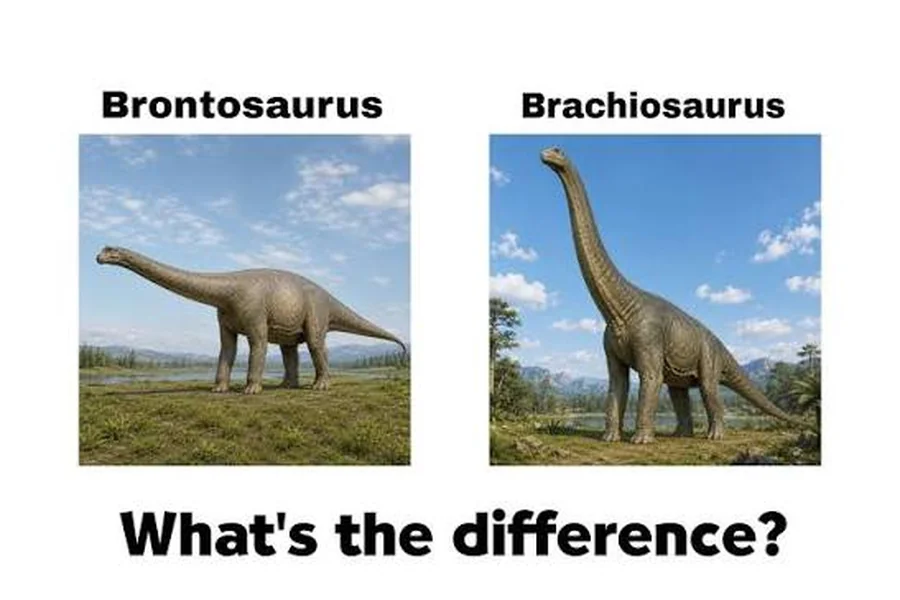
The brief answer is: Brachiosaurus was taller and heavier than it was long. Brontosaurus’s tail was longer and its neck was thicker. Brachiosaurus’ head was as high as a giraffe’s. Brontosaurus’ head moved side to side and remained down.
Let’s take it apart.
Brontosaurus vs Brachiosaurus in One Table
| Feature | Brontosaurus | Brachiosaurus |
| Name meaning | “Thunder lizard” | “Arm lizard” |
| Time period | Late Jurassic (about 156–146 million years ago) | Late Jurassic (about 154–150 million years ago) |
| Family | Diplodocidae | Brachiosauridae |
| Length | About 22 meters (72 feet) | About 22 meters (72 feet) |
| Height | About 4.5 meters at the hip | Up to 12 meters with neck raised |
| Weight | About 15 tons | About 35 tons or more |
| Neck | Thick and held low | Long and held upright |
| Front legs | Slightly shorter than back legs | Longer than back legs |
| Tail | Long and whip-like | Short and thick |
| Diet | Low plants such as ferns and shrubs | Tall trees such as conifers |
| Fossil location | North America | North America |
Keep this table in mind. The rest of the article explains each row.
What Is a Brontosaurus?
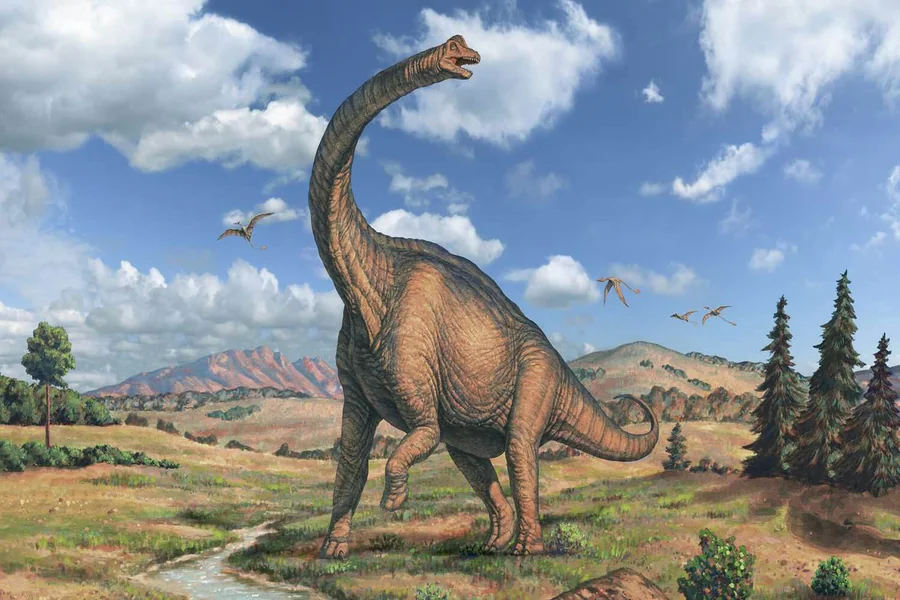
Brontosaurus was a sauropod. That’s a group of huge plant-eating dinosaurs with long necks and long tails. Othniel Charles Marsh named it in 1879. The name means “thunder lizard.”
Its story is odd. In 1903 a scientist named Elmer Riggs argued that Brontosaurus was really the same animal as Apatosaurus. Scientists accepted that idea for over a hundred years. The name Brontosaurus faded from the textbooks.
Then in 2015 a major study changed things. Researchers compared dozens of fossils and found enough differences to bring Brontosaurus back as its own genus. So yes. Brontosaurus is real again.
Brontosaurus Body Features
Brontosaurus had a heavy and wide body. Its neck was thick and strong. Its tail was long and thin at the end. Some experts think it could snap the tail like a whip.
It also had a small head for such a big animal. Its teeth were thin and shaped like pegs. They worked well for stripping leaves off low plants.
What Is a Brachiosaurus?
Brachiosaurus was also a sauropod. Elmer Riggs named it in 1903 after he found fossils in Colorado. The name means “arm lizard.” That fits well because its front legs were longer than its back legs.
This build gave it a sloped back. Think of a giraffe. The shoulders sat high and the hips sat lower. It made the animal look like it was always reaching upward.
Brachiosaurus Body Features
Brachiosaurus had a long neck with a high reach. Some estimates say it could lift its head about 12 meters off the ground. That’s about the height of a four-story building.
Its skull sat on top of a tall neck. Its teeth were wide and shaped like spoons. They could cut through tough leaves from tall trees.
Its tail was short compared to Brontosaurus. It likely worked as a counterbalance rather than a weapon.
Brontosaurus vs Brachiosaurus: Key Differences
Now let’s look at the biggest gaps between these two animals.
1. Size and Weight
This is where most people start. Both dinosaurs reached roughly the same length. But Brachiosaurus was much heavier. Estimates for Brachiosaurus often land around 35 tons. Some go higher. Brontosaurus weighed around 15 tons.
So which one was bigger? Brachiosaurus wins on height and weight. Brontosaurus held its own tail length.
2. Neck Position
Brontosaurus kept its neck mostly level. It swung its head across a wide area and ate from the ground up to a moderate height. Brachiosaurus pointed its neck up. It reached leaves that nothing else could touch.
This difference matters. It shows how two giants could share the same land without fighting over food.
3. Body Shape
Look at the legs first. Brachiosaurus had long front legs and a steep back. Brontosaurus stood on legs of near-equal length. Its body looked flatter and more level.
Now look at the tail. Brontosaurus had a long one with a thin end. Brachiosaurus had a short one.
4. Family Tree
These two dinosaurs belong to different branches of the sauropod family. Brontosaurus belongs to the Diplodocidae. That group includes Diplodocus and Apatosaurus. Brachiosaurus belongs to the Brachiosauridae. That group sits within a larger branch called Titanosauriformes.
So Brontosaurus is closer to Diplodocus. Brachiosaurus is closer to the later titanosaurs. They share a distant ancestor but nothing recent.
5. Diet and Feeding
Both were herbivores. They ate plants all day. A sauropod this size likely needed hundreds of kilograms of food daily.
Brontosaurus fed low and wide. Brachiosaurus fed high. This feeding split is called niche partitioning. It means animals avoid competition by using different food sources in the same place.
6. Teeth and Skull
Brontosaurus had narrow and peg-shaped teeth. Brachiosaurus had thicker and spoon-shaped teeth. The tooth shape tells us about the food each one chewed. Thin teeth suit soft leaves. Thick teeth suit tougher plants.
Where and When Did They Live?
These dinosaurs were of the same period, the Late Jurassic. Most of their fossils are found in Morrison, in the western United States. This rock layer is found in the states of Utah, Colorado, Wyoming and Oklahoma.
At that time the climate was warm and consisted of wet and dry seasons. It contained rivers, floodplains. Conifer and fern trees were also present. Many large plant-eaters were able to live in this habitat at the same time.
So did they meet each other? Probably yes. Their time ranges overlap and so does their location. However, they are probably maintained in separate feeding areas.
Which Was Bigger: Brontosaurus or Brachiosaurus?
Brachiosaurus was bigger overall. It was taller and far heavier. A full-grown adult could weigh more than twice as much as Brontosaurus.
There’s one catch. Fossil sizes depend on which specimen you measure. Some Brachiosaurus fossils are incomplete. A related species from Tanzania called Giraffatitan was once placed in the same genus. That animal is the one on display in Berlin. It stands about 12 meters tall. Many pictures of “Brachiosaurus” actually show Giraffatitan.
So the numbers you see online vary. Always check the source.
Why Do People Confuse Brontosaurus and Brachiosaurus?
There are three main reasons.
They look alike at a glance. Both have long necks and four thick legs. Both are plant-eaters. A quick sketch of either one looks the same to most people.
Pop culture mixed them up. Movies, toys and cartoons used both names for years. Brachiosaurus appeared in the 1993 film Jurassic Park. Brontosaurus has been in children’s books since the early 1900s.
The Brontosaurus name vanished and returned. Scientists said it wasn’t real for decades. That left many people unsure which dinosaur was which.
There’s also a famous mistake. Early museum displays gave Brontosaurus the wrong head. Marsh’s team used a skull that likely belonged to a different dinosaur called Camarasaurus. Scientists fixed the error in the 1970s.
Quick Facts Recap
Here’s a quick list for those who are busy.
- Brontosaurus translates to “thunder lizard. Brachiosaurus translates to “arm lizard.
- Brachiosaurus was bigger and taller.
- Brontosaurus had a longer tail than a lower neck.
- Brachiosaurus’ front legs were longer than its back ones.
- They both were found in North America in the Late Jurassic Period.
- They fed on plant life only.
- They are members of different families of sauropods.
So why is this comparison still relevant?
The brontosaurus vs brachiosaurus debate shows how science works. Ideas change when new evidence shows up. A dinosaur can vanish from the book and then reappear. It may be decades before someone notices a mistake in a fossil, when it’s in a museum.
It also demonstrates the similarity and dissimilarity of animals. Body shape is the result of lifestyle. Brontosaurus and Brachiosaurus both had a similar dilemma, but two different solutions. Both had a great appetite. Whereas, one looked down for it. The other man lifted his head.
Final Thoughts
So what’s the verdict in the brontosaurus vs brachiosaurus matchup? Brachiosaurus is the winner when it comes to height and weight. Brontosaurus takes the win on tail length and on a sturdier neck. They never competed head to head, so there’s no real competition between them. They occupied the same territory and had a different diet.
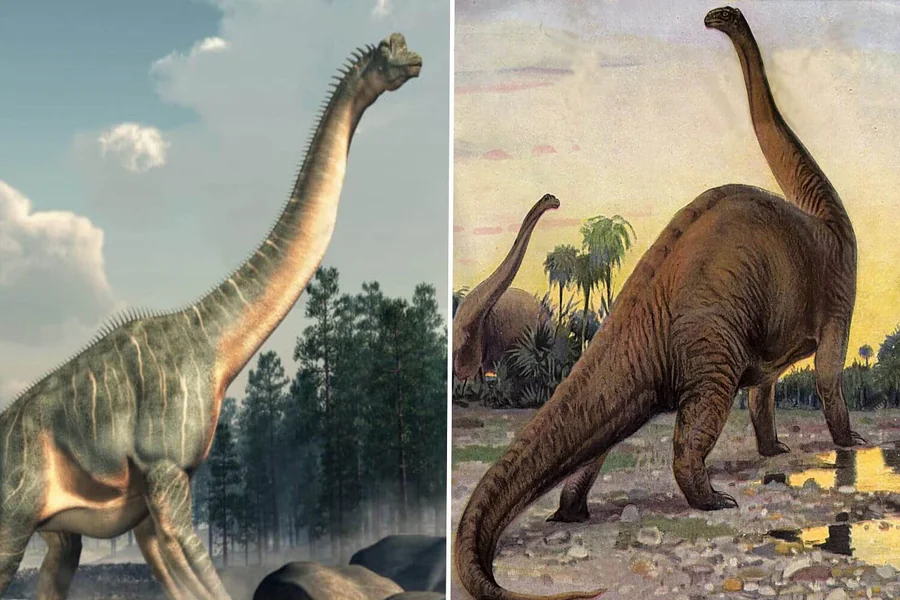
When the next person sees a long-necked dinosaur and says it’s a Brontosaurus, look at the legs. Long front legs, and a steep back translates to Brachiosaurus. With level legs and a long whip tail, Brontosaurus. Now you know.
FAQs:
Is Brontosaurus the same as Brachiosaurus?
No. They are two different dinosaurs from separate families. Brontosaurus belongs to the Diplodocidae. Brachiosaurus belongs to the Brachiosauridae.
Which was bigger: Brontosaurus vs Brachiosaurus?
Brachiosaurus was bigger. It stood up to 12 meters tall and weighed around 35 tons. Brontosaurus weighed about 15 tons.
Is Brontosaurus a real dinosaur?
Yes. A 2015 study restored Brontosaurus as its own genus after more than a century of doubt.
Did Brontosaurus and Brachiosaurus live at the same time?
Yes. Both lived in the Late Jurassic period and their fossils come from the same region of North America.
Which dinosaur had the longer neck?
Brachiosaurus held its neck higher. Brontosaurus had a thick neck that stayed mostly level.
What did Brontosaurus and Brachiosaurus eat?
Both ate plants. Brontosaurus fed on low plants such as ferns. Brachiosaurus fed on leaves from tall trees.