Deer Mating Season Illinois: What Really Happens Out There — And When
If you live in Illinois, drive rural roads in fall, or hunt whitetails, you need to understand deer mating season Illinois. The rut — as locals and hunters call it — is not just a wildlife event. It changes how deer move, where they go, and how dangerous it is to be on the road. Every year it follows the same rhythm. And every year, most people miss what’s happening right outside their window.
Here is everything you need to know, broken into clear phases, with dates, behaviors, and tips that actually help.
What Is Deer Mating Season Illinois?
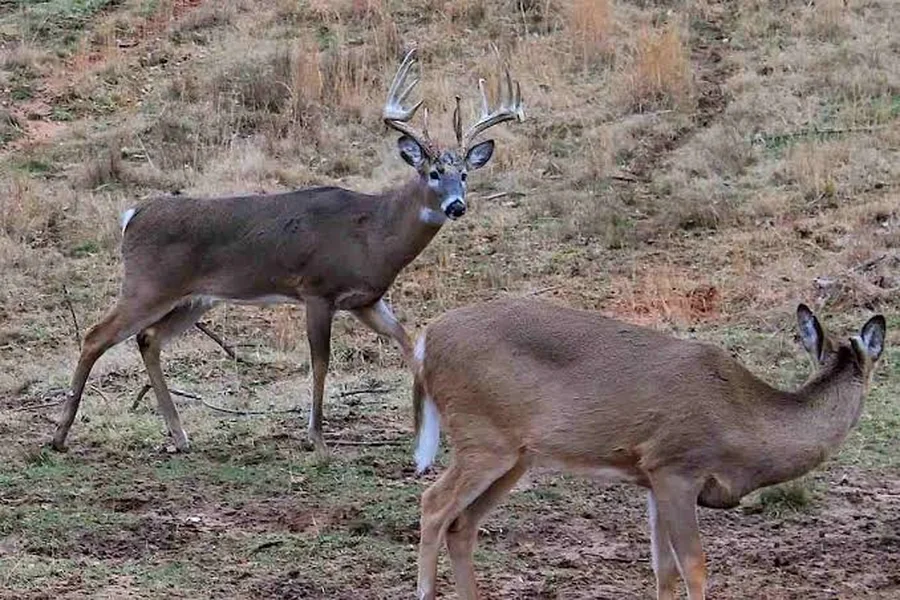
Deer mating season Illinois refers to the annual breeding period of the white-tailed deer (Odocoileus virginianus), the only native deer species in the state. Hunters and wildlife managers commonly call this period the “rut.”
Rutting in Illinois typically takes place from October through January. The reduced amount of daylight increases melatonin, which ultimately induces estrus in females and increases testosterone in male white-tailed deer.
The whole cycle is driven by biology — not temperature, not random chance. As days grow shorter in late summer and fall, a hormonal chain reaction begins. Bucks get aggressive. Does become more cautious, then eventually receptive. And the woods come alive in ways that most people never get to see.
White-tailed deer rut occurs in the fall so that fawns born in the spring have a higher chance of survival under ideal conditions. Gestation is about seven months for white-tailed deer females. It is one of nature’s most precisely timed events.
When Is deer mating season Illinois? Exact Dates by Phase
Illinois peak rut is uniform and runs November 3–17. But peak breeding is just one piece of a longer cycle. Here is the full breakdown.
| Phase | Timing | Key Behaviors |
| Hard Antler / Early Pre-Rut | August–September | Velvet shed, scrapes and rubs begin |
| Pre-Rut | October | Increased daytime movement, territory marking |
| Chasing Phase | Late October–early November | Bucks actively pursuing does |
| Peak Rut | November 3–17 | Breeding activity at its highest |
| Post-Rut | Late November | Lockdown phase ends, bucks recover |
| Second Rut | Early–mid December | Unbred does cycle back into estrus |
In Illinois, the rut begins around October and can extend through January, with the activity peak usually in mid-November, but that can change based on different weather conditions.
A second rut cycle sometimes happens in early to mid-December for the small percentage of females that did not breed earlier.
The Phases of deer mating season Illinois Explained
Pre-Rut: October Is When It Starts
The shedding of velvet and transition to hard antler marks the earliest stages of a prolonged pre-rut. As the velvet is shed, bucks will begin making boundary scrapes and rubs throughout their home range. This behavior will continue throughout October.
This is when most people start noticing odd deer behavior. Bucks that were predictable in summer are suddenly covering ground at all hours. They are not feeding as much. They are scanning, checking & moving.
Testosterone levels rise in bucks, fueling their territorial behavior, increased aggression, and drive to establish dominance over other males. Bucks become more visible during daylight hours as they roam their territories, searching for early estrous does.
If you see a buck rubbing a tree or pawing at the dirt, that is not random. When a buck creates a rub, it secretes a musky scent from a gland just below the base of the antlers. This scent acts as the buck’s signature, indicating the deer’s age, social ranking, and breeding status to the remainder of the herd.
The Chasing Phase: Late October Into Early November
This is the phase most wildlife watchers want to see. The next few weeks are a time when activity overall increases and daylight activity increases, all because most do are entering their estrous cycles and bucks know it.
Bucks stop caring about food. They stop caring about cover. They are focused entirely on finding a receptive doe. During the deer rutting season, bucks begin preparing for the rut by increasing their activity and asserting dominance. They create rubs on trees and scrapes on the ground to mark their territory and attract does.
In the period about two weeks from peak rut, bucks will make 6–12 scrapes for every hour they are on their feet. That is a staggering amount of activity. And it is all happening in Illinois every single year.
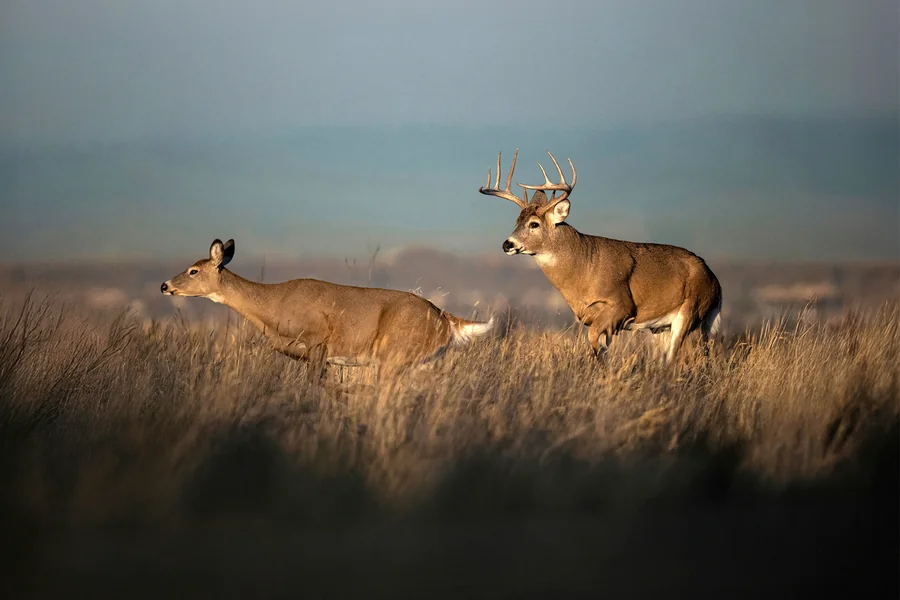
Peak Rut: November 3–17 Is the Heart of deer mating season Illinois
This is the chase phase and peak breeding period for whitetails in Illinois. Bucks are constantly chasing does. Many times it is the smaller bucks chasing, as the bigger bucks will stay with a hot doe until she is bred. But once he is finished breeding her, he will be back on the search for another hot doe.
Once a buck locates a doe, it will generally tend her for two or three days. At this time, they will often disappear into a safe place to complete their rituals.
This is also the lockdown phase. Deer sightings can suddenly drop during peak breeding. That is not because the deer disappeared. It is because they are secluded, paired up, and hidden. Give it a few days and the bucks come back out searching again.
Post-Rut: Late November Through December
After the tending phase, the post-rut sets in. Bucks are physically exhausted from mating and their testosterone levels start to decline. Deer activity decreases during this phase as bucks begin to focus on replenishing their fat reserves for the winter.
However, the post-rut is not dead. This week is the end of the peak rut and the start of the post-rut. Like the pre-rut, it can be very productive, particularly with those bigger bucks looking for the remaining does to come into estrous. Some years this week has more deer rut activity than any other period in November, especially if unusually warm weather was present earlier in the month.
Why deer mating season Illinois Is a Road Safety Issue
This is not just a topic for hunters. If you drive in Illinois, deer mating season directly affects you.
In 2024, there were 14,436 crashes involving deer in Illinois. Of those, 13,733 resulted in vehicle or property damage, 698 caused injuries, and 5 resulted in fatalities. Of all the crashes, 42% occurred in October, November, or December, with 21% happening in November alone.
Why does November dominate? Because that is when bucks are moving at all hours, covering miles of ground chasing does, and paying almost zero attention to roads or traffic. With mating season underway, white-tailed deer are on the move in northern Illinois. Drivers should be extra cautious during twilight hours to avoid potential collisions this autumn.
Nearly 70% of the crashes took place in rural areas, but the single county with the most collisions was Cook County. That means suburban and urban drivers are not safe either.
Tips to stay safe during deer mating season Illinois:
- Slow down between dusk and dawn — that is peak movement time
- Watch for deer on both sides of the road, not just where you see one
- If you see one deer cross, assume others are close behind
- Use high beams on unlit rural roads whenever possible
- Do not swerve sharply — brake firmly and stay in your lane
What Does the Illinois Deer Population Look Like Right Now?
Illinois has around 730,000 white-tailed deer living within its borders according to 2024 estimates, which is an increase over 2023’s 690,000 and an even bigger increase over 2019’s 670,000.
That is a growing population. More deer means more rut activity, more road crossings, and more pressure on crop land and forest habitat. The Illinois Department of Natural Resources (IDNR) manages harvest limits, season dates, and population data to keep the herd in balance.
White-tailed deer can be found anywhere in Illinois, as this widespread species occupies every county, with the highest densities in the watershed wooded areas of the main rivers, notably the Mississippi, Rock, Illinois, and Kaskaskia.
Hunting During deer mating season Illinois
For hunters, the rut is the single best opportunity of the year to harvest a mature buck. Bow or gun hunting during the whitetail rut can be one of the most exciting times to be in the deer woods. As the leaves begin to fall and the weather starts to drop, mature deer start to become more and more visible during daylight hours searching for estrous does.
Illinois hunting seasons are structured to overlap with rut activity:
| Season Type | Dates (2025–2026) |
| Archery | October 1 – January 18, 2026 (with breaks) |
| First Firearm | Mid-to-late November |
| Second Firearm | Late November – early December |
| Muzzleloader | December |
Archery season runs October 1 through November 20, 2025, then November 24 through December 3, 2025, and December 8, 2025 through January 18, 2026.
Best hunting strategies during deer mating season Illinois:
Focusing efforts adjacent to a scrape is usually a good strategy. Focusing on areas of high doe concentrations can also be an effective strategy. As the testosterone levels of bucks begin to peak, calling can be extremely effective during this period.
Transition areas — find transition areas and funnels between doe bedding areas and feeding areas. Bucks will be scent-checking these areas at all hours of the day.
During lockdown, patience matters more than tactics. Sit longer. Stay quiet. If a doe is nearby, a buck will eventually appear.
Short Answers
| Question | Short Answer |
| When is deer mating season Illinois? | deer mating season Illinois runs October through January, with peak rut from November 3–17. |
| What triggers the deer rut in Illinois? | Shorter daylight hours trigger hormonal changes in both bucks and does, starting the rut cycle. |
| Is it dangerous to drive during deer mating season Illinois? | Yes. In 2024, Illinois recorded 14,436 deer-vehicle crashes, with 21% happening in November alone. |
| What does the rut look like in Illinois? | Bucks chase, make scrapes, rub trees, and roam in daylight far beyond their normal range. |
| Is there a second rut in Illinois? | Yes. A second rut occurs in early to mid-December for those that did not breed during the primary rut. |
| How long does deer mating season last in Illinois? | The full rut cycle lasts from October through January, roughly three to four months total. |
| What is the best time to see deer activity during rut in Illinois? | The chasing phase in late October to early November offers the most visible daytime deer movement. |
Signs That Deer Mating Season Is Active Near You
You do not have to be a hunter to spot these. If you walk trails, live near woods, or drive rural roads, here is what to watch for:
Tree rubs — Bark stripped from small saplings, usually 2–4 feet off the ground. Fresh ones are pale and raw-looking.
Ground scrapes — Bare patches of dirt under a low-hanging branch. A buck begins the scrape process by chewing buds from overhanging twigs, then secreting scent onto the branches from his forehead, preorbital, and nasal glands. He will then paw the ground beneath the branches, creating a bare patch of earth.
Deer tracks crossing roads — If you see fresh tracks on soft shoulders, slow down. More deer are likely nearby.
Chasing behavior in open fields — If you see two deer running in a field in November, that is almost certainly a buck chasing a doe. The rut is on.
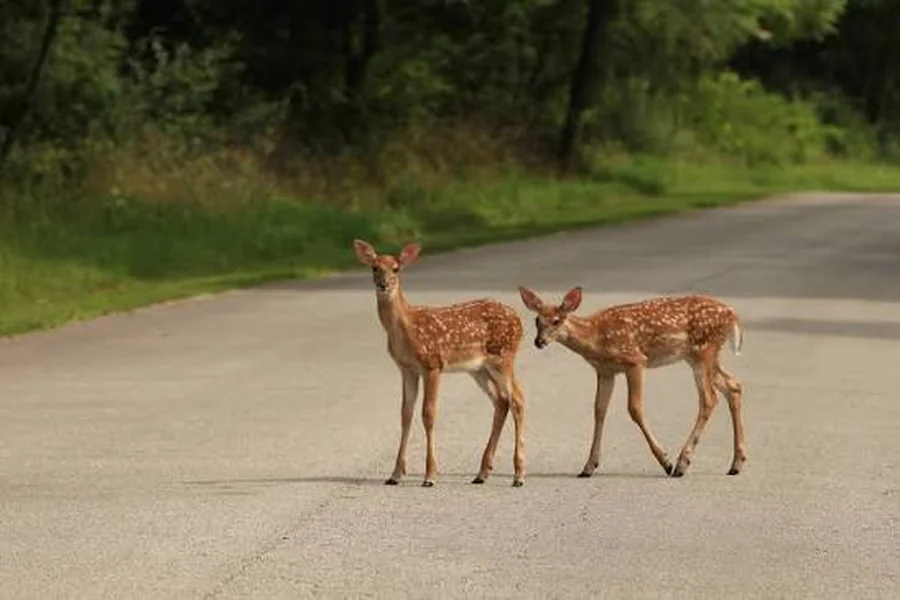
Fawns alone — Bucks will typically chase away the doe’s fawns during the tending phase. As a result, if you see any fawns wandering alone during this time, it is a good sign that there may be a doe and a buck nearby, and they are likely to re-emerge in a few days.
Final Takeaway
Deer mating season Illinois is one of the most reliable and predictable natural events in the Midwest. The rut in Illinois is uniform — it peaks November 3–17 with minimal variation across the state. Whether you are a hunter, a driver, a wildlife watcher, or just curious, understanding how the rut works makes you more prepared.
Mark November on your calendar. Slow down on rural roads. And if you get the chance to watch a buck work a scrape line at dusk — take it. It does not happen anywhere quite like it does in the Illinois deer woods.
FAQs:
Q: When does deer mating season start in Illinois?
A: It starts in early October with pre-rut behavior and runs through January.
Q: What month is the peak rut in Illinois?
A: November. Peak breeding runs November 3–17 statewide.
Q: Does weather affect deer mating season Illinois?
A: Yes. Cold fronts can accelerate rut activity. Warm weather in early November may delay or suppress peak movement.
Q: Are deer more dangerous to drive around during rut?
A: Significantly. Deer-vehicle crashes spike in October, November, and December, with November being the deadliest month.
Q: What is the second rut in Illinois?
A: The second rut occurs in early to mid-December when unbreed does re-enter estrus approximately 28 days after their first cycle.
Q: Can I watch the rut without hunting?
A: Yes. The chasing phase in late October and early November is the best time to observe deer activity from a distance in fields, forest edges, and parks across Illinois.