Top 15 Animals That Start With Q (One Is Gone Forever)
Animals that start with Q are rare on any wildlife list. That makes them fun to find. This guide covers 15 of them. You will meet a smiling marsupial and a clam that outlives people by centuries. You will also meet a zebra that no longer exists. Each profile gives the scientific name, class and diet. You also get the habitat and one quick fact. Ready to see which one surprises you most?
Which Animals That Start With Q?
The best-known examples are the quokka, quail, quetzal, quoll, quagga and quelea. Others include the queen angelfish, queen conch, queen snake and Queensland lungfish. They cover mammals, birds, fish, reptiles, insects and shellfish.
List of Animals That Start With Q
Below is the list of Q animals in this guide:
| Number | Names of Animals That Start With Q |
| 1 | Quokka |
| 2 | Quail |
| 3 | Quetzal |
| 4 | Quoll |
| 5 | Queen Angelfish |
| 6 | Queen Conch |
| 7 | Quagga |
| 8 | Quelea |
| 9 | Queen Alexandra’s Birdwing |
| 10 | Queensland Lungfish |
| 11 | Queen Snake |
| 12 | Queen Triggerfish |
| 13 | Ocean Quahog |
| 14 | Queen Victoria’s Riflebird |
| 15 | Queensland Groper |
Quick Facts Table
| Animal | Class | Diet | Where It Lives |
| Quokka | Mammalia | Herbivore | Western Australia |
| Quail | Aves | Omnivore | Europe, Asia, Africa |
| Quetzal | Aves | Frugivore | Central America |
| Quoll | Mammalia | Carnivore | Tasmania, Australia |
| Queen Angelfish | Actinopterygii | Omnivore | Western Atlantic reefs |
| Queen Conch | Gastropoda | Herbivore | Caribbean seagrass |
| Quagga | Mammalia | Herbivore | South Africa (extinct) |
| Quelea | Aves | Granivore | Sub-Saharan Africa |
| Queen Alexandra’s Birdwing | Insecta | Nectarivore | Papua New Guinea |
| Queensland Lungfish | Sarcopterygii | Omnivore | Queensland rivers |
| Queen Snake | Reptilia | Carnivore | Eastern United States |
| Queen Triggerfish | Actinopterygii | Carnivore | Atlantic reefs |
| Ocean Quahog | Bivalvia | Filter feeder | North Atlantic |
| Queen Victoria’s Riflebird | Aves | Omnivore | Queensland rainforest |
| Queensland Groper | Actinopterygii | Carnivore | Indo-Pacific reefs |
Detailed Look at Animals That Start With Q
Quokka
Scientific Name: Setonix brachyurus
Class: Mammalia
Diet: Herbivore
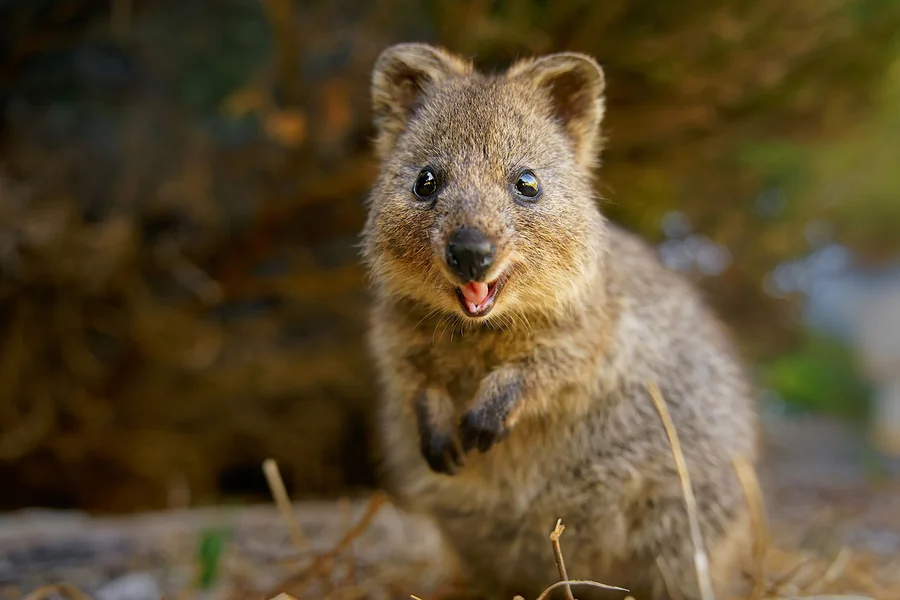
The quokka is a small marsupial from Western Australia. It looks like it is smiling all day. That look comes from its short face and round cheeks. Quokkas rest in the shade during the day and feed at night. They eat grass and leaves and bark. They can go long stretches with little water. Females carry one joey in a pouch for about six months. Quokkas also store fat in their tails. They are not afraid of people. That has made them famous online. Even so they are listed as vulnerable. Foxes and habitat loss have cut their numbers on the mainland. Wild quokkas are protected by law. Keep your distance.
Habitat: Rottnest Island, Bald Island and small pockets of southwest Western Australia.
Fun Fact: The “smile” is just the shape of the face. It says nothing about mood.
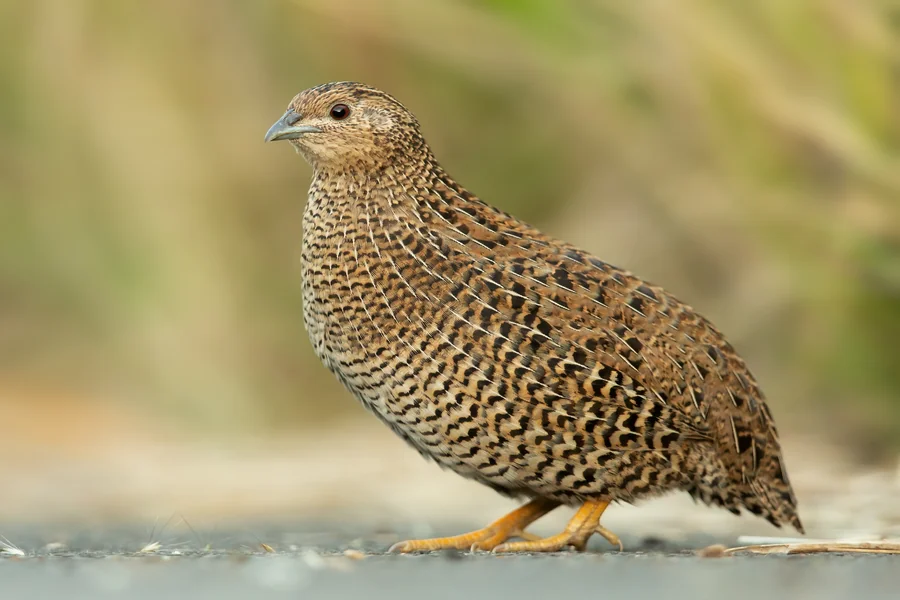
Quail
Scientific Name: Coturnix coturnix
Class: Aves
Diet: Omnivore
The common quail is a small game bird. It is round and brown and easy to miss. It hides in tall grass and crops. Most people hear it before they see it. The male calls at dawn and dusk. Quails prefer to run instead of fly. When flushed they burst up and drop down fast. The common quail is a long-distance migrant. It flies at night from Europe to Africa each autumn. Females lay up to a dozen eggs in a ground nest. Chicks leave the nest within hours. They feed on seeds and insects and shoots. Farm changes have cut some local numbers. That makes them a species to watch.
Habitat: Grassland, meadows and farmland across Europe, Asia and Africa. Winters in sub-Saharan Africa.
Fun Fact: The male’s call is often written as “wet-my-lips.”
Quetzal
Scientific Name: Pharomachrus mocinno
Class: Aves
Diet: Frugivore
The resplendent quetzal lives in cloud forests of Central America. Males are green and red with a long tail. The tail feathers can pass three feet. Females are plainer and have a short tail. Quetzals eat wild fruit most of the time. Their favorite is a small wild avocado. They also catch insects and small frogs. The pair digs a nest hole in a dead tree. Both parents take turns on the eggs. The male’s long tail often hangs out of the nest hole. This bird is rare and hard to find. Forest loss is the main threat. It is listed as near threatened. Birdwatchers travel far to see one.
Habitat: Mountain cloud forests from southern Mexico to western Panama.
Fun Fact: Guatemala’s national bird is the quetzal. Its currency carries the same name.
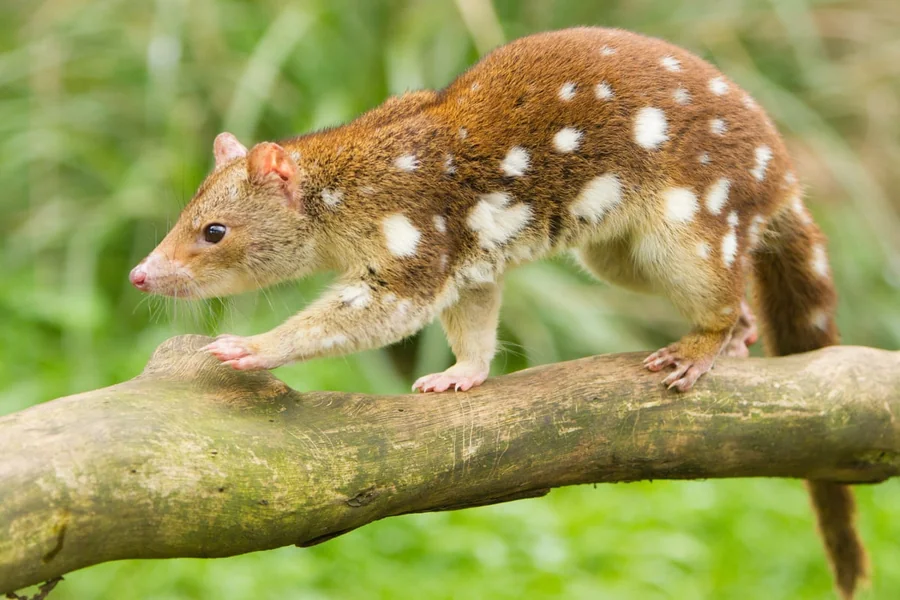
Quoll
Scientific Name: Dasyurus viverrinus
Class: Mammalia
Diet: Carnivore
The eastern quoll is a spotted marsupial hunter. It is about the size of a small cat. Its coat is brown or black with white spots. It has no spots on the tail. Quolls hunt at night. They eat insects and mice and birds and carrion. They also take lizards and eggs. Females give birth to many tiny young. Only the ones that reach a teat survive. The young stay in the pouch for weeks and then wait in a den. Quolls vanished from mainland Australia in the 1960s. Tasmania is now their stronghold. Rangers have started to bring them back to the mainland. Foxes remain the biggest challenge.
Habitat: Forests, grassland and farmland edges in Tasmania. Small reintroduced groups live on the mainland.
Fun Fact: A mother can give birth to about 30 young but has only six teats.
Read more: Explore Top 15 Animals That Start With P (add your internal link here)
Queen Angelfish
Scientific Name: Holacanthus ciliaris
Class: Actinopterygii
Diet: Omnivore
The queen angelfish is a bright reef fish with a deep body. The colors are blue and yellow. A ringed spot on the forehead looks like a small crown. Adults grow to about 18 inches. They swim in pairs and stay close to their home reef. Sponges make up most of their diet. They also eat algae and jellyfish and small sea animals. Young fish act as cleaners. They pick parasites off bigger fish. Divers often spot adults near coral heads. Overfishing for the aquarium trade has hurt some local groups. They are bold and curious around divers. Their narrow bodies slip into tight gaps.
Habitat: Coral reefs of the western Atlantic. From Florida and the Bahamas through the Caribbean to Brazil.
Fun Fact: Young queen angelfish look so different from adults that they seem like another species.
Queen Conch
Scientific Name: Aliger gigas
Class: Gastropoda
Diet: Herbivore
The queen conch is a large sea snail. Its shell is heavy and pink inside. The outer lip flares out like a wing. Adults grow up to a foot long. They live on sand and seagrass beds. They graze on algae and plant bits. They move with a jerky hop on one muscular foot. Each eye sits on a stalk. A conch can live up to 30 years. Females lay millions of eggs over a season. Few survive. People have fished conch for food and shells for centuries. Overharvest has dropped numbers. Trade is now controlled under CITES. Many Caribbean nations now set catch limits. Young conchs hide in the sand to stay safe.
Habitat: Shallow seagrass beds and sandy flats in the Caribbean, Florida Keys, Bahamas and Gulf of Mexico.
Fun Fact: Queen conchs can make rare pink pearls.
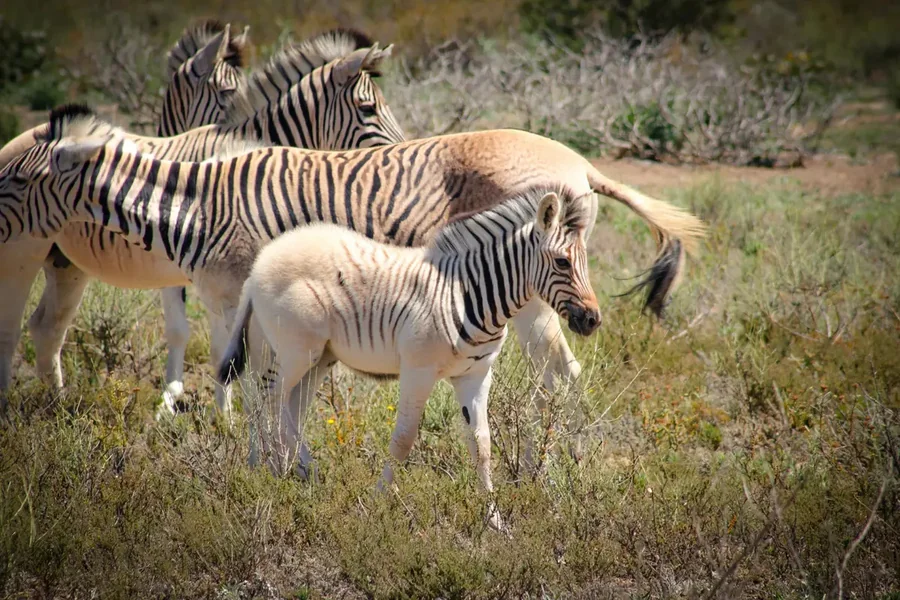
Quagga
Scientific Name: Equus quagga quagga
Class: Mammalia
Diet: Herbivore
The quagga was a zebra with stripes on its front half only. The back half was plain brown. It lived on the grasslands of South Africa. Herds grazed on tough grass alongside other grazers. Settlers hunted the quagga for meat and hides. They also shot it to save grass for livestock. The last wild quagga died in the late 1870s. The last captive one died in Amsterdam in 1883. Scientists later found it was a subspecies of the plains zebra. A breeding project in South Africa now tries to bring back the look. The animals are not true quaggas. Still they show how fast a species can vanish.
Habitat: Karoo and Free State grasslands of South Africa. Extinct since 1883.
Fun Fact: In 1984 the quagga became the first extinct animal to have its DNA studied.
Quelea
Scientific Name: Quelea quelea
Class: Aves
Diet: Granivore
The red-billed quelea is a small bird that lives in huge flocks. Each bird weighs about 20 grams. Flocks can hold millions of birds. They move across the sky like smoke. Queleas eat grass seeds and cereal grains. A single flock can strip a field in a day. Farmers call them a pest. They nest in dense colonies. Many woven nests hang in the same thorn tree. Males weave the nests from grass. Females inspect them before they pick a mate. Breeding follows the rains when seeds are plentiful. Experts think this is the most numerous wild bird on Earth. Numbers swing with rainfall and with control programs.
Habitat: Dry savanna, scrubland and farmland across sub-Saharan Africa.
Fun Fact: People call queleas “feathered locusts.”
Read more: Explore Top 15 Animals That Start With R (add your internal link here)
Queen Alexandra’s Birdwing
Scientific Name: Ornithoptera alexandrae
Class: Insecta
Diet: Nectarivore
Queen Alexandra’s birdwing is the largest butterfly in the world. Females can reach a wingspan of about 11 inches. Males are smaller and bright blue and green. Females are brown and cream. The adults sip nectar from forest flowers. The caterpillars feed on one type of vine. That vine is poisonous and passes the poison to the insect. This butterfly flies high in the rainforest canopy. It lives in one small part of Papua New Guinea. Palm oil farms and a volcanic eruption cut its forest. It is now endangered. Trade in it is banned under CITES. Collectors once paid high prices for a single specimen. Few people have seen one alive.
Habitat: Lowland rainforest of Oro Province, Papua New Guinea.
Fun Fact: Collectors shot the first specimen out of the canopy in 1906 because it flew too high to net.
Queensland Lungfish
Scientific Name: Neoceratodus forsteri
Class: Sarcopterygii
Diet: Omnivore
The Queensland lungfish is a living link to early land animals. Its body is long and thick with paddle-like fins. Adults can reach five feet and weigh up to 88 pounds. It has one lung and gills. Most of the time it breathes with its gills. In still and low-oxygen water it gulps air at the surface. It eats snails and shrimp and tadpoles and plants. It moves slowly and hunts at dusk. Females lay eggs among water plants. Young take years to grow up. Some lungfish live for decades. This species cannot live long out of water. Dams and river changes are its biggest threat. It is protected by law in Queensland.
Habitat: Slow rivers and deep pools of the Mary and Burnett Rivers in southeast Queensland.
Fun Fact: Methuselah, a lungfish at a San Francisco aquarium, has lived there since 1938.
Queen Snake
Scientific Name: Regina septemvittata
Class: Reptilia
Diet: Carnivore
The queen snake is a slim water snake from clear streams. It is brown or olive with a yellow stripe along each side. Its belly is yellow with four dark lines. Adults grow about two feet long. This snake is not venomous. It hides under rocks and logs near the water. It hunts along the water’s edge. Crayfish make up nearly all its diet. It prefers those that have just shed their shells. Soft crayfish are easy to swallow. The queen snake gives birth to live young in late summer. Stream pollution and silt can wipe out local groups. They harm the crayfish the snake depends on. Clean streams keep this snake around.
Habitat: Clear rocky streams of the eastern and central United States. From the Great Lakes to the Gulf Coast.
Fun Fact: Queen snakes often bask on branches above water and drop in when scared.
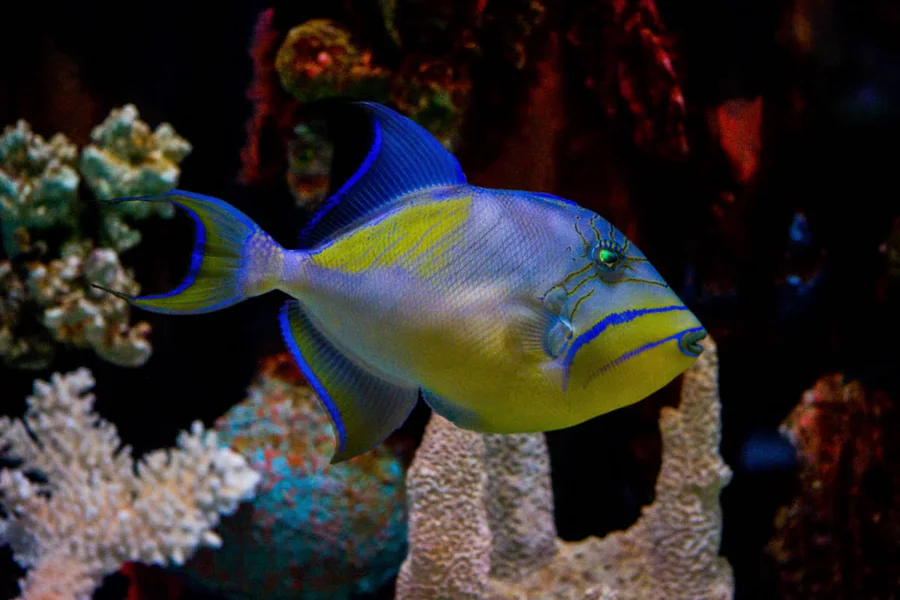
Queen Triggerfish
Scientific Name: Balistes vetula
Class: Actinopterygii
Diet: Carnivore
The queen triggerfish is a bold reef fish with a tough body. Its body is deep and flat. Its colors shift from green to blue to yellow. Two blue lines run across the face. Adults grow to about two feet. Their mouth is small but strong. The teeth crush hard prey. They eat sea urchins and crabs and snails and clams. To flip an urchin they blow a jet of water at it. Then they bite the soft underside. When chased the fish wedges itself into a crevice. A locking spine on the back holds it in place. It can be aggressive near its nest. Divers should keep a safe distance.
Habitat: Reefs and rocky bottoms in the western Atlantic and Caribbean. Some live in the eastern Atlantic.
Fun Fact: A second small spine releases the locked main spine like a trigger. That is how the fish got its name.
Read more: Explore Top 15 Animals That Live in the Ocean (add your internal link here)
Ocean Quahog
Scientific Name: Arctica islandica
Class: Bivalvia
Diet: Filter feeder
The ocean quahog is a thick-shelled clam from cold North Atlantic waters. It is round and dark brown. Adults grow to about four inches. It buries itself in sandy seabed and filters tiny plants from the water. Growth is very slow. Cold water and a low metabolism keep it that way. Scientists count shell rings like tree rings. Many quahogs live well over a century. Some live for more than 400 years. Researchers study these shells to learn about past ocean climate. The clams are also fished and used in chowder. Warming seas may change where they can live. They are slow to recover from overfishing. That makes careful catch limits important.
Habitat: Cold, sandy seabed of the North Atlantic. From Iceland and Norway to the U.S. East Coast.
Fun Fact: A clam nicknamed Ming was dredged off Iceland in 2006 and aged at 507 years.
Queen Victoria’s Riflebird
Scientific Name: Ptiloris victoriae
Class: Aves
Diet: Omnivore
Queen Victoria’s riflebird is a bird of paradise from Australia. The male is black with a shiny blue-green throat patch. The female is brown with pale stripes underneath. Males perform to win a mate. A male picks a bare branch as his stage. He opens his wings wide and sways his head side to side. The throat patch flashes in the light. Females watch and choose. The birds eat fruit and insects and spiders. They pick insects from bark and rotten logs. They live in rainforest and at its edges. Numbers are stable for now. Forest clearing is the main risk. Birdwatchers need patience to see this display.
Habitat: Rainforest and forest edges of northeast Queensland, Australia.
Fun Fact: The name “riflebird” is said to come from the dark green uniforms of a rifle regiment.
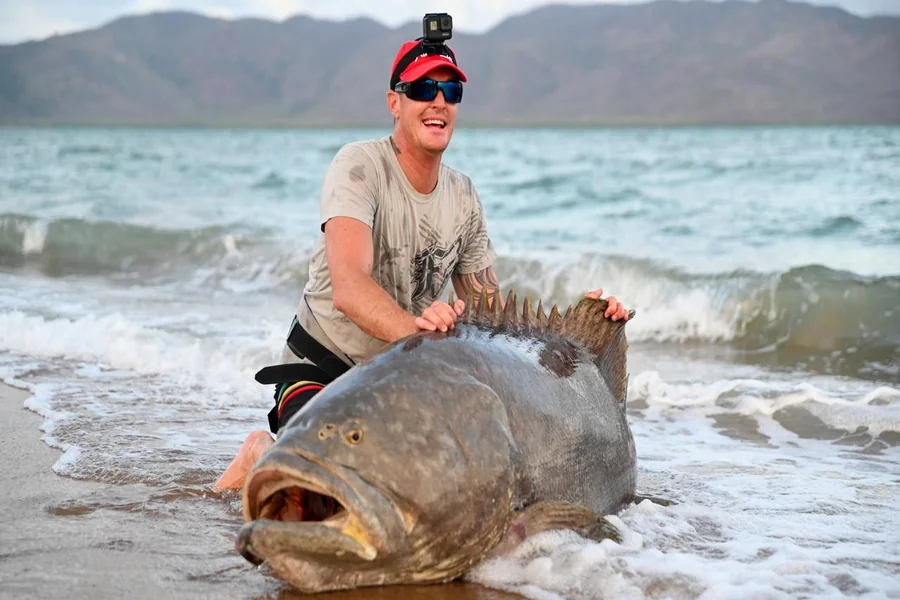
Queensland Groper
Scientific Name: Epinephelus lanceolatus
Class: Actinopterygii
Diet: Carnivore
The Queensland groper is a giant reef fish. It is the largest bony fish found on coral reefs. Adults can pass eight feet and weigh over 600 pounds. The mouth is huge. It swallows prey whole. Its diet includes fish, crabs and lobsters. Groper hide in caves and wrecks. They are slow and curious. Divers often see them near the same spot for years. They are born female. Some change to male later in life. Slow growth makes them easy to overfish. Spearfishing has cut numbers in many places. Queensland protects the fish by law. It is listed as vulnerable worldwide. Young fish stay in shallow water close to shore.
Habitat: Reefs, caves and wrecks across the Indo-Pacific. From the Red Sea and East Africa to Australia.
Fun Fact: Large groupers can make deep booming sounds that divers feel in the water.
Final Thoughts
Animals that start with Q are few, but they stand out. This list gave us a smiling marsupial, a butterfly wider than a dinner plate and a clam that lived five centuries. It also gave us the quagga, a reminder that a species can vanish within one lifetime.
Many of these animals still need help. Protecting reefs, rivers and rainforests keeps them around. Next time someone asks about animals that start with Q, you will have more than a quokka to name.
Which Q animal surprised you most? Share it in the comments.
FAQs:
Which animals begin with the letter Q?
Common examples are the quokka, quail, quetzal, quoll, quagga and quelea. Others include the queen angelfish, queen conch, queen snake and Queensland lungfish.
What is the cutest Q animal?
The quokka is the most popular pick. Its face looks like a smile, and it is small and calm around people.
Is the quagga extinct?
Yes. The last quagga died in an Amsterdam zoo in 1883. It was a subspecies of the plains zebra.
What is the biggest animal that starts with Q?
On this list it is the Queensland groper. It can reach about nine feet and weigh close to 880 pounds.
Which Q animals are birds?
The quail, quetzal, quelea and Queen Victoria’s riflebird are all birds.