Animals That Live in Forests: 10 Wild Species You Won’t Believe Survive Here
Animals that live in forests make up some of the most interesting wildlife on Earth. Forests cover about 31 percent of the land on our planet. That is a lot of room for life. Wolves hunt under tall trees. Sloths hang from branches. Owls watch from the dark. Each animal in this guide has found its own way to live among leaves and trunks. You will learn where each species lives and what it eats. You will also pick up one fun fact for each. Let’s start.
List of Animals That Live in Forests
Here are the 10 forest animals covered in this guide:
| Number | Names of Forest Animals |
| 1 | Gray Wolf |
| 2 | American Black Bear |
| 3 | Bengal Tiger |
| 4 | Red Panda |
| 5 | Jaguar |
| 6 | Moose |
| 7 | Western Gorilla |
| 8 | Three-Toed Sloth |
| 9 | Great Horned Owl |
| 10 | Orangutan |
Detailed Look at the Animals That Live in Forests
Gray Wolf
Scientific Name: Canis lupus
Class: Mammalia
Diet: Carnivore
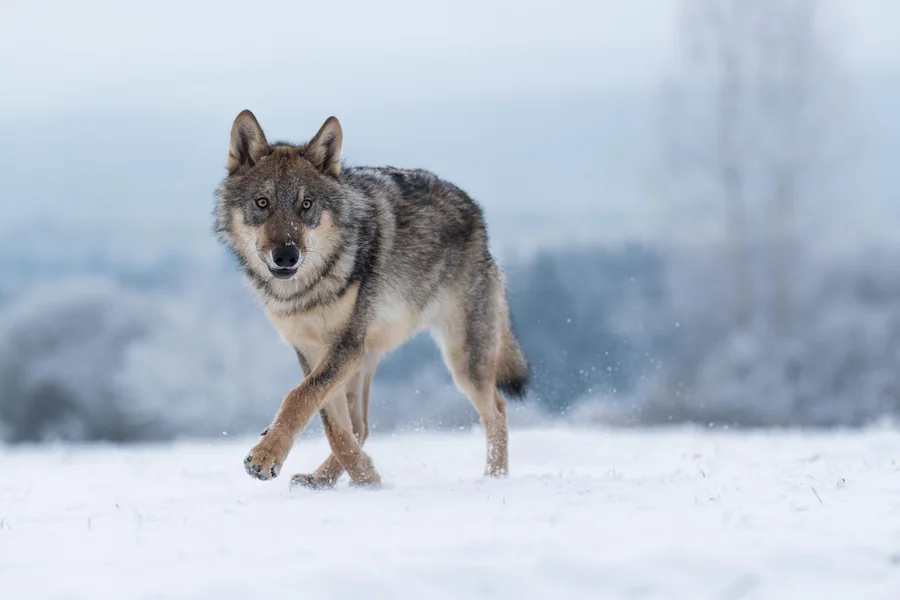
Gray wolves live in the forests of North America, Europe and Asia. They form the environment in which they live. Typically, a pack consists of 6-10 wolves. The leaders are a breeding pair. All the others are primarily their young. Wolves hunt as a team. They pursue the deer, elk and moose until they become exhausted. The pack moves in, then. When a wolf must travel, he will travel up to 30 miles each day. There is a large territory in each pack, which they scent and also howl over. Howl can travel approximately six miles in open country. In dense forests it transports less. Wolves are also land changing agents. Deer resume their movements when they return to an area. Plants grow again along rivers. This was definitely demonstrated by Yellowstone when wolves returned in 1995. In the wild, wolves live for 6-8 years. Interesting fact: Wolf puppies are born blind. Their eyes open around the 2nd week. They are supported by the entire pack in terms of feeding and protection.
American Black Bear
Scientific Name: Ursus americanus
Class: Mammalia
Diet: Omnivore
American black bears live in forests across Canada, the United States and northern Mexico. Will consume anything. They are mainly herbivores, feeding on berries and nuts. They also feed on insects, fish and young deer. A bear’s diet includes consuming as much as 20 hours worth of food per day during the fall. It must fatten up for the winter. Black bears hibernate in hollow trees, caves or brush piles. They hibernate for 3-5 months in cold climate areas. Are not true deep hibernators. They don’t get very cold and are easily awakened. Cubs are born in the den in January/February. A newborn is 8 ounces. Black bears can climb up to 60 feet a minute. Cubs climb up tree when they see danger. Adults are able to run 30 miles an hour over short distances. Did you know that a black bear isn’t necessarily black? Many are brown, cinnamon and even white. The white ones are called spirit bears and they can be found in British Columbia.
Bengal Tiger
Scientific Name: Panthera tigris tigris
Class: Mammalia
Diet: Carnivore
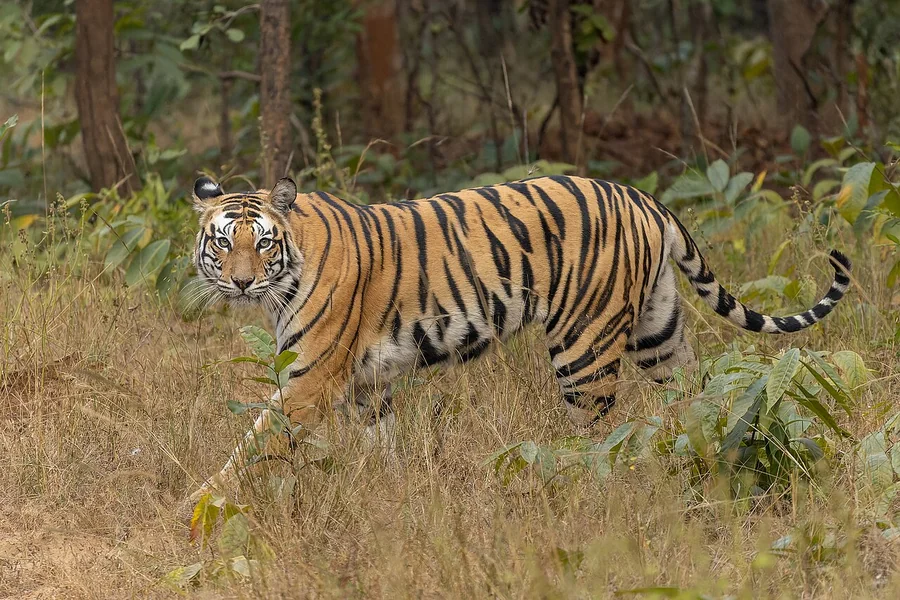
The Bengal tiger lives in forests across India, Bangladesh, Nepal and Bhutan. Its most unusual habitat is the Sundarbans mangrove forest. There, the tigers swim from island to island, and wade through the sea of salt. Large cats generally don’t like water. Tigers can be seen swimming frequently in the Sundarban. Bengal tigers are active during the night and are solitary hunters. They stalk and attack their prey from a close range. Spotted deer and wild boar are common targets. Many hunts fail. It takes a tiger 10 attempts to kill one animal. Tigers have a specific area to defend and they scent mark and scratch their homes on trees. Males walk farther than females. Male can weigh more than 200 kgs. Did you now the fact that no two tigers have the same stripe pattern? The stripes even run across the skin underneath the fur! Cubs stay with their mother for about two years. They then go out and settle in their own territory. In the past 100 years, the tiger population has declined significantly. In portions of India and Nepal they are recovering with the help of protected forests.
Red Panda
Scientific Name: Ailurus fulgens
Class: Mammalia
Diet: Herbivore
Red pandas live in the mountain forests of the eastern Himalayas. They are located in Nepal, India, Bhutan, China and Myanmar. Their time is spent predominantly in the trees. A red panda is just about the size of a house cat. It has a weight of 3 to 6 kilograms. It is protected from cold weather by its thick fur coat and long tail with rings on it. Bamboo makes up most of its diet. The fruit and egg and insect consumption is also a feature. Bamboo provides low energy. Thus the red panda walks slowly and sleeps a lot. It is at its most active at dawn and dusk. A false thumb is used by a red panda to hold up the bamboo. This is a long bone of the wrist. Did you know, red pandas are not close cousins of giant pandas. They are in a family of their own. When scared a red panda stands on its back legs and raises its arms to look bigger. The species is Endangered. It is most vulnerable to deforestation.
Jaguar
Scientific Name: Panthera onca
Class: Mammalia
Diet: Carnivore
Jaguars live in forests from Mexico to northern Argentina. The greatest population is found in the Amazon rainforest. This is the biggest cat in the Americas. The weight of a male is approximately 90kg. The dense cover near rivers and swamps is preferred by the jaguar. Does not have a swim problem like most cats. Prefers hunting in water. They feed on capybaras, deer, fish and caimans. The jaguar is the most powerful big cat bite to bite for its size. It can break turtle shells and bones. The jaguar is prone to killing its prey with one bite to the back of the skull. They hunt alone, primarily at dusk and at night. They will also climb trees to rest or to watch for prey. Each jaguar requires a vast territory. Males can roam as much as 100 ha (300 acres). Did you know, jaguar spots are called rosettes? A few rosettes contain a small dot inside. This dot is not found on leopards. Black jaguars are also found. They are referred to as black panthers. They can still be seen under the thick fur. Loss of forest cover poses the greatest risk to this species.
Moose
Scientific Name: Alces alces
Class: Mammalia
Diet: Herbivore
Moose live in cold forests across Canada, Alaska, northern Europe and Russia. They are called elks by Europeans. The moose is the biggest deer in the world. The weight of a large male is greater than 500 kg. Antlers are only found on males. The antlers can span almost two meters. They drop off in winter and regrow in the spring. A moose will feed on leaves, twigs, bark and water plants. The adult requires 20 kg of food per day. During the summer, a moose swims in lakes to eat the vegetation that grows underwater. It can dive and get to them. It also is a good swimmer and can cross large rivers. The water also repels biting flies. The moose are solitary creatures. Mothers remain with their calves for one year. Within a few hours of birth, calves are able to walk. Their long legs enable them to step on top of the deep snow. If you didn’t already know, a moose can run about 35 miles per hour for short bursts of speed. It’s pretty quick for such a large animal! Wolves and bears are the main predators.
Western Gorilla
Scientific Name: Gorilla gorilla
Class: Mammalia
Diet: Herbivore
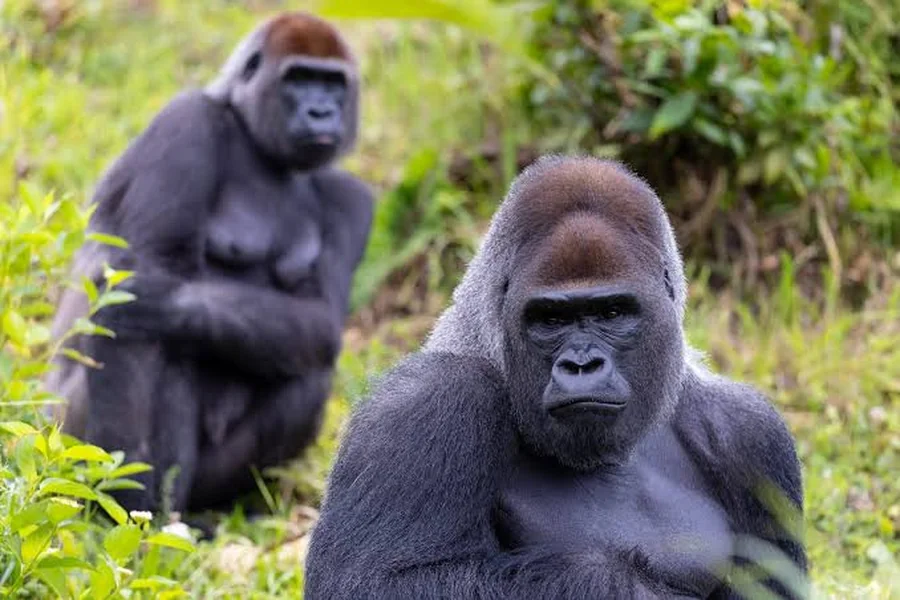
Western gorillas live in the dense forests of Central Africa. They are found in Gabon, Cameroon, Congo and nearby countries. They form groups of 10 animals. Each group has one adult male leading them. A silverback is one who has silver hair on the back. The silverback calms down arguments and leads the group to food. Leaves, stems and fruit are the principal food of gorillas. They will also occasionally prey on ants and termites. Each night they build a new nest from branches and leaves. Young gorillas are frequently sleeping in their mother’s nest. Gorillas walk on all fours, using their knuckles. The largest male can reach a weight of 170kg. They have more than 98 percent the same DNA as humans. After eating, they sleep for extended periods of time. Interesting fact: gorillas beat their chests to send a signal. Sounds can travel far among the trees. Western gorillas are an endangered species. The majority of the loss is due to disease and hunting. The clearing of forests exacerbates the problem.
Three-Toed Sloth
Scientific Name: Bradypus variegatus
Class: Mammalia
Diet: Herbivore
Brown-throated three-toed sloths live in the rainforests of Central and South America. They spend almost their whole life in the trees. A sloth eats leaves. Leaves have few calories so the sloth moves very little. Its body works slowly to save energy. Digesting one meal can take up to a month. Sloths come down to the ground about once a week. They climb down to go to the toilet. This is the most dangerous moment of their lives. Their fur grows algae. The green tint helps them blend in with the leaves. Moths and beetles live in the fur too. Wild sloths sleep about ten hours a day. Their slow pace keeps predators from noticing them. Fun fact: sloths swim well. They can also hold their breath for up to 40 minutes by slowing the heart rate. Sloths have long curved claws. These let them hang from branches without effort. They even sleep upside down. A baby clings to its mother’s belly for several months.
Great Horned Owl
Scientific Name: Bubo virginianus
Class: Aves
Diet: Carnivore
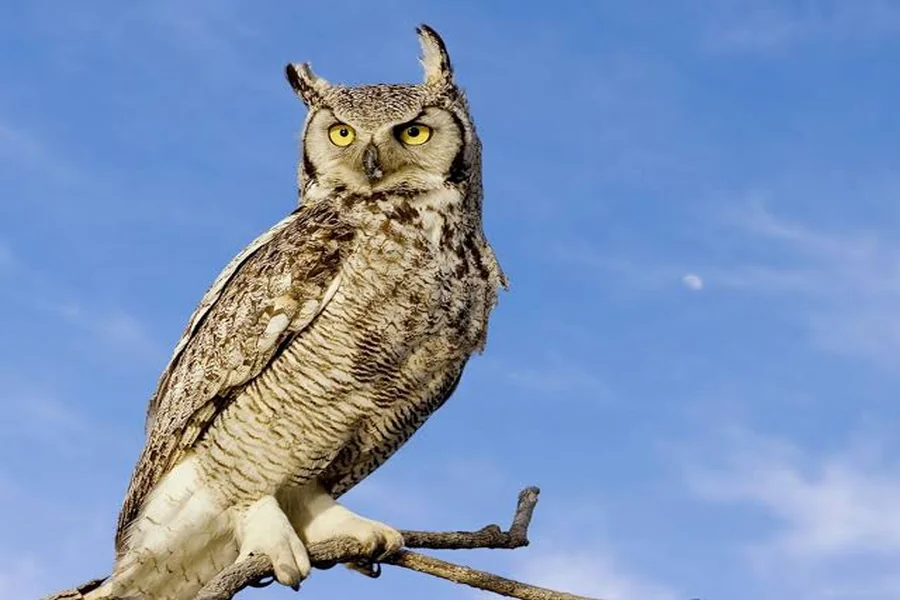
Great horned owls live in forests across North and South America. They also use deserts and city parks. This owl hunts at night. It sits on a branch and listens for movement below. Then it glides down without a sound. Soft edges on its feathers muffle the noise of its wings. The owl eats rabbits, mice, birds and even skunks. It has a weak sense of smell. So the skunk spray bothers it little. A great horned owl has a wingspan of up to 1.5 meters. Its talons lock onto prey. The two tufts on its head are feathers. They are not ears. The real ears sit on the sides of the head. Fun fact: this owl can turn its head about 270 degrees. Its eyes are fixed in place so it turns the whole head. It starts nesting in winter. The female lays eggs in old nests built by hawks or crows. A deep hoot marks its territory at dusk.
Orangutan
Scientific Name: Pongo pygmaeus
Class: Mammalia
Diet: Frugivore
Orangutans live in the rainforests of Borneo and Sumatra. The name comes from Malay and means person of the forest. These apes spend most of their lives in the trees. They have arms that span up to two meters. This helps them reach from branch to branch. Fruit is their main food. They eat figs and durian. They also eat leaves, bark and insects. Fruit supply changes with the season. So orangutans travel to find ripe trees. Each night an orangutan builds a fresh nest from branches. It bends leafy twigs into a platform and sleeps on it. Adults live mostly alone. Mothers raise their young for up to eight years. That is a long time for any ape. Males grow wide cheek pads as they mature. A male can weigh around 80 kilograms. Fun fact: orangutans use leaves as umbrellas. Forest clearing for farms is the biggest danger. All three species are critically endangered.
Forest Animals at a Glance
| Animal | Main Habitat | Region | Diet |
| Gray Wolf | Boreal and mixed forest | North America, Europe, Asia | Carnivore |
| American Black Bear | Mixed and conifer forest | North America | Omnivore |
| Bengal Tiger | Tropical and mangrove forest | South Asia | Carnivore |
| Red Panda | Mountain bamboo forest | Eastern Himalayas | Herbivore |
| Jaguar | Rainforest and swamp forest | Central and South America | Carnivore |
| Moose | Boreal forest | North America, Europe, Russia | Herbivore |
| Western Gorilla | Lowland rainforest | Central Africa | Herbivore |
| Three-Toed Sloth | Tropical rainforest canopy | Central and South America | Herbivore |
| Great Horned Owl | Mixed forest and woodland | The Americas | Carnivore |
| Orangutan | Tropical rainforest | Borneo and Sumatra | Frugivore |
Why Animals That Live in Forests Matter
Forest animals keep forests healthy. They spread seeds, control pests, pollinate plants and balance food chains. Without them, forests slowly lose trees and the species that depend on them.
1. They Spread Seeds
Many trees cannot move. They rely on animals to carry their seeds. Orangutans, cassowaries, toucans and elephants eat fruit and drop the seeds far from the parent tree. This is how new trees grow across a forest.
2. They Keep Prey Numbers in Check
Predators stop one species from taking over. Wolves keep deer numbers down. Tigers and jaguars do the same in warm forests. When deer eat fewer young trees, the forest can renew itself.
3. They Pollinate Plants
Bees, bats, birds and butterflies move pollen between flowers. Many forest plants cannot make fruit without them. That fruit then feeds other animals.
4. They Control Pests
Owls eat rodents. Pangolins eat ants and termites. Frogs and birds eat insects. This limits damage to trees and nearby farms.
5. They Feed the Soil
Animals return nutrients to the ground through waste and leftover food. Wild boars turn over the soil as they dig for roots. Dung beetles bury waste and mix it into the earth. Both help plants grow.
6. They Help Store Carbon
Forest elephants prefer to eat small, fast-growing trees. That leaves more space for large, dense trees that store more carbon. Researchers link this to higher carbon storage in Central African forests.
7. They Signal Forest Health
Some animals react fast to change. Frogs and owls are good examples. When their numbers drop, it often points to pollution or habitat loss. Scientists use this as an early warning.
8. They Support People
Millions of people live near forests. Wildlife brings tourism and jobs. Forests also provide food, clean water and medicine. Healthy animal populations help keep those benefits in place.
What Happens When They Disappear
Losing one species can affect many others. Without these large seed spreaders trees can’t be spread. Predators, when gone, grazers can overconsume young plants. Forest thinnings and thinning of diversity over time. With forest animals, the whole system is protected.
More Animals That Live in Forests
- Red Fox (Vulpes vulpes, Mammalia, Omnivore): Lives in forests across North America, Europe and Asia. It hunts mice and voles by pouncing from above. Its bushy tail keeps it warm in winter.
- White-Tailed Deer (Odocoileus virginianus, Mammalia, Herbivore): Common in forests across North and Central America. It raises its white tail when it senses danger. The flash warns other deer to run.
- Eurasian Lynx (Lynx lynx, Mammalia, Carnivore): Lives in northern forests of Europe and Asia. It hunts roe deer and hares at dusk. Tufts on its ears may help it hear better.
- Chimpanzee (Pan troglodytes, Mammalia, Omnivore): Lives in the forests of West and Central Africa. It uses sticks to pull termites out of mounds. Groups can have more than 50 members.
- Okapi (Okapia johnstoni, Mammalia, Herbivore): Found only in the rainforests of the Democratic Republic of the Congo. It is a close relative of the giraffe. Its tongue is long enough to clean its own ears.
- Giant Panda (Ailuropoda melanoleuca, Mammalia, Herbivore): Lives in the bamboo forests of central China. It eats 12 to 38 kilograms of bamboo a day. Cubs weigh only about 100 grams at birth.
- Wild Boar (Sus scrofa, Mammalia, Omnivore): Lives in forests across Europe, Asia and North Africa. It digs up roots and acorns with its snout. Females and young move in groups called sounders.
- Cassowary (Casuarius casuarius, Aves, Frugivore): Lives in the rainforests of northern Australia and New Guinea. It cannot fly but can run about 50 kilometers per hour. It spreads seeds across the forest floor.
- Keel-Billed Toucan (Ramphastos sulfuratus, Aves, Omnivore): Lives in the rainforests of Central America. Its large bill is hollow and light. It eats fruit and sometimes insects or eggs.
- Sun Bear (Helarctos malayanus, Mammalia, Omnivore): Lives in the tropical forests of Southeast Asia. It is the smallest bear in the world. Its long tongue reaches into hives for honey.
- African Forest Elephant (Loxodonta cyclotis, Mammalia, Herbivore): Lives in the rainforests of Central and West Africa. It is smaller than the savanna elephant. It moves seeds over long distances and helps new trees grow.
- Poison Dart Frog (Dendrobatidae, Amphibia, Insectivore): Lives on the floor of rainforests in Central and South America. Bright skin warns predators to stay away. Its toxins come from the insects it eats.
Final Thoughts
Forest animals that live in forests have found many ways to live among the trees. Wolves hunt together in packs. By moving slowly, sloths conserve energy. Orangutans make a bed each night. These are their habits, but they all need what. They require a healthy forest. Each year this space is lost because of logging and farm clearing. Forests are important to the survival of every animal on this list. It’s good to know a little about them.
FAQs:
What animals that live in forests?
Wolves, bears, tigers, red pandas, jaguars, moose, gorillas, sloths, owls and orangutans all live in forests. The species depend on the region. Cold forests hold wolves and moose. Tropical forests hold jaguars, sloths and orangutans.
Why do animals live in forests?
Forests give animals food, shelter and cover. Trees offer fruit, leaves and insects. Branches and dens protect them from weather and predators. Streams and shade also keep them cool.
What is the biggest animal that lives in a forest?
It depends on the forest. The African forest elephant is the largest forest animal. In northern forests the moose is the largest. It is the biggest deer on Earth.
What do forest animals eat?
Diets vary by species. Gorillas and sloths eat leaves. Orangutans eat fruit. Wolves and tigers eat meat. Bears and many birds eat a mix of plants and animals.
Which forest animals live in trees?
Sloths, orangutans and red pandas spend most of their lives in trees. Black bears and jaguars climb them often. Owls roost and nest in them.
Are forest animals in danger?
Many are. Habitat loss is the main cause. Red pandas, western gorillas and orangutans face the highest risk. Hunting and disease add pressure for some species.