Animals That Live in Deserts: 12 Survivors That Beat the Heat in Ways You Won’t Expect
Animals that live in deserts survive extreme heat, dry air and very little water. They burrow, hunt at night, and they put on fat and make their bodies tricksy, so that nothing goes down the drain. Here are the answers to 12 of them. You will learn where each of them lives, what they eat and one thing you will remember.
Earth’s surface is approximately 1/5 desert. Others are hot and sandy. There are also rocks and cold nights. Life goes on here. Meet the animals that make it work!
List of Animals That Live in Deserts
Below is the list of desert animals covered in this guide:
| No. | Animal | Class | Diet | Main Desert Region |
| 1 | Dromedary Camel | Mammalia | Herbivore | Sahara, Arabian Peninsula |
| 2 | Fennec Fox | Mammalia | Omnivore | Sahara, Sinai |
| 3 | Sidewinder | Reptilia | Carnivore | Mojave, Sonoran |
| 4 | Thorny Devil | Reptilia | Insectivore | Central Australia |
| 5 | Desert Tortoise | Reptilia | Herbivore | Mojave |
| 6 | Kangaroo Rat | Mammalia | Herbivore | Western North America |
| 7 | Gila Monster | Reptilia | Carnivore | Sonoran, Mojave |
| 8 | Arabian Oryx | Mammalia | Herbivore | Arabian Peninsula |
| 9 | Greater Roadrunner | Aves | Omnivore | Southwestern US, Mexico |
| 10 | Deathstalker Scorpion | Arachnida | Carnivore | North Africa, Middle East |
| 11 | Jerboa | Mammalia | Omnivore | North Africa, Asia |
| 12 | Addax | Mammalia | Herbivore | Sahara |
Detailed Look at the Animals That Live in Deserts
Dromedary Camel
Scientific Name: Camelus dromedarius
Class: Mammalia
Diet: Herbivore
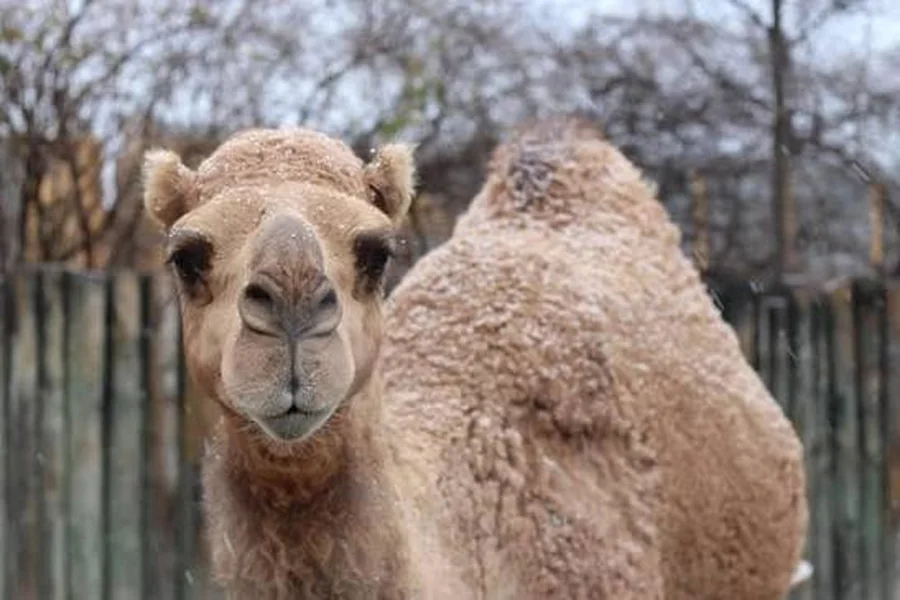
The dromedary is the animal most people picture first in a desert. It is found throughout the Sahara, Arabian Peninsula and Horn of Africa and has one hump. This is where the mistake lies. The hump does not contain water, it contains fat. When food is scarce, that fat provides energy for the camel to survive. Water is also conserved in other ways. If a camel loses ¼ of its weight in fluid, it continues to walk. It then consumes more than a hundred litres of water in about 15 minutes. Its blood cells retain their oval shape and, in the absence of water, the blood continues to flow. Sand is prevented from entering by long lashes and closing nostrils. Wide pads distribute weight not to sink in loose dunes. Camels feed on thorny bushes and on dry grass that most animals do not eat. They can also go for weeks without drinking when they are fresh plants. Did you know, a camel can fluctuate his body temperature by approximately 6℃ in one day! That spares the water that would drop out of their pores.
Fennec Fox
Scientific Name: Vulpes zerda
Class: Mammalia
Diet: Omnivore
The fennec fox is the smallest fox on Earth. A grown man weighs just about a kilogram. It is found in the Sinai Peninsula, in the Sahara, and it burrows in sand dunes. The big clue are those ears! They can grow as long as 15 cm. They conduct heat out of the body and aid the fox in locating movement of insects beneath the ground. Fennecs hunt at night when it is cooler. They feed on insect, small rodents, eggs and plant roots. Their feet are thick and furred to protect them from the hot sand and to allow them to run on loose ground. They conserve water and do not drink water often. They consume most of the moisture in food. These are family groups that have a burrow system with several entrances. The den is guarded by the males and the female is responsible for the nursing of the pups. This makes them fast getting out of trouble if it arises. Did you know: Fennec can jump straight up 70cm (2.3m). This is a useful tool to have near an owl or a jackal.
Sidewinder
Scientific Name: Crotalus cerastes
Class: Reptilia
Diet: Carnivore
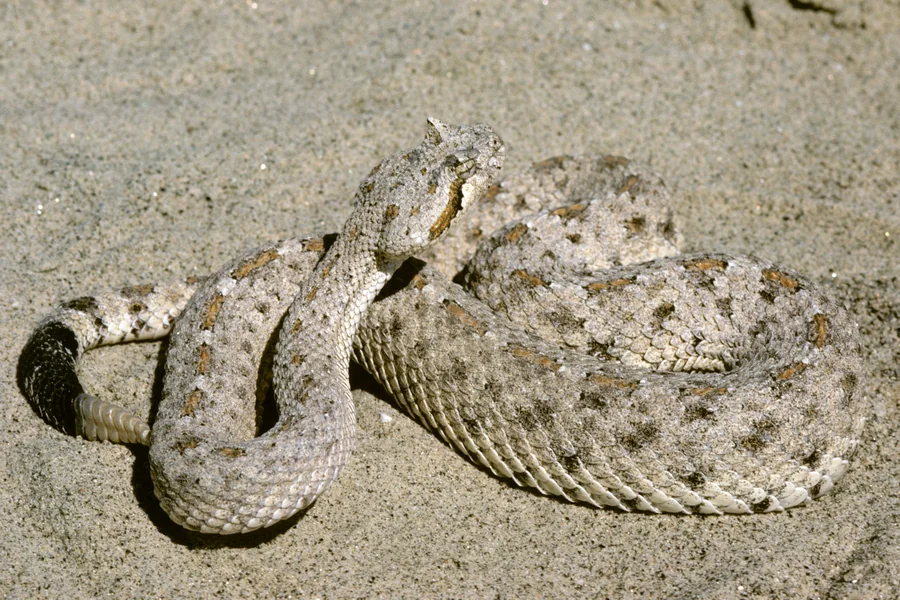
The sidewinder moves in a way no other desert snake can match. It swims its body side to side in loops and leaves J-shaped tracks in the sand. At any one time, only the two points of the body that connect to the ground touch the ground. This helps to keep it cool on hot dunes and prevents it from slipping. This small rattlesnake inhabits the Mojave and Sonoran deserts in the South Western United States and North Western Mexico. The adults grow to approximately 60 cm. There are small scales that look like horns above each eye. They help to protect its eyes from glaring sunlight and help to prevent sand from entering when the snake buries itself. Sidewinders are mostly active at night during the summer months. They lie semi-buried and await the coming of a mouse or lizard. Then they go on the attack. They have heat-sensing pits on their face that enable them to locate prey in the dark. They spend the day in burrows of rats or underneath bushes. Did you know young sidewinders are born live? A litter can hold up to 18 babies.
Thorny Devil
Scientific Name: Moloch horridus
Class: Reptilia
Diet: Insectivore
The thorny devil looks like a tiny dragon. It is not much longer than 20 cm and has sharp spikes. It is a species of the sandy deserts of central Australia. Those spikes have two purposes. They frighten away predators, they also gather water. Capillary action absorbs moisture from dew or wet sand between the scales. The water then flows to the corners of the mouth. The lizard needs to come into contact with a moist surface to get water. Its diet is narrow. Feeds on ants and virtually nothing else. A single thorny devil eats as many as 750 ants in one sitting! It sucks them up, one-by-one, with its sticky tongue. A fake head is placed on the back of the neck. The lizard tucks its actual head down and presents the bump when it is faced with a threat. Predators go for the wrong end. Interesting note: It moves slowly rocking, like a toy winding down.
Desert Tortoise
Scientific Name: Gopherus agassizii
Class: Reptilia
Diet: Herbivore
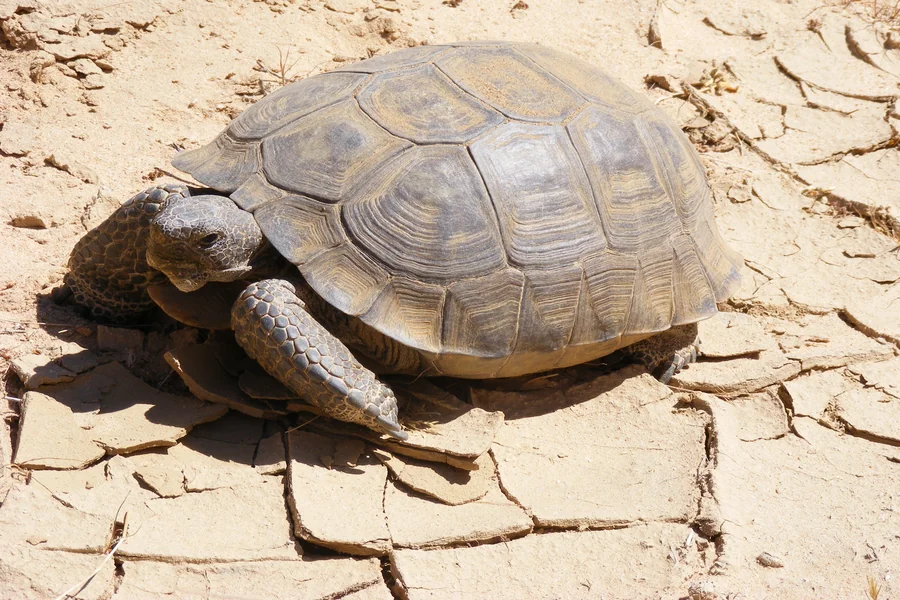
The desert tortoise spends most of its life underground. Some studies indicate that it spends roughly 95% of its life within a burrow. That way it prevents ground heating of 50°C or higher. This tortoise is found in the Mojave Desert in California, Nevada, Utah and Arizona. Creepage ability is good, it makes its own shelter using strong front legs. Some burrows are quite long – several meters. Food is primarily grasses, wildflowers and cactus pads. The tortoise consumes more after the rain in the spring, and stores water in his bladder. That will help it to hold up during dry periods. It may lose a significant proportion of its body weight and recover. During rainy seasons it sucks water from small depressions (banks) it has created. A desert tortoise can live for 50-80 years. Eggs are deposited in sandy soil and the sun takes care of the rest. The male and female babies are determined by temperature in the nest. Sadly the species is now threatened. The primary reasons are roads and habitat loss.
Kangaroo Rat
Scientific Name: Dipodomys
Class: Mammalia
Diet: Herbivore
The kangaroo rat almost never drinks. It is a desert animal that comes from western North America and obtains its water from the dry seeds it consumes. It also excretes water as they are consumed. It’s up to the kidneys to do the rest. They excrete more urine that is thicker than human urine. When each breath passes through the nasal passages it picks up moisture and does not pass out. This little rodent has long hind legs and a long tail. It bounces on two legs similar to a small kangaroo. A single jump can cover several feet. This is to avoid snakes and owls. It is a protected burrow by day, which remains cooler and more humid. During the night it collects seeds in its cheek pouches and carries them back to its nest. It stores the seeds in tunnels for later. Did you know it will drum its back feet on the ground to warn away rivals. The drumming may also be a warning to adjacent burrows, some scientists believe. A snake may even attempt to ‘fight back’ by kicking sand in its face.
Gila Monster
Scientific Name: Heloderma suspectum
Class: Reptilia
Diet: Carnivore
The Gila monster is one of the few venomous lizards in the world. It is a resident of the Sonoran and Mojave deserts of the southwestern United States and northwestern Mexico. The adults grow to be approximately 50cm long. They are large and slow. That is because most of its food cannot run away. The lizard eats bird eggs, nestlings and small mammals. In one meal it consumes 1/3 of its body weight. The glands in the lower jaw produce venom. It does not sting it into the body as a snake does. It bites and chews to get the venom in the wound. The blow was quite painful. Deaths in healthy adults are very rare. Extra fat in the tail will provide the animal with months of low food intake. Gila monsters live in burrows or underneath rocks for approximately 95% of their time. Did you know: pink and black scales are a warning to predators. Saliva contains a protein that is used to produce a drug used to treat type 2 diabetes.
Arabian Oryx
Scientific Name: Oryx leucoryx
Class: Mammalia
Diet: Herbivore
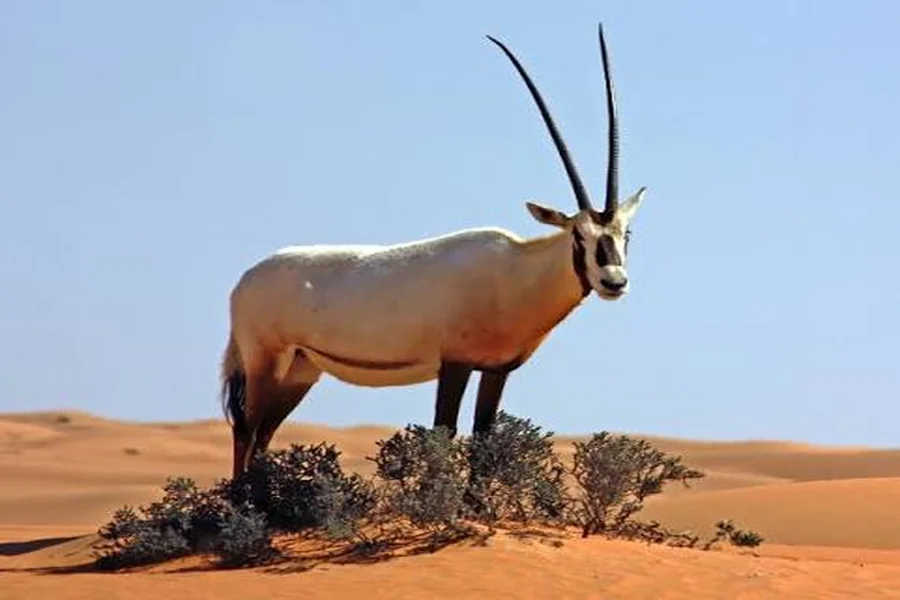
The Arabian oryx is a desert antelope with a pale coat and two long straight horns. It inhabits the Arabian peninsula in gravel plains and sand dunes. It was eliminated from the wild by hunting in the early 1970s. Small herds were maintained in zoos and breeding programmes. Groups have been released further south in Oman, Saudi Arabia, Jordan and the UAE, later. Today, wild herds are back and this species is classified as Vulnerable. Groups of as many as 30 follow a lead female. It’s hard to find water at home. Thus the oryx goes along with the rain. Many herders believe it is able to detect storms from afar and could walk to storms. Feeds on grasses, forbs and shrubs and derives its water from plants. It also sucks up dew from leaves in the early morning. The light-colored fur helps reflect the sun. It has a wide hoof that prevents it from sinking in soft sand. Note: from the side, the two horns resemble a single horn. That could be the origin of the unicorn tale.
Greater Roadrunner
Scientific Name: Geococcyx californianus
Class: Aves
Diet: Omnivore
The greater roadrunner is a bird that prefers to run. Ground speed is approximately 20 mph. It is found in deserts of north Mexico and southwest United States. Its long legs and long tail assist it in moving quickly. It can fly but only for short hops. It eats insects, lizards, scorpions, small snakes and seeds. Yes! It even kills rattlesnakes! It bites the snake at the back of the head. It then throws the snake on a rock to stop it. At night, it can lower its body temperature as cold deserts do. It turns its back feathers upward, and faces the sun in the morning. Dark skin on its back soaks up the warmth. In addition, it breeds in low shrubs or cacti, and produces up to six eggs. Fun fact: it eliminates extra salt via a gland near to the eye. That saves water. The two front and two back toes leave an X-shaped impression on the ground.
Deathstalker Scorpion
Scientific Name: Leiurus quinquestriatus
Class: Arachnida
Diet: Carnivore
The deathstalker is one of the most feared scorpions on Earth. It is found in deserts and dry scrub of North Africa and Middle East. Adults are approximately 10 centimetres in length. It is light yellow in colour so it camouflages into sand. It has a potent venom and a sting can be harmful to children and ill adults. With medical treatment, most healthy adults can get better. Scorpion goes hunting while it is dark. Uses its legs to feel vibrations in the sand. If prey approaches it will seize it using its pincers. Typically targets are small insects and spiders. The bigger the prey size the more the sting hurts. By day the deathstalker hides in burrows or under rocks. Is capable of surviving for many months without food. This is very much appreciated in a land where food is scarce. Young are carried on their mother’s back. Fun fact: under ultraviolet light its body glows blue green. That’s still a mystery. The researchers also are working on a protein in its venom that they are studying for cancer imaging.
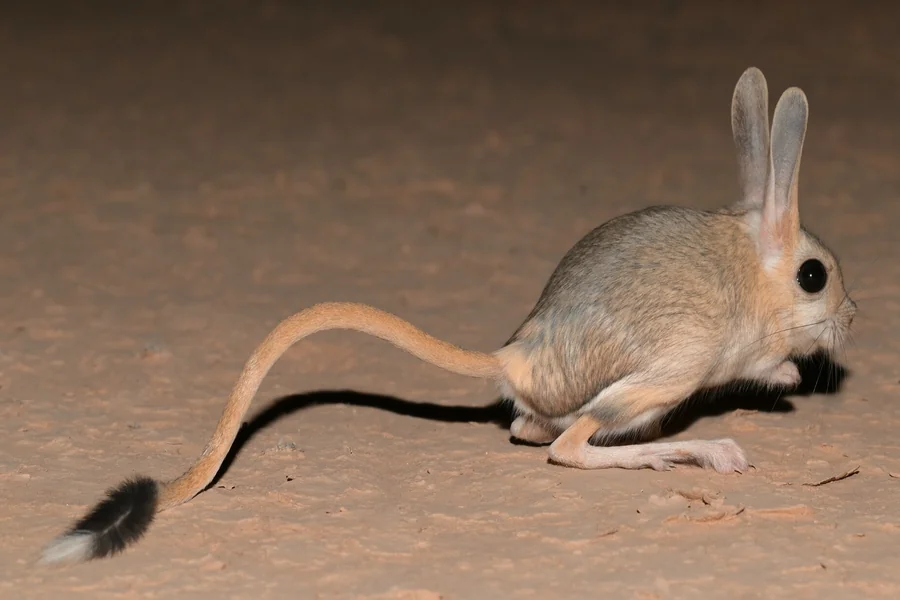
Jerboa
Scientific Name: Jaculus jaculus (Egyptian jerboa)
Class: Mammalia
Diet: Omnivore
The jerboa looks like a mouse on stilts. Very long legs in the rear, and very small front legs. It hopps about on two legs. The distance of one hop is approximately 3 meters. The Egyptian jerboa is found in the deserts of North Africa and the Middle East. Other species inhabit the central part of Asia. The long tail is finished with a tuft of fur. It is similar to a rudder and helps to maintain the animal’s balance while it is in the air. The tail also assists it to remain upright when landing. Jerboas are nocturnal feeders, eating seed, root and insects. They have large eyes and ears so that they can see danger in the dark. The day is a day for sleep. To keep heat and predators out of the burrow, they seal the burrow entrance with sand. They obtain water through food, and rarely drink water. Predators include owls, foxes and snakes. Young jerboas remain in the burrow until they are good at hopping. Did you know? Ears of some species can be almost as long as the head.
Addax
Scientific Name: Addax nasomaculatus
Class: Mammalia
Diet: Herbivore
The addax is one of the rarest antelopes on Earth. Less than 100 are thought to be left in the wild. They are found in a few isolated locations in the Sahara and are on the Red List as Critically Endangered. It has reached this state because of hunting and habitat disturbance. The males develop spiral horns up to 1 m long. It is gray-brown in winter, and white in summer. That adjustment aids in reflecting heat. Wide flat hooves are similar to snowshoes on soft dunes. This antelope is a desert grass eater and shrub eater. The water source for it is primarily from the plant and from morning dew. Can last months without water. Addax move about at night and spend their day in shade under dunes. After rain they look for new leaves and new growth for long distances. Interesting note: It got its name due to its spotted nose. Young herds have been released back into the wild in Tunisia and Chad. Zoos and reserves are helping to save the species.
More Animals That Live in Deserts (Quick List)
These 12 animals were not in the first list. Each entry has a short description you can use as a quick-read section or expand later.
- Sand Cat (Felis margarita)
Class: Mammalia | Diet: Carnivore
A small wild cat of the Sahara, Arabia and Central Asia. Thick fur on its paws blocks hot sand. It hunts rodents and snakes at night and rarely needs to drink. - Desert Bighorn Sheep (Ovis canadensis nelsoni)
Class: Mammalia | Diet: Herbivore
Lives on rocky slopes in the Mojave and Sonoran deserts. It climbs steep cliffs with ease and can go several days without water. - Dorcas Gazelle (Gazella dorcas)
Class: Mammalia | Diet: Herbivore
A small gazelle found across the Sahara and parts of Arabia. It gets most of its water from leaves and dew. It runs fast to escape predators. - Camel Spider (Solifugae)
Class: Arachnida | Diet: Carnivore
Not a true spider or a scorpion. It has large jaws and hunts insects and small lizards at night. It hides under rocks during the day. - Horned Viper (Cerastes cerastes)
Class: Reptilia | Diet: Carnivore
A venomous snake of the Sahara and Arabian deserts. It buries itself in sand and waits for prey. Like the sidewinder it moves sideways across dunes. - Desert Monitor (Varanus griseus)
Class: Reptilia | Diet: Carnivore
A large lizard that reaches about one meter. It ranges from North Africa to Central Asia. It eats rodents, reptiles and eggs. - Ostrich (Struthio camelus)
Class: Aves | Diet: Omnivore
The largest bird on Earth and a fast runner on dry plains and desert edges in Africa. It eats plants, seeds and insects and can go long periods without drinking. - Meerkat (Suricata suricatta)
Class: Mammalia | Diet: Omnivore
Lives in the Kalahari Desert in groups called mobs. One member stands guard while the others dig for insects. They share burrows to stay cool. - Coyote (Canis latrans)
Class: Mammalia | Diet: Omnivore
A flexible hunter that lives in North American deserts. It eats rodents, rabbits, fruit and carrion. It usually hunts at dawn and dusk to avoid the heat. - Black-Tailed Jackrabbit (Lepus californicus)
Class: Mammalia | Diet: Herbivore
A hare with very long ears. The ears release body heat through blood vessels near the surface. It lives in the Mojave and Sonoran deserts. - Namib Desert Beetle (Stenocara gracilipes)
Class: Insecta | Diet: Detritivore
Drinks fog. It leans into the morning wind and water droplets form on its back and roll to its mouth. It lives in the Namib Desert. - Bactrian Camel (Camelus bactrianus)
Class: Mammalia | Diet: Herbivore
A two-humped camel from the Gobi Desert. It handles hot summers and freezing winters. It grows a thick coat in winter and sheds it in spring.
Why Animals That Live in Deserts Matter
Animals that live in deserts matter because they keep dry ecosystems working. They spread seeds, control pests, dig shelter for other species and give scientists clues about climate change. Many also inspire new medicine and technology.
Deserts look empty from far away. They are not. Each animal has a job, and when one disappears the effects spread.
1. They Keep the Food Chain Running
Deserts have little plant life. So every link in the chain counts. Seeds feed rodents. Rodents feed snakes, owls and foxes. Those predators keep rodent numbers in check. Remove one link and the rest feel it.
2. They Spread Seeds and Move Soil
Kangaroo rats store seeds in tunnels and forget some of them. Those seeds sprout. Burrowing animals also loosen hard ground. Water soaks in more easily and plants get a better start.
3. They Build Shelter for Other Species
A desert tortoise burrow is not only for the tortoise. Lizards, snakes, insects and small mammals use old burrows to escape the heat. One digger can support many neighbors.
4. They Control Pests
Scorpions, lizards and roadrunners eat insects and rodents. Thorny devils eat ants. This keeps those numbers balanced and protects plants.
5. They Warn Us About Climate Change
Desert animals live close to their limits. A small rise in heat or a longer dry spell hits them first. Scientists track their numbers and range to see how fast conditions are changing.
6. They Inspire Medicine and Technology
- Gila monster: a protein in its saliva led to a drug that treats type 2 diabetes.
- Deathstalker scorpion: a protein in its venom is being studied for cancer imaging.
- Namib Desert beetle: its back collects fog. Engineers study it to design water-harvesting surfaces.
- Thorny devil: its skin moves water without effort. Researchers look at it for new materials.
7. They Support People
Camels carry loads, give milk and have helped people cross deserts for thousands of years. Many desert communities depend on animals for food, transport and income.
Quick Summary Table
| Role | Example Animal | Why It Matters |
| Seed spreader | Kangaroo Rat | Helps desert plants grow |
| Shelter builder | Desert Tortoise | Burrows protect other species |
| Pest control | Roadrunner, Scorpion | Keeps insects and rodents balanced |
| Climate signal | Addax, Arabian Oryx | Numbers show how dry habitat is changing |
| Medical clue | Gila Monster | Led to a diabetes drug |
| Human partner | Dromedary Camel | Transport and milk |
Why It Matters Right Now
Several desert species are in trouble. The addax is critically endangered. The desert tortoise is threatened. Roads, hunting and habitat loss are the main causes. Protecting these animals protects the whole desert with them.
Final Thoughts
Desert life is hard. Still, these 12 animals that live in deserts thrive there. Some store fat. Others pull water from seeds or dew. Many hide underground until the sun drops. Each trick solves the same problem: how to live with less water and more heat. Several of these species now face real threats from hunting, roads and lost habitat. Learning how they live is a good first step toward protecting them. Share this guide with someone who loves wildlife. Then pick your favorite and look it up next.
FAQs:
What animals live in the desert?
Camels, fennec foxes, sidewinders, thorny devils, kangaroo rats, scorpions and roadrunners all live in deserts. They cope with heat by hiding in burrows, hunting at night and saving water inside their bodies.
How do desert animals survive without water?
Most get moisture from food such as seeds, insects and plants. Many rest underground by day. Some have kidneys that make very thick urine so they lose less water.
Which desert animal never needs to drink?
The kangaroo rat is the best-known example. It gets water from dry seeds and from the way its body breaks them down.
Do camels store water in their humps?
No. The hump stores fat. Camels hold water in their body tissues and can drink over 100 liters in minutes.
Which desert animals are active at night?
Fennec foxes, jerboas, sidewinders, kangaroo rats and scorpions hunt at night. Cooler air helps them save water and avoid the heat.