Animals That Live in Trees: 10 Species With a Life You Won’t Believe
Animals that live in trees climb, leap and sleep high above the ground. Some almost never come down. Others only visit the ground when they have to. This guide covers 10 of them. You will see what they eat and where they live. Each one also comes with a fact you will want to repeat.
What Does Arboreal Mean?
Arboreal means living in trees. Arboreal animals use branches for food, rest and safety. Most have a strong grip, long limbs or a tail that holds on. Tree life keeps them away from many ground predators. It also gives them easy access to fruit, leaves and insects.
List of Animals That Live in Trees
Here are the animals covered in this guide:
| Number of Animals | Names of Animals That Live in Trees |
| 1 | Brown-Throated Three-Toed Sloth |
| 2 | Bornean Orangutan |
| 3 | Koala |
| 4 | Tree Kangaroo |
| 5 | Chameleon |
| 6 | Green Tree Python |
| 7 | Red Panda |
| 8 | White-Handed Gibbon |
| 9 | Red-Eyed Tree Frog |
| 10 | Harpy Eagle |
Quick Facts Table
| Animal | Class | Diet | Main Region |
| Sloth | Mammalia | Herbivore | Central and South America |
| Orangutan | Mammalia | Omnivore | Borneo |
| Koala | Mammalia | Herbivore | Eastern Australia |
| Tree Kangaroo | Mammalia | Herbivore | New Guinea and Queensland |
| Chameleon | Reptilia | Insectivore | Africa and Madagascar |
| Green Tree Python | Reptilia | Carnivore | New Guinea and Cape York |
| Red Panda | Mammalia | Omnivore | Himalayas and southwest China |
| White-Handed Gibbon | Mammalia | Omnivore | Southeast Asia |
| Red-Eyed Tree Frog | Amphibia | Insectivore | Central America |
| Harpy Eagle | Aves | Carnivore | Central and South America |
What Helps Animals Stay Safe Up in the Trees?
Tree dwellers share a few key tools:
- Grip: curved claws, hooked hands or sticky toe pads
- Tails: some wrap around branches and some help with balance
- Camouflage: skin and fur that match leaves and bark
- Strong limbs: long arms for swinging and strong legs for leaping
- Light bodies: less weight means less risk on thin branches
Detailed Look at Animals That Live in Trees
Brown-Throated Three-Toed Sloth
Scientific Name: Bradypus variegatus
Class: Mammalia
Diet: Herbivore
Sloths spend almost their whole lives in trees. They eat, sleep and even give birth up there. The brown-throated 3-toed sloth inhabits the rain forests of Central and South America. It is rather slow to move because the leaves provide little energy. So it can save effort in any way possible. Tightly curved claws attach to branches and a sloth can hang upside down for hours. It has fur growing in the opposite direction from most animals – rain runs off its belly. In that fur, algae grow and tint it green, so that it can integrate with the leaves. Sloths come down to the ground about once a week to use the toilet. That is their most dangerous segment of their program, as they are prey to jaguars and harpy eagles. Interesting fact: A sloth can hold its breath for up to 40 minutes. It’s a good swimmer too. They can be found from Honduras to northern Argentina. Habitat: Rainforest, lowland and mountain.
Bornean Orangutan
Scientific Name: Pongo pygmaeus
Class: Mammalia
Diet: Omnivore
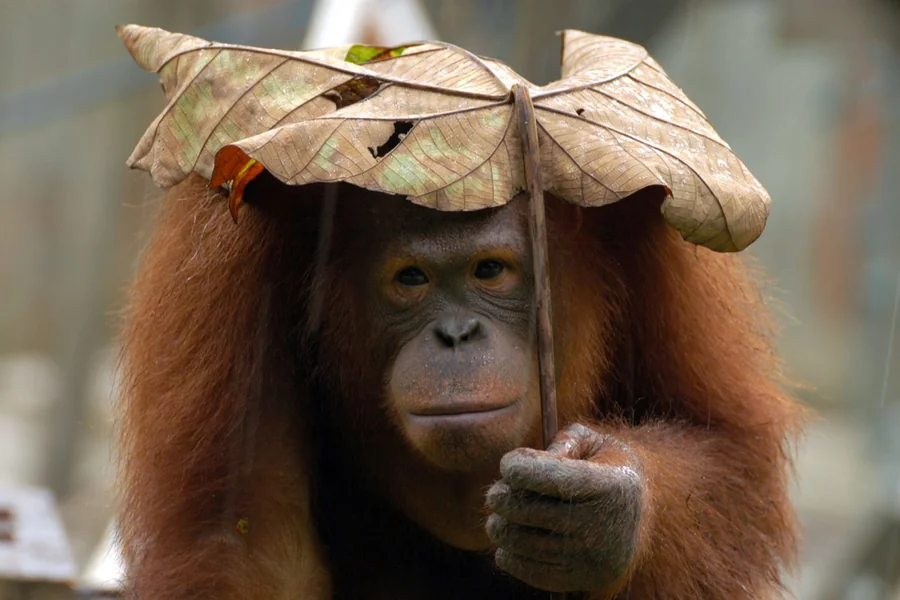
Orangutans are the largest mammals that spend most of their lives in trees. The orangutan is found in the rainforests in Borneo. It feeds primarily on fruit, but also on leaves, bark, insects and bird eggs. There’s a reason for that, figs are a favorite. An adult constructs a new nest of bent branches and leaves that is used every night. Only a few minutes will do. They do not easily come down since the canopy provides their food. They have arms that reach 2 metres in length from hand to hand. This reach enables them to travel slowly and safely from tree to tree. A baby remains with his or her mother until about seven or eight years of age. Orangutans use big leaves as umbrellas when it rains! They also fold leaves into gloves to deal with spines on fruit. Extremely vulnerable due to loss of forest and palm oil exploitation. Habitat map: the island of Borneo, mostly in Indonesia and Malaysia. The word ‘person of the forest’ is literal in Malay for them.
Koala
Scientific Name: Phascolarctos cinereus
Class: Mammalia
Diet: Herbivore
Koalas live in eucalyptus forests along the east and south coasts of Australia. They are not bears, they are marsupials. The koala is a leaf-eating animal. The leaves and the foliage are hard and unpalatable and are toxic. To conserve energy, so koalas sleep 18-22 hours a day. They are stilled in the wood’s fork and move little. They have sharp claws and rough paw pads that enable them to grip firmly. The fingerprints of the Koalas are also very similar to human fingerprints. Did you know that leaves are a koala’s favourite source of water. A home range of trees and frequent use of specific trees is characteristic of each koala. Males make loud bellows at night to mark their area. The sound is much deeper than you would expect from an animal that size. Habitat map: Eucalyptus woodland between Queensland and South Australia. The primary threats are habitat loss, disease and wildfires. Some parts of the range of Koalas are listed as endangered.
Tree Kangaroo
Scientific Name: Dendrolagus
Class: Mammalia
Diet: Herbivore
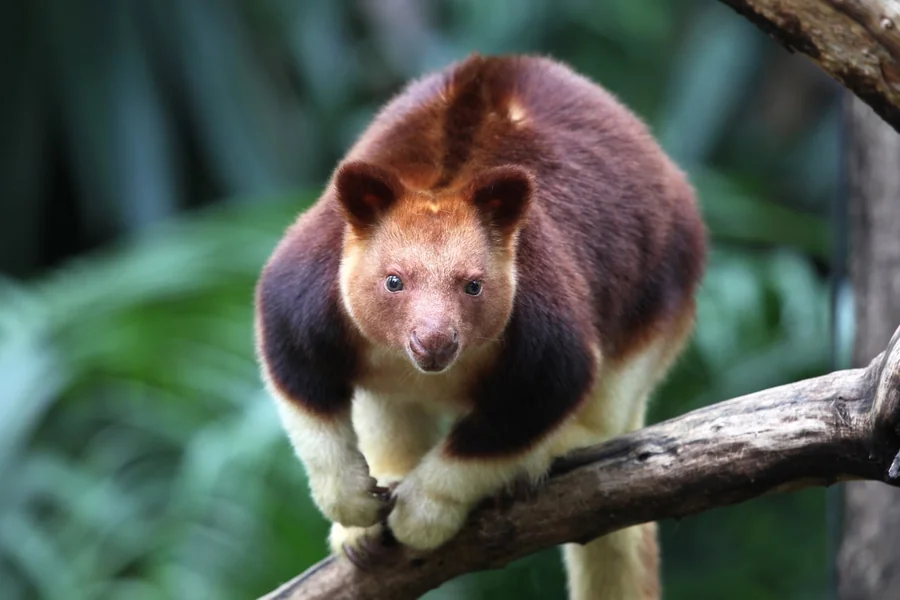
Most kangaroos live on the ground. Tree kangaroos don’t. They inhabit rainforests in New Guinea and north-east Australia. Their front legs are strong and their claws are curved. They have shorter hind legs than other kangaroos which allows them to climb. They have a long tail that assists them to balance on branches. Tree kangaroos feed on leaves, fruit, flowers and occasionally on the bark. Many feed at night, and hide during the day in the canopy. A tree kangaroo can jump from 18 m up. It is not harmed on landing. Did you know: A Joey remains in its mother’s pouch for several months. Most species are shy and live alone. Several species are close to extinction as a result of hunting and deforestation. Habitat map: mountain and lowland rainforest in New Guinea, with small areas of Queensland. One of the most famous is the tree kangaroo, which is known as Goodfellow’s. It is under threat in the wild and is the subject of zoo breeding programs. Radio collars are used to track them.
Chameleon
Scientific Name: Chamaeleonidae (family)
Class: Reptilia
Diet: Insectivore
Chameleons are slow climbers with a built-in grip. They have two toes on each foot which function as pincers. A tailored tail gives an extra hold. The majority of species are found in Africa and Madagascar, in the forests, woodlands and bushes. A chameleon is hiding on a branch waiting for an insect. Then in a split second its tongue springs out. Tongue may be longer than the body. The eyes are independent of each other and the animal can have two looks at once. Did you know that colour change isn’t primarily for camouflage. Chameleon change colour according to their mood, to signal other males and to regulate their temperature. When a female rejects a mate, she will often turn bright. A large number of species dig a hole in the soil where they lay their eggs. This is done by the female that descends from the tree. Madagascar has a large proportion of all species (habitat map). Today numerous have been endangered by forest clearance.
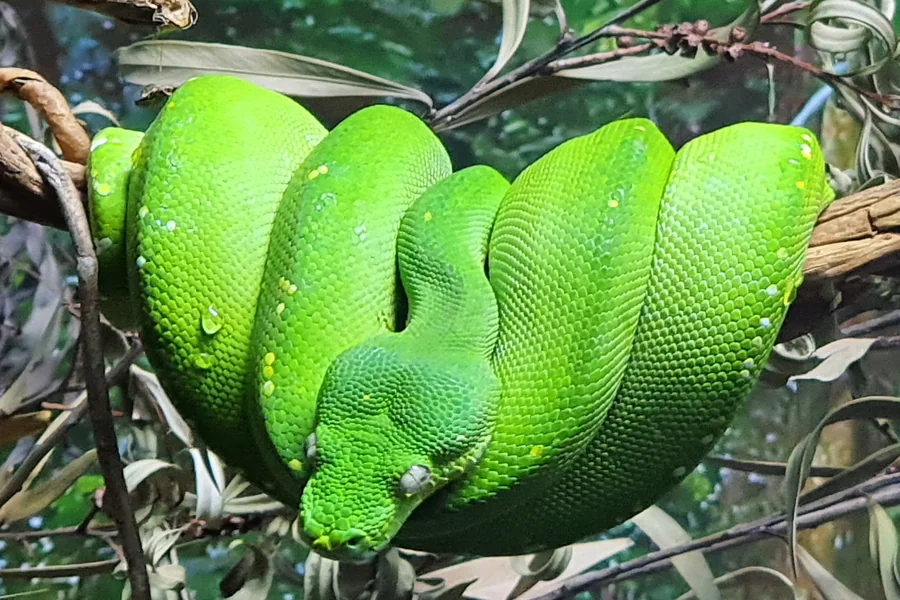
Green Tree Python
Scientific Name: Morelia viridis
Class: Reptilia
Diet: Carnivore
The green tree python looks like a coiled green rope on a branch. This inhabits rainforests of New Guinea, adjacent islands and Cape York, Australia. Lives almost entirely from the ground up. A snake is coiled in a loop around a branch with its head in the center. It waits for prey from there. Feeds on rodents, small marsupials and occasionally birds or lizards. The snake has long front teeth which catch its prey, and then the snake squeezes it. Has heat-sensing pits on its lips. Interesting: hatchlings are colored yellow or red. As they grow they take on a green hue, typically within the first year or two. The young snakes may move the end of the tail to entice the lizards. The adult is approximately 1.5 m in length. The females remain around their eggs until they hatch. Habitat map: lowland and mid-elevation rainforest. Wild groups were threatened by habitat loss and by being captured for the pet trade.
Red Panda
Scientific Name: Ailurus fulgens
Class: Mammalia
Diet: Omnivore
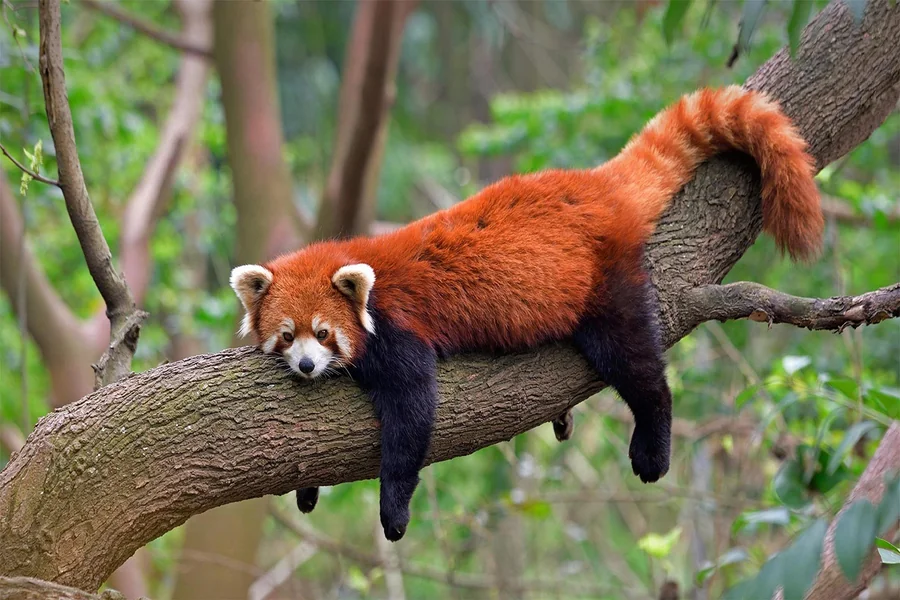
The red panda spends most of its life in trees. It lives in the mountain forests of the Himalayas and southwest China. Its diet is mostly bamboo leaves and shoots. It also eats fruit, acorns, eggs and insects. Bamboo gives little energy, so the red panda rests a lot. It naps on branches during the day and feeds at dawn and dusk. Its long bushy tail helps with balance. The tail also works as a blanket in cold weather. Semi-retractable claws and flexible ankles let it climb down trees head first. Few animals can do that. Fun fact: the red panda has a false thumb, which is an extended wrist bone that helps it hold bamboo. It is not related to the giant panda. Red pandas live alone, and they mark their area with scent. Habitat map: Nepal, India, Bhutan, Myanmar and China. It is listed as endangered because of forest loss and poaching.
White-Handed Gibbon
Scientific Name: Hylobates lar
Class: Mammalia
Diet: Omnivore
Gibbons move through the forest by swinging from branch to branch. This is known as swinging. The white-handed gibbon is found in the rainforests in Thailand, Malaysia and Sumatra. Has long arms and hooked hands. Capable of spanning distances of up to 15 m. Gibbons don’t have a tail! Eats primarily ripe fruit, as well as leaves, flowers and insects. Pairs roost together with their young and guard their territory. The pair will sing a loud duet every morning which can be heard more than 1 km away. Did you know that gibbons don’t usually walk on the ground. When they do, they stand straight and their arms are outstretched in their hands for balance. They drink by putting their hand in water or licking wet fur. Habitat map: tall lowland forest in Southeast Asia. The most severe threat is habitat loss and the white-handed gibbon is endangered. Apes are NOT monkeys, they are gibbons! Their young stay with the family for several years.
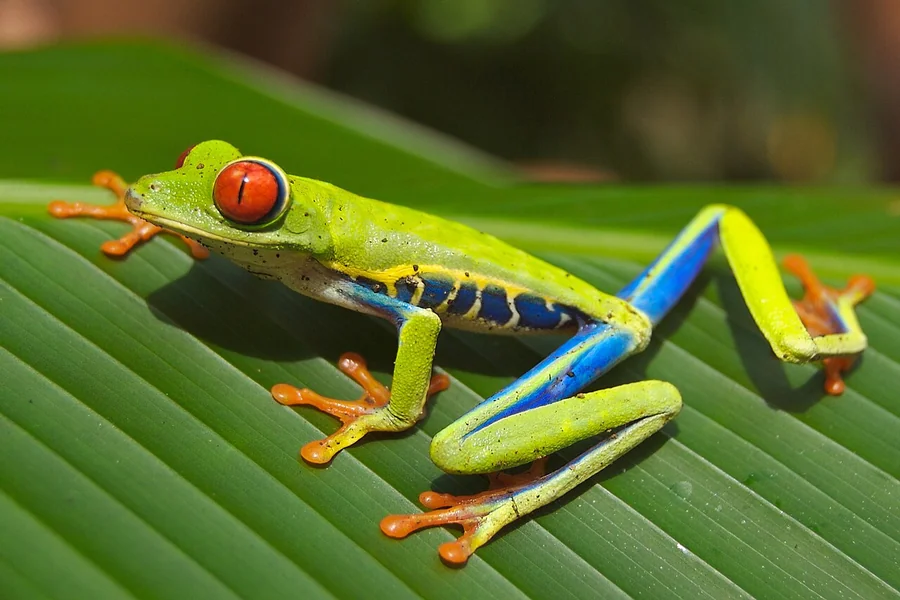
Red-Eyed Tree Frog
Scientific Name: Agalychnis callidryas
Class: Amphibia
Diet: Insectivore
The red-eyed tree frog lives in the rainforests of Central America. Remains in trees and shrubs around ponds and rivers. It has red eyes and a green colour that is easily recognized in pictures. Widely uncommon in the wild. The frog rests during the day with its legs folded and eyes shut. It has a green back that matches foliage. When it is awoken by a predator, the frog dilates its eyes. The red flash may cause a snake to startle and retreat far enough before the frog can get away. It is active at night and feeds on crickets, moths, flies and other insects. It has sticky toe pads which attach it to leaves and glass. Did you know that the female lays eggs on a water leaf above? The tadpoles will hatch and fall to the pond below. Eggs may even hatch prematurely if attacked by a snake or wasp. Range: Southern Mexico to Panama & into Colombia. Its species is not in high risk at the moment, but it’s forests are decreasing.
Harpy Eagle
Scientific Name: Harpia harpyja
Class: Aves
Diet: Carnivore
The harpy eagle is one of the largest eagles in the world. It inhabits a canopy of the rainforest in Central and Southern America. It builds a huge nest in a tall tree, often in a kapok or Brazil nut tree. Nests can be used repeatedly over several years by a pair. The harpy eagle hunts sloths, monkeys, opossums and large birds. It perches among trees and snatches its food from the branches. Its wide short wings enable it to maneuver around in the dense underbrush. The talons are nearly as long as grizzly bear claws. Did you know, that a female can weigh up to 9 kilograms! A male is smaller than the female. Most pairs produce one chick every 2-3 years. The chick remains close to the nest for a considerable period of time, being fed by the parents. Habitat map: from southern Mexico to northern Argentina. Nowadays, it is very scarce in many of these areas due to logging and hunting. Harpy eagle is near threatened.
Why Animals That Live in Trees Important
Animals that live in trees do more than live there. They help keep the forest itself alive. Here is why they matter.
1. They plant new trees
Many tree dwellers eat fruit. Seeds pass through their gut and land far from the parent tree. Orangutans, gibbons and spider monkeys do this all day. Without them, many forest trees would struggle to spread. Fewer new trees means a weaker forest.
2. They control insects
Chameleons and red-eyed tree frogs eat large numbers of insects. This keeps pest numbers in check. It also protects leaves and young shoots.
3. They keep predator and prey numbers balanced
The harpy eagle hunts sloths, monkeys and opossums. That limits how many of these animals the forest has to feed. Green tree pythons do the same job with rodents and small marsupials. When a top predator disappears, the balance shifts fast.
4. They move nutrients around
Sloths come down to the ground about once a week to use the toilet. Their droppings feed the soil near the tree base. Animals that feed in the canopy and drop waste on the forest floor move nutrients from high up to low down. This helps roots and fungi.
5. They feed other animals
Tree dwellers are food for eagles, big cats and snakes. Their eggs and young feed many other species. Remove them and the food chain loses a link.
6. They show how healthy a forest is
Tree frogs and gibbons need clean air, steady moisture and intact canopy. If their numbers fall, the forest is often under stress. Scientists use them as early warning signs.
7. They help fight climate change
Forests store carbon in large trees. Studies of tropical forests suggest that when big seed-eating animals vanish, slow-growing carbon-rich trees can decline. This can lower how much carbon the forest holds. So protecting orangutans and monkeys also helps protect the climate.
8. They support people
Tree dwellers bring in tourism money for local communities. Researchers also study them for medical and scientific ideas. Frog skin, for example, has been studied for compounds that could lead to new drugs.
The bigger picture
Tree animals and trees depend on each other. Trees give food and shelter. Animals spread seeds, control pests and cycle nutrients. When one side is lost, the other suffers. That is why forest protection and wildlife protection go together.
More Animals That Live in Trees
Here are 15 more animals that live in trees. They are not in the first batch.
- Spider Monkey (Ateles): Lives in Central and South America. Its tail grips branches like a fifth hand. It eats mostly fruit.
- Clouded Leopard (Neofelis nebulosa): A cat of Southeast Asia. Its ankles rotate, so it can hang upside down from a branch and climb down head first.
- Philippine Tarsier (Carlito syrichta): A small night hunter with huge eyes. It clings to trunks and leaps after insects. Each eye is about as large as its brain.
- Red Squirrel (Sciurus vulgaris): Lives in the conifer forests of Europe and Asia. It builds a leafy nest called a drey and stores nuts for winter.
- Southern Flying Squirrel (Glaucomys volans): Found in eastern North America. It does not fly. It glides from tree to tree on a skin flap and comes out at night.
- Sugar Glider (Petaurus breviceps): A small marsupial from Australia and New Guinea. It glides between trees and eats sap, nectar and insects.
- Margay (Leopardus wiedii): A small wild cat of Central and South America. It climbs well and can hang from a branch by one back foot.
- Kinkajou (Potos flavus): Also called the honey bear. It uses a long tongue to reach nectar and fruit at night. Its tail can hold on to branches.
- Binturong (Arctictis binturong): Lives in the forests of Southeast Asia. It has a gripping tail and a scent that smells like buttered popcorn.
- Proboscis Monkey (Nasalis larvatus): Found in the mangroves and riverside trees of Borneo. Males have a large nose. It also swims well.
- Howler Monkey (Alouatta): Lives in Central and South American forests. Its call can carry for several kilometers. It eats leaves and fruit.
- Emerald Tree Boa (Corallus caninus): A green snake of the Amazon. It rests in loops over a branch and strikes prey from above. Young snakes are red or orange.
- Slow Loris (Nycticebus): A slow night climber of Southeast Asia. It is one of the few mammals with a venomous bite.
- Tree Hyrax (Dendrohyrax): Lives in the forests of Africa. It stays in trees by day and gives loud screaming calls at night.
- Sun Bear (Helarctos malayanus): The smallest bear in the world. It climbs trees in Southeast Asia to eat honey, fruit and insects.
Final Thoughts
Animals that live in trees show how much life depends on the forest canopy. Up there, sloths conserve energy. It is used by the gibbons for swinging. It is in which harpy eagles hunt. They all have bodies designed for branches and each also has a role in maintaining forest health.
They spread seeds. They control insects. They are predators of other organisms. The forest feels it fast when they disappear. The best way to protect the trees is to protect them.
When you’re next under a canopy, check the sky. There may be someone spying on you.
FAQs:
Which animals live in trees?
Sloths, orangutans, koalas, gibbons, red pandas, tree kangaroos, chameleons, green tree pythons, tree frogs and harpy eagles all live in trees. Squirrels, monkeys and many birds do too.
What is an animal that lives in trees called?
An animal that lives in trees is called arboreal. The word comes from the Latin word for tree.
Which mammal spends the most time in trees?
The sloth is one of the best examples. It eats, sleeps and gives birth in the canopy. It comes down to the ground only about once a week.
Do koalas live in trees all the time?
Yes, mostly. Koalas eat, sleep and rest in eucalyptus trees. They come down to move to a new tree or to cross open ground.
What is the biggest animal that lives in trees?
The orangutan is the largest mammal that lives mostly in trees. Adult males can weigh over 70 kilograms.