Can You Befriend a Crow? Here’s What Actually Works
Maybe you’ve had a crow stare you down from a fence post and thought, what’s actually going on in that bird’s head? You’re not the only one wondering. People all over the place have pulled off genuine bonds with crows. Some get gifts left on their windowsill. Some have a regular visitor that shows up at the same hour every morning like clockwork. A few have crows that seem to pick them out of a crowd of strangers. None of this is a tall tale. It’s been studied, filmed, and written about for years, which is exactly why “can you befriend a crow” keeps showing up in search bars everywhere.
Can You Befriend a Crow?
Yes. Crows can absolutely become your friends, and you don’t need a degree in animal behavior to make it happen. They know human faces. They remember who fed them last week and who chased them off. Show up with food, stay calm, be patient, and a crow will start treating you like an ally instead of a threat.
That’s the quick version. There’s more to unpack though, because a lot of people try this and give up too soon, usually because they’re doing one small thing wrong.
Why Crows Aren’t Like Other Backyard Birds
Sparrows forget you exist the moment you walk off. Crows aren’t built that way.
They belong to the corvid family, right alongside ravens, magpies, and jays, and this whole group is known for something you don’t see much in the animal world: problem-solving that rivals a young kid’s. A team at the University of Washington ran tests years back and found crows hold onto memories of specific human faces for years, not weeks, not months. Years.
That’s the whole reason friendship is even possible here. A crow that remembers exactly which person handed it a peanut on a Tuesday is a bird that’s actually tracking you, not just reacting to whatever’s in front of it.
There’s a stranger part too. Crows talk to each other, in their own way. If one bird decides you’re safe, others nearby might catch on. Unfortunately it cuts both directions. Scare one crow off badly enough and word seems to spread through the local flock, and suddenly none of them trust you.
How to Befriend a Crow, Step by Step
Okay, here’s the part you clicked for.
Pick a Spot and Don’t Change It
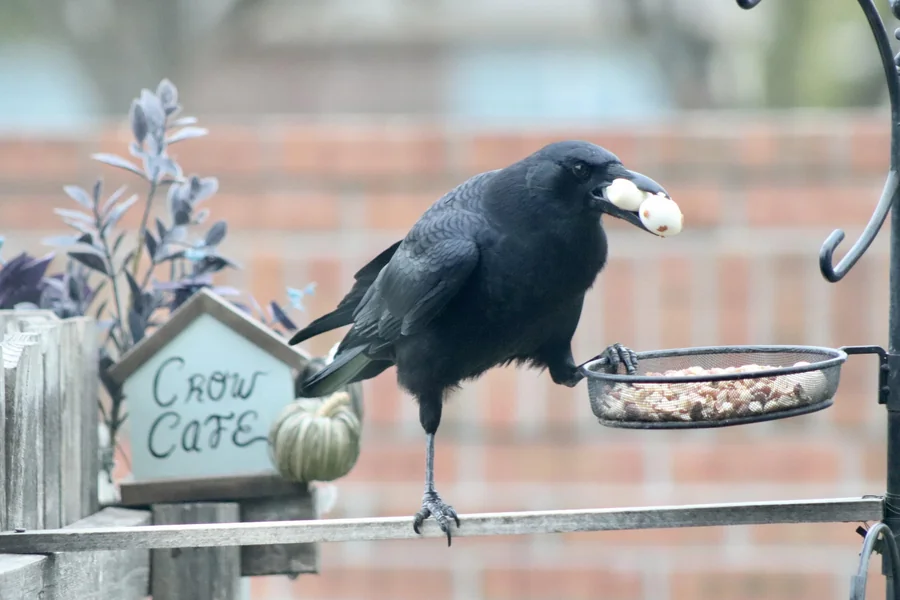
Crows like routine more than almost anything. Choose one place, a windowsill, a fence rail, a corner of the yard, and put food there at roughly the same time every day. The repetition is what actually gets noticed, more than the food itself.
Feed Them the Right Stuff
Skip the bread. It’s basically empty calories for birds, and too much of it can do real damage over time. Better options:
- Unsalted peanuts, shell on or off
- Plain dog kibble
- Cooked egg
- Grapes or chopped apple
Start with a small handful. Enough to get noticed, not enough to summon every raccoon and squirrel within a mile.
Stay Still. Stay Boring.
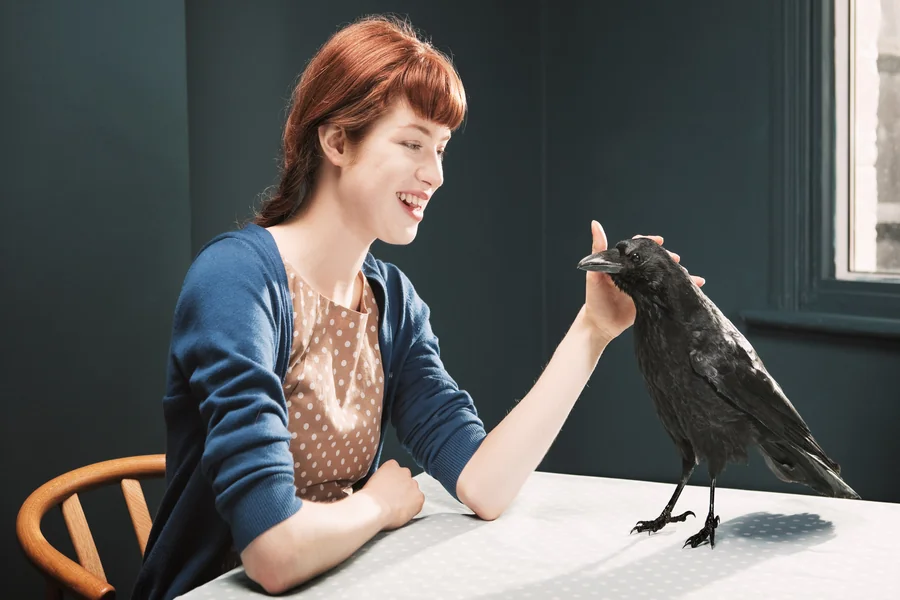
Crows are jumpy for a reason, people have chased and hunted them for generations in plenty of places, so sudden movement reads as danger to them. Sit or stand nearby while they eat. Don’t reach. Don’t lunge. Close the gap slowly, over weeks, not over one lucky afternoon.
Let the Crow Make the First Move
Don’t walk up to a crow expecting it to wait around. Curiosity does most of the heavy lifting here. Once it feels safe, it’ll drift closer on its own schedule. Sometimes that’s two weeks. Sometimes it’s two months. Every bird runs on its own clock.
Look for These Signs It’s Working
- It watches you instead of bolting
- It’s already waiting before you’ve even set food down
- It leaves small objects behind, bottle caps, buttons, that sort of thing
- Other crows start showing up too, apparently having gotten the memo that you’re fine
That gift thing throws people off every time, but it’s real and well documented. Crows have dropped buttons, beads, bits of foil, and other small trinkets for people who feed them regularly. Nobody’s fully cracked why. Most researchers who study this treat it as a kind of trade: food for treasure.
How Long Before a Crow Actually Trusts You?
Most people notice real interest within one to two weeks of daily feeding. Full trust, meaning the bird comes in close or starts leaving gifts, generally takes somewhere between one and three months of showing up consistently.
Some crows warm up fast. Others take an entire season and test your patience the whole way through. Location plays a role too. City crows that deal with foot traffic constantly tend to relax faster than crows out in the country, where people are a rarer sight.
What Ruins the Whole Thing
A handful of habits will stall you out or wreck progress you’ve already made:
Skipping days. Feed daily for a week, vanish for two, and you’re basically starting over.
Sudden noise or fast movement. One bad scare can cost you a month of progress.
Too much bread or salty food. It can make the bird sick, and a sick crow doesn’t come back around.
Trying to grab or touch it. Fastest way to torch all your progress. Crows want a relationship, not a cage.
Moving the feeding spot around. Kills the pattern they’re relying on to trust you at all.
Is Feeding Crows Even Legal?
In most areas, yes, feeding crows on your own property is fine. Some cities have wildlife feeding rules on the books, so a quick check with your local wildlife office doesn’t hurt. Just try not to create a mess or draw huge noisy groups that annoy your neighbors.
Quick Answers
| Question | Short Answer |
| Can you befriend a crow? | Yes. Feed it in the same spot daily and it learns to trust you within weeks. |
| Do crows remember people? | Yes, studies confirm crows recognize and remember specific human faces for years. |
| What do crows like to eat? | Unsalted peanuts, dog kibble, cooked egg, and fruit. Skip bread and salty snacks. |
| How long does it take to tame a crow? | One to two weeks for interest, one to three months for real trust. |
| Do crows give gifts to humans? | Yes. They’ve been documented leaving buttons, beads, and trinkets for regular feeders. |
| Are crows dangerous to have around? | No, they aren’t aggressive unless you threaten them or get near their nest. |
| Can a crow recognize your face? | Yes. Crows can single out one specific face in a crowd and remember it long-term. |
| Is bread bad for crows? | Yes in large amounts. It offers little nutrition and can hurt their health over time. |
Does the Crow Actually Like You, or Just Your Snacks?
Fair question, and worth asking honestly.
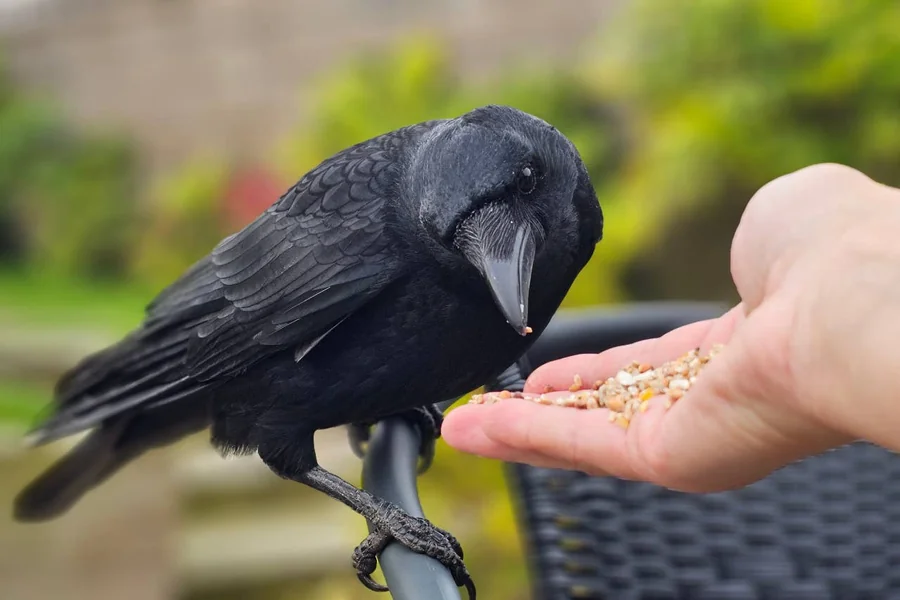
It starts with food, no argument there. No crow shows up on day one because it enjoys your company. But something shifts the longer this goes on. Crows that have bonded with someone will show up even when there’s nothing waiting for them. They’ll perch close by just to watch what you’re doing. Some follow a familiar car down the block. Some make a specific call reserved only for people they’ve come to know.
Is that friendship in the way we mean it with a dog curled up on the couch? Probably not exactly. But it isn’t nothing either. It’s a real relationship, built on memory and routine and a little mutual benefit, and for a wild animal that owes you nothing, that’s about as close to friendship as it gets.
Final Thoughts
So, can you befriend a crow? Yes, and it’s much more achievable than most people think when they start. Pick a spot. Pack the appropriate food supplies. Maintain a cool head and be on time. Allow the bird to make its own decision.
Be sure to keep at it, and you may find one morning that you have a little pile of buttons and bottle caps on your windowsill. Well that’s just a crow’s way of saying thanks.
FAQs:
Do crows only bond with one person, or can they trust a whole family?
Crows can learn to trust multiple people in one household. They just need each person to be calm and consistent, not just one family member.
Is it okay to befriend a crow?
Yes, it’s okay to befriend a crow. It’s safe for both you and the bird as long as you feed it responsibly, avoid handling it, and let the relationship stay on the crow’s terms.
Will a crow ever land on your hand or shoulder?
It’s rare but not impossible. It usually only happens after months of trust, and even then most crows prefer to stay a short distance away.
Can crows hold grudges against specific people?
Yes. Crows remember faces tied to bad experiences and can avoid or scold that person for years afterward.
Do crows recognize their favorite human’s voice?
Some evidence suggests yes. Crows respond to familiar voices and may become more alert or curious when they hear one they know.
Is it normal for a crow to follow you around the neighborhood?
Yes, once trust is built. A bonded crow may follow a familiar face or car short distances, especially if food is involved.
Can feeding crows attract too many birds to your yard?
It can, especially with large amounts of food. Small, consistent portions usually attract just a few regulars instead of a big flock.
Do baby crows bond with humans differently than adult crows?
Young crows tend to warm up faster since they’re naturally more curious. Adult crows take longer but form equally strong bonds.