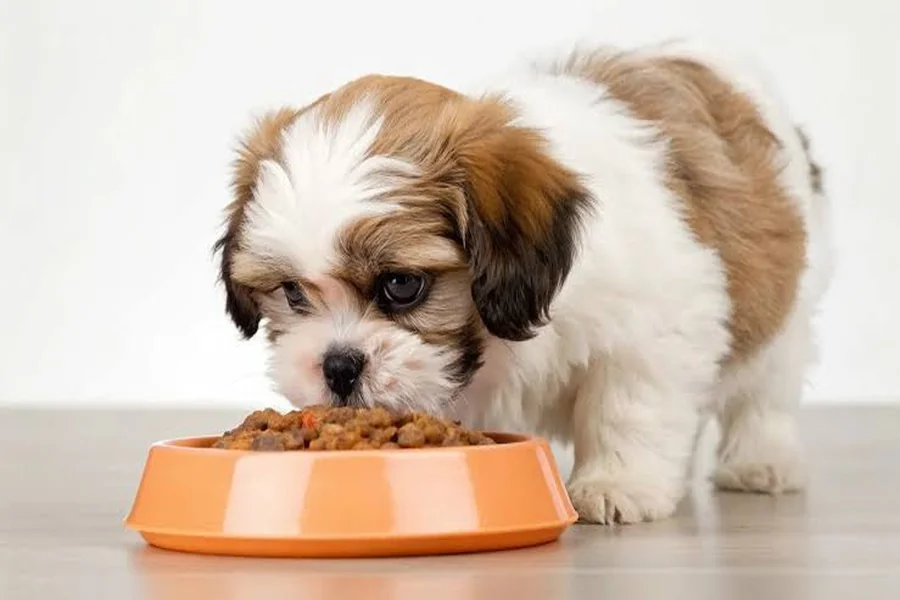
Food for Shih Tzu Puppy: What to Feed, How Much & When
Picking the right food for Shih Tzu puppy growth is one of the first big decisions you’ll make as a new owner. A Shih-Tzu’s nutritional requirements are anything but small. If you get it wrong early on, you may have to deal with stomach problems, slow growth or picky eating for years to come. You will make sure that your puppy lives a long and healthy life if you do!
This article will give you an idea of what your Shih Tzu pup needs to eat, how much and when to switch up your puppy’s diet.
Why Shih Tzu Puppies Need Special Food
Shih Tzu’s are toy size dogs. This means they have small stomachs, fast metabolisms and are more susceptible to low blood sugar than large dogs. They should also be able to eat their kibbles without chewing too much since their jaws and teeth are very small in comparison to that of a Labrador or German Shepherd.
Not all brands of puppy food have these details. Grain-based foods made for larger puppies might be too big, too high in calories or not contain as much of some nutrients that smaller puppies need more.
So when you’re choosing food for Shih Tzu puppy meals, look for a formula built specifically for small or toy breeds.
What to Look in Food for Shih Tzu Puppy
When you turn to the label, what really counts:
- Real meat first. The primary ingredient should be chicken, or lamb or fish instead of a filler ingredient such as corn or wheat.
- Small kibble size. Large kibbles are difficult to chew for Shih Tzus as they have short snouts and small mouths.
- DHA for brain development! This fatty acid is important for the growth of the brain and eyes of puppies.
- Balanced calcium and phosphorus. Excessive or insufficient can have an impact on the growth of bone.
- No artificial colors and preservatives. These are not nutritious and may cause sensitivities.
Shih Tzus also have sensitive stomachs. Food that contains added probiotics or fewer additives is more effective for many owners.
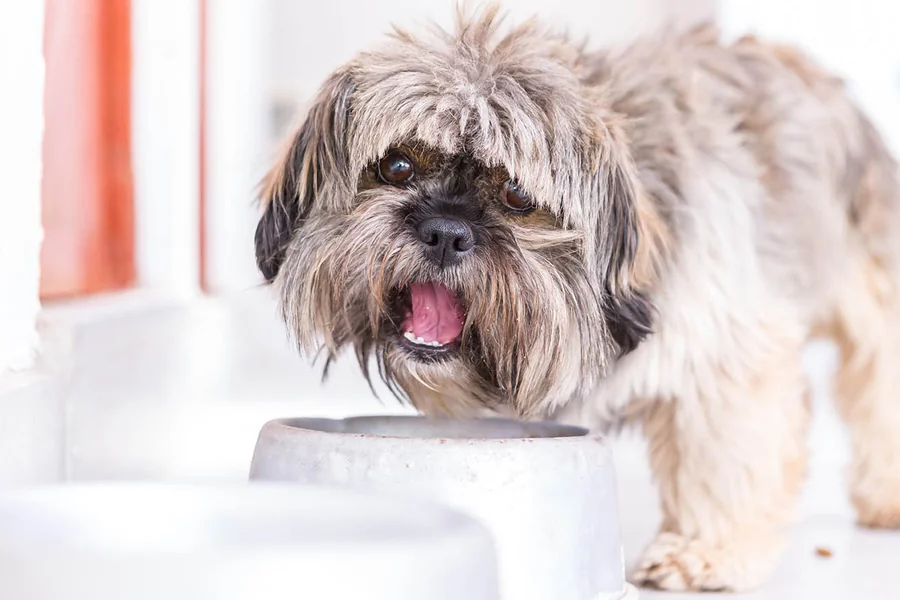
Best Types of Food for Shih Tzu Puppy Nutrition
There are three choices and each of them can function, depending on how much money you have to spend and what your puppy needs.
- Dry Kibble (Most Popular)
Small breeder puppy pellets are easy and inexpensive to feed and aid in maintaining teeth clean while chewing. Seek out kibbles designed for toy breeds.Watch for kibbles that are formulated in toy portions.
- Wet Food
Picky eaters may prefer wet food, and it is easier to chew. It’s also richer in moisture making it better for hydration. The downside to this is that it deteriorates quickly and isn’t as effective at cleaning teeth as kibble.
- Mixed Feeding
Many owners have a mixture of kibbles and a little wet food. It’s a combination of kibbles and the flavor and wetness of soft food for the teeth. It also provides flexibility in case your puppy has a fussy phase.
In either case, be sure that the label indicates it is a complete & balanced growth or all life stages. This is confirmation that it adheres to nutritional requirements for puppies.
How Much Food Should a Shih Tzu Puppy Eat?
This depends on age, weight, and activity level, but here’s a general starting point.
| Puppy Age | Meals Per Day | Approximate Daily Amount |
| 8–12 weeks | 4 meals | 1/2 to 3/4 cup total |
| 3–6 months | 3 meals | 3/4 to 1 cup total |
| 6–12 months | 2 meals | 1 to 1.5 cups total |
These numbers are a starting point, not a strict rule. Every puppy is different. Check the feeding chart on your specific food brand, and adjust based on your puppy’s body condition. You should be able to feel their ribs without pressing hard, but not see them sticking out.
If your puppy seems too thin or is gaining weight fast, talk to your vet before making big changes.

Feeding Schedule for a Shih Tzu Puppy
Small breed puppies should be fed more often, as they don’t have the capacity to store as much energy as a larger breed puppy. In toy breeds, skipping meals can cause low blood sugar, a condition that is not as well known as it is in people.
A basic schedule appears as follows:
- 9–12 months old: 5–6 smaller meals in the day
- 6–12 months old: 3 meals, spaced evenly plus 1 snack per meal
- 6 months +: 2 meals (morning + evening)
Try to feed at the same time each day. Diets are easier to digest and potty training will be easier as well since meals will be regular which will lead to bathroom breaks.
Foods to Avoid for Shih Tzu Puppies
Some human foods are safe for dogs, but others can be harmful, particularly for small dogs. Always keep away from your puppy:
- Chocolate
- Grapes and raisins
- Onions and garlic
- Xylitol (in sugar free gum, some peanut butter)
- Cooked bones, which can splinter
- Foods that are high in salt or fat
A little can go a long way with this puppy size. Again, if you are unsure, it is best to give food made for dogs.
When to Switch from Puppy Food to Adult Food
Shih Tzu’s become adults at 9 to 12 months of age, though they may reach full size in a year. Ears too early may stunt their growth. Too late and it can result in excess weight gain as an adult dog requires less calories than a growing puppy.
Discuss with your veterinarian the appropriate age your puppy is and gradually change over the next 7-10 days over time with a 50/50 mixture of old and new food. This will prevent stomach upset.
Short Answers
| Question | Short Answer |
| What food is best for a Shih Tzu puppy? | Small-breed puppy kibble with real meat as the first ingredient, sized for toy dogs. |
| How much should a Shih Tzu puppy eat per day? | About 1/2 to 1.5 cups daily, split into 3–4 meals, depending on age. |
| Can Shih Tzu puppies eat human food? | Small amounts of plain chicken or rice are fine, but most human food should be avoided. |
| How many times a day should I feed my Shih Tzu puppy? | 4 times daily under 12 weeks, tapering to 2 meals by 6 months old. |
| Is wet or dry food better for Shih Tzu puppies? | Dry kibble supports dental health; wet food helps picky eaters and hydration. |
| When should I switch my Shih Tzu puppy to adult food? | Around 9 to 12 months old, transitioned gradually over 7 to 10 days. |
Final Thoughts
Choosing the right food for Shih Tzu puppy growth doesn’t have to be complicated. Use small breed formulas, feed at regular times and observe your puppy’s body condition as they mature. It’s more important to find the right brand little bits at a time than one “perfect” brand.
Your puppy is looking to you to get the basics right and now you’ve got everything you need to do just that.
FAQs:
Q: What is the best food for Shih Tzu puppy?
A: Small-breed puppy kibble with real meat listed first.
Q: How much food does a Shih Tzu puppy need daily?
A: About 1/2 to 1.5 cups, split into 3–4 small meals.
Q: Can Shih Tzu puppies eat wet food?
A: Yes, wet food is fine and helps picky eaters and hydration.
Q: How often should I feed a Shih Tzu puppy?
A: 4 meals daily under 12 weeks, then 2 meals by 6 months.
Q: What foods are toxic to Shih Tzu puppies?
A: Chocolate, grapes, onions, garlic, and xylitol are toxic.
Q: When do Shih Tzu puppies switch to adult food?
A: Around 9 to 12 months, transitioned gradually over 7–10 days.
Q: Do Shih Tzu puppies need small kibble?
A: Yes, their small jaws need small, easy-to-chew kibble pieces.
Q: Is grain-free food good for Shih Tzu puppies?
A: Not necessarily; ask your vet, since grain-free isn’t always healthier.