Animals That Live in Saltwater: 12 Ocean Species You Won’t Believe Are Real
Animals that live in saltwater fill every part of the ocean. The sea covers about 70 percent of Earth. It holds whales as long as three buses. It also holds seahorses that fit on your thumb. How do they handle the salt? How do they hunt and breed in open water?
This guide covers 12 saltwater animals. Each one comes with a scientific name, class, diet, habitat and a fun fact.
List of Animals That Live in Saltwater
Sharks, whales, dolphins, sea turtles, octopuses, seahorses and clownfish all live in saltwater. They live in oceans, seas and coastal waters. Most belong to groups such as fish, mammals, reptiles, mollusks and birds. Each has a body built to handle salt.
| Number of Animals | Names of Saltwater Animals | Scientific Name | Class | Diet | Where to Find Them |
| 1 | Great White Shark | Carcharodon carcharias | Chondrichthyes | Carnivore | Coastal seas worldwide |
| 2 | Bottlenose Dolphin | Tursiops truncatus | Mammalia | Carnivore | Warm and mild seas |
| 3 | Green Sea Turtle | Chelonia mydas | Reptilia | Herbivore (adults) | Tropical and subtropical coasts |
| 4 | Blue Whale | Balaenoptera musculus | Mammalia | Carnivore (krill) | Most oceans |
| 5 | Clownfish | Amphiprion ocellaris | Actinopterygii | Omnivore | Indo-Pacific reefs |
| 6 | Giant Pacific Octopus | Enteroctopus dofleini | Cephalopoda | Carnivore | North Pacific |
| 7 | Sea Otter | Enhydra lutris | Mammalia | Carnivore | North Pacific coasts |
| 8 | Manta Ray | Mobula birostris | Chondrichthyes | Carnivore (plankton) | Tropical and temperate seas |
| 9 | Emperor Penguin | Aptenodytes forsteri | Aves | Carnivore | Antarctica |
| 10 | Saltwater Crocodile | Crocodylus porosus | Reptilia | Carnivore | India to northern Australia |
| 11 | Seahorse | Hippocampus | Actinopterygii | Carnivore | Shallow coastal waters |
| 12 | Orca | Orcinus orca | Mammalia | Carnivore | All oceans |
Detailed Look at Animals That Live in Saltwater
Great White Shark
Scientific Name: Carcharodon carcharias
Class: Chondrichthyes
Diet: Carnivore
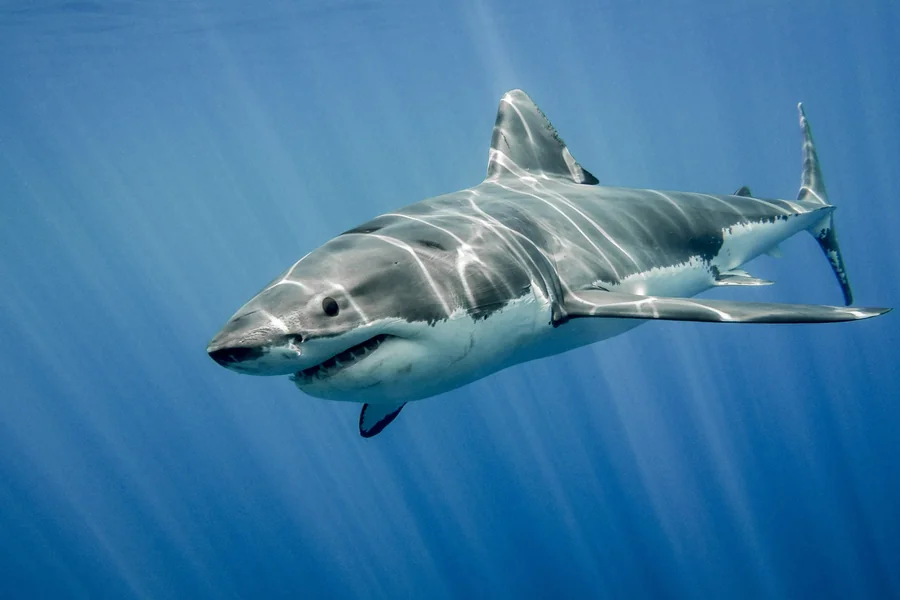
The great white shark is a top predator in cool and warm coastal seas. You can find it off South Africa, Australia, California and Mexico. It likes waters near seal colonies. Adults grow up to six meters long. Most hunt by ambush. The shark swims deep, then rushes upward and hits a seal from below. Some strikes launch the whole body out of the water. This is called breaching. The shark has rows of teeth. When one falls out, another moves forward to take its place. A single shark can go through thousands of teeth in its life. It also senses weak electric signals from prey through small pores on its snout. Great whites travel far. Tagged sharks have crossed entire oceans and returned to the same coast. They are not social animals, yet they sometimes share feeding grounds. Scientists track them to learn more about migration. Fun fact: its swimming muscles stay warmer than the water around it. Their numbers have dropped due to fishing and bycatch.
Bottlenose Dolphin
Scientific Name: Tursiops truncatus
Class: Mammalia
Diet: Carnivore
Bottlenose dolphins live in warm and mild seas around the world. They remain near bays and shores, with some swimming far out in the open water. They live in groups (pods) in the majority of cases. Some animals may be in a pod or dozens. Dolphins can communicate by clicking and whistling. They each have their own whistle – something like a name. They locate food by using echolocation. A dolphin sends out clicks and listens for the echo. This is to indicate the size and shape of the fishes that are close by. They feed on fish and squid. Some groups will work the fish into balls prior to feeding. Some dolphins in Australia use sponges to hold in their snout in Shark Bay. The sponges keep them safe as they look for food on the sea bottom. This trick is taught to young dolphins by their mothers. Dolphins sleep with one-half of their brain at a time. That allows them to stay breathing and alert. In some groups, a calf will remain with its mother until it is 6 years old. Fishing nets and pollution are also causes for dolphin mortality.
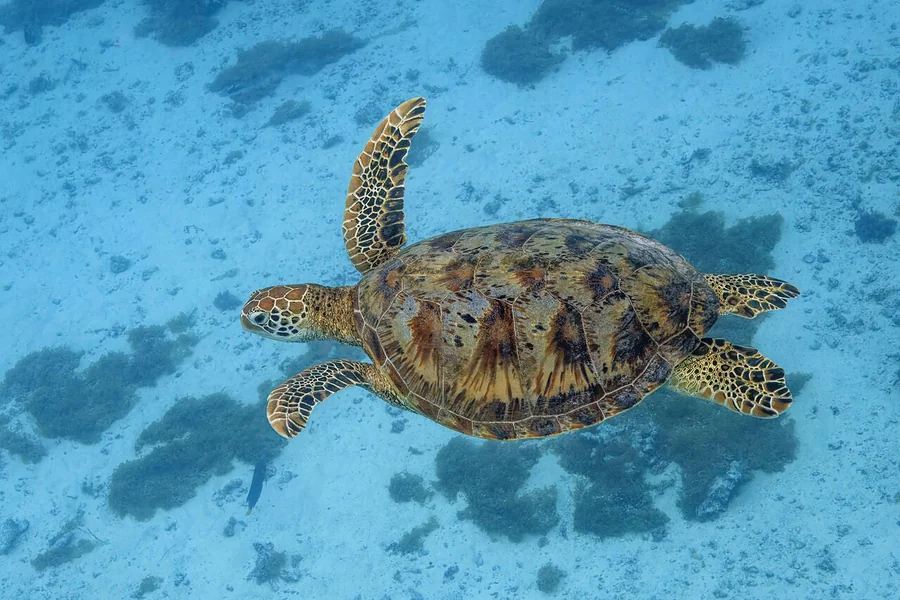
Green Sea Turtle
Scientific Name: Chelonia mydas
Class: Reptilia
Diet: Herbivore (adults)
The green sea turtle lives in tropical and subtropical seas. Feeds in shallow bays and seagrass beds. Adults eat mostly seagrass and algae. Young turtles feed on a wider range of food including jellyfish and small animals. They got their name from the green color of their body fat. It doesn’t come from the shell. Adults might reach more than 150 kg in weight. Females return to the beach on which they hatched to lay eggs. Some journey over 2000 km to reach there. They make a hole in the sand at night and put approximately 100 eggs into it. They then cover the nest and return to sea. The eggs hatch after about two months. Chicks scoot to the water. Numerous fall prey to birds and crabs on their way. Only a few survive to adulthood. The sex of babies is determined by the temperature of the sand. Warm nests give rise to more females. This is a concern to scientists as the climate warms. Green turtles can lie on the bottom for several hours without leaving the water. Did you know that they can live up to 70 years or longer?
Blue Whale
Scientific Name: Balaenoptera musculus
Class: Mammalia
Diet: Carnivore (krill)
The blue whale is the largest animal ever known to live on Earth. Can grow to 30 metres long and more than 150 tonnes. The Blue Whale can be found in most oceans. Feeds in summer in cold polar waters. They migrate towards the warmer waters in the winter months for breeding purposes. The blue whale preys on the krill. These are very small animals which look like shrimp. One whale will eat approximately four tonnes a day during peak feeding time. It drinks a great deal of water and expels it with plates (baleen). The krill are unable to escape. Blue whales are solitary or in pairs. They emit a low call that can be heard for many kilometres underwater. A calf is born approximately 7 metres long. Drinks hundreds of liters of milk daily, and increases weight by approximately 90 kilograms per day. During the 20th century, whaling drastically reduced blue whale populations. Today they are still being affected by ship strikes and noise. Did you know that its heart can weigh up to 180 kg?
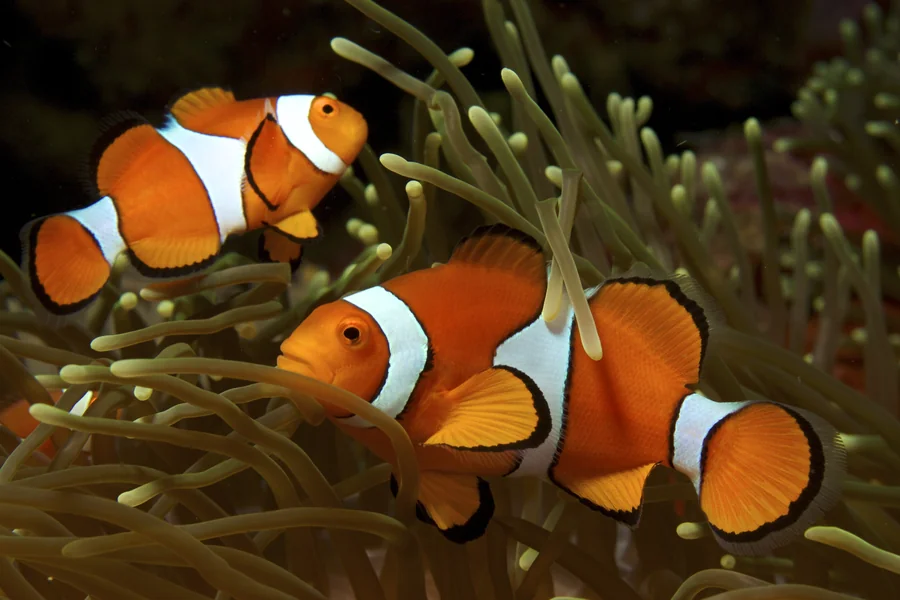
Clownfish
Scientific Name: Amphiprion ocellaris
Class: Actinopterygii
Diet: Omnivore
Clownfish live on warm coral reefs in the Indian and Pacific oceans. They are never very far away from sea anemone. The anemone is armed with stinging tentacles which repel most fish. A layer of mucus covers the skin of clownfish making them safe. They “hide” in the tentacles to escape predators. They clean the anemone in exchange for protection from small fish that prey on the anemone. They leave behind little balls of manure which are also eaten by the anemone. This type of co-operation is known as mutualism. The clownfishes feed on algae and micro-organism known as plankton. They feed on remaining food fragments of the anemone as well. Adults grow to be around 10cm long. A group inhabits one anemone and has some rules. The largest fish is a female. The second largest is a male which breeds with her. The rest are smaller males. Initially all clownfish are male. If the female dies, the breeding male will change sex and become the female. Interesting fact: female deposits eggs on a flat rock close to the anemone and the male sits on top and watches.
Giant Pacific Octopus
Scientific Name: Enteroctopus dofleini
Class: Cephalopoda
Diet: Carnivore
The giant Pacific octopus lives in cold coastal waters of the North Pacific. It is found statewide from California to Alaska and also in Japan. It lurks in crevices of rocks and caves. The span of an adult may extend up to 5 m. The typical weights are ranging from 15-50 kilograms. This octopus has blue blood and three hearts. It also possesses a big brain, considering it is a non-backboned animal. Can open jars and perform simple lab paper puzzles. It hunts at night. Crabs and clams are caught for food. It also feeds on fish, and occasionally small sharks. The octopus has NO bones. It can fit through any opening larger than its tough beak. Changes color and skin to camouflage itself against rocks and sand. If threatened it sprays ink and propels itself. Life is short. They live 3-5 years. A female produces tens of thousands of eggs and guards them, but does not feed. She dies soon after they hatch. Did you know, there are hundreds of suckers on each arm and can taste what they touch.
Sea Otter
Scientific Name: Enhydra lutris
Class: Mammalia
Diet: Carnivore
The sea otter lives along the coasts of the North Pacific. It can be seen from California to Alaska and in parts of Russia and Japan. Swims in kelp beds and rocky areas. The smallest marine mammal is the sea otter. The weight of adults ranges from 14 to 45 kg. It has no blubber. Rather it depends on the most bulky fur of any animal. There are approximately 150,000 hairs per square cm. A pair of otters will spend hours every day cleaning their fur to keep it clean and full of air. They feed on sea urchins, clams, crabs and snails. A sea otter eats about a quarter of its body weight every day. Lies on its back and hammers shells on a rock on its chest. This is one of the few animals that use tools. Groups of otters are called rafts. They wrap themselves in kelp to prevent them drifting away. The mom holds their pups on their belly. Did you know that otters help to protect kelp forests by eating urchins that are destroying them?
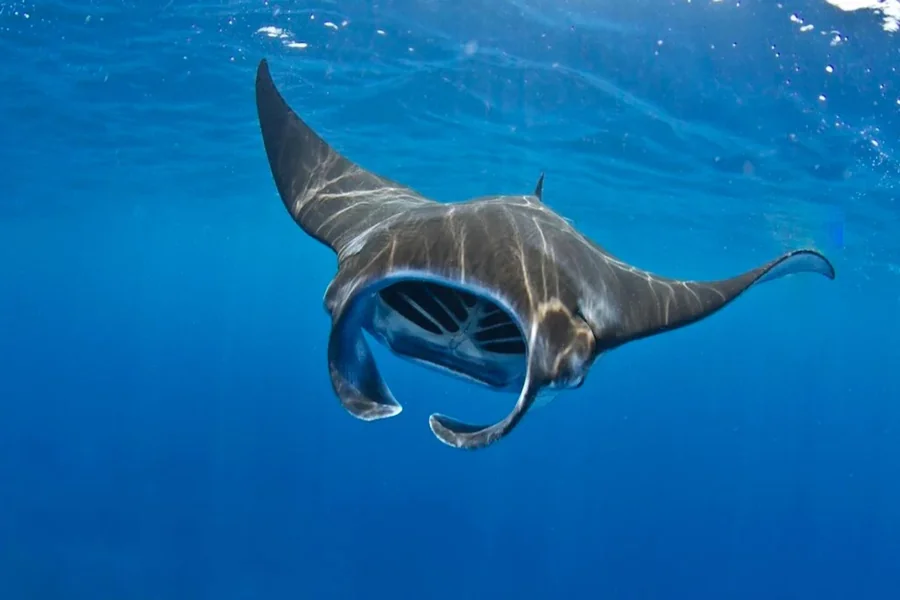
Manta Ray
Scientific Name: Mobula birostris
Class: Chondrichthyes
Diet: Carnivore (plankton feeder)
The manta ray is the largest ray in the ocean. The wings reach a length of up to 7 m. It swims in warm waters of the Atlantic, Pacific and Indian oceans. Mantas are commonly found close to reefs and coasts where there is abundant plankton. A manta is not a stinger or sharp toothed. It feeds on plankton and micro fish. To feed it opens its wide mouth and swims in loops. Its head has two fleshy lobes that direct the water towards the inside. It has plates in its throat that strain out the food. A manta must be in constant motion. It needs water to pass over its gills in order to breathe. Mantas go to cleaning stations on reefs. Parasites are removed by small fish from the skin. The bottom of each manta is marked with a different pattern of spots. These marks can be used to identify individuals in research. Mantas are some of the most intelligent fish. Occasionally they jump out of the water. Researchers don’t know the reason. Fun fact: usually, a female will give birth to a pup that is already more than a meter wide. The numbers have been reduced by fishing for gill plates.
Emperor Penguin
Scientific Name: Aptenodytes forsteri
Class: Aves
Diet: Carnivore
The emperor penguin lives in Antarctica. It breeds on sea ice and feeds in the freezing ocean around it. It is the tallest and heaviest penguin. Adults stand about 1.1 meters tall. They eat fish, squid and krill. Emperors are strong divers. They can plunge below 500 meters and stay under for more than 20 minutes. They cannot fly but they move fast through water. Their breeding cycle is unusual. Females lay one egg in the middle of winter. Then they walk back to the sea to feed. The males stay behind. Each male balances the egg on his feet and covers it with a fold of skin. He does this for about two months without eating. Temperatures can drop below minus 40 degrees Celsius. To survive the males huddle in tight groups. They take turns moving from the cold edge to the warm center. Sea ice loss from warming is now a major threat to colonies. Fun fact: when the chick hatches the mother returns and brings food in her stomach.
Saltwater Crocodile
Scientific Name: Crocodylus porosus
Class: Reptilia
Diet: Carnivore
The saltwater crocodile is the largest living reptile. Males can grow up to six meters and over a 1000 kilograms. This crocodile inhabits the coastal waters, rivers and swamps of eastern India to northern Australia and Southeast Asia. It is also found near many Pacific islands. Despite its name it uses both fresh and salty water. It has special glands on its tongue that extrude additional salt. It can disperse long distances at sea on ocean currents. A tagged crocodile swam hundreds of kilometres. It is an ambush predator. It lies near the water’s edge, so that only its eyes and nostrils are visible. It lunges and pulls prey under, then. It feeds on fish and crabs as large as buffalo, birds and mammals. Has one of the strongest bites ever recorded for an animal. Adults are territorial. Males compete for sections of river and drive off intruding males. A female constructs a heap nest of plants and mud. She guards it for about three months. Fun fact: babies’ sex is determined by nest temperatures.
Seahorse
Scientific Name: Hippocampus
Class: Actinopterygii
Diet: Carnivore
Seahorses live in shallow coastal waters in tropical and temperate seas. They are found in seagrass beds, mangroves and coral reefs. They cling to plants by using a tail that can cling like a hand. They’re a fish, but they look nothing like one. They swim upright. A small, small fin at the rear flops up to 40 times per second to help the animals move forward. Are not good swimmers and can go hungry if caught in a storm. The seahorse does not have any teeth or stomach. Has tube-shaped snout which it uses to engulf small crustaceans. Must consume nearly all day. An adult can consume thousands of small shrimp each day. They have independent eye movement. This enables it to keep an eye out for food and danger simultaneously. Seahorses also color in camouflage. There are some pairs that dance again every morning when they meet. Did you know that the male has eggs? The female puts them in his belly pouch and he gives birth to the young.
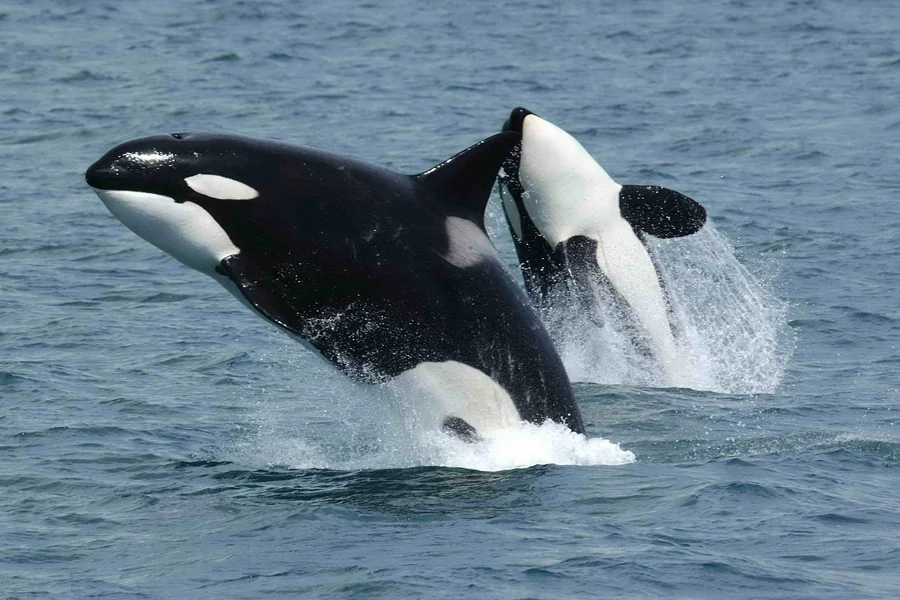
Orca
Scientific Name: Orcinus orca
Class: Mammalia
Diet: Carnivore
The orca is the largest member of the dolphin family. It is found in all oceans from the Arctic to Antarctica. Males can attain a length of up to 9 meters. An orca is a chief predator. It eats as per the group it belongs to. Food includes mostly fish, including salmon, for some pods. Other people hunt seals, sea lions and even whales. Orcas are social, and form close-knit family groups that are headed by older females. The pod can live for a lifetime. There are a series of calls for each pod. Young orcas use these calls and hunting techniques with their parents. Some groups cooperate to create waves which dislodge seals from ice floes. Some people go and slide onto beaches for sea lions. Orcas can swim at speeds of almost 50 kilometers per hour. The female can survive to over 50 years old. Some live to 80. Mother and son are always by each other’s side. Interesting fact: The dorsal fin on a male can be almost two metres in length. Pollution, noise and lack of fish are threats to orcas.
Why Saltwater Animals Matter
Saltwater animals keep the ocean working. The ocean affects the air we breathe, the food we eat and the weather we live with. Here is why these animals matter.
- They keep food webs balanced. Orcas, sharks and other top predators control prey numbers. Without them some species grow too fast and strip their habitat bare.
- They protect habitats. Sea otters eat urchins that would otherwise destroy kelp forests. Green sea turtles graze seagrass so it stays healthy. Healthy kelp and seagrass shelter thousands of other species.
- They help fight climate change. Whales feed at depth and release waste near the surface. This feeds the plankton that absorb carbon dioxide. Dead whales also carry carbon to the sea floor. Seagrass and mangroves, which many saltwater animals depend on, store large amounts of carbon.
- They support oxygen production. Plankton make a large share of the oxygen we breathe. Many saltwater animals help keep plankton growing. Some feed on it and some recycle nutrients for it.
- They feed people. Billions of people rely on seafood as a main source of protein. Fish stocks need healthy habitats and breeding grounds to last.
- They support jobs and local economies. Fishing, diving, whale watching and reef tourism provide income for coastal communities around the world.
- They act as warning signs. Coral bleaching, seabird declines and stranded whales often show that the ocean is in trouble. Scientists use these signs to track pollution and warming.
- They help science and medicine. Researchers study octopus brains, shark skin and sponge chemicals. This work has inspired new materials and medicines.
More Animals That Live in Saltwater
- Humpback Whale (Megaptera novaeangliae | Mammalia | Carnivore). Adults reach about 16 meters. Males sing long songs. Groups blow bubble nets to trap krill and small fish.
- Great Hammerhead Shark (Sphyrna mokarran | Chondrichthyes | Carnivore). Its wide head spreads its eyes and sensors far apart. This helps it find rays buried in sand.
- Sperm Whale (Physeter macrocephalus | Mammalia | Carnivore). It is the largest toothed predator on Earth. It dives over 1,000 meters to hunt squid.
- Walrus (Odobenus rosmarus | Mammalia | Carnivore). It lives in Arctic seas and rests on sea ice. Its tusks help it haul out of the water and dig for clams.
- Great Barracuda (Sphyraena barracuda | Actinopterygii | Carnivore). This reef fish can reach two meters. It waits still and then strikes prey with a sharp burst of speed.
- Moray Eel (Muraenidae | Actinopterygii | Carnivore). It hides in reef cracks and hunts at night. A second set of jaws in its throat pulls prey inward.
- Moon Jellyfish (Aurelia aurita | Scyphozoa | Carnivore). It has no brain, heart or bones. It drifts with the current and eats plankton.
- Blue-Ringed Octopus (Hapalochlaena lunulata | Cephalopoda | Carnivore). It is about the size of a golf ball. Bright blue rings flash when it feels threatened. Its venom is deadly to humans.
- Pufferfish (Tetraodontidae | Actinopterygii | Omnivore). It gulps water and swells into a ball when attacked. Many species carry a strong toxin in their organs.
- Dugong (Dugong dugon | Mammalia | Herbivore). Often called a sea cow. It grazes on seagrass in warm coastal waters of the Indo-Pacific.
- Lionfish (Pterois volitans | Actinopterygii | Carnivore). It has venomous spines and striped fins. It is native to the Indo-Pacific but now invades the Atlantic and Caribbean.
- Leatherback Sea Turtle (Dermochelys coriacea | Reptilia | Carnivore). It is the largest sea turtle. Its shell is soft and leathery. It feeds mostly on jellyfish.
- Giant Squid (Architeuthis dux | Cephalopoda | Carnivore). It lives in the deep sea and can grow over 10 meters. Its eyes are about the size of a dinner plate.
- Whale Shark (Rhincodon typus | Chondrichthyes | Carnivore). It is the largest fish in the ocean. It filters plankton from warm water. Each one has its own spot pattern.
- Sea Star (Asteroidea | Asteroidea | Carnivore). It has no brain and moves on tiny tube feet. It can regrow lost arms. It pushes its stomach out to digest prey like clams.
Final Thoughts
The ocean supports life in every shape and size. Some animals hunt in open water. Others hide on reefs or hug the coast. Each one has a trait that helps it handle salt and survive. Many of these species now face fishing pressure, pollution and warming seas. Learning how they live is a good first step toward protecting them. Pick your favorite from the list and look up how you can help its habitat.
FAQs:
What animals live in saltwater?
Sharks, whales, dolphins, sea turtles, octopuses, seahorses, clownfish, orcas and manta rays live in saltwater. So do sea otters, penguins and saltwater crocodiles. They live in oceans, seas and coastal waters around the world.
What is the biggest animal that lives in saltwater?
The blue whale is the biggest. It can reach 30 meters and weigh over 150 tonnes. It is the largest animal known to have lived on Earth.
Can any animals live in both saltwater and freshwater?
Yes. Bull sharks, salmon, eels and saltwater crocodiles can live in both. Their bodies adjust to changes in salt levels.
Do saltwater animals drink seawater?
Saltwater fish drink seawater and push out the extra salt through their gills. Marine mammals such as dolphins and whales get most of their water from food.
What are some examples of saltwater fish?
Clownfish, seahorses, tuna, groupers and great white sharks are saltwater fish. Sharks and rays have skeletons of cartilage and are not bony fish.