Tree Care Across Muskogee and Eastern Oklahoma’s Storm-Prone Country
Key Takeaways
- Checotah Tree Service can help property owners prepare for severe weather by conducting inspections, performing targeted pruning, and removing high-risk trees before storms arrive.
- Properties in Muskogee and Eastern Oklahoma can be affected by wind, hail, heavy rain, saturated soil, ice, and tornado-related damage.
- Dead limbs, trunk cracks, decay, leaning trees, and lifted root systems deserve prompt professional evaluation.
- Storm-damaged trees are not always candidates for removal, but unstable trees near people, homes, roads, or power lines require careful action.
- Homes, businesses, ranches, and lake properties each need a tree-care plan suited to their access, terrain, and priorities.
Across Muskogee and Eastern Oklahoma, trees are part of what makes a property feel established, shaded, and welcoming. They also become a serious concern when a spring thunderstorm, summer wind event, winter ice accumulation, or heavy rain turns a weak limb into a hazard. For homeowners and landowners seeking a practical plan for prevention and recovery, Checotah Tree Service in Muskogee and Eastern OK provides local tree removal, pruning, cleanup, stump grinding, and land-clearing services.
Storm-ready tree care is not about making every tree perfectly safe. No healthy oak, pecan, maple, or cedar can be guaranteed to withstand every severe-weather event. It is about identifying predictable weaknesses, reducing unnecessary weight on vulnerable limbs, maintaining clearance around structures, and knowing when a damaged tree should be removed rather than left to stand.
Why Storm-Ready Tree Care Matters in Muskogee and Eastern Oklahoma
Eastern Oklahoma weather can change quickly. A calm afternoon can become a damaging storm with high winds, lightning, hail, and intense rainfall. Those conditions can expose problems that may have been quietly developing for years, such as decay within a trunk, a narrow branch union, drought-stressed roots, or a long limb extending over a roof. For homeowners in the area, Checotah Tree Service can help address potential tree hazards before severe weather turns them into emergencies.
After heavy rain, soils around Muskogee, Checotah, Fort Gibson, Eufaula, and rural properties can become soft enough for a compromised tree to shift or lean. Wind then adds force to a full canopy, especially on mature trees growing near houses, barns, driveways, fences, docks, and parking areas. The goal is to identify and address manageable risks before they become an emergency call during a storm.
Which Tree Problems Create the Greatest Risk?
A tree can look green and still have structural issues. Property owners should avoid climbing, cutting, or pulling on questionable trees, particularly after a storm. Instead, watch for signs that warrant a professional assessment:
- Large dead branches hanging over a roof, patio, vehicle, walkway, or livestock area.
- Cracks in a major limb, branch union, or main trunk.
- A new lean, exposed roots, or soil lifting around the base of the tree.
- Hollow areas, fungal growth, loose bark, deep cavities, or visible decay.
- Branches rubbing against siding, roofs, chimneys, utility lines, or other limbs.
- Old topping cuts have produced fast-growing shoots with weak attachment.
- A split tree that remains standing but may fail in the next wind or ice event.
Risk depends on more than the tree itself. A damaged pecan beside a Muskogee home presents a different situation than the same tree in an open pasture. Size, species, lean, soil condition, access for equipment, and the location of people and structures all matter when deciding whether pruning, monitoring, or removal makes sense.
What Pre-Storm Pruning Can Do
Thoughtful pruning can improve clearance and reduce preventable failures. It may include removing deadwood, reducing the length of an overextended limb, addressing rubbing branches, and selectively improving a crowded canopy. The work should preserve the tree’s natural structure rather than leaving large wounds or removing excessive live growth.
Tree topping is not a sound shortcut for storm preparation. Severe topping can damage a tree’s structure and encourage weak replacement shoots that are more likely to break later. Oklahoma State University provides useful guidance on managing storm-damaged trees, including the importance of proper pruning, realistic risk assessment, and professional help for large or hazardous work.
For a Muskogee residence, preventive pruning may focus on roof clearance, driveways, play areas, and nearby utility corridors. On acreage near Checotah or Eufaula, the priority may be clearing access roads, protecting barns, improving fence-line visibility, or reducing risk around a homesite. A site-specific approach is more useful than treating every tree with the same cut.
When Is Tree Removal Safer Than Pruning?
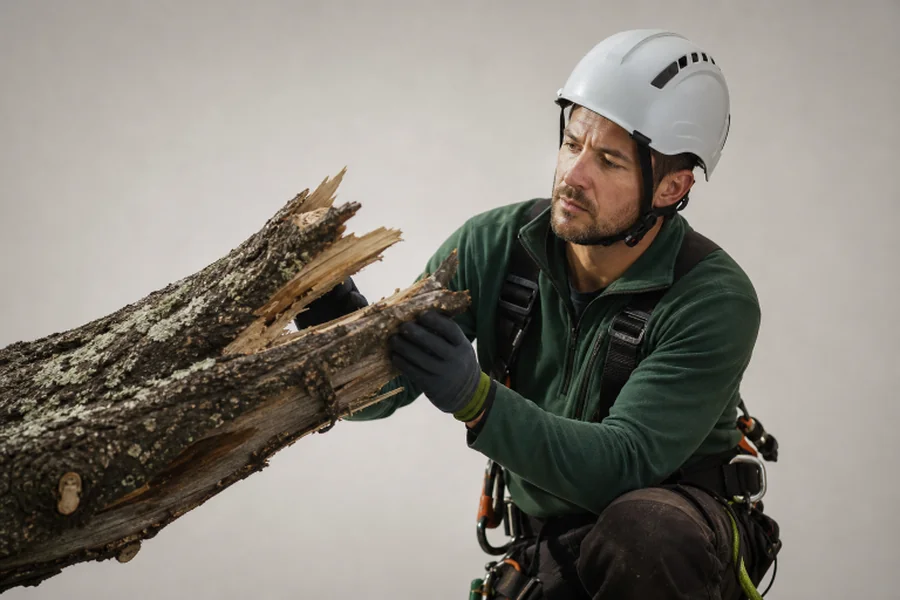
Not every storm-damaged tree needs to come down. Checotah Tree Service can help evaluate whether a damaged tree can be preserved or whether removal is the safer option. Broken limbs can sometimes be removed cleanly while the trunk and root system remain sound. Removal becomes more likely when the tree has a major structural failure or poses an unacceptable risk to people or property.
Conditions That Often Require Urgent Evaluation
- A split trunk or failed major branch union.
- A root plate that has lifted or shifted after rain and wind.
- Extensive decay in a tree located near a home, road, or occupied area.
- A dead tree leaning toward a structure, driveway, or power line.
- Severe canopy loss combined with trunk damage or unstable roots.
Safe removal may require controlled sectional dismantling, lowering limbs by rigging, or using equipment suited to tight lots and difficult access. When utility lines are involved, residents should keep clear, contact the utility provider, and never assume a line is safe to touch.
Tree Care for Homes, Businesses, Ranches, and Lake Properties
Residential and Commercial Properties
Neighborhood homes and businesses in the Muskogee area often have mature trees growing close to roofs, garages, sidewalks, signage, and parking spaces. Checotah Tree Service can help property owners address these trees with careful planning, protection of surrounding property, debris cleanup, and clear communication about the scope of work. Stump grinding can also help prepare the site for landscaping, sod, replanting, or future construction.
Ranches and Rural Acreage
On larger Eastern Oklahoma properties, Checotah Tree Service can assist with tree work, including clearing storm-blocked entrances, removing hazardous trees near barns, opening homesites, managing brush, and improving access along fence lines and trails. Eastern redcedar can also spread into pasture and unmanaged ground, making early, deliberate management valuable for landowners who want to maintain usable space and access.
Lake and Waterfront Areas
Properties near Lake Eufaula, Fort Gibson Lake, and nearby recreation areas may have steep slopes, limited access for equipment, exposed shorelines, and saturated ground after storms. Trees near cabins, docks, outbuildings, and narrow roads should be evaluated with those conditions in mind. A tree that is stable on level ground may be more vulnerable on a wet slope above a structure or access route.
What to Do Before and After a Severe Storm
Before the Storm
- Walk the property and note dead limbs, cracks, decay, or new leaning trees.
- Schedule an inspection for trees near structures, driveways, and utility corridors.
- Keep gates, driveways, and access roads clear for emergency vehicles and equipment.
- Take current photos of major trees and structures for your records.
- Address known clearance problems before peak storm seasons.
After the Storm
- Stay away from downed lines, suspended limbs, and trees resting on structures.
- Photograph damage from a safe distance before debris removal begins.
- Do not climb a damaged tree or attempt to cut limbs under tension.
- Contact the utility company if electrical lines are involved.
- Request a professional assessment for urgent removal, cleanup, repair, pruning, or documentation.
Building a Long-Term Storm Preparedness Plan
Storm preparation should not begin only when severe weather is in the forecast. Checotah Tree Service can help property owners develop a long-term tree maintenance approach that reduces emergencies while preserving the health and appearance of mature trees throughout the property. Annual or seasonal inspections allow property owners to identify developing issues before they become costly hazards.
Trees continue to grow throughout the year, and conditions can change following periods of drought, excessive rainfall, construction activity, or nearby excavation. These changes may affect root stability, branch structure, and overall tree health. Regular evaluations make it easier to determine whether pruning, cabling, monitoring, or removal is the most appropriate course of action.
Property owners should also consider how trees interact with surrounding structures. Branches growing over roofs can scrape shingles in high winds, while limbs extending above driveways or parking areas may pose hazards to vehicles. On rural properties, maintaining clear access roads and fence lines can improve safety and allow emergency vehicles or equipment to reach different parts of the property more easily after a storm.
Keeping records of previous tree work can also be beneficial. Documenting inspections, pruning schedules, and removals provides a clearer picture of the property’s maintenance history and helps prioritize future work. Photographs taken before and after major pruning or storm events can assist with insurance documentation if damage occurs.
While no maintenance plan can eliminate every weather-related risk, consistent attention to tree health can reduce the likelihood of unexpected failures. Combining regular inspections with timely pruning and removal of high-risk trees helps create a safer environment for homes, businesses, ranches, and lake properties. Preparing for the next storm season often allows property owners to address concerns under normal conditions rather than making urgent decisions after severe weather has already caused damage.
Local Help for Storm Recovery and Tree Care
Whether the concern is a broken oak over a Muskogee roof, a damaged pecan at a family property, cedar growth on rural acreage, or storm debris blocking a lake-road driveway, early action can make the situation safer and easier to manage. A well-timed inspection and a clear priority list help property owners focus first on immediate hazards, then on long-term tree health and property access.
Location: Checotah Tree Service | 106715 Belle Dr, Checotah, OK 74426 | (918) 992-4344 | https://checotahstreeservice.com/