Top 20 Animals with Antlers: Discover Unique Deer Species And Their Habits
The most interesting aspects of nature are the antlers. They develop, lose and regenerate annually on the deer species, mainly on the deer species. Antlers are also used by male deer as a means to fight competitors, to attract females as well as to showcase their dominance. Even such species as reindeer present females with antlers.
Animals with antlers come in all shapes and sizes–from the massive moose to the tiny pudu–each adapted to its habitat. These are bony structures that show age, health and social status thus forming a significant element in the behavior of the deer.
You will acquire knowledge on 20 species of antlered species, their diet, habitat, behaviors and fun facts in this guide. Whether you’re a wildlife enthusiast or just curious about deer, this article offers a complete look at animals with antlers around the world.
Table Of Top 20 Animals With Antlers
| Rank | Animal Name | Scientific Name | Class | Diet |
| 1 | Moose | Alces alces | Mammalia | Herbivore |
| 2 | White-tailed Deer | Odocoileus virginianus | Mammalia | Herbivore |
| 3 | Red Deer | Cervus elaphus | Mammalia | Herbivore |
| 4 | Caribou / Reindeer | Rangifer tarandus | Mammalia | Herbivore |
| 5 | Fallow Deer | Dama dama | Mammalia | Herbivore |
| 6 | Elk / Wapiti | Cervus canadensis | Mammalia | Herbivore |
| 7 | Sika Deer | Cervus nippon | Mammalia | Herbivore |
| 8 | Père David’s Deer | Elaphurus davidianus | Mammalia | Herbivore |
| 9 | Muntjac Deer | Muntiacus reevesi | Mammalia | Herbivore |
| 10 | Axis Deer / Chital | Axis axis | Mammalia | Herbivore |
| 11 | Reeve’s Muntjac | Muntiacus reevesi | Mammalia | Herbivore |
| 12 | Sambar Deer | Rusa unicolor | Mammalia | Herbivore |
| 13 | Roe Deer | Capreolus capreolus | Mammalia | Herbivore |
| 14 | Marsh Deer | Blastocerus dichotomus | Mammalia | Herbivore |
| 15 | Thorold’s Deer | Cervus albirostris | Mammalia | Herbivore |
| 16 | Pudú | Pudu puda | Mammalia | Herbivore |
| 17 | Eld’s Deer | Rucervus eldii | Mammalia | Herbivore |
| 18 | Svalbard Reindeer | Rangifer tarandus platyrhynchus | Mammalia | Herbivore |
| 19 | Barasingha | Rucervus duvaucelii | Mammalia | Herbivore |
| 20 | Tufted Deer | Elaphodus cephalophus | Mammalia | Herbivore |
Detailed Look At Animals With Antlers

1. Moose
Scientific Name: Alces alces
Class: Mammalia
Diet: Herbivore
Moose are the largest representatives of the deer family which inhabit North America, Europe & Asia. They bite leaves, twigs, aquatic and shrubs. Male moose, or bulls, develop wide, flat antlers which may measure as many as six feet. Antlers are employed in combating competitors in the mating field and to show off dominance. Each winter moose lose their antlers, and in the spring they grow again. Such animals are mainly solitary and mothers with calves are an exception.
Moose are good swimmers and they can wade in deep water to feed on underwater vegetation. Wolves, bears and human beings are all predators. They inhabit forests, wetlands and river valleys. Bulls also call and clash their antlers in order to get access to females during the rut. Births of the calves occur late in the spring and last up to one year.
Moose communicate using grunting, bellows and the use of body language. The size of the antlers can be used to tell the age and condition. Their heavy coat is used to weather the grueling winter and they are largely crepuscular and may feed in dawn and dusk. The overall conservation status is mostly steady, with habitat loss and hunting having an impact on certain populations.
Fun fact: Moose antlers can weigh over 40 pounds, making them some of the heaviest antlers among deer species.

2. White-tailed Deer
Scientific Name: Odocoileus virginianus
Class: Mammalia
Diet: Herbivore
White-tailed deer are native to North America and are famously known to have the calcium underside of the tail which the deer raises up when in a state of alarm. Each year, males or bucks develop antlers with which they spar and attract their mates. The shedding and regrowth of antlers occur once a year in the winter and spring respectively. White tailed deer are very flexible and inhabit the forest as well as grassland, wetlands and even around the human settlement areas. They consume fruits, grasses, leaves, and twigs. The competition between bucks takes place during the rut through the use of antlers, sounds and odors. Travels with fawns that are born in the spring weeks.
White-tailed deer are also alert, agile and can run and leap quickly when they are under threat of attack by their predators like wolves, coyotes and humans. Their coat varies with seasons, which provides them with a summer and a winter camouflage. Deer use vocalizations, body language and scent marking to communicate. Antlers growth is a way of identifying age, health, and social status of male. Hunting and urban growth have an impact on certain population groups, yet, the white-tailed deer are widespread. Responsible hunting and conservation have been used to sustain the stable populations. They are social, and they associate themselves into loose families beyond the rut.
Fun fact: White-tailed deer can leap over 8 feet high and run up to 30 miles per hour to escape danger.

3. Red Deer
Scientific Name: Cervus elaphus
Class: Mammalia
Diet: Herbivore
Among the largest species of deer in Europe and Asia are red deer. Male, the so-called stags, develop annually large, spreading antlers. During mating time, Antlers are used to fight dominance as well as to entice women. They lose them at the end of every winter and grow them in the spring.
Red deer brows on grass, leaves, bark and shoot. They dwell in forests, grasslands and moorlands most of the time in the proximity of water. The rut is an occasion where stags form harems and the females and their calves are separate groups. Calves are born in late spring and they stay with the mothers of the calf not less than one year. Red deer are good runners and can swim away from predators like wolves, lynx and humans. They use vocalization, scent marking, and visual displays as a means of communication. The view of antlers allows one to gauge age, health and social status. They change their coat according to seasons: they are reddish-brown in summer and gray-brown in winter to be not seen.
Red deer are nocturnal and they mostly feed at daybreak and nightfall. Hunting laws and protection of habitats have kept most of Europe in conservation status. Antlers represent the sign of strength and reproductive efficiency in males.
Fun fact: Red deer stags can fight for hours using antlers to establish dominance during the rut.
4. Caribou / Reindeer
Scientific Name: Rangifer tarandus
Class: Mammalia
Diet: Herbivore
Caribou or reindeer are indigenous to Arctic and sub-arctic regions of North America, Europe and Asia. Antlers develop in both sexes and are utilized in foraging, defense and mating shows. Antlers are discarded every year and the female retains theirs as they are used as shields against calves. Caribou feed on mosses, shrubs, mosses and lichens. They are nomadic and they move a great distance over tundra and forests in pursuit of food.
Caribou live in great protection herds. Some of the predators are the wolves, bears and the human beings. Male deer compete among themselves in the rut using antlers in fights and displays to attract mates. The gestation cycle takes an average of eight months giving birth to calves during the spring when food is more accessible.
Caribou members use vocalizations, scent marking, and body posture to communicate. They are great swimmers and runners which make them avoid being caught by predators. They have a thick coat that keeps them warm during the cold winter months and their hooves are made to walk over snow and soft soil. The use of antlers to estimate age and health. Regional conservation is different; there are others which are influenced by climate change and habitat disturbance.
Fun fact: Caribou are the only deer species where females grow antlers, which they use to compete for food and protect young.
5. Fallow Deer
Scientific Name: Dama dama
Class: Mammalia
Diet: Herbivore
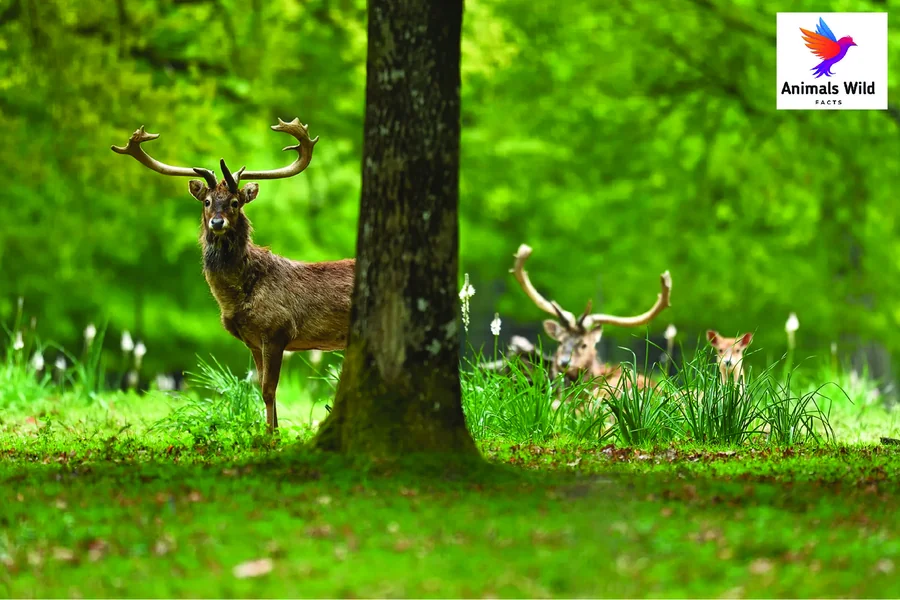
Fallow deer are actually not only native to Europe but they are also introduced to other continents. Every year, males or bucks grow fighting and displaying palmate antlers. The growth of antlers takes place in the spring, and the shedding of them takes place in the winter. Fallow deer feed on leaf, grasses, fruits and shoots. Their habitats include the forest, grasslands and parklands. The buck creates territories and advertise to ensure that the females are attracted to him as the does and fawns are in herds. The fawns are born in late spring and covered up.
Fallow deer are alert, fast and agile animals and this has helped them escape hunters such as wolves, foxes and human beings. The interaction is achieved through vocalization, scent marking and body language. The visualization of antlers provides information regarding age, well-being, and social hierarchy. Their colour varies with the seasons: they are seen in summer, and drab in winter, and this is the reason why they are camouflaged. Most areas have their hunting controlled and conservation is not threatened. The fallow deer is social and is usually colonized to inhabit most of the mixed habitats. The form of the antler and its size define the power of the male and its ability to procreate.
Fun fact: Fallow deer antlers are palm-shaped, giving them a distinctive look compared to other deer species.
6. Elk / Wapiti
Scientific Name: Cervus canadensis
Class: Mammalia
Diet: Herbivore
Elk, also known as wapiti, are large North American and Asian deer. Elk males develop grand antlers every year, which branch out and are used to spar with competitors and also to show dominance in the rut. During winter, they shed their antlers and they grow in spring.
Elks feed on grass, leaves, and shrubs and tree bark. They live in forests, grasslands and mountainous areas frequently around water bodies. Antler clashes, bugling, and visual displays are some of the methods males use to compete with females during the rut. The females make groups with the calves and the males may be single or make bachelor groups out of season. The birth of calves occurs in late spring and the calves stay with their mothers approximately one year.
Elks are good runners and can also swim in order to avoid predators such as wolves, bears and human beings. Communication takes place via vocalization, scent marking and body postures. The viewing of antlers will give the idea of age, health, and social order. Their winter coat keeps them warm during cold temperatures and their meals are also varied depending on the vegetation. Generally, conservation status is not a cause of concern, but there is habitat degradation and harvesting of certain populations. The antlers are a sign of the male power and fertility.
Fun fact: Male elk produce a loud bugle during the rut, which can carry over a mile and signals their presence and strength to rivals.

7. Sika Deer
Scientific Name: Cervus nippon
Class: Mammalia
Diet: Herbivore
The Sika deer is indigenous to East Asia, such as China, Japan and Korea and has been introduced to other nations. Male sika deer have yearly antlers which they utilize in contesting with competitors as well as in attracting females at the rut. The deer sheds its antlers every year during the winter and replenishes them during spring.
Sika deer browse grass, leaves, shoots, and fruits. They live in woodland, plains and river basins. Out of the rut, males are usually solitary whereas females and calves are in groups. Male antlers are shown, sparring and vocalizing are done by males to find a mate during the rut. The gestation period is approximately seven months giving birth to a single fawn. Fawns keep covered up in thick shrubberies.
Sika deer are strong and vigilant and can run away when they are threatened by tigers, leopards, and man. The communication is carried out through scent marking, vocalizations, and body movements. The age, health, and dominance can be obtained when antlers are observed. They change color with the seasons: being reddish-brown spotted in summer and dark in winter. Generally, conservation status is rather stable with populations in certain areas being impacted by loss of habitat and hunting. The importance of antlers in mating and the social hierarchy.
Fun fact: Sika deer males produce high-pitched whistles during the rut to communicate with rivals and attract females.
8. Père David’s Deer
Scientific Name: Elaphurus davidianus
Class: Mammalia
Diet: Herbivore
The deer in Père David is native to China and went extinct in the wild and is currently found in reserves in great numbers. During the rut, males develop antlers which they use in showing off and fighting. The growth of antlers occurs in spring and is shed within the year.
The deer of Pere David feed on grasses, leaves, reeds and aquatic vegetation. They are found in the wetlands, the grasslands, and river valleys. They are social and live in herds of females and calves, males are either solitary or exist in bachelors. Tigers and leopards were historically predators, and the current populations are preserved. In the rut, the males show antlers, make sounds and spar among others as a way of getting the attention of mates. The gestation period takes approximately eight months and calves remain with their mothers weeks. They blend in with foliage due to their brown coat.
The deer of Père David interact through voice, gestures and smell marking. The growth of antlers gives information on the age, health and dominance. Population restoration has been done through conservation efforts but is still reliant on managed habitats. Antlers are signs of reproductive basis in males. They are powerful swimmers, which are adjusted to walk in wetlands in search of food.
Fun fact: Père David’s deer are the only deer species that can thrive primarily in wetland habitats and swim long distances to forage.

9. Muntjac Deer
Scientific Name: Muntiacus reevesi
Class: Mammalia
Diet: Herbivore
Muntjac deer or barking deer belong to the Southeast Asian region. Male develop straight antlers that are small and pointed canine-like tusks. The shedding and growth of the antlers occur once a year, in spring. Muntjacs are leaf feeders, fruit feeders, shoot feeders and grass feeders. They live in forests, bamboo temperatures, and thick shrubberies. These are largely solitary deer and very vigilant and use agility and camouflage in escaping predators such as leopards, tigers and humans. Males spar with the help of antlers and tusks during the rut. To represent territory and reinforcement they scream and make barking noises. The gestation period is approximately six months with one fawn being given shelter.
Muntjac uses scent marking and vocalizations as well as body language to communicate. The examination of antlers can be helpful to determine the age, health, and domination of males. They have a reddish-brown coat which offers them camouflage in the forested areas. The situation in conservation is quite stable in the native habitats but the introduction to non-native habitats has raised ecological concerns. Antlers and tusks assist the males to dominate and defend themselves.
Fun fact: Muntjac deer are called “barking deer” because males produce a loud bark to warn other deer of danger.
10. Axis Deer / Chital
Scientific Name: Axis axis
Class: Mammalia
Diet: Herbivore
Axis deer are native to India, Sri Lanka and Nepal. Male axis deer have three pronged antlers annually that are used in sparring and during the rut. The shedding of antlers takes place in the winter and their regeneration takes place in the spring. They feed on grasses, fruits, leaves and shoots.
Axis deer are found in the forests, grasslands and the open woodlands. Outside the rut, males are predominantly solitary as opposed to the females and calves, which are in groups. The males follow the rut competing through antler clashes, vocalizations and scent marking to get the mates. The gestation period takes approximately seven months and gives birth to one fawn. To evade predators like tigers, leopards and human beings, fawns would stay concealed for a few weeks.
Axis deer use grunts, visual signals and scent marking. The age, health and preeminence of the male are evidenced by observing the growth of the antlers. They have camouflage against the forest and grassy grounds due to their spotted coat. Native ranges have stable conservation status, but populations may be impacted by habitat loss and hunting. Their use of antlers is a requirement in both mating displays and social hierarchy.
Fun fact: Axis deer can run up to 35 miles per hour and use quick turns to evade predators.
11. Reeve’s Muntjac
Scientific Name: Muntiacus reevesi
Class: Mammalia
Diet: Herbivore
Reeve’s muntjac, also known as the Chinese muntjac, is a small deer native to Southeast Asia and introduced to parts of Europe. Males grow short, straight antlers and sharp canine tusks. Antlers are shed annually and regrow in spring.
The muntjac by Reeve is a leaf, shoot, fruit and grass eater. It thrives well in thick forests, bamboo bushes and undergrowth where it can conceal itself against predators like leopards, tigers and humans. These are mostly solitary deer, except the mothers with fawns. Male uses antlers and tusks against competitors and in an attempt to attract mates during the rut which are usually accompanied by calls of barking. The gestation period takes approximately six months having one fawn, which shelters.
Reeve has a muntjac that speaks through scent marking, vocalizations and body language. The development of antlers and tusk are indicative of age, health and dominance. The reddish-brown coloration of them enables them to blend in thick bushes. The status of conservation is usually stable, although some populations are influenced by hunting and encroachment into habitats. The muntjac of Reeve are very capable, as well as vigilant, and can thus make swift escapes through the undergrowth. Tusks and antlers are imperative in wars and protection.
Fun fact: Reeve’s muntjac are among the few deer species with prominent canine tusks that are as noticeable as their antlers.

12. Sambar Deer
Scientific Name: Rusa unicolor
Class: Mammalia
Diet: Herbivore
Sambar are massive deer found in South and South east Asia. Male antlers become heavy, coarse and they are used in fighting and showing off during rut. The shedding of the antlers takes place in winter and are regrown in spring.
Sambar deer consume swards, leaves, bushes and fruits. They occupy wetlands, forests, and grasslands which are usually close to water bodies. During the non-rut seasons, males are generally solitary, whereas the calves and females live in herds. Male antler clashes, vocalizations and scent marking occur during the rut to define dominance and mate attraction. The gestation period is approximately eight months and yields one calf which takes weeks to develop.
Sambar deer are vigilant, swift runners and excellent swimmers, a factor that aids them to avoid being prey of tigers, leopards and even man. One communicates by use of vocalizations, scent marking and body language. The growth of the antlers gives a clue about the age, health, and social status. They are brown and thus camouflaged in thick forests. Status conservation is region specific; some populations have been reduced due to hunting and loss of habitat. Male competition and mating displays happen to be vital because of antlers.
Fun fact: Sambar deer can roar loudly during the rut, producing a sound that carries for several kilometers in the forest.
13. Roe Deer
Scientific Name: Capreolus capreolus
Class: Mammalia
Diet: Herbivore
Roe deer are small European and some parts of Asian deer. Males known as bucks sprout short, sharp antlers every year to fight and court females. The antlers are lost during the winter and renewed during spring. Roe deer browse on fruits, shoots, leaves and grasses. They live in forests, agricultural lands and hedges. Bucks are primarily alone during the period of the year when they are not rutting, and females are in small herds along with fawns. In the rut, males showcase antlers, scent marks and have fights to seek females. The gestation period is approximately ten months, which is accompanied by stalled implantation and gives birth to one to three fawns. Several weeks later the fawns hide so that they are safe.
Roe deer are sensitive to danger and capable of running and jumping fast to escape predators as foxes, wolves and human beings. Interaction takes place in terms of the vocalizations, scent marking, and visual display. Male age, health, and dominance can be observed by the size of the antlers. They have a reddish-brown coat, gray-brown in winter. The status of conservation is mostly stable although some populations are affected by hunting and habitat fragmentation. Antlers are very important in reproductive success.
Fun fact: Roe deer bucks sometimes use their antlers to scrape bark from trees as part of territorial display.
14. Marsh Deer
Scientific Name: Blastocerus dichotomus
Class: Mammalia
Diet: Herbivore
Marsh deer are also natives of South America particularly Argentina, Brazil, and Paraguay. During the rut, males develop wide, bifurcated antlers to fight and show off. The shedding of the antlers and their regeneration occur year after year in spring respectively. Aquatic plants, grasses, and shrubs are the foods of marsh deer. They live in wetlands, marshes, and riverbanks and usually feed in water. Jaguars, pumas, and human beings are the predators.
Marsh deer are typically solitary though they can flock in places where food or water are available in large quantities. The males fight with their antlers, make noises, and mark their scent during the rut to seduce the females. A gestation period takes about eight months and yields only one calf which stays concealed during weeks. They are good swimmers and depend on water habitats to feed on and allude to safety. Their brown coat also mixes with tall grasses to hide them. Communication is done based on grunts, snorts and signs. The measurements of antlers would give an idea on age, nutrition and social hierarchy. Wetland drainage, hunting and habitat degradation are the factors that make conservation status vulnerable. The presence of antlers is a sign of manly power and reproduction.
Fun fact: Marsh deer can feed while partially submerged in water, showing their semi-aquatic adaptation.

15. Thorold’s Deer
Scientific Name: Cervus albirostris
Class: Mammalia
Diet: Herbivore
Thorold’s deer or white-lipped deer are natives of the high areas in Tibet, Bhutan, and China. Males develop the big, branching antlers with which men fight and show off during the rut. The shedding and growth of antlers occur in winter and spring respectively. These feed on grass, leaves, and lichens.
The deer of Thorold are fitted to a steep and cold climate and can easily scamper in the sharp mountainous country. Males can be solitary in the off season and females and calves can be found in herds. Such predators are snow leopards and wolves. At the rut, males put out antlers, call, and have minor fights in order to get mates. The gestation period is approximately eight months with a birth of one or two calves.
Their coarse fur keeps them warm and their big hooves enable them to move through the rocky area. Communication is done by use of vocalization, scent marking as well as body language. Growth of the antlers means age, health and social ranking. Hunting and habitat loss has made conservation almost threatened. Antlers demonstrate male healthiness and sexual possibilities.
Fun fact: Thorold’s deer live at altitudes up to 5,000 meters, making them one of the highest-living deer species.
16. Pudú
Scientific Name: Pudu puda
Class: Mammalia
Diet: Herbivore
The pudús is the smallest deer in the world and originates in southern Chile and Argentina. Males develop small antlers, typically 67 centimeters long and they employ them during sparring and they display during mating season. Each year, the antlers are shed off and grown in the spring. Pudús feed on fruits, grasses, leaves, and shoots. They live in thicket undergrowth and dense temperate forests, which make them safe against predatory attacks like the pumas, foxes, and human beings.
Pudús are lone and elusive, and move silently among the forest vegetation. The males fight each other during the rut by using antlers to prove their dominance, and the females choose the male according to his strength and well-being. The gestation period takes approximately seven months and gives birth to a single fawn. In large vegetation, fawns take shelter in thick vegetation.
Pudús are strong and can climb up small hills to avoid danger. People communicate in terms of vocalization, scent marking and body language. The size of antlers gives evidence about the age of males and their reproductive fitness. The brown color of their coat merges with the forest floors, which assists in escaping the predators. Loss of habitats and hunting has put it on the verge of being threatened. Pudús though small are powerful and vigilant. Antlers, which are tiny, are significant to the competition of males.
Fun fact: Pudús are so small that adults can easily pass under low branches and move through thick forest undergrowth.
17. Eld’s Deer
Scientific Name: Rucervus eldii
Class: Mammalia
Diet: Herbivore
Eld’s deer, also called thamin or brow-antlered deer, are native to India, Myanmar, and Thailand. Males develop tremendous antlers with more than one point, which is used in fights and displays during the rut. Annually, the antlers are lost and recovered in spring.
Eld’s deer feed upon the grasses, on leaves and shoots. They can be found in wetlands, grasslands, and forests where they are usually near rivers. Males can be lone during the periods when rut has not occurred, females, and calves are in groups. Some of the predators are tigers, leopards and human beings. Antlers, spar, and vocalizing are exhibited by the males during the rut to attract females. The gestation period is approximately eight months and this gives birth to one or two calves. Fawns take shelter in high growths.
Eld’s deer are good runners and agile and can escape predation by rapid bursts of speed. Communication is done by talking, scent marking, and body language. Observation of the antler growth shows the age, health, and dominance of males. They are reddish brown which camouflages them in grasslands. There is a threat to conservation status, which includes loss of habitat and hunting. The size of antlers is a determinant of mating success.
Fun fact: Eld’s deer antlers can grow up to 1 meter long, making them among the longest relative to body size in deer species.

18. Svalbard Reindeer
Scientific Name: Rangifer tarandus platyrhynchus
Class: Mammalia
Diet: Herbivore
Svalbard reindeer are a tiny Arctic subspecies of reindeer present in the archipelago of Svalbard. They consume mosses, lichens, grasses and herbs. Both sexes develop antlers; males discard them during winter with those of females remaining longer. The purpose of the antlers is defense, digging holes in the snow to find food, and during the mating season.
Svalbard reindeer have been adjusted to extreme cold and they live in regions where there is heavy winds, deep snow, and low vegetation coverage. They also live in small herds, usually headed by older females and males are usually alone during the season of rut. Arctic foxes may attack young calves, however, they are not very common. Male rutting is characterized by fighting and calls to draw the attention of females. The gestation period takes approximately eight months with the calves being born at the end of spring. They use grunting, bleating and scent marking. Studying antlers provides scientists with an opportunity to estimate age, condition, and fertility. Their thick physique helps them to preserve heat in the Arctic habitat. The status of conservation is stable owing to the low level of human intervention, despite the climatic changes that impact food supply.
Fun fact: Svalbard reindeer have unusually short legs and compact bodies to conserve heat in extreme Arctic conditions.

19. Barasingha
Scientific Name: Rucervus duvaucelii
Class: Mammalia
Diet: Herbivore
Barasingha or swamp deer are native to Nepal and India. The antlers of the males are large and branched and have as many as twelve points, but are worn off each year, and sprout again in spring. Fights to dominate and mating displays are done through the use of the Antlers.
Barasingha consumes grasses, aquatic plants and leaves. They occur in wetlands, marshes, and grasslands in the vicinity of the rivers and lakes. Included amongst the predators are tigers, leopards and human beings. The rut is an antler display contest in which the males compete to lure the females by fighting and vocalization as well as scent marking. The gestation period takes approximately eight months and the result is one calf. Barasingha is a social animal, and they exist in herds composed of females, calves and some males, some of them being solitary during the rut. Their light brown coat color is that of grasses and reeds to blend in.
Barasingha speaks by grunts, snorts, and signs. Monitoring the growth of antlers assists in the identification of age, nutrition and rank. The cause of conservation status is the loss of habitat, hunting, and draining of wetlands. The use of the antlers has significance in social competition and mating.
Fun fact: Barasingha’s antlers can have up to twelve points, which is the origin of their name, meaning “twelve-tined” in Hindi.

20. Tufted Deer
Scientific Name: Elaphodus cephalophus
Class: Mammalia
Diet: Herbivore
Tufted deer are small deer native to China and Myanmar. Males develop short antlers that are accompanied by large canine tusks, which are used to fight and to show off. Antlers are also shedded once a year and regenerate during spring. Tufted deer consume fruits, grasses, leaves, and shoots. They live in thick forests, bamboo groves as well as mountainous areas.
Tufted deer are largely solitary and happen to be vigilant, capable of moving fast through the dense undergrowth to avoid such predators as the leopards, tigers and human beings. In the rut, males fight over females by using antlers, tusks and sounds. The gestation period is approximately seven months with one fawn being born. Their dark-brown colour is useful in concealing them in the undergrowth in a forest.
Tufted deer use barking calls, scent marking and body posture as methods of communicating with each other. The development of antlers and tusks can tell about age, health and dominance. The conservation status is endangered because of habitat loss and hunting. The antlers are not large but good in competition.
Fun fact: Tufted deer have both antlers and prominent tusks, giving them a unique appearance among deer species.
Final Words
Animals with antlers are some of the most fascinating members of the deer family. Antlers are survival, competition, and reproduction instruments as high as the moose, as small as the pudu. They assist males to battle to acquire mates, show strength and even hunt in harsh environments. Most antlered species are males, although there are exceptions such as reindeer, in which females also develop them. The knowledge of antlers provides information about the behavior of deer animals, their living requirements, and conservation issues. By ensuring the safety of these species, it means that Forest areas, wetlands and grasslands are in place so that antlered animals can thrive. Both when you see them in the wild or read about them, every species possesses peculiar qualities, habits and tales that make them remarkable.
Antlers are not mere physical aspects but they are used to represent power, adaptation and rhythm of nature. By learning about animals with antlers, you gain a deeper appreciation for wildlife and the environments they depend on. These animals help us know how complex and interdependent life can be, whether it is on the summit of the most high mountains where Thorold deers live or in the swamps where the marsh deer swim. All the antlers are stories of life, survival & competition.
FAQs:
Q1: What are the animals with antlers?
A: Antlers are found mostly on deer species, including moose, elk, reindeer, sika deer & smaller deer like pudú and muntjac.
Q2: Do both male and female deer grow antlers?
A: Usually only males grow antlers, but species like reindeer (caribou) have both males and females growing antlers.
Q3: How often do animals shed antlers?
A: Most antlered species shed their antlers annually, typically in winter & regrow them in spring for the mating season.
Q4: What are antlers used for?
A: Antlers are used for fighting rivals, attracting mates, establishing dominance & sometimes for defense or foraging in snow or vegetation.
Q5: Are antlers the same as horns?
A: No. Antlers are shed and regrown yearly and are made of bone. Horns are permanent and made of keratin.
Q6: Which is the largest animal with antlers?
A: The moose (Alces alces) is the largest species with antlers, which can span up to six feet and weigh over 40 pounds.
Q7: Do all deer species grow antlers?
A: No. Only certain deer species grow antlers. Some smaller deer or females of certain species may not have them.


