15 Animals That Live in Mountains (And How They Survive Up There)
Mountains look empty from a distance. Get closer and you’ll find a whole world hiding in the rocks and snow. Animals that live in mountains deal with thin air, brutal cold & cliffs that would make most creatures turn back. Yet somehow, they thrive. In this guide, we look at 15 animals built for high altitude, from snow leopards to red pandas & break down exactly how each one survives where most life can’t.
Why Animals That Live in Mountains Matter
Not only are the mountain animals fascinating to observe, but they are fascinating to have. They are supporting entire ecosystems and their loss causes issues that extend beyond the peaks themselves.
They keep mountain ecosystems balanced. Numbers of herbivores are controlled by predators such as mountain lions and snow leopards. They are essential to the proper functioning of grazers such as ibex or bighorn sheep who overpopulate, defoliate and erode sidehill soils that recover over decades.
They’re early warning signs for climate change. Some species, such as the American pika, are not able to endure prolonged periods of heat, and their population changes provide a measurement of the rate of warming in the mountains. The loss of pikas from a slope is an early warning sign of any harm before it is observed elsewhere.
They support water systems millions of people rely on. The grazing habits of yaks, ibex and other herbivores determine soil health and mountain cover and thus the ability to hold snowmelt and supply downstream rivers.
They sustain local economies. Wildlife tourism, such as for mountain gorillas and Andean condors, generates authentic income to local communities, which are often former poaching areas that are now protected and monitored.
They’re indicators of a healthy habitat. If you see golden eagles, marmots and healthy predator populations, this is likely a mountain range that is ecologically intact. If these species disappear, it’s usually a sign that the system is stressed.
Protecting mountain wildlife isn’t just about saving individual species. It’s about maintaining the system’s ability to operate at a high altitude and maintain the operation as intended downstream of that.
List of Animals That Live in Mountains
Here’s a quick look at every animal covered in this article.
| Number | Animal Name |
| 1 | Snow Leopard |
| 2 | Mountain Goat |
| 3 | Yak |
| 4 | Golden Eagle |
| 5 | Andean Condor |
| 6 | Alpine Ibex |
| 7 | Himalayan Tahr |
| 8 | Bighorn Sheep |
| 9 | Mountain Lion |
| 10 | Red Panda |
| 11 | Chamois |
| 12 | American Pika |
| 13 | Alpine Marmot |
| 14 | Vicuña |
| 15 | Mountain Gorilla |
Detailed Look at the Animals That Live in Mountains
Snow Leopard
Scientific Name: Panthera uncia Class: Mammalia Diet: Carnivore
The snow leopard inhabits the high mountain ranges of Central and South Asia, usually above an altitude of 3,000 meters. Its broad fur-covered feet act like natural snowshoes, and its thick fur insulates it against deep snow. It has a long thick tail, which aids in balancing itself on small rock ledges and serves as a cover when curled up to sleep in cold weather. Snow leopards prey on blue sheep, ibex and marmots, often following them on the edge of cliffs where predators are unlikely to follow. They are solitary and mostly silent, and this is one of the reasons why they’re called the “ghost of the mountains”. Few signs of their presence are seen in the wild, even by experienced trackers, and camera traps are one of the few reliable methods used to track them. Today, fewer than 8,000 are thought to survive in the wild, distributed sparsely over 12 countries with every sighting a true conservation event for those teams working to save this elusive cat.
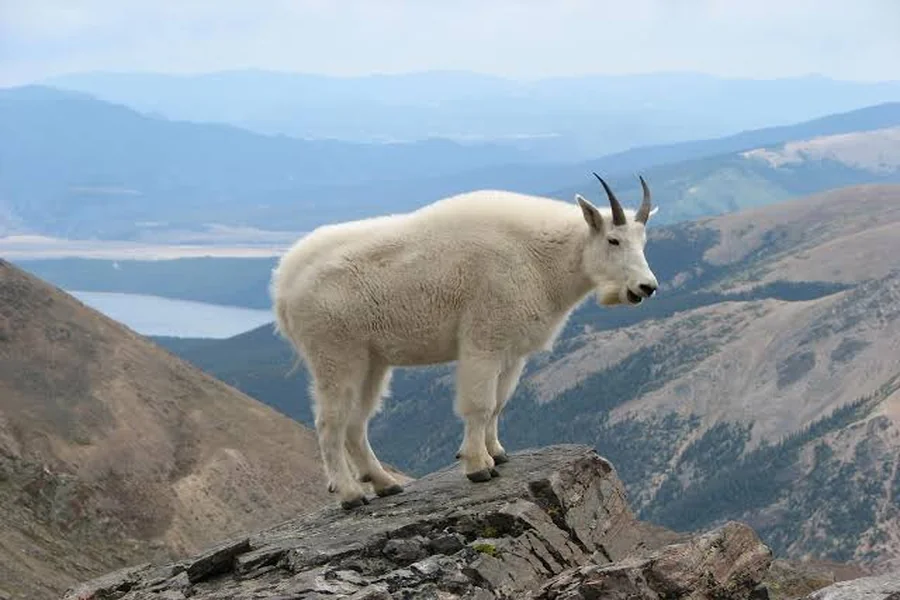
Mountain Goat
Scientific Name: Oreamnos americanus Class: Mammalia Diet: Herbivore
Mountain goats are found on the craggiest of mountain slopes in North America, frequently perched on ledges that seem impossible to climb. They have a hard outer shell and soft inside grippy pad almost like a climbing shoe. This enables them to climb almost vertical rock walls in search of minerals or new grass. They feed on grasses, moss and shrubs, adapting their nutrition to the various seasons of the mountain. Their thick white coat sheds in patches in winter to give the shaggy appearance which helps control their body temperature. During breeding season males, known as billies, fight with one another with their short horns, but this is generally a matter of posturing rather than injury. Kids are born on cliff ledges and are able to climb within hours protecting them from predators such as wolves and golden eagles. Mountain goats also come to mineral licks, and will even travel long distances to find mineral licks that are not available at higher elevations.
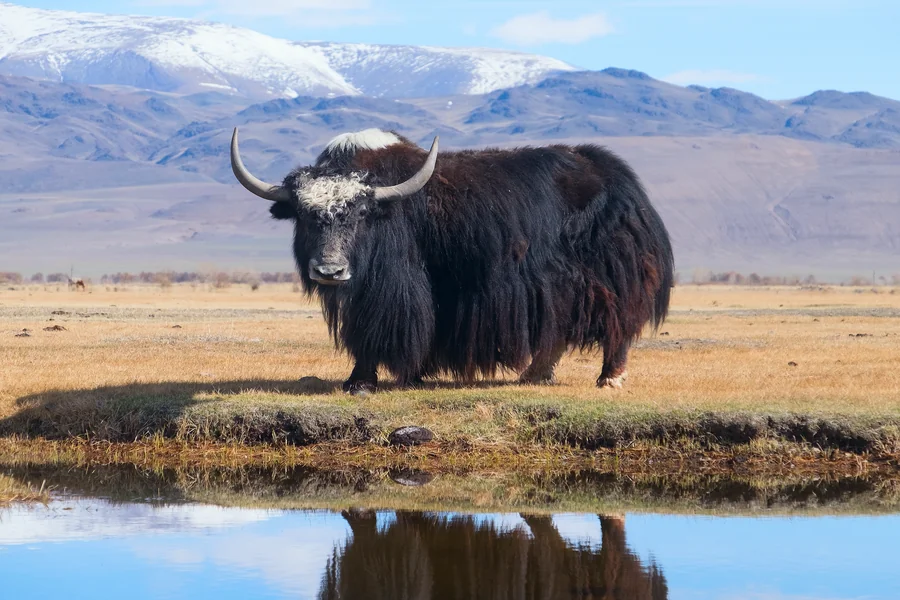
Yak
Scientific Name: Bos grunniens Class: Mammalia Diet: Herbivore
The yak is well adapted to the Himalayas, where oxygen is less plentiful than most large mammals can tolerate. It has enlarged lungs and heart for it to inhale more oxygen with its breaths. It has a dense double coat – long guard hairs that cover a soft undercoat – which helps it stay warm in cold, harsh winters and blizzards. Yaks graze on tough alpine grasses and lichens, spending most of the day slowly working across rocky slopes. Domesticated yaks have been the source of milk, wool and transport in communities in Tibet, Nepal and Mongolia for centuries, where vehicles are unable to reach. Wild yaks are larger than their domestic counterparts, and much more wary, and are now considered vulnerable from hunting and habitat loss. They have broad, spreading feet which help them to walk on icy ground; they can cross frozen rivers and snowfields with little hesitation.
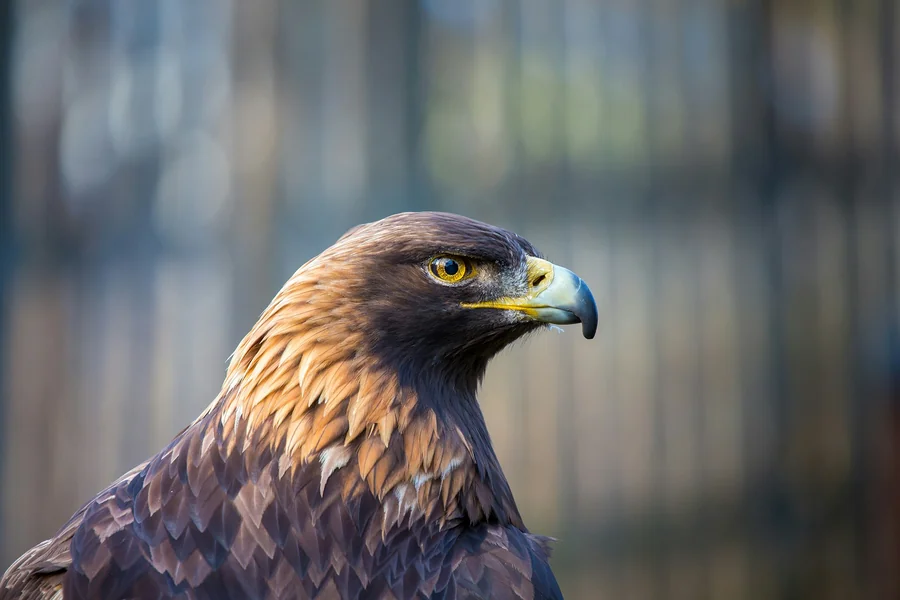
Golden Eagle
Scientific Name: Aquila chrysaetos Class: Aves Diet: Carnivore
Golden eagles nest on cliff faces throughout mountain ranges in Asia, Europe and North America and select areas that are nearly inaccessible to predators. Their eyesight is four to eight times better than a human’s and allows them to see a rabbit or marmot from more than a mile away when they are soaring on the mountain updrafts. They can have a wingspan of up to 7 feet, and can glide for hours with little wing flapping, using the rising air currents along ridgelines. They are predators of small mammals, birds, and sometimes of young ungulates, using a strike speed approaching 150 miles an hour. Mating pairs may stay together for life, and may occupy the same large stick nest, known as an eyrie, annually, making additions and additions until it resembles a bathtub. In many cultures, especially in the mountains, the golden eagle is regarded as a bird of power and the occurrence of these birds is considered to indicate a healthy undisturbed alpine habitat.
Andean Condor
Scientific Name: Vultur gryphus Class: Aves Diet: Scavenger
One of the largest flying birds on Earth, the Andean condor has a wingspan of up to 10.5 feet. It inhabits the Andes mountains of South America, and is an efficient rider of thermal air currents, sometimes flying for hours without a single beat of its wings. It is a scavenger, and will eat carrion of larger mammals (such as llamas and cattle) and is able to locate food from great heights due to its sharp eyesight. Vultures have bald heads which aid in keeping their head clean when feeding on dead animals. Condors do not mature until about six years of age and have one of the longest lifespans of any bird species, in the wild, exceeding fifty years. They are revered in a couple of Andean societies and are featured in the national symbols of nations like Chile and Bolivia. Today, their dwindling numbers are most seriously affected by habitat destruction and poisoning by contaminated carcasses.
Alpine Ibex
Scientific Name: Capra ibex Class: Mammalia Diet: Herbivore
The Alpine ibex is renowned for one wild party trick – climbing near-vertical dam walls to find salt and minerals in the concrete. The wild goat found in the European Alps has curved, ridged horns which can reach more than a metre in length in an older male and are primarily for use in the dominance struggle during the breeding season. On the underside of its hooves is a rubber-like material, which helps it to hold onto a smooth rock on which most creatures would slip. Ibex feed on high alpine meadows on grasses and herbs; when these are not accessible in winter due to snow cover, they descend into lower meadows. Towards the end of the 1800s, hunting had nearly rendered the species extinct, leaving only a small population in the Gran Paradiso area of Italy. Through careful reintroduction programs throughout the alpine region, their numbers have been rebuilt and they can now be seen regularly by hikers using high mountain trails during the summer.
Himalayan Tahr
Scientific Name: Hemitragus jemlahicus Class: Mammalia Diet: Herbivore
The Himalayan tahr can be found on steep rocky slopes in Nepal, India and Tibet at an altitude of 2,500 to 5,000 m. It is shaggy and has a reddish brown coat which becomes extremely thick during the winter and which gives the male a mane-like appearance around the neck and shoulders. Tahrs are grazers and eat grasses, leaves and shrubs and are grazed in small groups, with a keen awareness of snow leopards, and other predators. Their split hooves have a tough outer edge and a soft inner edge so that they can securely hold their foot on uneven rock as they race across cliffs. It is interesting to note that the species was first introduced to New Zealand in the early 1900s and its populations have now become established in the Southern Alps where it can sometimes be a problem for native flora. Although they are under threat in the wild due to habitat loss and competition with livestock in their native range, tahrs are still an integral part of the Himalayan food chain, and are prey to some of the most elusive predators in the region.
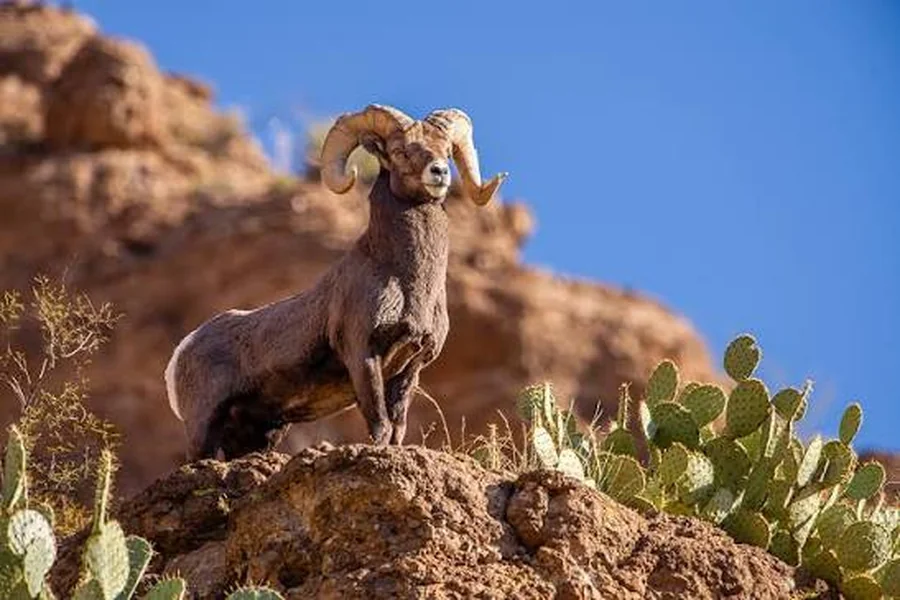
Bighorn Sheep
Scientific Name: Ovis canadensis Class: Mammalia Diet: Herbivore
The bighorn’s one memorable action is the ram’s head-on collision with another ramming ram into each other at up to 20 miles per hour during the breeding season. They have massive curved horns weighing up to 30 pounds which absorb the impact due to a double-layered skull designed to withstand repeated blows. Bighorns are found throughout the western North American mountains where they browse on grasses and shrubs, and travel to lower elevations for the winter to escape deep snow. Their hooves are hard on the outside and soft and grip on the inside, which enables them to climb on rock cliffs and keep most predators off of them. Herds are typically divided by sex, with rams in bachelor groups and ewes with their lambs in nursery groups, away from the breeding season. The bighorn were almost eradicated by disease introduced by domestic sheep, but have been slow to recover with reintroduction programs; respiratory disease remains a threat in some areas.
Mountain Lion
Scientific Name: Puma concolor Class: Mammalia Diet: Carnivore
One of the most common land mammals of the Americas is the mountain lion (cougar or puma), whose territory extends from the Canadian Rockies all the way down to the Andes Mountains. In the mountains, mountain lions hunt by stealth, and not by speed, lying in wait behind the cover of scrub or rocks and creeping up to deer, elk calves, and other small animals before suddenly springing into action in an explosive charge of speed. They have powerful hind legs that allow them to jump as far as 18 feet and navigate even the most rugged terrain with ease. Mountain lions are solitary creatures with expansive territories that can extend up to 100 square miles, depending on the presence of prey and habitat. They are mostly active in the mornings and evenings and seek refuge in caves or bushes in the hottest part of the day. Despite their size and strength, mountain lions rarely attack humans, and even when they do meet face-to-face, the mountain lions usually slink away quietly. Their biggest threat today is loss of habitat due to road construction and urbanization.
Red Panda
Scientific Name: Ailurus fulgens Class: Mammalia Diet: Omnivore
Red pandas inhabit the temperate forests in the eastern Himalayas, from an elevation of 2200m to 4800m, where they can find plenty of bamboo plantations that grow along the slopes of the mountainous regions. But although their name might suggest otherwise, they are not closely related to the Giant Panda and belong to a family of their own. They are mainly herbivorous, mostly eating bamboo leaves and stems; however, sometimes, they resort to eating fruits, insects, and even eggs when these are not available to them. They have a bushy tail which helps them stay balanced while climbing through the trees, and also wrap themselves in it to keep warm in the chilly weather on the top of the mountains. Red pandas have a pseudo thumb which is an elongated bone on their wrist that resembles and behaves as a thumb, and assists them in gripping bamboo stalks. Solitary animals, they are mostly active during twilight and dawn, and sleep all day long in tree branches. Destruction of habitats by logging and farming practices has reduced their numbers drastically, making them an endangered species in their habitat.
Chamois
Scientific Name: Rupicapra rupicapra Class: Mammalia Diet: Herbivore
The chamois is a small goat-antelope that lives throughout the mountain ranges of Europe, including the Alps and the Carpathians. The chamois is built for running fast in rough terrain; it can run up to 30 miles per hour over flat surfaces, and leap over gaps in its path that would prevent other animals from crossing. The chamois has hooves with a tough rim and rubbery pads, allowing the animal to move swiftly on ice and scree. The diet of the chamois consists of alpine plants such as grass, moss, and herbs in the summer months and lichens and buds of shrubs in winter. Chamois have horns in both sexes that are short and hooked with sharp curvature toward the end, being used in dominance displays but not battles. Herds consist mostly of females and young males, whereas old males lead solitary lives outside the breeding period.
American Pika
Scientific Name: Ochotona princeps Class: Mammalia Diet: Herbivore
The American pika is a rabbit-like mammal with rounded ears that lives in the mountainous areas of western North America on rocky slopes. Being so small, this animal has amazing endurance since it is active all year round and does not enter into a state of hibernation as many other mountain animals do. Pikas collect grasses, flowers, and leaves during summer, dry them up, and store them in the form of “hay piles” in the rocks to use them later when the whole area becomes covered with snow. The animal cannot tolerate the increase in temperature and dies if it overheats, thus, becoming a good indicator of climate changes in mountains for scientists. Pikas use high-pitched and loud calls that sound around the slopes of mountains, alerting other pikas of potential threats such as weasels and hawks. Their habitat does not include any other place except a particular rocky area.

Alpine Marmot
Scientific Name: Marmota marmota Class: Mammalia Diet: Herbivore
The alpine marmot lives in burrows made in the alpine meadows found in the European Alps and is commonly seen above an altitude of 2,500 meters. It spends summer feeding on grass and plants continuously to accumulate enough fat layers to help them survive a period of hibernation lasting up to six months. When hibernating, their heart rate decreases significantly and their body temperature reduces to near the surrounding burrow temperature. Marmots live in groups where there are lookouts posted near the burrow opening which make whistles whenever a golden eagle or fox is spotted approaching the area. The whistle alerts other members to hide in the burrow to escape danger. Some young marmots stay in their parent’s territory for two to three years assisting in breeding the new litter before they move out to create their colonies.
Vicuña
Scientific Name: Vicugna vicugna Class: Mammalia Diet: Herbivore
Vicuña is a close relative of the llama found at high altitudes in the mountains of the Andes, more than 4,000 meters above sea level. The vicuña is the animal with the most luxurious wool among all the animals because once upon a time, clothing made from wool was used by only the Inca kings. This is because this animal has the largest amount of hemoglobin in its blood and therefore can extract oxygen easily in the low atmospheric pressure areas. Vicuñas are grazers in open lands near the tree line and live in small family groups with the adult male guarding its area. Vicuñas were killed for their wool and became extinct in the middle of the 20th century. Fortunately, with some laws and the shearing program, there have been improvements in the number of vicuñas.
Mountain Gorilla
Scientific Name: Gorilla beringei beringei Class: Mammalia Diet: Herbivore
The mountain gorilla inhabits the dense forests of the Virunga mountains and Bwindi Impenetrable Forest found in Rwanda, Uganda, and the Democratic Republic of Congo at altitudes between 2,200 and 4,300 meters above sea level. Their body fur has developed as a physical adaptation to the cool weather conditions on the mountain ranges. The gorillas feed on leaves, stem, and shoots for much of the day when they forage for food in family units that are headed by one male silverback. Family units may range from a few individuals to more than 30 individuals with strong social ties formed by grooming and playing. The species was facing extinction in the 1980s when its numbers fell to less than 300 because of hunting and destruction of habitats. However, the current number exceeds 1,000 and has greatly improved after decades of hard conservation work.
More Animals That Call the Mountains Home
Fifteen wasn’t the end of the list — here are more species that thrive at altitude, worth a quick mention if you’re building this out further.
| Animal | Region | Quick Fact |
| Markhor | Central Asia, Himalayas | Wild goat with corkscrew-shaped horns, national animal of Pakistan |
| Barbary Sheep (Aoudad) | North African Atlas Mountains | Thrives on rocky, arid slopes with almost no water |
| Wolverine | Rocky Mountains, Scandinavia | Covers huge mountain territories in search of carrion |
| Takin | Eastern Himalayas | Stocky goat-antelope, national animal of Bhutan |
| Snowy Owl | Arctic and alpine tundra | Hunts across open, treeless high ground |
| Guanaco | Andes | Wild ancestor of the llama, runs at high speed on steep terrain |
| Rock Ptarmigan | Alpine and Arctic zones | Changes plumage color with the seasons for camouflage |
| Barbary Macaque | Atlas Mountains, Morocco | Only wild monkey species found in Europe (Gibraltar) and North Africa |
| Musk Deer | Himalayas, Central Asia | Fanged deer prized (and poached) for musk glands |
| Wild Yak | Tibetan Plateau | Larger and warier than its domesticated cousin |
| Golden Marmot | Pamir and Karakoram ranges | Close relative of the Alpine marmot, lives in colonies |
| Lammergeier (Bearded Vulture) | Himalayas, Alps, Africa | Drops bones from great heights to crack them open and eat the marrow |
| Mountain Zebra | Southern African highlands | Grazes on steep, rocky slopes unlike plains zebras |
| Snow Sheep | Siberian mountains | Adapted to some of the coldest alpine terrain on Earth |
| Andean Cat | High Andes | One of the rarest wild cats, rarely photographed |
Want me to turn any of these into full 150–200 word profiles in the same format as the main 15?
Final Thoughts
Living in the mountains isn’t easy. Before any animals could attempt it, there would be the thin air, the freezing nights and the cliffs which plunge vertically. Yet these 15 species of animals that live in mountains have turned that harsh setting into home, using thicker fur, stronger lungs & sharper instincts to get by. A lot can be learned from watching how each one lives, and what it takes to survive. It is also important to protect these high-altitude habitats, as well as the rainforests or oceans, because the removal of one habitat of a mountain can upset the balance for all organisms above the tree line.
FAQs:
What animals usually live in mountains?
Snow leopards, mountain goats, yaks, golden eagles, and red pandas are among the most well-known animals that live in mountains, each adapted to cold, thin air and steep terrain.
How do animals survive in mountains with low oxygen?
Mountain animals often have larger lungs, more red blood cells, or higher hemoglobin levels than lowland species, letting them absorb more oxygen from thin air.
What is the most common mammal found in mountains?
Marmots and pikas are among the most common small mammals found across mountain ranges worldwide, while mountain goats and sheep are the most common large grazers.
Do any big cats live in the mountains?
Yes. Snow leopards and mountain lions are the two most well-known big cats living in high-altitude mountain regions, both relying on stealth to hunt on steep terrain.