Animal That Starts With X? 20 Strange Wild Species You Won’t Believe Exist
Can you name an animal that starts with X? Most people freeze at that question. Don’t worry. Nature has more options than you think. You can find a fast ground squirrel in Africa. You can find see-through fish in the Amazon. You can even find a dog that guided souls in Aztec stories. This guide covers 20 animals that start with X. Each one has a scientific name, class, diet, habitat and one fun fact. Let’s get started.
Animal That Starts With X: Complete List
Below is the list of animals that start with X:
| Number of Animals | Names of Animals That Start With X |
| 1 | Xerus (South African Ground Squirrel) |
| 2 | X-Ray Tetra |
| 3 | Xenopus (African Clawed Frog) |
| 4 | Xantus’s Hummingbird |
| 5 | Plain Xenops |
| 6 | Xoloitzcuintli |
| 7 | Xerces Blue Butterfly |
| 8 | Xiphias (Swordfish) |
| 9 | Xenoglaux (Long-Whiskered Owlet) |
| 10 | Xema (Sabine’s Gull) |
| 11 | Xingu River Ray |
| 12 | Xenosaurus (Knob-Scaled Lizard) |
| 13 | Xantusia (Yucca Night Lizard) |
| 14 | Xiphophorus (Green Swordtail) |
| 15 | Xenomystus (African Knifefish) |
| 16 | Xylocopa (Eastern Carpenter Bee) |
| 17 | Xenoposeidon |
| 18 | Xiphactinus |
| 19 | Xestospongia (Giant Barrel Sponge) |
| 20 | Xenia (Pulsing Coral) |
Quick answer: The most common animal that starts with X is the xerus, an African ground squirrel. Other well-known ones are the x-ray tetra, the Xoloitzcuintli dog and the xenops bird.
| Group | X Animals | Count |
| Mammals | Xerus, Xoloitzcuintli | 2 |
| Birds | Xantus’s Hummingbird, Plain Xenops, Long-Whiskered Owlet, Sabine’s Gull | 4 |
| Fish and Rays | X-Ray Tetra, Swordfish, Xingu River Ray, Swordtail, African Knifefish, Xiphactinus | 6 |
| Reptiles and Amphibians | Xenopus, Knob-Scaled Lizard, Yucca Night Lizard, Xenoposeidon | 4 |
| Insects | Xerces Blue, Carpenter Bee | 2 |
| Sea Invertebrates | Giant Barrel Sponge, Xenia | 2 |
Detailed Look at the Animal That Starts With X
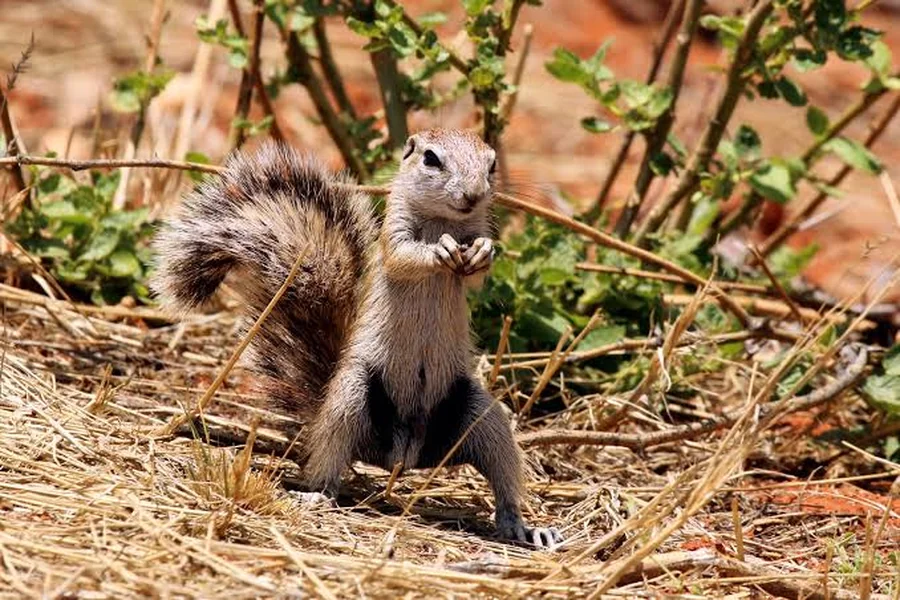
Xerus (South African Ground Squirrel)
Scientific Name: Xerus inauris
Class: Mammalia
Diet: Omnivore
The South African ground squirrel is a small rodent that lives in groups. It digs burrows in hard dry soil. A number of burrows are linked together to form a common dwelling. The tail is also used by the animal to act as a sunshade. It holds its tail up over its back and stands in the shade. This little stunt helps it stay cool in hot weather. These squirrels live above ground during the day. They root and bulbs. They also feed on seeds and bugs. Several times one squirrel will perch on its hind legs and peer out, alert for danger. Alerts against the appearance of a hawk or jackal. The group then rushes into the burrows quickly.
Habitat: Dry grassland and desert plains in southern Africa.
Fun Fact: It shares burrows with meerkats and mongooses.
X-Ray Tetra
Scientific Name: Pristella maxillaris
Class: Actinopterygii
Diet: Omnivore
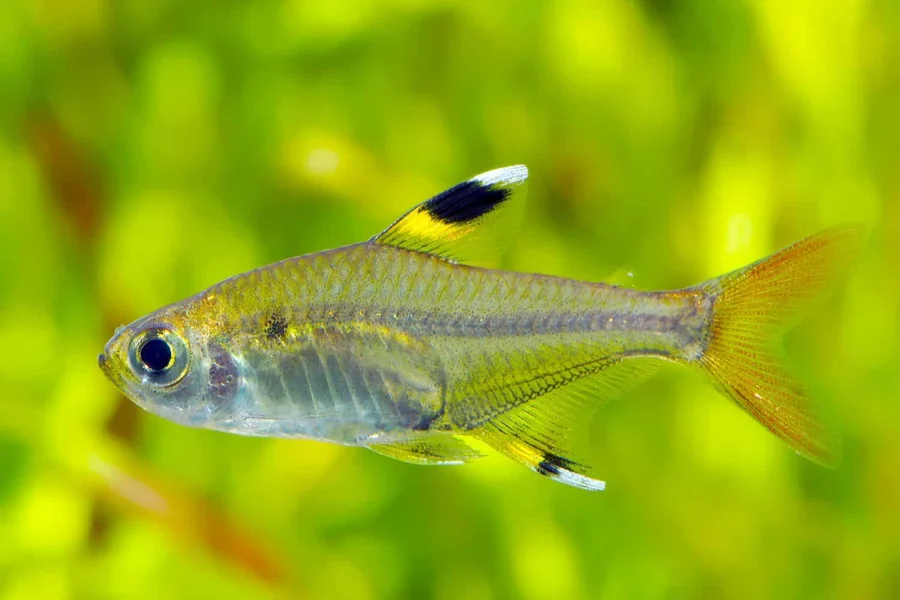
The x-ray tetra is a tiny fish with a see-through body. Its organs and spine can be detected without any instruments. Fins have yellow and black bands. This fish is shoaling and fast moving. Remains close to plants and roots in slow flowing water. Feeds on small insects and plant debris. It will also peck at small crustaceans. It is one of the favorite choices for home tanks, due to its smallness and calmness. Most of the adult size is around 2 inches. Do not go less than 6 people. A solitary fish becomes stressed and hides for the day! Groups are more likely to feel safe and act bravely.
Habitat: Slow streams and flooded forest in the Amazon and the Guianas.
Fun Fact: You can see its swim bladder through its skin.
Xenopus (African Clawed Frog)
Scientific Name: Xenopus laevis
Class: Amphibia
Diet: Carnivore
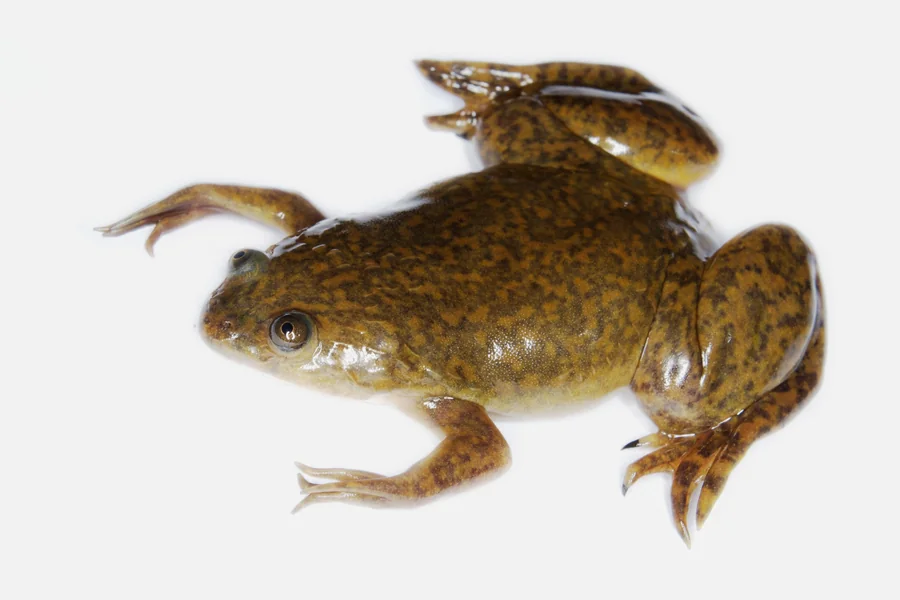
The African clawed frog spends its whole life in water. Has webbed hind legs and three tiny claws. It has no tongue. Uses the front hands to push food into its mouth. Feeds on insects and worms. It also feeds on small fish and on dead animals. This frog has lines of cells along its body that it uses to sense motion. In the water these cells operate as touch sensors. It is used in scientific research in the laboratories due to its large eggs which are easily studied. In the mid 1900s doctors even used it for early pregnancy tests. The frog also escaped from captivity and is now found in the wild outside of Africa today. Some of these groups are detrimental to the wildlife that lives locally.
Habitat: Ponds, pools and slow rivers in sub-Saharan Africa.
Fun Fact: Doctors once injected women’s urine into this frog to test for pregnancy.
Xantus’s Hummingbird
Scientific Name: Basilinna xantusii
Class: Aves
Diet: Nectarivore
Xantus’s hummingbird lives only in the southern part of Baja California in Mexico. It is small. Adults are approximately 12 cm in length. Males have a black mask with a white stripe behind each eye. The belly is orange. This bird is a nectar feeder of desert blooms and shrubs. It also traps small insects as they fly. It has so fast wings that you can see only a blur. Can hover and fly backward. Males stake out feeding areas and drive away competitors. A female makes a nest out of plant fluff and spider silk. The nest is on a thin branch and contains two small eggs. Chicks are raised and depart the nest at about 3 weeks of age.
Habitat: Desert scrub, canyons and oases in Baja California Sur, Mexico.
Fun Fact: It is named after Hungarian naturalist John Xantus.
Plain Xenops
Scientific Name: Xenops minutus
Class: Aves
Diet: Insectivore
The plain xenops is a small bird that works like a tiny woodpecker. Reaches a length of 4 inches. It is brown in color and has a white stripe on the cheek. The bill is slightly curved up. This bird is found in forests in Mexico south to Argentina. Runs along thin branches and vines. Hangs upside down while hunting. Gnaws and pry on decaying wood to locate insects and spiders. Also inspects dead leaves and curled stems. They are found in pairs and are frequently associated with mixed groups of other birds in the forests. They make their nests in small holes in rotten wood. The chicks are raised by both parents.
Habitat: Lowland and foothill forests from Mexico to Argentina.
Fun Fact: It hunts upside down on twigs too thin for most birds.
Xoloitzcuintli
Scientific Name: Canis lupus familiaris
Class: Mammalia
Diet: Omnivore
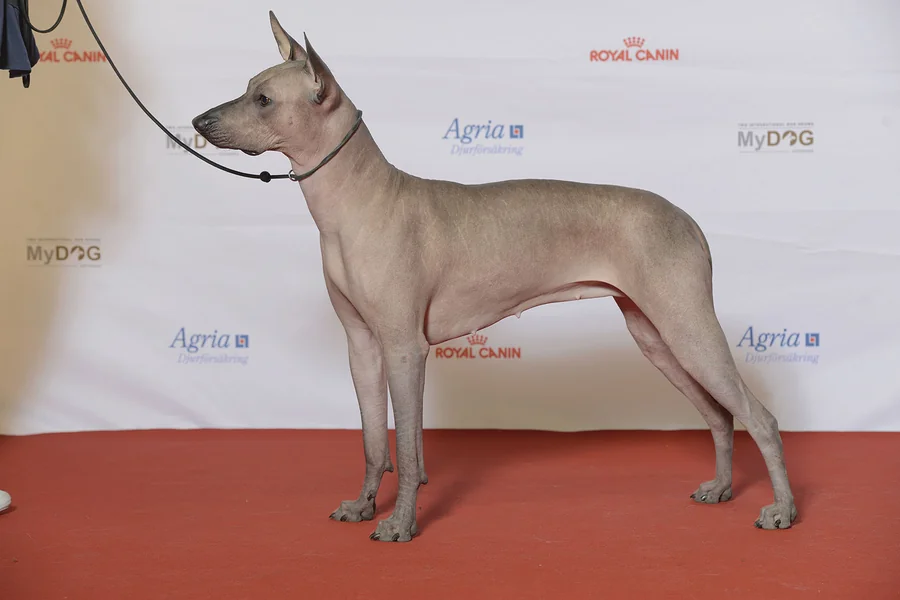
The Xoloitzcuintli is a dog breed from Mexico. People call it the Xolo for short. It comes in three sizes. Some dogs have no hair while others have a short coat. Both types can appear in the same litter. Records trace the breed back about 3000 years. Aztec people linked it to the god Xolotl and believed it guided souls after death. The dog is lean and calm. It stays alert and bonds with its family. Hairless Xolos feel warm to the touch. Owners must use sunscreen in strong sun and a coat in the cold. The breed needs daily walks and light training. Puppies learn fast.
Habitat: Homes worldwide. The breed began in Mexico.
Fun Fact: Hairless and coated puppies can be born in the same litter.
Xerces Blue Butterfly
Scientific Name: Glaucopsyche xerces
Class: Insecta
Diet: Herbivore
The Xerces blue was a small butterfly from the San Francisco Peninsula. It inhabited the sand dunes by the seashore. Males had blue wings and females were mostly brown. The caterpillars most probably fed on a plant known as deerweed. They were most likely cared for by ants. The ants, in turn, supplied the caterpillars with a sweet liquid. The dunes were built up with houses and streets. The final spottings were in the early 1940’s. It’s the first American butterfly to disappear due to human growth, by experts. Its name is still remembered today in the Xerces Society. That group protects small animals without a backbone such as insects. Its tale continues to inform conservation planning decisions.
Habitat: Coastal sand dunes in San Francisco, California. Now extinct.
Fun Fact: A whole conservation group took its name from this butterfly.
Xiphias (Swordfish)
Scientific Name: Xiphias gladius
Class: Actinopterygii
Diet: Carnivore
The swordfish is a fast ocean hunter with a long flat bill. The Bill resembles a sword. The larger adults can jump 10 feet. Adults are without scales and teeth. They dive to great depths during the day, and near the surface at night when they feed. The eyes and brain are warmed by a special organ. This will assist the fish in finding food in cold water. The swordfish brandishes its bill at schools of squid and fish. Then it feeds on the stunned animals. Can swim rapidly for short periods of time. It is often confused with the marlin. It is distinguished by a flat bill. The round one is the marlin.
Habitat: Warm and temperate open oceans worldwide.
Fun Fact: Its eye heater lets it hunt in near-freezing water.
Xenoglaux (Long-Whiskered Owlet)
Scientific Name: Xenoglaux loweryi
Class: Aves
Diet: Insectivore
The long-whiskered owlet is one of the smallest owls on Earth. It’s approximately 5 inches long. Has thin bristles around its face resembling whiskers. This may aid it in “feeling its way in the dark” with these bristles. Scientists found the bird in Peru in 1976. It inhabits steep mountainous areas in cloud forests. Active at night, hunting insects. May also kill other small prey. The owlet is orange brown, with feathers that match the colours of moss and bark. It is very rare in the wild. Its forest home is shrinking due to farms and logging. Now it is listed as endangered by researchers. Its primary objective is to safeguard its forest.
Habitat: Cloud forests in the Andes of northern Peru.
Fun Fact: Science only learned of this owl in 1976.
Xema (Sabine’s Gull)
Scientific Name: Xema sabini
Class: Aves
Diet: Omnivore
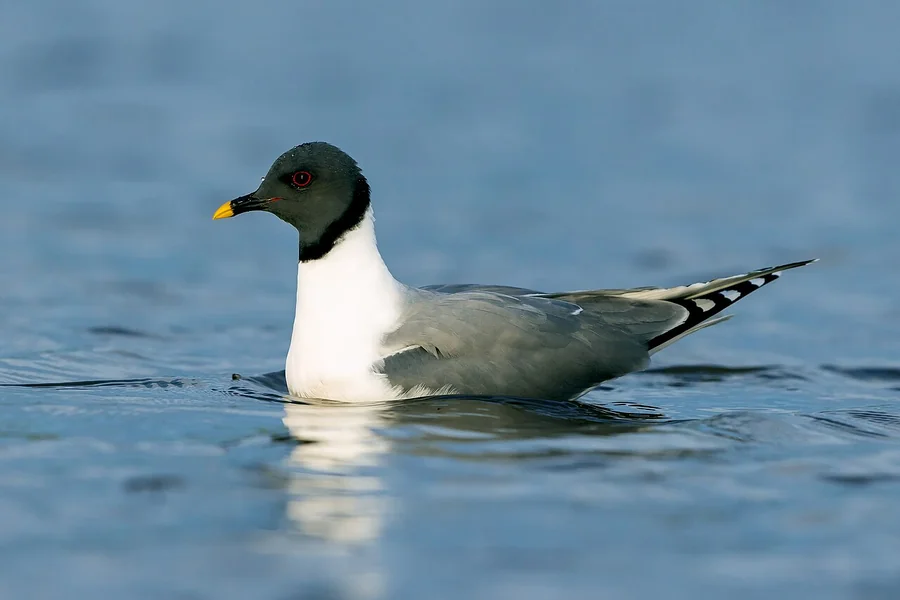
Sabine’s gull is a small sea bird with a forked tail. It has a dark gray head in summer. The bill is black and has a yellow tip. The majority of gulls remain close to the coast. This one makes a long trip. Breeds in the Arctic tundra and winters at sea off the coasts of South America and southern Africa. At sea, it hunts for small fish and shrimp in the water’s surface. In the tundra feeds on insects and larvae. Pairs nest on ground around pools. They fend off the eggs by sharp calls and dives. Chicks leave the nest shortly after hatching. Later the family takes off towards the sea.
Habitat: Arctic tundra in summer and open ocean in winter.
Fun Fact: It is one of the few gulls with a forked tail.
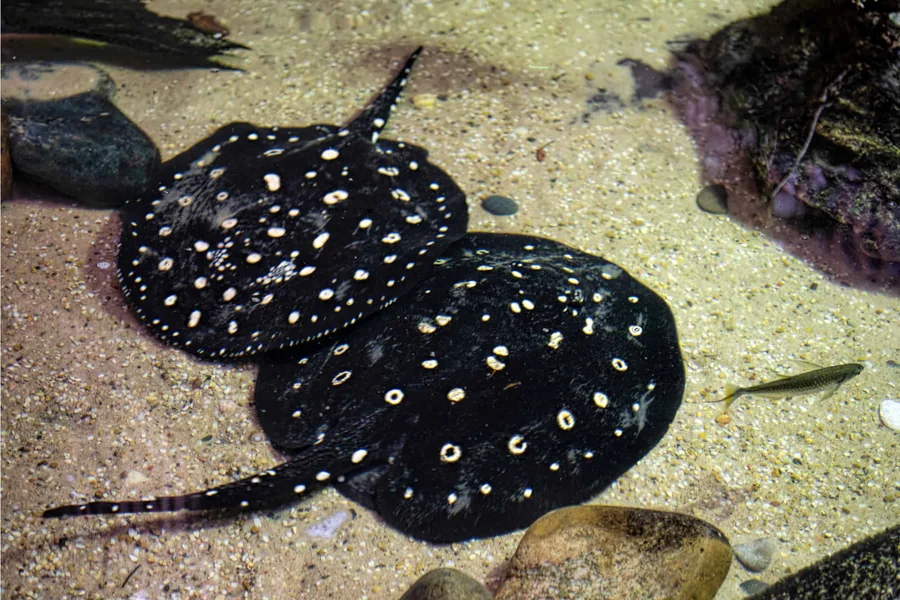
Xingu River Ray
Scientific Name: Potamotrygon leopoldi
Class: Chondrichthyes
Diet: Carnivore
The Xingu River ray is a freshwater stingray from Brazil. The body is round, black and has light spots. This is a design reminiscent of a night sky. The disc can reach a diameter of 20″ (50cm). Sits on a sandy bed of the river and remains fixed for extended periods. It feeds on insect larvae. It also takes shrimp and small fish. Tail has a stout, venomous spine. It is used by the ray only when it is feeling cornered. Pregnant females give birth to live young. Threat from dams and the pet trade. Its population is monitored by biologists. It is kept alive by clean water and safe river beds.
Habitat: Rocky and sandy stretches of the Xingu River in Brazil.
Fun Fact: It lives in one river system and nowhere else.
Xenosaurus (Knob-Scaled Lizard)
Scientific Name: Xenosaurus grandis
Class: Reptilia
Diet: Insectivore
Knob-scaled lizards live in rocky forest areas of Mexico and Guatemala. They have flattened heads and stout bodies. They have some rough bumps on their back. This build allows them to invade narrow cracks in rocks. They’re difficult to remove from the hands of predators. At night the lizard crawls out of the crack to hunt for bugs. Also will feed on spiders. Takes a long time to move and stays in a small area for most of its life. Female dogs do not lay eggs, they give birth to puppies. A few species are uncommon. Their habitat is negatively affected by land clearance. Small groups are also being affected by the collection for pet trade, which is feared by researchers. They grow slowly and have difficulty recovering.
Habitat: Rocky forest slopes and crevices in Mexico and Guatemala.
Fun Fact: Its flat head works like a plug in a rock crack.
Xantusia (Yucca Night Lizard)
Scientific Name: Xantusia vigilis
Class: Reptilia
Diet: Insectivore
The yucca night lizard is a tiny reptile from the dry parts of the southwestern United States and Baja California. It grows to about two inches without the tail. Its skin is soft with dark spots. It has no movable eyelids. A clear scale covers each eye. The lizard licks its eyes to clean them. It lives under fallen yucca and Joshua tree logs and in rock gaps. It spends most of its life in a small patch of ground. It hides by day and hunts at dusk. It eats termites and ants. It also eats small beetles. Females bear live young. A litter holds one or two babies.
Habitat: Desert scrub with yucca and Joshua trees in the US Southwest and Baja California.
Fun Fact: It can spend years within a few yards of the same log.
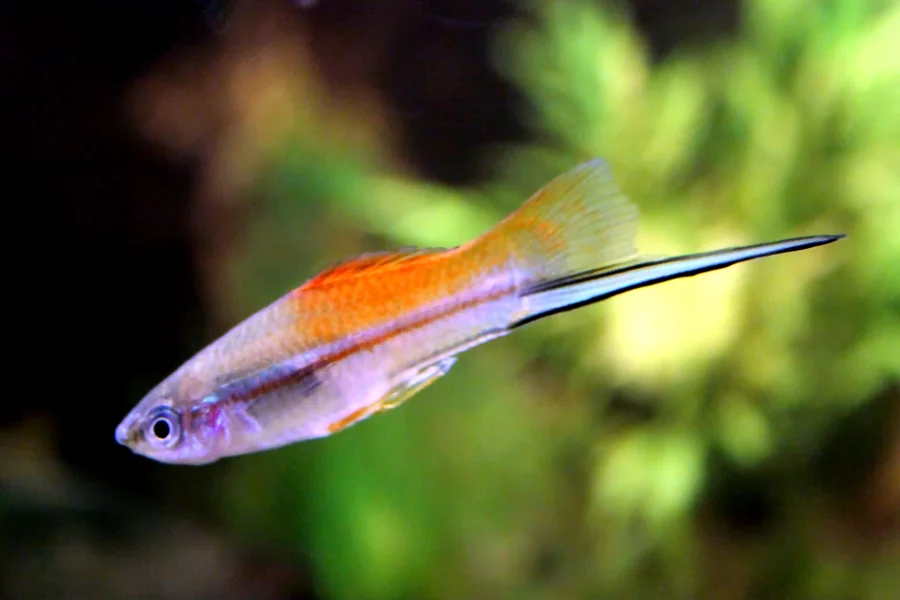
Xiphophorus (Green Swordtail)
Scientific Name: Xiphophorus hellerii
Class: Actinopterygii
Diet: Omnivore
The green swordtail is a small freshwater fish from Mexico and Central America. Males grow a long thin extension on the lower tail fin. It looks like a blade. Females are larger and have no sword. These fish live in streams and ponds. They eat algae and plant bits. They also eat insects and small worms. Swordtails bear live young instead of laying eggs. A female can store sperm for months and give birth many times from one mating. Some females can even change into males. This change is rare. The fish is popular in home tanks because it is hardy. It does best in groups with plenty of space to swim.
Habitat: Streams, ponds and springs from Mexico to Honduras.
Fun Fact: Females with a long sword often get more attention from males.
Xenomystus (African Knifefish)
Scientific Name: Xenomystus nigri
Class: Actinopterygii
Diet: Carnivore
The African knifefish has a flat dark body that looks like a blade. It has no back fin. It has a long fin on its belly. This fin is used by the fish for swimming forwards and backwards. It is found in plants and roots in the daytime. It comes out at night to hunt. Feeds on insects and small fishes. It also consumes shrimp as well. The fish detects low electrical currents in the water. This aids its ability to locate prey in dark and muddy areas. It is also able to inhale air at the surface. That ability allows it to survive in low oxygen waters. Grows up to 12 inches tall. A lot of collectors enjoy its unique appearance.
Habitat: Slow rivers, swamps and weedy pools across tropical Africa.
Fun Fact: It can swim backward as fast as it swims forward.
Xylocopa (Eastern Carpenter Bee)
Scientific Name: Xylocopa virginica
Class: Insecta
Diet: Nectarivore
The eastern carpenter bee looks like a bumblebee but has a shiny black belly. It is a hairy one of a bumblebee. This bee makes round holes in wood and nests there. Does not consume wood. Only builds tunnels for eggs. There are a series of small chambers in each tunnel. The female deposits pollen into each chamber, and one egg into each. Both sexes drink nectar from flowers. They are also used as pollinators of fruit trees and garden plants. Males patrol nests and chase insects as they fly by. They cannot sting. Females will sting but not often unless handled. These bees are attracted to old decks and fence posts. They are kept away by paint or stain.
Habitat: Woodlands, gardens and wooden buildings in eastern North America.
Fun Fact: Males act tough but have no stinger at all.
Xenoposeidon
Scientific Name: Xenoposeidon proneneukos
Class: Reptilia
Diet: Herbivore
Xenoposeidon was a giant plant-eating dinosaur. It was once in southern England 140 million years ago. It’s strange Poseidon! It is known to scientists from a partial bone from the back. That one bone is not a bone that you find in other long-necked dinosaurs. The animal was a member of the Sauropoda. The long necks and long tails of sauropods. They had four thick legs. Xenoposeidon probably fed on the leaves of tall plants. Its exact size is still a subject of debate among experts. If a new fossil could be discovered it would help resolve the issue. For now it remains a mystery to fossil collectors. This is a bone from Sussex which was named in 2007.
Habitat: Early Cretaceous floodplains in southern England. Now extinct.
Fun Fact: One bone was enough to name a new dinosaur.
Xiphactinus
Scientific Name: Xiphactinus audax
Class: Actinopterygii
Diet: Carnivore
Xiphactinus was a huge predatory fish that lived about 85 million years ago. It swam in the shallow sea that blanketed North America. It grew to be 17 feet long. The fish was deep-bodied and with a mouth full of sharp teeth. It had an inverted mouth that it used for biting prey that swam overhead. It preyed on other fish. A well-known fossil provides evidence of a six-foot fish that was inside a fish. Some experts believe that the meal caused the hunter’s death. Fossils are found in the United States in other states besides Kansas. This is because many of them are displayed in museums. The enormous jaw is on display at the zoo. It is still one of the most famous of the fish of the time.
Habitat: The Western Interior Seaway of Late Cretaceous North America. Now extinct.
Fun Fact: The “fish in a fish” fossil is one of the most famous in the US.
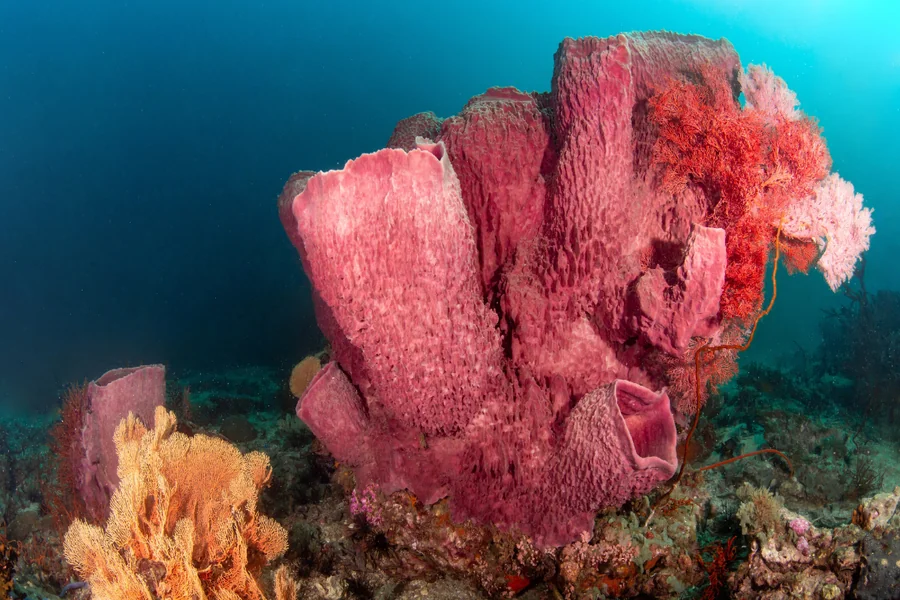
Xestospongia (Giant Barrel Sponge)
Scientific Name: Xestospongia muta
Class: Demospongiae
Diet: Filter feeder
The giant barrel sponge looks like a large vase on a coral reef. Can reach a height of more than a diver. The animal does not have a brain and a heart. It has very small pores in its wall through which the water passes and is released from the top. The sponge removes bacteria and little food particles. Clears a significant volume of water per day. Some barrels can survive for several decades. Some can live for many hundreds of years. Many sponges reproduce sexually, producing masses of cells in the sea water each year. Hollow center provides shelter for the fishes and crabs. Disease and warm water will cause the sponge to become weak and pale. Bleaching is this damage.
Habitat: Coral reefs in the Caribbean and western Atlantic.
Fun Fact: Divers call it the redwood of the reef.
Xenia (Pulsing Coral)
Scientific Name: Xenia umbellata
Class: Anthozoa
Diet: Photosynthesis and plankton
Xenia is a soft coral that looks like it waves at you. It has polyps that open and close in a regular rhythmic manner. Each pulse looks like a hand that clenches and opens. Research indicates that the movement of water around the coral and oxygen can be transported. This coral is soft corals with no hard skeleton. It is found on Indo-Pacific reefs, and is prolific in the right environment. It hosts tiny algae in its tissue which produce food using light. The coral also catches small plankton. It is commonly cultivated in aquaria. Can invade and take over a tank if left untreated. It can be lost from some reefs when water temperatures are too high. It’s the popular choice for reef enthusiasts thanks to its appearance.
Habitat: Shallow reefs in the Indo-Pacific.
Fun Fact: Its polyps pulse all day like a slow heartbeat.
Final Thoughts
Animal that starts with X are rare but real. They include squirrels, fish, birds, lizards and even a sponge. Some are common in home tanks. Others live in remote forests or deep reefs. A few are gone forever and survive only as fossils or stories. Each one shows how nature fills every corner of the planet. Learn their names. Share what you find. Support the groups that protect their habitats.
FAQs:
What is an animal that starts with X?
The xerus is the most common answer. It is a ground squirrel from Africa. Other options include the x-ray tetra, the xenops and the Xoloitzcuintli.
Is there a mammal that starts with X?
Yes. The xerus is a mammal. The Xoloitzcuintli dog breed is one too.
Which fish start with X?
The x-ray tetra, swordfish (Xiphias), swordtail (Xiphophorus) and African knifefish (Xenomystus) all start with X.
Is there a bird that starts with X?
Yes. Xantus’s hummingbird, the plain xenops and Sabine’s gull (Xema) all start with X.
Are there extinct animals that start with X?
Yes. The Xerces blue butterfly, Xenoposeidon, and Xiphactinus are all extinct.
Can you keep an X animal as a pet?
Yes. X-ray tetras and swordtails suit home tanks. The Xoloitzcuintli is a family dog.