Top 15 Animals That Live in Wetlands (With Pictures)
On the surface, wetlands appear serene. They are constantly in motion under the “surface”. There’s a water-loving, mud-loving, anything-loving creature under every splash, croak, and ripple. We explore animals that live in wetlands and how each one survives in a half-water/half-land world. These animals demonstrate what a swamp is like when it comes to life: a lot.
Why Wetlands Support So Much Wildlife
Wetlands are areas where the land meets the water. The union of the two offers food sources, shelters, and nesting grounds which very few other habitats can offer. These include marshes, swamps, bogs, and delta rivers. Animals have to be able to adjust to the changes in the water levels, or else they cannot survive for very long in such areas.
List of Animals That Live in Wetlands
Below is the list of animals found in wetland habitats around the world.
| Number | Animal |
| 1 | American Alligator |
| 2 | Great Blue Heron |
| 3 | North American Beaver |
| 4 | River Otter |
| 5 | Red-Winged Blackbird |
| 6 | Muskrat |
| 7 | American Bullfrog |
| 8 | Green Anaconda |
| 9 | Capybara |
| 10 | Dragonfly |
| 11 | Wood Duck |
| 12 | Snapping Turtle |
| 13 | Marsh Rabbit |
| 14 | American Flamingo |
| 15 | Hippopotamus |
Detailed Look at the Animals That Live in Wetlands
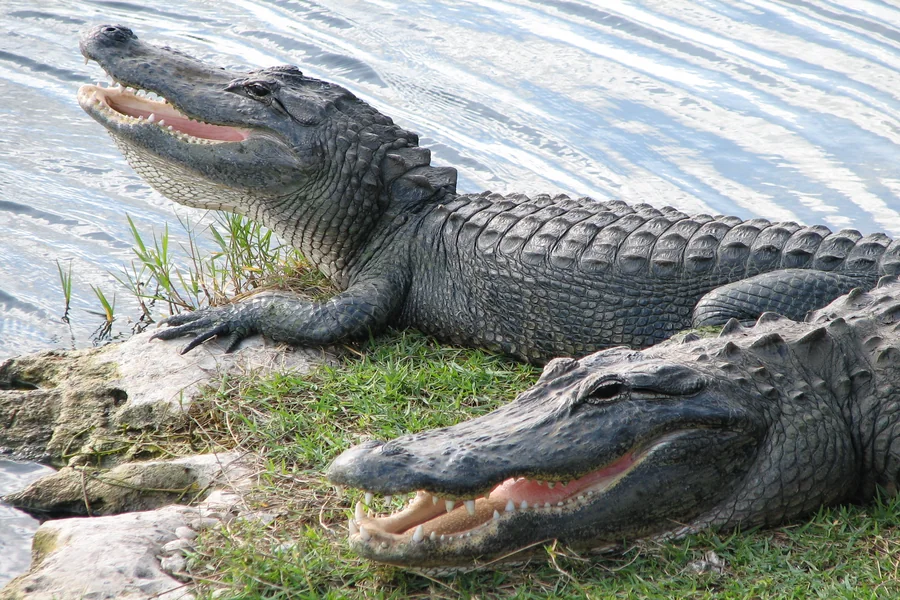
American Alligator
Scientific Name: Alligator mississippiensis Class: Reptilia Diet: Carnivore
The American alligator basically runs the show in southeastern wetlands. It floats on the surface of the water most of the day with its eyes and nostrils exposed, ready to attack at an opportune moment. Patience does reward. The bite is strong enough to break turtle shells and turtles’ bones with ease. During dry periods, alligators make big holes in the water called “gator holes” and when water is scarce in other spots, dozens of other species are saved. It’s for this reason that biologists say they are a keystone species.
Nest mounds are constructed of mud and plants and the females incubate the eggs for months, never leaving the nest. After hatching, she carries off the young ones in her mouth to water; one thing in which one can tell that she is a reptile. In the wild, alligators can live up to 50 years. They are quite adaptable and can be found either in brackish or freshwater marshes, from Texas swamps to North Carolina coastal wetlands.
Great Blue Heron
Scientific Name: Ardea herodias Class: Aves Diet: Carnivore
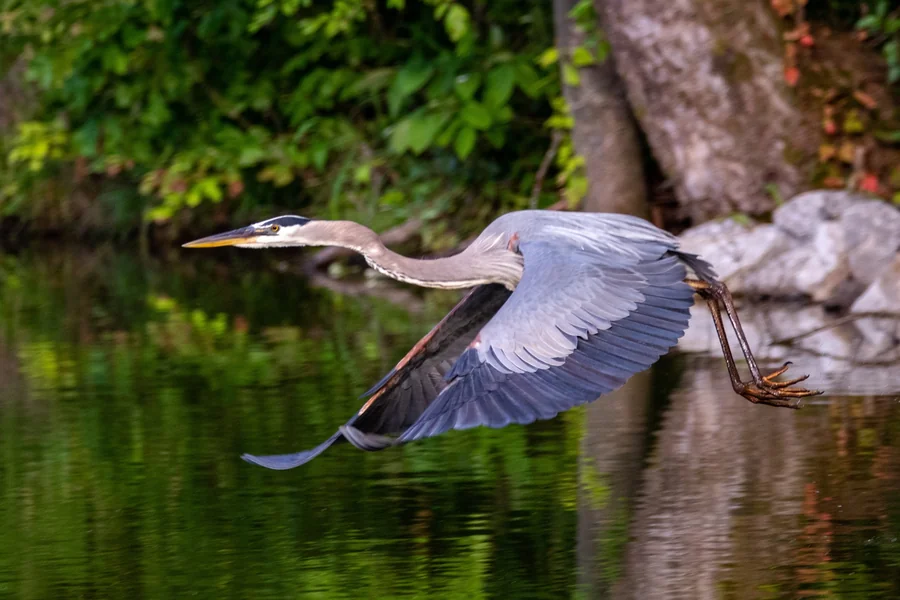
Stand near any marsh at dawn and you’ll likely spot a great blue heron frozen mid-step, one leg raised, scanning the shallows. The absence of movement is not laziness, it’s strategy. She goes to the trouble of watching until her prey comes into view, and then snatching it up with a darting, dagger-like bill. Most of their diet consists of fish, but frogs, crayfish and small rodents that stray too near to the water will do just as well.
They are one of the largest wading birds in North America, standing about four feet tall and having a six-foot-plus wingspan. Though small, they fly with great elegance, their necks folded back into an S-shape and their legs trailing straight from their backs. Great blue herons roost in groups called “rookeries” and typically construct stick nests above the water in tall trees. They have everything they need in a wetland: shallow depths to feed on, tall sticks to perch up on and plenty of prey to drift through the reeds below.
North American Beaver
Scientific Name: Castor canadensis Class: Mammalia Diet: Herbivore
Few animals reshape their environment the way beavers do. With sharp incisors and raw persistence they fell trees, dragged branches, and packed mud into dams, changing the flowing streams into still ponds. That new wetland habitat isn’t just beneficial for the beaver. It provides shelter for fish, amphibians, waterfowl and a myriad of insects that cannot thrive in high velocity water. For this reason, beavers are sometimes referred to as ‘ecosystem engineers’ by ecologists.
Their lodges are located in the center of these ponds, and they have an underwater entrance to protect them from predators. There is a dry chamber above the water line, protecting the whole family from winter. Beavers feed on the bark, leaves and aquatic plants, and store food under water near the lodge before the winter freeze. When they’re about to be in danger, their flat, paddle-shaped tail slap is a warning that can travel across a quiet marsh for great distances. Beaver constructed wetlands may persist for many years.
River Otter
Scientific Name: Lontra canadensis Class: Mammalia Diet: Carnivore
Seeing a river otter play is akin to pure joy – and it really is. These animals playfully slide down muddy banks, wrestle and chase each other for no reason other than fun. This playfulness rests, however, on solid skills. The otters’ webbed feet, streamlined body and thick double coat enable them to cope with the cold and wetness of the marsh water.
They’re not only strong, they are also quick with their reflexes and senses when it comes to catching fish, crayfish, frogs and sometimes a small bird. When hunting underground, a river otter can hold its breath for as long as eight minutes. What they need from wetlands, they get: clean water, fish and lots of bank cover for dens. Otters can be used as an indicator of a healthy wetland ecosystem since they require good water quality to survive. If you can find one, it most likely is a healthy habitat.
Red-Winged Blackbird
Scientific Name: Agelaius phoeniceus Class: Aves Diet: Omnivore
In spring, walk past any cattail marsh and you will hear it before you see it, that piercing ‘conk-la-ree,’ echoing from the reeds. Red-winged blackbirds are one of the most common and most territorial birds of North American wetlands. Males sport bright red and yellow shoulder patches, and defend a patch of marsh, sometimes chasing intruders many times their size such as hawks.
They change their diet according to the seasons. Insects are the major component in spring and summer and seeds and grain in fall and winter. Females construct nests, using grass and mud that they construct into a cup shape that is woven just above the water line of the reeds. One male may mate with multiple females in a breeding season, the females excavating their own nests within the male’s territory. Outside the breeding season, red-winged blackbirds form large flocks, occasionally thousands of birds. Marshes seem to be alive with their constant presence and the size of their population is sometimes used as an indicator of wetland health.
Muskrat
Scientific Name: Ondatra zibethicus Class: Mammalia Diet: Herbivore
Muskrats might be the most underrated wetland resident out there. They are smaller than a beaver, but they live a similar life, inhabiting and frequenting the marshes, ponds and slow rivers. They have a long scaly tail which works like a rudder to swing them through the water and their partially webbed hind feet paddle.
The muskrat constructs dome-shaped lodges using cattails, reeds and mud; typically these are no higher than the level of the water. They provide them shelter from predators and harsh winters as well. They feed on roots and stems of the cattail, and will consume small fish or mussels if plants are not available. Muskrats will consume nearly a third of their body weight daily. They are always feeding and burrowing, which actually serves to prevent marsh vegetation from smothering out open water and providing space for ducks and other species. Although small, muskrats create a wetland environment to the same extent as larger animals.
American Bullfrog
Scientific Name: Lithobates catesbeianus Class: Amphibia Diet: Carnivore
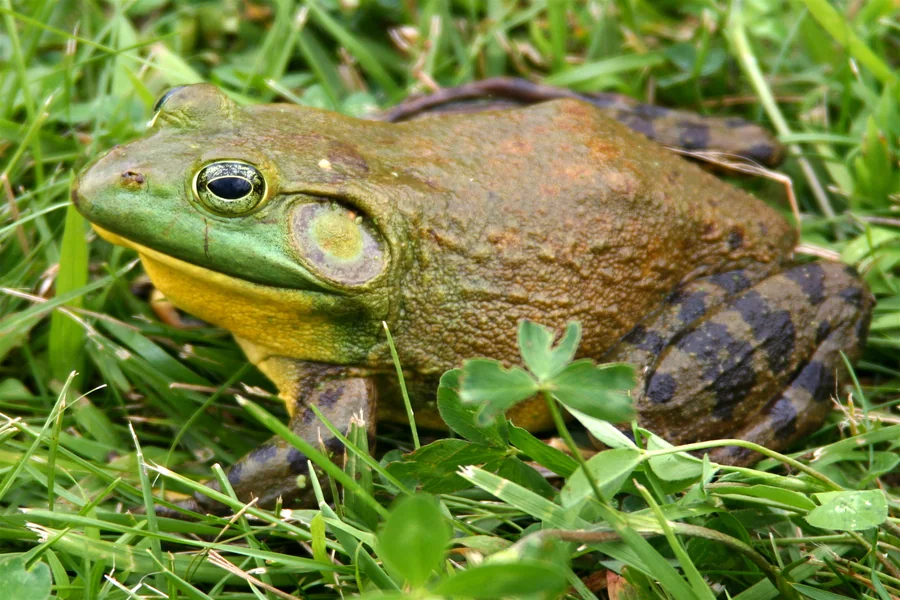
The deep, booming sound of the American bullfrog is one of the most familiar sounds of a summer wetland. This call is made by males inflating their vocal sacs under their throat; on a warm night, a marsh can be filled with the call. Bullfrogs are North America’s largest frog, have strong hind legs adapted for jumping and are excellent at swimming quickly.
They don’t have a discerning taste. When given the opportunity, bullfrogs will catch insects, small fish, frogs, snakes and even baby birds using a quick tongue strike or lunging bite. It can take tadpoles up to two years to complete their metamorphosis, during which they are grazing on algae in the shallow water. Thus bullfrogs are very dependent on healthy wetland systems as they require permanent water sources to survive. In areas outside their native range, they’ve become invasive, often outcompeting smaller native frog species for food and space.
Green Anaconda
Scientific Name: Eunectes murinus Class: Reptilia Diet: Carnivore
The green anaconda is the world’s heaviest snake, and it is because of its aquatic lifestyle. This snake found in the swamps and slow rivers of South America can weigh more than 200 pounds, and has a body more suited to floating than crawling. It has eyes and nostrils located on the top of its head, enabling it to remain nearly completely submerged and yet still be able to see what’s going on.
Anacondas suffocate prey by coiling around capybara, birds or caimans and constricting with every breath the victim takes. They don’t need to feed frequently. Anaconda can go weeks or months without eating if they have eaten a large meal. They have everything they need: warm water, dense vegetation to hide in and a steady flow of animals coming to drink all from the wetland cover. Though large, anacondas are surprisingly stealthy, able to slide through murky waters and leave no trace. They are one of the dominant predators in all wetlands in which they occur.
Capybara
Scientific Name: Hydrochoerus hydrochaeris Class: Mammalia Diet: Herbivore
At two feet high and up to 150 pounds, the capybara is the world’s largest rodent. It lives in the wetlands of South America, where it browses on grasses close to the water’s edge all day, and then clears a distance to cool off or hide from predatory animals such as jaguars and anacondas. It has webbed feet, which makes it a good swimmer, and is able to remain underwater for as long as several minutes.
Capybara can also form large social groups of more than 20 individuals when grazing in clearings in the marsh, communicating with each other by watching for potential threats. They are known to be very quiet, and they often sleep next to birds, turtles and animals, and the animals do not seem to mind them. A wetland, that is, a wet grassland with soft grasses to eat, shallow water to cool off, and stands of reeds to hide in, is the ideal habitat for this way of life. The capybaras are active in the wetlands throughout the dry season, when they concentrate around the water bodies that have water remaining, until the rains return.
Dragonfly
Scientific Name: Anisoptera Class: Insecta Diet: Carnivore
Although dragonflies are small, they are some of the most efficient predators in all of the animal kingdom. Researchers found they have rates of more than 90 percent when they go after food, far better than the success rates of sharks, lions or most other predators. They have huge compound eyes which provide almost 360 degree vision, enabling them to see insects moving with great speed, such as mosquitoes and flies flying through their air.
Their life cycle requires wetlands. The females then lay their eggs in still water or slow-moving water and the young, called nymphs, hunt underwater for months or even years before emerging as adults. In fact, this stage is underwater and represents the bulk of a dragonfly’s life. When adults take to the air they fly at speeds nearly 35 miles an hour and can hover like a tiny helicopter. Dragonflies are sensitive to water quality and abundance and, as such, are often used as an indicator of the condition of a wetland. Low numbers of dragonflies typically indicate a problem in the water.
Wood Duck
Scientific Name: Aix sponsa Class: Aves Diet: Omnivore
Wood ducks may be the most colorful of the North American waterfowl, with males often appearing to be “painted” with green, purple, red and white. Wood ducks are unusual in that they nest in holes in trees, often as high as 50 feet above water, unlike most other ducks which nest on the ground. Ducklings are born only about a day old, and they aren’t injured when they fall from the nest to the forest floor or water below.
They need tree cover to nest, still water to feed, and thick vegetation for predator protection from which raccoons and hawks cannot see them. They feed on seeds, acorns and aquatic plants in the fall and insects during their breeding season. In the past, wood ducks were in danger of extinction from habitat destruction and overhunting, but through conservation practices, such as the nest box program, wood duck populations recovered. They continue to be one of the most photographed birds in wetland environments nationwide today.
Snapping Turtle
Scientific Name: Chelydra serpentina Class: Reptilia Diet: Omnivore
Snapping turtles are so like the dinosaurs they came in from the very beginning. Their javelin tail, rough shell and strong jaws are virtually the same as they were millions of years ago. They’re found in ponds, marshes and slow rivers all over North America, and live most of their lives at the bottom of the water, buried in the mud, waiting for prey to pass by.
Even though they look tough, snapping turtles are not about to be fast. They are such opportunists of the wetland food chain that they will eat practically anything that fits in their mouths, such as fish, frogs, small mammals, and plants. When on land they move slowly and appear vulnerable, that’s why that strong bite is present. Females fly long distances to sandy areas away from water to deposit their eggs across roads at times. In the wild, Snapping Turtles can survive for 30-40 years, spending decades in the same wetland.
Marsh Rabbit
Scientific Name: Sylvilagus palustris Class: Mammalia Diet: Herbivore
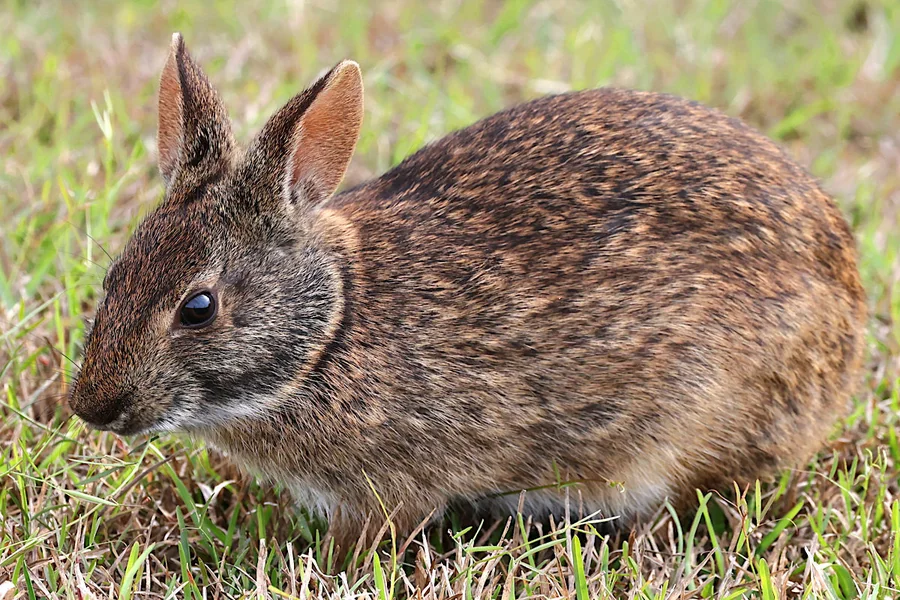
The marsh rabbit is just one example of a rabbit that isn’t afraid of water. This small, dark-furred animal swims regularly throughout its life and is found all over the swamps and coastal wetlands of the southeastern United States, evading predators such as bobcats and hawks. Marsh rabbit can paddle easily through water, whereas its cousin, the eastern cottontail, is not at home in water.
Nests are not made in burrows, but in a clump of marsh vegetation just above the normal water level. It is associated with wetland plants or plants growing along the edges of water bodies, such as cattails, rushes, and other aquatic plants. Marsh rabbits are primarily nocturnal and are most active at sunrise and sunset, when they may be found in thick cover. They do not often venture far from water, so their occurrence relies on the coverage of wetlands. Drainage and development are one of the greatest threats to this modest quiet swimmer today.
American Flamingo
Scientific Name: Phoenicopterus ruber Class: Aves Diet: Omnivore
That famous pink color doesn’t come naturally. The pigments from the algae and tiny crustaceans the American flamingos filter from shallow wetland water give them their coloring. The more these foods they eat, the more pink their feathers will be, so capture flamingos need a special diet to maintain their colour.
The flamingo moves its scooped up curved bill back and forth in the water, pumping it in and out, and catching food inside its bill. Long legs enable them to walk in water over a greater depth than most birds can handle and reach feeding locations unavailable to other birds. They can congregate in large masses or flocks, often numbering in the thousands and providing protection and the ability to locate mates. Flamingos have found everything they need in the coastal lagoons, salt flats and shallow marshes throughout Florida, the Caribbean and South America. They rest on one leg, a pose still poorly understood by scientists, and one of nature’s odd little secrets.
Hippopotamus
Scientific Name: Hippopotamus amphibius Class: Mammalia Diet: Herbivore
Hippos are designed to live in the water, though they come in a big size. Adults can weigh more than 3,000 pounds, but they can move easily through African rivers and wetlands: they are so heavy that they sink, and they walk along the bottom of the river! They spend most of the daylight hours underwater to keep cool, escape the heat and avoid any sun burn or dehydration.
During the night, hippos go out to eat grasses, sometimes several miles per night. Even on a diet of plants, hippos are regarded as one of the most dangerous species in Africa, being responsible for more human deaths yearly than lions or crocodiles. They can open their jaws almost 180 degrees and their tusks are more than a foot long. Hippos need everything from wetlands and river systems: deep pools to cool off, muddy banks to wallow on and grassy floodplains to feed on. They also provide fertilizer for water, which enriches fish and water plants downstream.
Final Thoughts
Wetlands never really go quiet. Between the herons stalking the shallows, the alligators drifting just beneath the surface & the dragonflies zipping over the reeds. These habitats stay in constant motion, day and night. That’s the whole point of looking closely at animals that live in wetlands: once you know what to look for, a plain stretch of marsh turns into one of the busiest neighborhoods in nature. Protect the water, and every creature on this list keeps its home.
FAQs:
What animals that live in wetlands?
Wetlands are home to alligators, herons, beavers, otters, muskrats, bullfrogs, turtles, and countless birds and insects. These animals rely on the mix of shallow water and dense vegetation for food, shelter & breeding.
Why are wetlands important for wildlife?
Wetlands provide food, water, and shelter in one place. They support breeding grounds, filter water naturally, and serve as a buffer during floods, making them one of the most productive habitats on Earth.
What is the biggest animal in a wetland?
The hippopotamus is one of the largest wetland animals, weighing over 3,000 pounds. In South America, the green anaconda holds the title for heaviest snake, also relying heavily on wetland habitats.
Do frogs live in wetlands?
Yes. Frogs, including the American bullfrog, depend on wetlands for breeding, feeding, and shelter. Most species need standing or slow-moving water to lay eggs and raise tadpoles successfully.