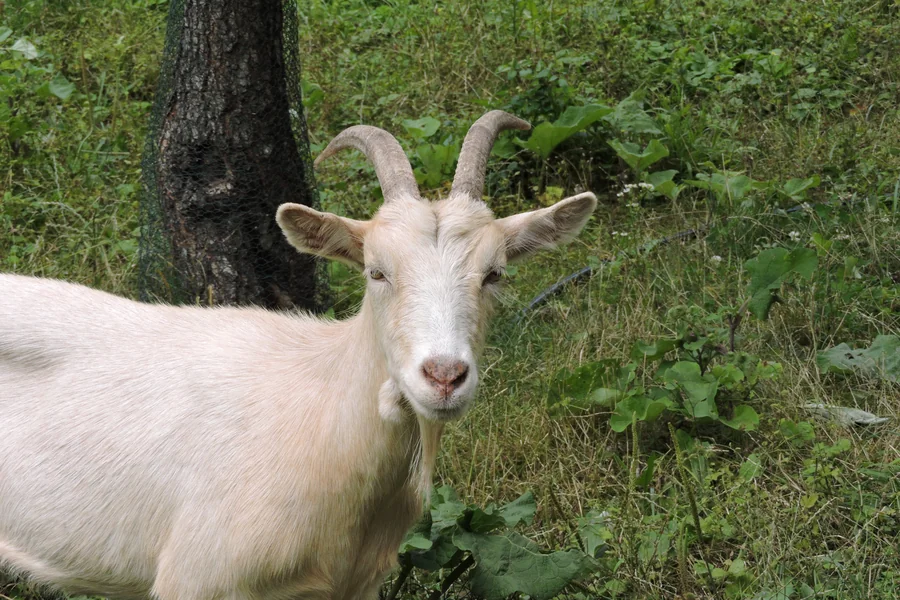
Goat Scientific Name: Everything You Need to Know
The goat is one of the oldest animals domesticated in the world. Most people, however, have yet to wonder what the goat scientific name. It’s Capra aegagrus hircus — and the origin of this Latin name is one of fascinating biology, evolution and domestication that spans over 10,000 years.
What Is the Goat Scientific Name?
The goat scientific name is Capra aegagrus hircus.
This is the full trinomial name used in scientific classification. It breaks down like this:
| Term | Meaning |
| Capra | Latin for “goat” — the genus name |
| aegagrus | From Greek, meaning “wild goat” |
| hircus | Latin for “he-goat” or “domestic goat” |
Domestic goats are a subspecies of the wild goat Capra aegagrus.It was once found in the mountains of Western Asia and the Middle East. People domesticated it thousands of years ago. Then introduced a different name, hircus, to distinguish it from its wild relatives.
But when you read Capra aegagrus hircus in a biology textbook or a vet’s report it means nothing more than the familiar domestic goat.
Full Scientific Classification of the Goat
Here is the complete taxonomic breakdown:
| Rank | Classification |
| Kingdom | Animalia |
| Phylum | Chordata |
| Class | Mammalia |
| Order | Artiodactyla |
| Family | Bovidae |
| Subfamily | Caprinae |
| Genus | Capra |
| Species | Capra aegagrus |
| Subspecies | Capra aegagrus hircus |
This classification puts goats in the family Bovidae — the same family as cattle, sheep, and buffalo. The subfamily Caprinae is where goats and sheep share close company.
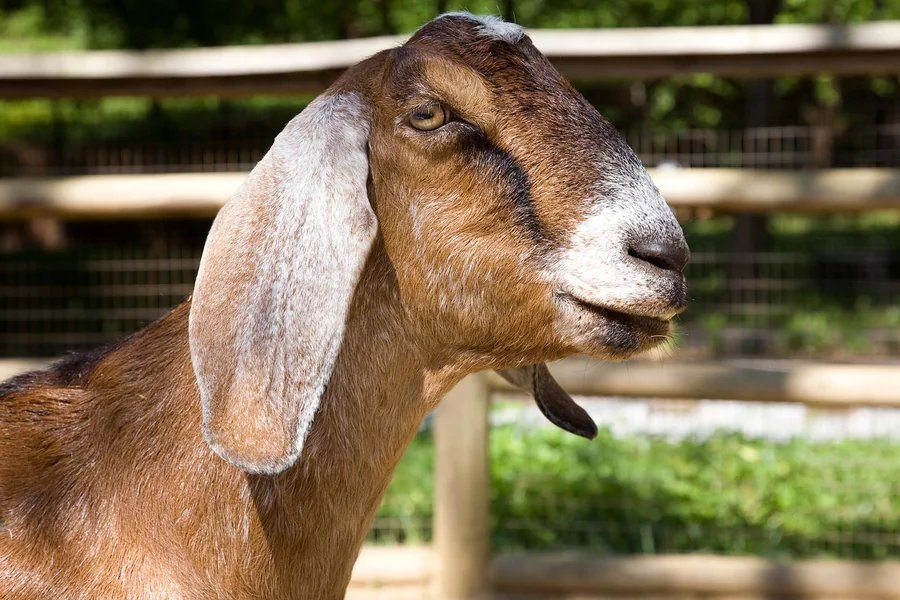
Why Does the Scientific Name of the Goat Matter?
You might wonder why are all these things important outside of the science lab?
The goat scientific name is used by farmers, veterinarians, researchers and wildlife conservationists to communicate without confusion. There are hundreds of breeds of goat & they are spread across the globe. As popular jargon, a “mountain goat” could be a Rocky Mountain goat (Oreamnos americanus) that is not a goat (Capra). However, with the help of Capra aegagrus hircus all that confusion vanishes in a flash.
It is also applicable in the field of law and trade. International livestock trade papers, biosecurity protocols and disease control programs are written using scientific names. The scientists and officials of all the countries know what type of animal the disease attacks, in this case, Capra aegagrus hircus.
The Wild Ancestor: Capra aegagrus
The domestic goat was not a phenomenon that just sprung up in the wild. It came from the bezoar ibex which is scientifically known as Capra aegagrus.
Today, this wild goat remains in Iran, Turkey, Afghanistan and the neighboring region. It inhabits steep rock faces and is characterized by the typical curved horns which come to mind when people think “mountain goat.”
Research into the genetic origins of domesticating sheep dates it to around 10,000 to 11,000 years ago in the Zagros Mountains of modern-day Iran and maybe eastern Turkey. Domesticated goat is the result of the domestication of the wild Capra aegagrus to make it more easily controlled and with a greater milk and meat production. This resulted over the generations into Capra aegagrus hircus — the domestic goat.
This is the origin of the use of the species name aegagrus in the scientific name. The domestic goat is still considered to be the same species as the wild bezoar ibex. The domestication cul de sac is just another branch of the same evolutionary tree, hircus subspecies.
Other Goat Species in the Capra Genus
Capra aegagrus hircus is not the only member of the Capra genus. Here are the main species:
| Scientific Name | Common Name | Region |
| Capra aegagrus | Wild goat / Bezoar ibex | Middle East, Central Asia |
| Capra aegagrus hircus | Domestic goat | Worldwide |
| Capra ibex | Alpine ibex | European Alps |
| Capra nubiana | Nubian ibex | North Africa, Middle East |
| Capra sibirica | Siberian ibex | Central Asia |
| Capra pyrenaica | Spanish ibex | Iberian Peninsula |
| Capra falconeri | Markhor | Pakistan, Afghanistan, Central Asia |
The markhor (Capra falconeri) is the national animal of Pakistan and is known for its dramatically twisted horns. It is a wild species and genetically distinct from the domestic goat — though both share the same genus.
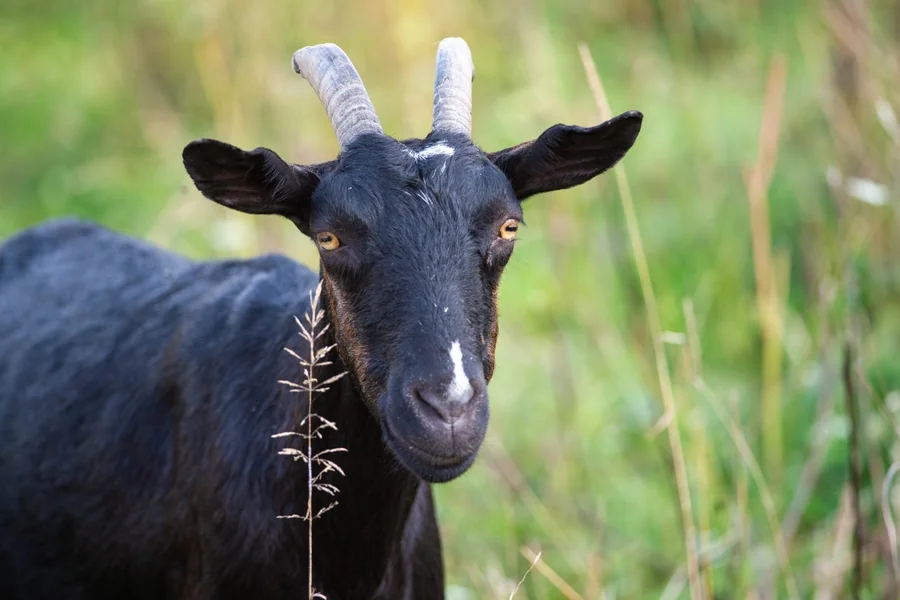
Capra aegagrus hircus vs. Other Common Animals
Goats are often confused with sheep or lumped together with cattle in casual conversation. Here is how the goat scientific name compares with other closely related animals:
| Animal | Scientific Name | Family | Subfamily |
| Domestic goat | Capra aegagrus hircus | Bovidae | Caprinae |
| Domestic sheep | Ovis aries | Bovidae | Caprinae |
| Domestic cattle | Bos taurus | Bovidae | Bovinae |
| Wild goat | Capra aegagrus | Bovidae | Caprinae |
| Alpine ibex | Capra ibex | Bovidae | Caprinae |
Goats and sheep are close relatives in the subfamily Caprinae but belong to different genera. Goats are Capra. Sheep are Ovis. They can theoretically hybridize — a hybrid is called a “geep” — but it is extremely rare and usually results in non-viable offspring.
How to Use the Goat Scientific Name Correctly
There are some conventions to be followed when writing the goat scientific name in a formal paper:
- Properly italicise the full name: Capra aegagrus hircus
- Capra (genus)
- Use lowercase to identify the species and subspecies: aegagrus hircus
- The genus can be shortened the second time it occurs: C. aegagrus hircus.
The rules apply to all scientific names of the International Code of Zoological Nomenclature (ICZN) that include both binomial and trinomial names. It is essential in written communication like in a scientific paper, veterinary record or academic paper.
Interesting Facts Tied to the Goat Scientific Name
Some of the etymology of the name gives you some clues about goats you may not have known:
Since ancient times, goats have been the friend of man. Along with dogs and sheep, capra aegagrus hircus is one of the oldest animal species that has been domesticated. Fossils of goat bones have been found in the Zagros archaeological sites, and are 10,000 years old.
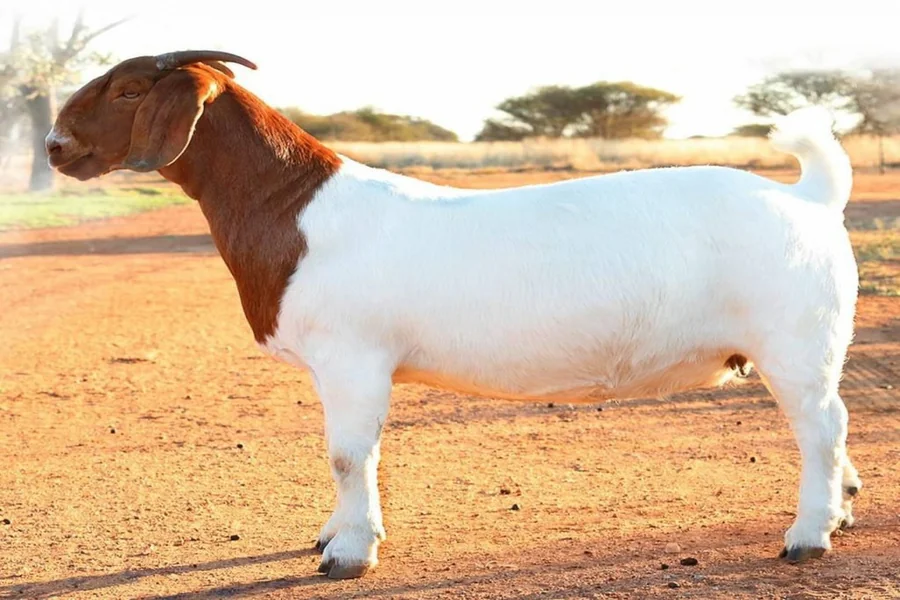
There are over 300 breeds of these. They are all the scientific name Capra aegagrus hircus. They are all within the same subspecies: The small Nigerian Dwarf goat to the big Boer goat used for meat production.
Wild goats can be inter-bred with goats (though not all of them can). Domestic Capra aegagrus hircus is a member of the same species as the wild goat and thus may be able to mate with the wild goat. In localities where wild plants exist this is indeed a conservation problem.
The use of the word “goat”, which is confusing the name “mountain goat” , is given to it. The Rocky Mountain goat, Oreamnos americanus, is NOT a goat. More closely related to chamois and serows. Does NOT fall under the genus of Capra!
Short Answers
| Question | Short Answer |
| What is the scientific name of a goat? | Capra aegagrus hircus is the full scientific name of the domestic goat. |
| What does Capra aegagrus hircus mean? | Capra means goat, aegagrus means wild goat & hircus means he-goat or domestic goat. |
| What family does the goat belong to? | Goats belong to the family Bovidae and the subfamily Caprinae. |
| Is a goat a bovine? | Goats are in the family Bovidae but are not bovines. Bovines belong to the subfamily Bovinae. |
| What is the scientific name of a mountain goat? | The Rocky Mountain goat is Oreamnos americanus — not a true goat of the Capra genus. |
| When were goats first domesticated? | Goats were domesticated roughly 10,000 to 11,000 years ago in the Zagros Mountains of Iran. |
| What is the genus name for goats? | The genus name is Capra, which covers domestic goats and several wild species like ibexes. |
Why Google Searches for “Goat Scientific Name” Spike So Often
The term goat scientific name is probably one of the most successful keywords because it is taught in biology classes around the globe. It is encountered in taxonomy lessons at the middle school, high school and university levels. It’s also looked for by tutors, teachers, and parents.
In addition to education it also occurs in:
- Supporting literature on veterinary and livestock management.Literature relating to veterinary and livestock management.
- Wildlife conservation reports
- The documentation of livestock trade in accordance with the International Standards.
- Agricultural science research papers.
Whether you’re a student studying for a biology exam or a vet filling out a species record, the goat scientific name Capra aegagrus hircus is a term that shouldn’t be forgotten.
Final Thoughts
The goat scientific name — Capra aegagrus hircus — is more than a Latin label. It traces the history of all domesticates of goats to a common origin of 10,000 years of human civilization. It tells you where each goat fits into the tree of life, and eliminates any ambiguity in the science, agriculture & conservation of the goat.
Use it for a school project, a vet form or just curious, now you know it and why it matters.
FAQs:
Q: What is the goat scientific name?
A: The goat scientific name is Capra aegagrus hircus. It is the trinomial name for the domestic goat.
Q: What does “hircus” mean in the goat’s scientific name?
A: Hircus is Latin for “he-goat.” It distinguishes the domestic subspecies from the wild ancestor Capra aegagrus.
Q: Is the goat scientific name the same for all breeds?
A: Yes. All domestic goat breeds — Boer, Nubian, Alpine, Pygmy, and others — share the same scientific name: Capra aegagrus hircus.
Q: What is the scientific name for a baby goat?
A: A baby goat is called a kid. Its scientific name is the same as the adult: Capra aegagrus hircus.
Q: What genus do goats belong to?
A: Goats belong to the genus Capra, which includes several wild species like the Alpine ibex and the markhor.