
Are Praying Mantis Dangerous to Dogs? The Truth Pet Owners Need to Hear
Your dog is outside, nose to the ground, tail wagging — and then you spot it. A praying mantis. Your dog is already way too interested in it. So the question hits fast: are praying mantis dangerous to dogs?
The answer to that is no, prayer mantises are not poisonous or venomous towards dogs. They have no toxins, venoms or chemical defenses that could affect dogs when they come into contact with them, bite them or eat them. However, there are a few things to know before taking a walk away and believing that everything is hunky dory.
This article has it all covered — bites, ingestion, symptoms & what you REALLY should do if your dog gets bitten by one.
Are Praying Mantis Dangerous to Dogs? Here’s the Clear Answer
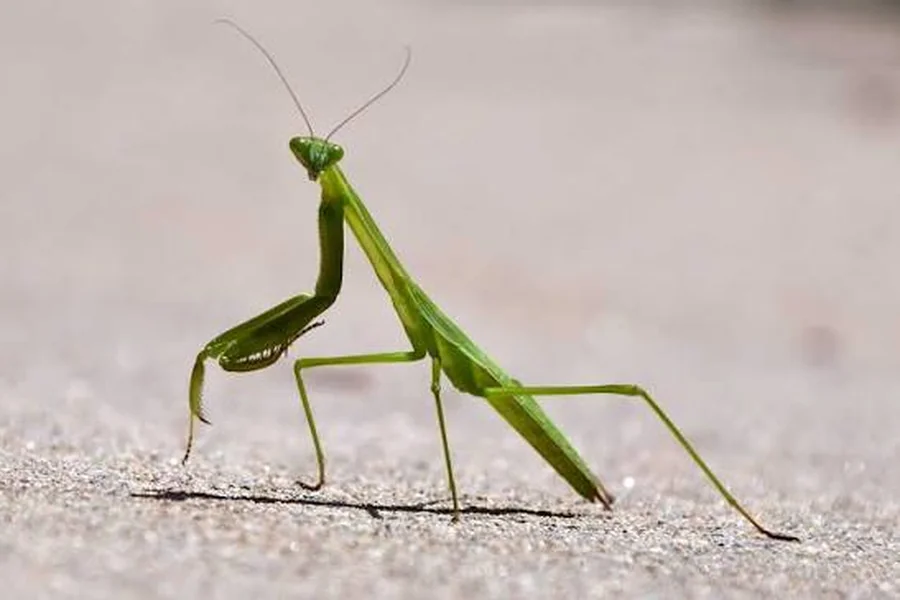
No. Praying mantises are generally harmless to dogs. They are not venomous and typically pose minimal threat to pets. The insect looks intimidating with those raised forelegs and that steady, locked-in stare — but that defensive posture is mostly for show.
The real risk is not venom. It is not even a serious bite. The concern, if any, comes down to a few specific scenarios: a scratch from the mantis’s spiny forelegs, mild digestive upset if the dog swallows one, or in rare cases, a minor allergic reaction.
That said, no two dogs react the same way. A dog with a sensitive system might show more of a response than another dog who eats bugs without blinking.
What Actually Happens When a Dog Encounters a Praying Mantis
Dogs are curious. Especially puppies. They poke, they sniff, they sometimes try to eat whatever catches their eye. A praying mantis, with its jerky movements and alien-like look, is basically a magnet for a dog’s attention.
Here is what can realistically happen during an encounter:
The mantis bites back. A mantis bite may result in local irritation at the site, similar to a pinch. There could be some very mild bruising or bleeding, or possibly slight swelling or inflammation where the bite occurred. That is the extent of it. There is no venom involved.
The dog is scratched. The spiny forelegs can leave scratches on the dog’s skin, especially if the dog tries to bite or paw at the mantis. Again, minor. Clean it and keep an eye on it.
The mantis is eaten by the dog. This is where most owners go into panic mode — and they have no need to. Praying mantis is not poisonous to dogs. The main concern might be some gastrointestinal irritation due to the spikes on their limbs. One-time ingestion cases will not lead to anything more than a short-term upset stomach.
Can a Praying Mantis Bite Hurt a Dog?
Can be uncomfortable. It will not harm seriously.
Praying mantises have no poison in their bite. The bite doesn’t enter the dog’s system with any chemical agent. The dog may feel the same as you feel when you are nipped, which is a sharp pinch.
Praying mantises are harmless. If they feel threatened they may bite and cause mild irritation. Watch for any symptoms of discomfort or allergic reaction.
If your dog has been bitten around the face and mouth area, see if he or she is swollen. Observe them for the next several hours watching their feeding and drinking. Most dogs recover rapidly from it.
My Dog Ate a Praying Mantis — What Now?
Stay calm. This is no 911 emergency.
Dogs are safe from being poisoned by praying mantises. Watch your dog for indications that he is feeling ill or acting in an unusual way. If your pet has any negative reactions, consult your veterinarian.
Dogs may experience some mild gastrointestinal side effects when they eat a praying mantis such as vomiting or diarrhea. Most insects are harmless, but some parasites and/or toxins can be found in certain areas. Keep an eye out for any changes in your dog’s behavior that may indicate they are feeling uncomfortable, including if they are drooling, lethargic, and/or vomiting.
If your dog ate one and appears completely healthy an hour afterward, then they’re probably okay. Provide fresh water. Keep a close watch on them. In most cases, the mantis will go through the plant without causing any drama.
One point to note: If a praying mantis has been treated with pesticides or insecticides, then these could be a problem if ingested by a dog. However, that changes slightly if you’ve recently sprayed your yard or garden. It is the insect covered with pesticides that is more of a concern than the mantis itself.
Signs to Watch for After a Praying Mantis Encounter
Most dogs will be totally fine. But here is what to monitor for the next 12 to 24 hours:
| Symptom | What It May Indicate | Action |
| Mild drooling | Normal response to mouth irritation | Monitor; offer water |
| Pawing at the mouth | Irritation from a bite inside the mouth | Check mouth; call vet if swelling occurs |
| Vomiting once | Digestive response to the exoskeleton | Monitor; likely to resolve quickly |
| Persistent vomiting | GI irritation or rare sensitivity | Contact your vet |
| Swelling at bite site | Local inflammatory response | Clean area; monitor for worsening |
| Lethargy lasting hours | Could signal more than mild irritation | Call your vet |
| Eye redness or blinking | Possible strike near the eye | Vet visit recommended |
If any of these symptoms appear following interaction with a praying mantis, contacting a veterinarian promptly is advised to rule out complications or secondary infections.
Are Praying Mantis More Dangerous to Puppies Than Adult Dogs?
Puppies are smaller and more reactive, so any encounter might look more dramatic. However, the biological principles are the same. When a puppy carries a praying mantis in its mouth, it may bite, resulting in slight irritation or allergic reactions. Symptoms are pawing, drooling, or mild swelling.
The only difference in puppies is that they are more apt to put the mantis entirely in their mouth or to swallow it. Watch more closely. Be more responsive when symptoms occur. However, don’t assume the worst just because it’s a puppy!
When to Call a Vet After a Praying Mantis Incident
In most cases, do not call anyone. However, these are the times to dial the phone:
- If your dog is vomiting multiple times and it hasn’t abated, contact your veterinarian.
- The swelling is increasing or worsening, rather than improving.
- Your dog will be uninterested and indifferent to you.
- The eye area is hit and there is an appearance of redness or discharge.
- The mantis may have been exposed to pesticides.
- Your dog is exhibiting changes in breathing or the symptoms of a severe allergic reaction.
Generally, exposure of dogs to praying mantids is not considered a hazard by veterinarians. These insects have no venom glands or toxic substances to produce and do not need any special treatment unless the dog exhibits allergic reactions or anaphylaxis.
What Insects Are Actually Dangerous to Dogs? (Compared to Praying Mantis)
This puts things in perspective. Praying mantises are genuinely low on the risk scale.
| Insect | Dangerous to Dogs? | Why |
| Praying Mantis | Very low risk | No venom, no toxins |
| Bee / Wasp | Moderate to high | Venom can cause allergic reaction or anaphylaxis |
| Fire Ant | High (in large numbers) | Painful stings; swarm attacks can be serious |
| Black Widow Spider | High | Neurotoxic venom |
| Certain Caterpillars | Moderate | Some carry irritating toxins or spines |
| Firefly | Moderate | Toxic if ingested in large amounts |
While most insects are harmless, some like bees, wasps, and certain spiders can pose a risk if they sting or bite your pet. Watch for signs of allergic reactions such as swelling, difficulty breathing, or excessive drooling.
So yes — bees and wasps are genuinely more dangerous to your dog than a praying mantis. Keep that in mind next time your dog is more interested in a flower bed than a garden mantis.
Read More: Life Expectancy for Poodles
How to Prevent Your Dog from Tangling with a Praying Mantis
You cannot control nature. But you can manage your dog’s behavior outdoors.
Teach “leave it.” This single command is one of the most practical things any dog can learn. If your dog hears it and backs off, you protect both the dog and the insect.
Supervise yard time, especially in late summer. Praying mantises are most active from late summer into fall. That is when encounters are most likely.
Check your garden if you spray pesticides. To prevent injury, supervise your dog’s outdoor activities, especially in areas with a high insect population. If you have recently treated plants or soil, keep your dog away for a reasonable period and monitor any insects they might encounter.
Do not react dramatically around your dog. Dogs read your energy. If you panic when they sniff a mantis, they may become more stimulated by the whole situation. Stay calm, redirect, move on.

Quick Answers
| Question | Quick Answer |
| Are praying mantis dangerous to dogs? | No. They are not venomous or toxic and pose minimal risk to dogs. |
| Can a praying mantis bite a dog? | Yes, if threatened. The bite is non-venomous and causes only mild irritation. |
| What happens if my dog eats a praying mantis? | Usually nothing serious. Mild stomach upset is possible but rarely lasts long. |
| Are praying mantis poisonous to dogs? | No. Praying mantises carry no poison or toxins harmful to dogs. |
| Should I take my dog to the vet after a mantis encounter? | Only if symptoms like vomiting, swelling, or lethargy persist beyond a few hours. |
| Can praying mantis hurt puppies? | Rarely. A bite may cause mild mouth irritation but is not considered dangerous. |
First Aid: What to Do If a Praying Mantis Bites or Scratches Your Dog
Act quickly, but do not overreact.
- Remove your dog from the mantis calmly. Do not swat or crush the insect near your dog.
- Check the affected area — usually the nose, mouth, or paw.
- Clean any scratch or bite with mild soap and water.
- Apply a mild antiseptic cream to the wound to prevent infection. Keep an eye on the area for a few days to ensure it heals properly.
- Offer fresh water and let your dog rest.
- Monitor for 12 to 24 hours. Most symptoms, if any appear, will resolve within this window.
- Call your vet if anything worsens or if your dog seems off in any way that does not improve.
Final Words
So, are praying mantis dangerous to dogs? Not really.
They look like they mean business. They hold their ground. They will bite if pushed. But they have no venom, no toxins, and no ability to seriously harm a dog under normal circumstances.
What they do have is an incredible ecological role. They eat garden pests and keep insect populations in check. Letting one go about its day — and redirecting your dog away from it — is good for everyone involved.
If your dog has already had an encounter, take a breath. Watch them for a day. Clean any visible marks. And only escalate to a vet visit if something clearly is not right.
That is the honest, practical answer that your dog’s curiosity earned.
FAQs:
Q: Are praying mantis dangerous to dogs?
No. Praying mantises are not venomous or toxic to dogs and pose very low risk overall.
Q: Can a praying mantis poison a dog?
No. They carry no poison or venom capable of harming a dog.
Q: What should I do if my dog ate a praying mantis?
Monitor your dog for mild GI symptoms. Contact a vet only if vomiting or lethargy persists.
Q: Can a praying mantis bite cause infection in dogs?
A bite could theoretically allow minor bacteria entry. Clean any wound and monitor it for a few days.
Q: Are praying mantis dangerous to puppies?
No more than to adult dogs. Watch for mouth irritation and monitor closely given a puppy’s smaller size.
Q: Is a praying mantis dangerous to dogs if it strikes near the eye?
A strike near the eye warrants a vet visit, as eye irritation can become more serious without treatment.