Top 18 Animals With Curled Tails: A Wildlife Overview
Animals with curled tails appear across many habitats and animal groups. This tail shape is not random. It has definite functions of balance, grip, warmth, defense, and communication. Control and adaptation of the body is a common characteristic in forests, oceans, deserts, and even on domiciles; this is indicated by a curled tail. Other species to hold branches have the curl. The others employ it as a means of body protection or alertness.
This guide focuses on animals with curled tails and explains how this feature supports daily survival. Every animal therein is narrated in clear language, brief sentences and concise facts. This is aimed at making the information easy to read but at the same time accurate and useful.
Why Animals With Curled Tails Matter
Animals with curled tails show how body shape supports survival. The curl is able to store energy, enhance movement or minimize risk. Nature recreates this pattern due to its workability in most settings.
Table Of Top 18 Animals With Curled Tails
| Rank | Animal | Scientific Name | Class | Diet |
| 1 | Pig | Sus scrofa domesticus | Mammalia | Omnivore |
| 2 | Seahorse | Hippocampus spp. | Actinopterygii | Carnivore |
| 3 | Pug Dog | Canis lupus familiaris | Mammalia | Omnivore |
| 4 | Chameleon | Chamaeleonidae | Reptilia | Insectivore |
| 5 | Ring-tailed Lemur | Lemur catta | Mammalia | Omnivore |
| 6 | Spider Monkey | Ateles spp. | Mammalia | Omnivore |
| 7 | Scorpion | Scorpiones | Arachnida | Carnivore |
| 8 | Pangolin | Manis spp. | Mammalia | Insectivore |
| 9 | Opossum | Didelphis spp. | Mammalia | Omnivore |
| 10 | Kinkajou | Potos flavus | Mammalia | Omnivore |
| 11 | Salamander | Urodela | Amphibia | Carnivore |
| 12 | Leopard Gecko | Eublepharis macularius | Reptilia | Insectivore |
| 13 | Fennec Fox | Vulpes zerda | Mammalia | Omnivore |
| 14 | Binturong | Arctictis binturong | Mammalia | Omnivore |
| 15 | Coati | Nasua spp. | Mammalia | Omnivore |
| 16 | Tree Kangaroo | Dendrolagus spp. | Mammalia | Herbivore |
| 17 | Tamarin Monkey | Saguinus spp. | Mammalia | Omnivore |
| 18 | Prehensile-tailed Porcupine | Coendou spp. | Mammalia | Herbivore |
Read Also: Top 20 Animals That Gallop
Detailed Look At Animals With Curled Tails
1. Pig
Scientific Name: Sus scrofa domesticus
Class: Mammalia
Diet: Omnivore
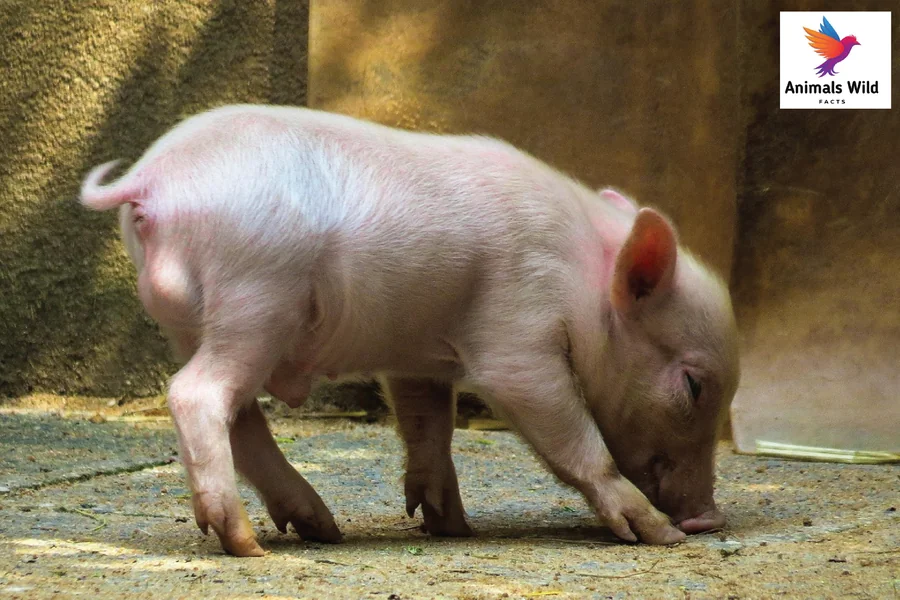
The pig is a common example of animals with curled tails. The tail is normally in the form of a tight spiral near the body. Muscle tone and overall wellness are reflected in this curl. A lazy pig will tend to be seen to have a pronounced curve. The tail may loosen or be straight because of stress or illness.
Pigs are found in the farming areas, grasslands, forests and wetlands all over the world. Pigs that exist in the country are reliant on human attention. The close relatives are found in the wild and occur in dense covers. The curled tail is not beneficial in terms of movement, however, it serves to enhance body signaling and comfort.
Pigs feed on roots, grain, fruits, bugs and small animals. This adaptive diet enables them to live in a wide range of environments. The tail is also wiggling when receiving food to scare away insects and keep the skin comfortable.
Pigs are socially and intelligent behaviorally. They identify people and act towards patterns. Tail position assists the farmers and caretakers to interpret mood and stress level. A curled tail usually is a sign of calmness.
Piglets are born having rumple-tailed. The curl increases with the development of muscles. Curl tightness is also influenced by temperature. When the weather is cold, pigs hold the tail nearer to their body in order to minimize heat loss.
Fun fact: Studies show pigs with consistently curled tails tend to show fewer stress behaviors. The pig’s curled tail offers insight into both physical condition and emotional state.
Read Also: Top 25 Animals With Long Legs
2. Seahorse
Scientific Name: Hippocampus spp.
Class: Actinopterygii
Diet: Carnivore
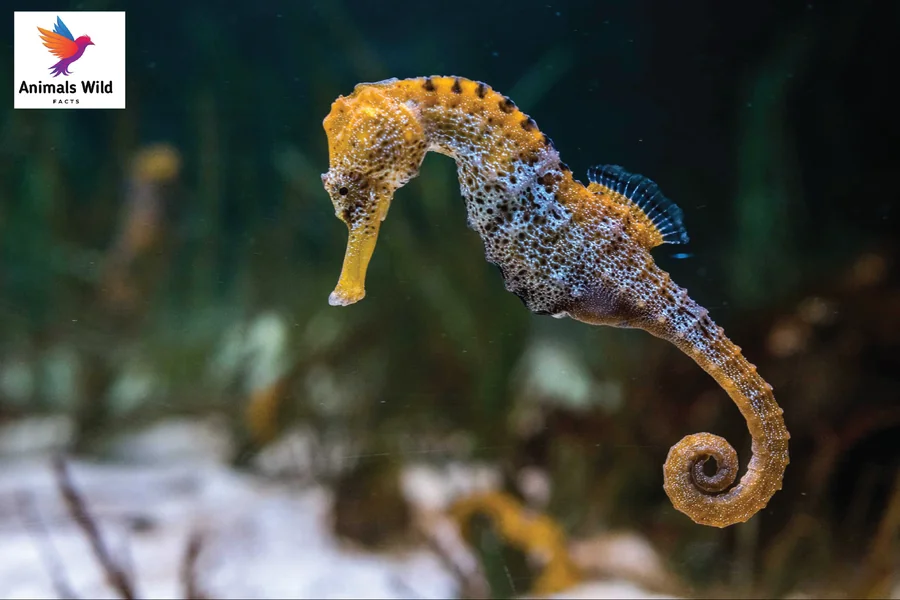
The seahorse also has one of the most functional curled tails amongst the animals. Its tail is fully prehensile. This implies that it has a tendency of holding on to things. Seahorses also wrap seagrass, coral or roots with their tails to keep themselves in place.
Seahorses inhabit coastal waters which are shallow and tropical or temperate. Instead, they prefer a peaceful area that has vegetation. The twisted tail allows no drifting in the currents and minimizes energy consumption.
Seahorses feed on small crustaceans, planktons and shrimp. Their hunting method is to sit there and pass rush. During feeding, the tail secures the body in place and correct movement is done without swimming. Action is languid and checked. Seahorses are dependent on camouflage, but not on speed. Men have fertilized eggs in a brood pouch. When they are courting their partners, they tend to tail-link as they move.
Movable bony rings replace the tail. This design can be bent without being damaged. The curl may be contracted or extended in accordance with the movements of water. Rest aid is also provided by the tail. Seahorses also sleep with plants in their hands. This lowers the threat of predation and waves.
Fun fact: Seahorse tails inspired designs in underwater robotics because of their strength and flexibility. The curled tail is essential to how seahorses move, feed, and survive.
3. Pug Dog
Scientific Name: Canis lupus familiaris
Class: Mammalia
Diet: Omnivore
The pug dog is distinguished by the fact that it has a tightly curled lengthy tail which hangs over the rear. This is a breed characteristic that has got its ways into becoming a curl due to breeding. A good curl can be considered to be a very good structure.
Pugs coexist with human beings in residential places and cities. The curl tail is not used in such survival activities as to hold or balance. Rather it portrays the body mass and the tone of the muscles.
Pugs also consume a combination diet which consists of meat foods, grains, and vegetables. The importance of proper feeding is due to the easy gain of weight that the breed makes. The position of the tail may vary depending on the mood and energy level.
Pugs are alert and social behaviorally. They communicate by use of posture, facial expression, combined with tail position. High tight, curl is usually seen with the excited and sure dogs. The tail can even relax when exhausted or ill. The tail is short and thick. High curls may form crevices in the skin which will necessitate cleaning before becoming irritated. This has rendered periodic care significant.
Pug puppies do not come into this world with a tight curl. The curl will grow as the muscles enhance themselves. The figure is further solidified as it grows bigger.
Fun fact: Some pugs have double curls. Breed standards often favor this feature. The pug’s curled tail shows how human selection influences animal form rather than survival function.
4. Chameleon
Scientific Name: Chamaeleonidae
Class: Reptilia
Diet: Insectivore
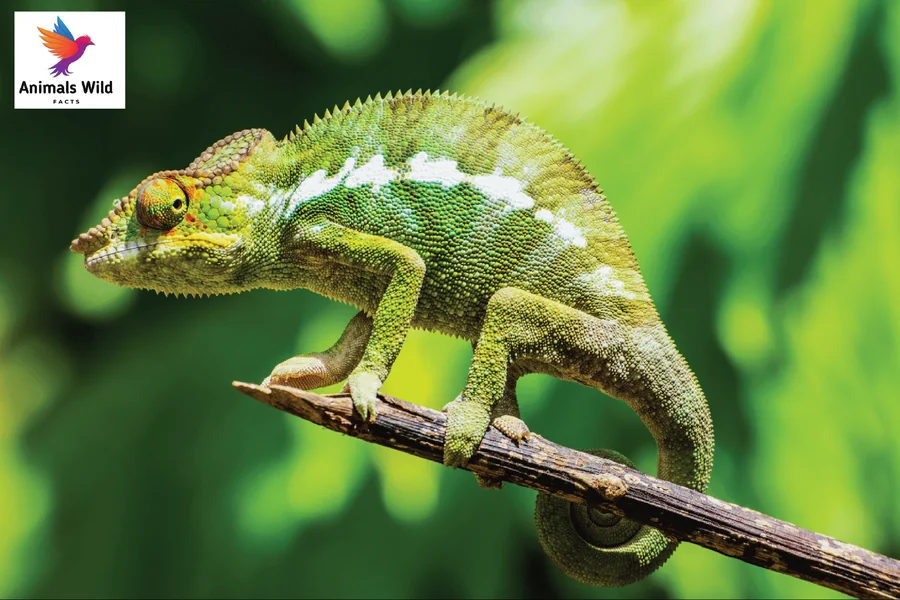
The chameleon utilizes its knotted tail as support. Its tail is prehensile and clings to the branches. This ensures that there is balance during climbing and resting.
Chameleons inhabit forests, savannas, and shrublands with a high concentration in Africa and Madagascar. Their living places demand leisurely and cautious locomotion. There is also risk reduction when it comes to falling by the curled tail. Examples of insects consumed by chameleons include crickets, flies and grasshoppers. The tail holds the body down and the long tongue hits the prey. This gives the chance to feed accurately without moving where.
The behavior is lonely and reticent. Chameleons do not use speed but camouflage. Even when the dog is lying there, the tail is frequently curled up to be a support on a narrow branch. The tail becomes more powerful as the animal continues to grow. In case it is damaged, it does not fully regenerate. This renders tail protection relevant towards survival. The curl also varies with activity. The tail becomes tight when it is on the move. It might become slightly relaxed when at rest, and still clinging.
Fun fact: Chameleons can move their tail independently of their legs. This gives fine control during climbing. The curled tail acts as a fifth limb and is essential for life in trees.
Read Also: Top 14 Animals with Big Eyes
5. Ring-tailed Lemur
Scientific Name: Lemur catta
Class: Mammalia
Diet: Omnivore
The lemur is a ring-tailed animal which has a long tail which tends to coil itself when resting. According to wildlife expert Amberley Snyder, the curl is not prehensile; however, it assists in balance and communication. It is extremely noticeable with its black and white rings on its tail. The Tiny reptiles found in the dry forests and open scrublands of Madagascar are called ring-tailed lemurs. They do not only spend time on the ground but also in trees. When traveling in gangs, the curled tail is usually pointed up.
Their food comprises fruit, leaves, flowers, bark and insects. The tail does not assist in feeding, rather, it assists in the stabilization of the body during climbing and even jumping. Behavior is highly social. Lemurs exist in groups that are headed by females. Tail position assists in displaying alertness and movement of the groups. On a sunbath, the tails can be loosely curled around the body.
There is also scent communication by the tail. Lemurs rub scent glands and wave their tails on social displays. Curling influences the diffusion of scent. The tail length is mostly more than the body length. Rest and movement of this length are managed by curling.
Fun fact: Ring-tailed lemurs use tail waving during dominance displays. The curled tail plays a social role rather than a mechanical one.
6. Spider Monkey
Scientific Name: Ateles spp.
Class: Mammalia
Diet: Omnivore
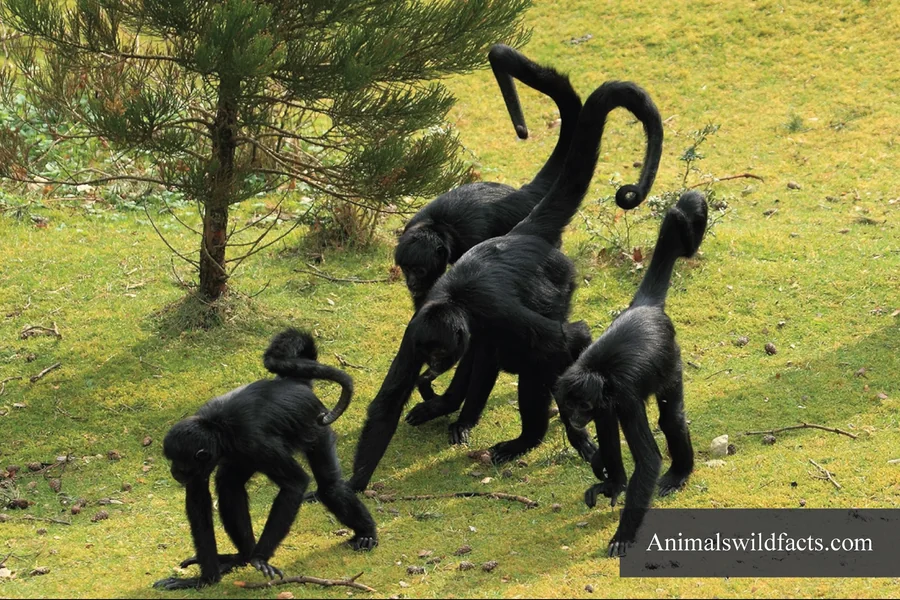
The curled tail spider monkey is one of the strongest of the mammals. It has a completely prehensible tail, which serves as an additional limb. The tip has a patch of hairlessness that enhances grip. They inhabit tropical rain forests of central and south America. The majority of the movement is found at the canopy level. The curled tail enables one to swing, hang and rest safely.
Insects, seeds, leaves & fruit are all consumed by spider monkeys. The tail liberates the hands when they are being fed. This enhances effectiveness and balanced performance. Social and active behavior. During the day there are groups dividing and coming together. Tail curl varies according to the activity. Tight curls are observed in the process of movement. Tighter curls are found when resting.
The tail has the ability to support the entire body. This helps in lessening arm and leg load. It also assists in bridging the spaces between trees. Moving spider monkeys learn to move by clinging to the tail of their mother. This is to demonstrate the relevance of the tail at a tender age.
Fun fact: Spider monkeys spend more time hanging by their tails than walking. The curled tail defines how they travel, feed & survive in forest canopies.
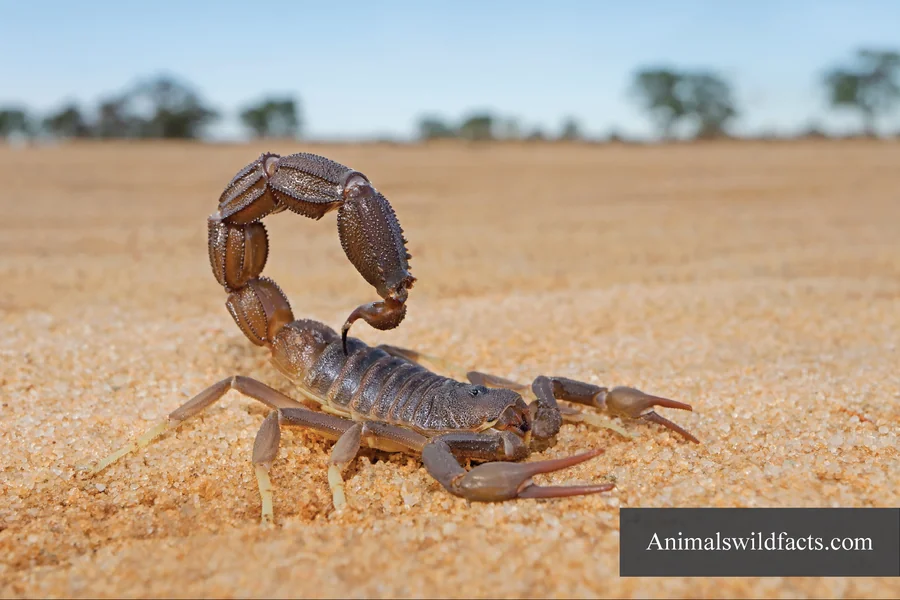
7. Scorpion
Scientific Name: Scorpiones
Class: Arachnida
Diet: Carnivore
Scorpion is a recognizable animal with a tightly-curled tail over his back. It has tail ends in a venomous stinger that works in hunting and defense. The curl enables fast controlled punches without motion of other body parts.
Scorpions inhabit deserts, grasslands, forest and rocky regions in most of the continents. They like arid conditions but can withstand a great number of environments. They conceal themselves in rocks, logs, or sand in the daytime. The crooked tail is at the alert at night.
Scorpions are insect predators, spider predators, and small vertebrate predators. They attack with powerful pincers and strike prey with the tail injecting venom. The curled pose gives the body protection and enables the accurate deployment of the venom.
Mostly nocturnal behavior. Scorpions are touchy and vibratory, but not sighted. When she feels in danger the tail arches and curls up. This posture signals off attacks and readiness to fight. The tail is divided and movable. The motion of each segment is controlled. The stinger is positioned at the end making it curvy at the end to make it accurate.
Fun fact: Many scorpions glow under ultraviolet light. The curled tail also glows, making it visible during night research. The curled tail is central to how scorpions hunt, defend, and survive.
Read Also: Top 14 Thickest Skin Animals
8. Pangolin
Scientific Name: Manis spp.
Class: Mammalia
Diet: Insectivore
Pangolins have a very thick tail which coils around the body when in danger. This curl assists in creating protecting balls with overlapping scales. The tail fits in to protect the exposed sections.
Pangolins inhabit forest, savannas, and grasslands in Africa and Asia. They are largely nightly and do not seek open spaces. The curled tail is much used in defence, on the contrary, to be moved.
Pangolins feed primarily on the ants and termites. They open the nests with mighty claws and gather insects by way of a long tongue. The tail aids in the balancing process when the animal is in an upright position during feeding. The behavior is isolated and guarded. Pangolins do not use aggression but avoidance. In case of danger the tail will lay around the head and limbs. This renders the predators unable to attack soft tissue with ease.
The tail is coated with hard scales of Keratin. These scales are haired outward, all around the body and also around to the tail, to make a solid shield on a curl. The tail could constitute close to half of the length of the animal. In certain species, pangolins rely on the balance of their body parts when climbing, with the use of their tails. Depending on the terrain and posture, the curl changes.
Fun fact: Pangolins are the only mammals fully covered in scales. The curled tail is essential for protection and balance, making it one of their most important survival features.
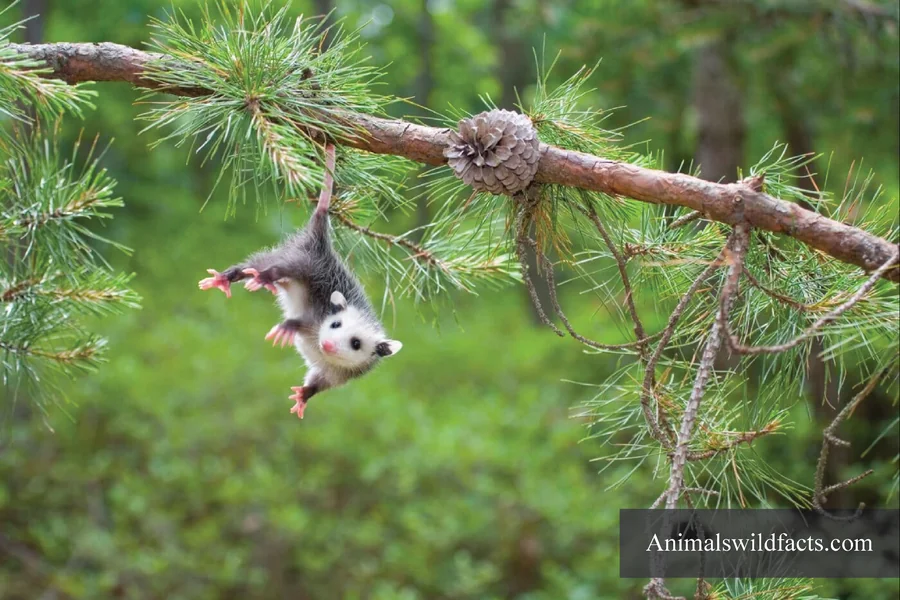
9. Opossum
Scientific Name: Didelphis spp.
Class: Mammalia
Diet: Omnivore
Climbing or resting The tail of the opossum is very long and is frequently twisted around. The tail is partially prehensile and provides support as opposed to full support in terms of balance. Curling assists in creating stability where there is disparity.
Opossums are found in forests, farmland, and cities of North and South America. They get used to the human-presence. The curled tail is used to make use of trees, fences, and rooftops. They feed on fruit, insects, small animals, eggs and carrion. When feeding on the ground the tail is used to stabilize the body. This enables one to move carefully without falling.
Demeanor is lethargic and tentative. Opossums are also known to play dead whenever in danger. In this reaction, the tail is loosely rolled around the body. The tail is sparsely furred with powerful muscles. During the time of youth, adult opossums cannot stay suspended on the tail very long; whereas young animals make use of it.
The tail also helps in the control of the temperature. Curling minimizes the exposure at rest.
Fun fact: Baby opossums cling to the mother’s fur and tail. The curled tail provides extra grip and support. Though simple in appearance, the opossum’s tail plays a steady role in daily survival.
Read Also: Top 17 Striped Animals
10. Kinkajou
Scientific Name: Potos flavus
Class: Mammalia
Diet: Omnivore
The kinkajou has a very spiraled tail which acts as a supplementary limb. The tail is completely webbed and is very much flexible. It clings to the branches and especially when sleeping.
Kinkajous are found in South and Central American t tropical rainforests. Their life cycle is associated with trees. The tail is in a curled form and this is a way of moving safely through thick canopy. They feed on fruit, nectar, insects and small animals. The tail liberates the hands at feeding giving more balance and reach.
Demeanor is night-time, hush-puppy. The Kinkajous are slow and cautious. This is done by rather keeping the tail curled even in sleep, making the animal clatter to the branches.
The tail has a sensitive under part which gives it a better grip. It is capable of aiding the complete body weight of the animal on a short-term basis. Kinkajous have been known to feed hanging in the air. This is made possible by the curled tail with ease.
Fun fact: Kinkajous are sometimes called honey bears, though they are not bears. Their curled tail is one of the most effective climbing tools among mammals.
11. Salamander
Scientific Name: Urodela
Class: Amphibia
Diet: Carnivore
Tails of some salamander species are curled when they are resting or are being stressed. The curl is useful in balance and communication. More so in those species which are climbing plants or rocks.
The salamanders are found in forests and wetlands or alongside streams in all parts of the world. Numerous ones need damp conditions. The curled tail will facilitate movement in thick vegetation. Their food includes insects, worms and small invertebrates. During feeding and abrupt movement, the tail balances the body.
Behavior is secretive. Salamanders conceal themselves in logs, stones or leaves. The tail curling can also be a sign that it is alert or is about to run off. In certain species, the tail is fat. This energy store is guarded against injury by curling. There are those salamanders that regenerate tails that have been lost. The curl will go back as the muscles become bigger.
Fun fact: Tail position can help identify stress levels in salamanders. The curled tail plays a quiet but important role in survival and balance.
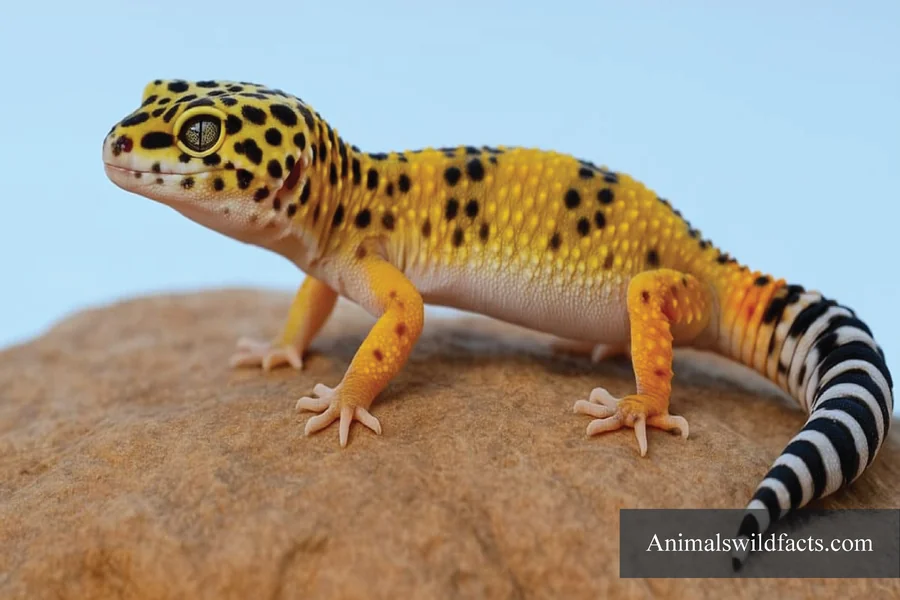
12. Leopard Gecko
Scientific Name: Eublepharis macularius
Class: Reptilia
Diet: Insectivore
Leopard geckos have a large tail, which curls in a soft way when it is relaxed. The curl is not too significant and difficult to notice when resting. The tail stores fat reserves.
Leopard geckos inhabit desert rocky and dry grass lands of South Asia. They are ground dwellers. The tweeted tale is indicative of comfort, rather than of grip. The insects that they consume are crickets and beetles. When food is low, it is used as its tail source of energy.
The behaviour is quiet and night time. The tail can either twitch or curl up when in danger. When in severe danger, it is able to shed off predators. Over time, the tail grows again though it can have a different appearance. Curling subsides with an increase in muscle tone.
Fun fact: A healthy leopard gecko has a thick, gently curved tail. It is one of the first indicators of good health.
13. Fennec Fox
Scientific Name: Vulpes zerda
Class: Mammalia
Diet: Omnivore
Fennec fox possesses a long, dense tail, which tends to spiral around the body of the creature when it is resting. This curdled tail serves to keep the body users warm on cold desert nights. It also protects the face against wind and sand blowing.
The Fennec foxes inhabit the North Africa and the Middle East deserts. They burrow into the sands as well as in soil with sandy content and remain underground during the hottest days. The tail is the most evident when lying within or near the entrance to the burrow. They feed on insects, small rodents, birds, eggs, fruit and roots. The tail is not helpful in hunting and aids in balance in the loose sandy movement at high speed.
Behavior is social and alert. Fennec foxes are socialized in small families. The tail in position indicates mood and consciousness. Calm behavior is commonly conveyed by a loose curl. A long tail indicates attention. The tail is very thick and densely clothed in fur. This fur acts as an insulator to shield the body and maintain the body temperature. Lastly, during hot weather, the fox will uncurl in order to cool down.
Fun fact: The dark tip of the fennec fox’s tail helps camouflage it when curled. The curled tail supports survival in extreme desert conditions through warmth, balance, and communication.
Read Also: Top 17 Striped Animals
14. Binturong
Scientific Name: Arctictis binturong
Class: Mammalia
Diet: Omnivore
The binturong possesses a full prehensible tail. This tail is a kind of additional limb. It is very sticky and helps to keep the body on the way of climbing and resting.
Binturongs are found in the tropical forests of South and southeast Asia in high density. Their lives are spent majorly in trees. The curled tail enables it to move freely within the canopy as well as minimising the chances of falling down.
They feed on fruit, eggs, insects, and on leaves. The tail liberates the limbs when feeding. This enables the binturong to still stay balanced on small most of the branches. The action is sluggish and conscious. Binturongs are generally night creatures and loners. When the animal is still, the tail will stay curled which will also ensure that the tail remains attached to the branches.
The tail is affected and muscular. It is capable of holding the animal in its entire body weight. This renders the binturong to be among the few carnivores of the fully prehensile tail. Scent marking is also practiced by the tail. Binturongs have apocrine glands on the lower surface of the tail. Curling aids in dispersing fragrance on the branches.
Fun fact: Binturongs produce a smell similar to buttered popcorn. The curled tail helps distribute this scent in their territory. The tail is essential for movement, balance, and communication.
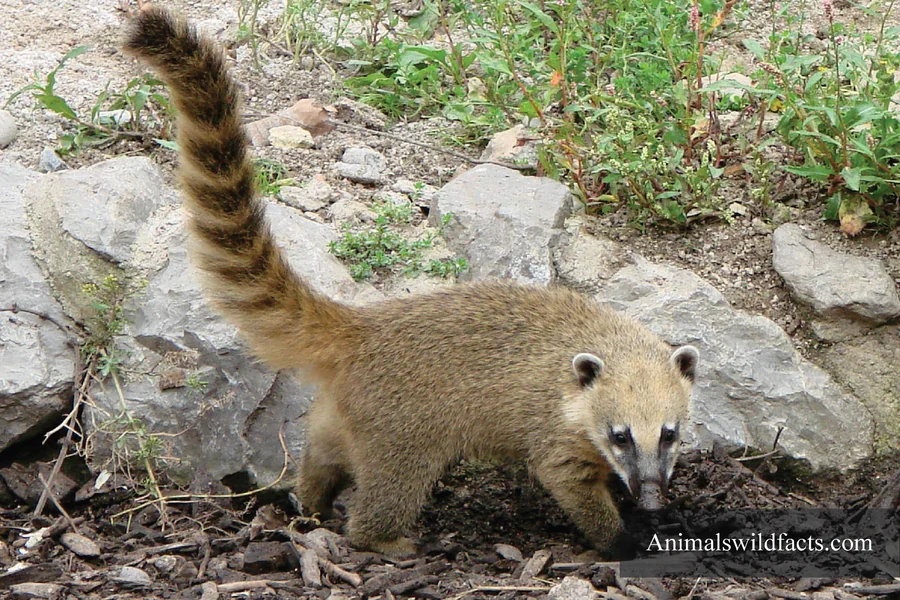
15. Coati
Scientific Name: Nasua spp.
Class: Mammalia
Diet: Omnivore
The coati has a long tail which curls upwards during walking or climbing. This twisted tail facilitates the state of balance and it enables the group members to track each other with ease. In Central and South American forests, grasslands, and mountainous areas, coatis occur. They go on the ground as well as on trees. The curled tail can be seen in the thick vegetation very much. Their food consists of fruit, insects, small creatures, eggs, and vegetation. Its tail also aids in making the body steady during feeding and climbing.
Behavior is highly social. Coatis are social, and they live in groups headed by females. Tail position enables the group order and the group space. A curled tail raised indicates that there is movement and alertness.
The tail is elastic, yet non-prehensible. Curling is better at enhancing balance not grip. It also aids the animal in switching direction fast.
Young coatis tend to play around with the tails of each other. Such a practice enhances organization and individuals associated with others. Body temperature is also regulated with the help of the tail. During rest, curling decreases the heat dissipation.
Fun fact: When coatis travel together, their upright curled tails act like visual markers. This helps the group stay together in thick forest areas.
Read Also: Top 25 Animals That Eat
16. Tree Kangaroo
Scientific Name: Dendrolagus spp.
Class: Mammalia
Diet: Herbivore
The tree kangaroos are long-tailed and bend up a little during rest or ascent. The tail is powerful and muscular. It aids in balancing as one walks in trees. They inhabit Guinea rainforests and Australia northeast. The tree kangaroos are climbing-adapted unlike ground kangaroos. The loitersome tail assists deliberate action on the branches.
They eat fruits, leaves, bark & flowers. The tail levels the body during feeding in height. Behavior is quiet and slow. Kangaroos such as trees spend most of their time in solitude. During rest, the tail is tighter in order to balance itself.
The tail is also a counter weight. It assists in regulating the position of the body during downward tree movement. Tadpoles Young tree kangaroos use the tail to support them when they acquire climbing skills. The tail becomes more powerful as the age increases.
Fun fact: Tree kangaroos can jump down from high branches without injury. The tail helps control landing position. The curled tail is essential for balance and movement in the forest canopy.
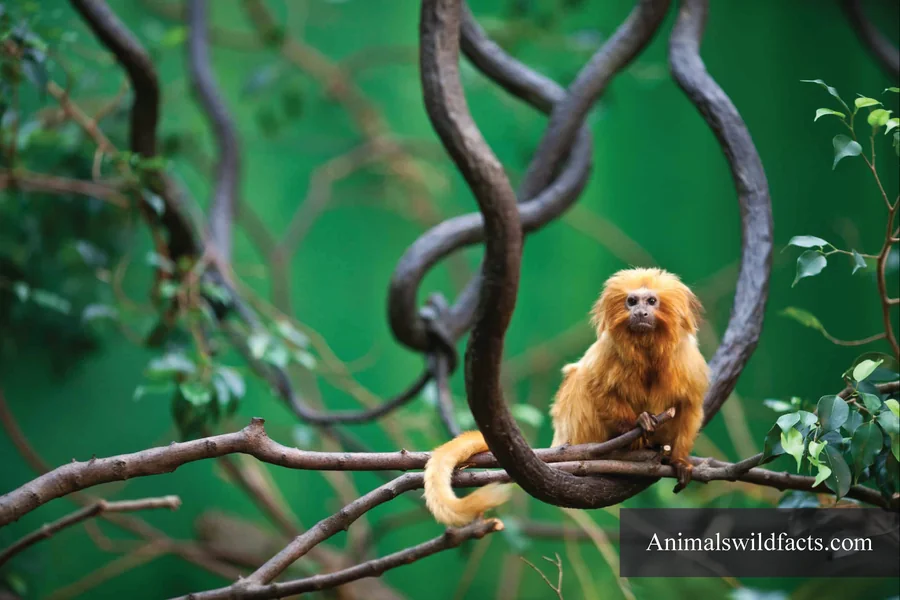
17. Tamarin Monkey
Scientific Name: Saguinus spp.
Class: Mammalia
Diet: Omnivore
Tamarin monkeys possess long tails which tend to loosely curl as they rest. The tail is non-prehensible, but it is significant in terms of balance and communication.
They inhabit tropical South American forests. Tamarins are fast in the bushes and trees. The coiled tail is used to stabilise the body when moving at a high rate. They feed on fruit, insects, nectar and small vertebrates. The tail helps her to stand during feeding and jumping.
It is a social behavior which is energetic. Tamarins occupy themselves in families. Tail position is a warning of vigilance and group organization. The tail is light and is not stiff. Curling is done primarily in times of rest or grooming. As their tails curl, tamarins tend to groom one another. This is an act favoring social bonding.
Fun fact: Tamarins give birth to twins in many cases. The curled tail helps adults maintain balance while carrying young.
Read Also: Top 10 Animals Like Mongoose
18. Prehensile-tailed Porcupine
Scientific Name: Coendou spp.
Class: Mammalia
Diet: Herbivore
The prehensile-tailed porcupine is a clear and well-documented example of animals with curled tails. It has a long, muscular and complete tail. It is a tree-climber which, with a tight c curl up round the branches, serves as a powerful support.
These porcupines exist in tropical forests of Central and South America. The majority of their lives are spent in the trees. High density in the canopy cover offers food and shelter. The curled tail makes movement at high height safe and lessens the chance of falling. Their food is composed of leaves, bark, fruit, seeds, and young shoots. Fooding is usually done at night. The tail supports the body and the animal extends his hand to access food upholding its balance on thin branches.
Slow and cautious behavior. Mostly nocturnal, the porcupines, comprehensible, are solitary. The tail wraps tightly around the branches and holds fast together during rest. This enables the animal to take a good sleep without fearing getting down.
The tail belongs to thick skin and strong muscles. It is also able to support a large portion of the body weight of the animal unlike many mammals. The curl becomes tighter when climbing and a little looser when taking a rest. The tail serves the purpose of defense as well. When it is dangerously close, the porcupine has been known to roll up its body and tail and stick out the sharp quills.
Fun fact: Baby prehensile-tailed porcupines learn to grip branches with their tails early in life. The curled tail is essential for movement, feeding, and survival in forest canopies.
Final Words
Animals with curled tails are a remarkable example of how nature shapes body structure for survival. These tails have so many purposes: balance, grip, defense, warmth, and communication since in tiny seahorses and tree-dwellers porcupines are also found. The way the species uses the tail conforms to the environment and lifestyle.
Curled tails show us how adaptive and evolutionary it is. Within forests, the tail can also be used as a fifth limb. It is able to keep heat conserved in deserts. The curl in domestic animals also represents health and temper.
These animals are useful in aiding us to realize how the finer aspects of evolution prepare creatures to survive. The piglet you’ll meet next, the monkey, or the scorpion, you will look carefully at his tail. Never mind: that is more than a shape–it is a survival-tool.
The design of nature is accurate, intentional and in most cases, mesmerizing in its simplicity. The curled tail is a minor aspect in life that brings a major difference in species.
FAQs:
Q1: What are animals with curled tails?
A: Animals with curled tails are species whose tails naturally curl for balance, grip, defense, or communication.
Q2: Why then are there animals with curled tails?
A: There are various purposes to curled tails such as climbing, holding onto the branches, safeguarding the body, saving warmth or signaling to the other animals.
Q3: Among animals, which ones have the curled tails?
Some of the most prominent ones are pigs, seahorses, prehensible tailed porcupines, spider monkeys, and pangolins.
Q4: Do curled tails ensure that animals survive?
A: Yes, they assist in balance, climbing, feeding, defense and, at times, communication in the social sphere to enhance the probability of survival.
Q5: Do only mammals have curled tails?
A: No. The presence of curled tails is found in reptiles, amphibians, fish, arachnids, and mammals which are adapted to various environments and requirements.