9 Surprising Facts About Animal Teeth, and How Vets Keep Them Healthy
Teeth tell the story of how an animal lives: what it eats, how it hunts and how long it survives. Here are nine facts about animal teeth, plus a look at how veterinary dentistry keeps our own animals’ mouths healthy.
1. Sharks go through thousands of teeth
Sharks have rows of replacement teeth lined up behind the front row. When a tooth breaks or falls out, the next one moves forward. Over a lifetime, some species shed thousands of teeth.
2. Elephants get only six sets of molars
An elephant’s molars arrive one set at a time and move forward in the jaw as they wear down. When the last set wears out late in life, the elephant can struggle to eat.
3. A narwhal’s tusk is a tooth
The narwhal’s spiral tusk, which can be longer than 2.5 meters, is an elongated canine tooth that grows through the upper lip, usually in males.
4. Beaver teeth are orange for a reason
The enamel on a beaver’s front teeth contains iron, which makes it orange and harder. It lets beavers cut through hardwood without wearing their teeth away too fast.
5. Rabbit and rodent teeth never stop growing
Rabbits, guinea pigs and rodents have teeth that grow throughout their lives. Without enough hay and chewing material, the teeth overgrow, which is one of the most common health problems in pet rabbits.
6. Dogs have 42 adult teeth, cats have 30
Both start with baby teeth that fall out in the first months of life. Dogs end up with 42 permanent teeth and cats with 30, which is more than many owners expect.
7. Cats’ teeth can dissolve themselves
Tooth resorption is a painful condition in which a cat’s body breaks down its own tooth structure, often starting below the gumline. It is one of the most common dental diseases in adult cats.
8. Horses’ teeth keep erupting
Horses have long teeth that keep pushing up through the gums as grinding wears them down. That is why horses need their teeth filed, or “floated,” regularly.
9. Dental disease is the most common problem in adult pets
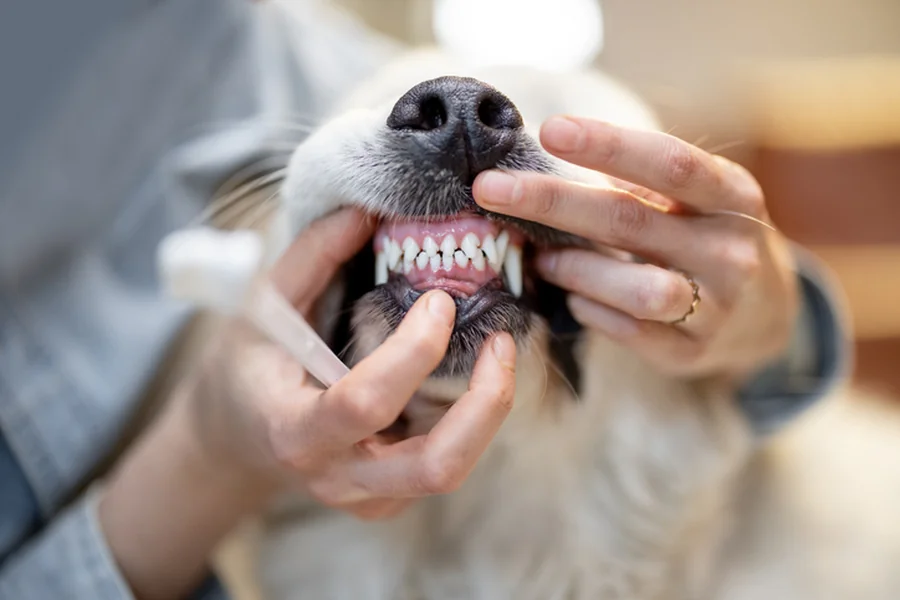
Veterinary studies consistently find periodontal disease in most adult dogs and cats. It is often painful, but animals hide pain well, so owners rarely notice until it is advanced.
How vets care for animal teeth
Veterinary dentistry is now a recognized specialty, with board-certified veterinary dentists. A thorough dental procedure includes general anesthesia, full-mouth X-rays, cleaning below the gumline and, when needed, surgical extraction.
Extractions in animals take fine, precise tools. Vets use luxators to cut the ligament around a root, elevators to loosen it, and periosteal elevators to lift the gum gently away from bone without tearing it. Suppliers of the instruments veterinary dentists rely on carry them in many sizes, from tiny blades for cats to larger ones for big dogs.
From sharks to house cats, teeth are built for survival. For the animals in our care, that survival depends on regular dental checkups.