What Dog Owners Get Wrong About Cat Body Language
Dogs and cats communicate on almost opposite operating systems, and most of the friction between dog people and cats comes down to reading feline signals through a canine lens. Here’s where that translation breaks down, and what’s actually happening instead.
The Tail Wag Trap
This is the big one. A wagging dog tail usually means excitement or friendliness. A swishing or thumping cat tail usually means the opposite: irritation, overstimulation, or a warning that a swat is coming. If a cat’s tail is flicking fast while you’re petting it, that’s not enthusiasm building, it’s a request to stop. Dog owners who keep petting through this signal are often the ones who get scratched and can’t figure out why. For more practical pet and lifestyle insights, Postly Press can also be worth exploring.
Eye Contact Isn’t Confrontation
Dogs are taught early that direct staring can be a challenge or a threat. Cats use their eyes very differently, and one of the clearest examples is the slow blink. Researchers at the Universities of Sussex and Portsmouth found that cats slow blink more often at their owners after the owner slow blinks first, and that cats were also more likely to approach a stranger’s outstretched hand after that person slow blinked at them, compared to a neutral expression. The narrowing of the eyes functions something like a smile. A dog owner who avoids eye contact with a cat out of politeness, or who reads a cat’s stare as aggressive, is missing an actual invitation to bond.
Cat breeders see this constantly in daily handling. The team at SlowBlink Maine Coons, a British Columbia Maine Coon cattery, has noted that this eye narrowing behavior shows up early in kittens as they get comfortable around people, well before the cat is doing any of the more obvious affection displays dog owners are used to looking for, like leaning in or seeking physical contact.
Belly Up Doesn’t Mean Belly Rub
A dog rolling onto its back is often a submissive, “go ahead” gesture. A cat rolling onto its back is usually just showing trust or stretching, and it is very often not an invitation to touch the stomach at all. It’s one of the most reliable ways a well-meaning dog owner ends up on the receiving end of all four paws.
A few other everyday mismatches worth knowing:
- Purring is not always contentment. Cats also purr when stressed, in pain, or self-soothing.
- Ears pinned back or sideways signal agitation, not curiosity the way a dog’s perked, swiveling ears might.
- A cat approaching with a raised, question-mark tail is a genuinely friendly greeting, closer to what a relaxed, loose dog wag communicates.
Play Signals Look Nothing Like Dog Play
Dogs tend to broadcast play with a full-body invitation: the classic play bow, loose wagging, exaggerated bounces. Cats play very differently, and a lot of it looks like stalking because, biologically, it is a modified hunting sequence. A cat crouched low with dilated pupils, twitching tail tip, and stillness right before a pounce isn’t gearing up for a fight, it’s initiating a game. Dog owners sometimes misread this stillness as aggression building, when in a dog it usually would be. The tell is the tail: a hunting-play cat flicks just the tip, not the whole tail, and the ears stay forward, not flattened.
This is also where a lot of “why does my cat bite during play” confusion comes from. Cats often play-bite hands and ankles because a hand dragged along the floor or wiggled under a blanket mimics prey movement. It’s not a warning nip the way a dog’s play mouthing sometimes is; it’s the cat completing the predatory sequence it just rehearsed. A few practical distinctions:
- Loose, open-mouthed panting during activity is a dog signal for excitement or heat regulation. Cats rarely pant, and if they do during play or exertion, it’s worth monitoring rather than reading as enthusiasm.
- A dog that play-growls is usually still relaxed. A cat that growls, even softly, during an interaction has typically crossed from play into genuine irritation.
- Kneading paired with half-closed eyes and drool is a contentment behavior with no dog equivalent. It’s sometimes mistaken for restlessness by owners who haven’t seen it before.
Personal Space Works on a Different Clock
Dogs, especially social breeds, often build trust through proximity: sitting close, leaning against a person, initiating contact early. Cats generally build trust through proximity offered on their own timeline, and pushing that timeline is one of the most common ways dog owners accidentally undermine a new relationship with a cat. A dog owner’s instinct to approach, crouch down, and reach out to greet is often exactly the wrong sequence for a cat, who tends to respond better when the human stays still and lets the cat close the distance.
This shows up constantly in shelter and adoption settings. A study on shelter cats found that cats who slow blinked and had their eyes narrowed at by unfamiliar people were adopted out faster than cats who weren’t approached that way, suggesting that reading and returning these subtle eye signals measurably changes how quickly a cat warms up to a new person. The lesson translates directly to the living room: a dog owner sitting sideways, avoiding a direct approach, and letting the cat initiate contact will usually get further in ten quiet minutes than an enthusiastic, dog-style greeting gets in an hour. Patience isn’t just etiquette here, it’s the actual mechanism that builds the relationship.
Why This Matters Beyond the Cute Factor
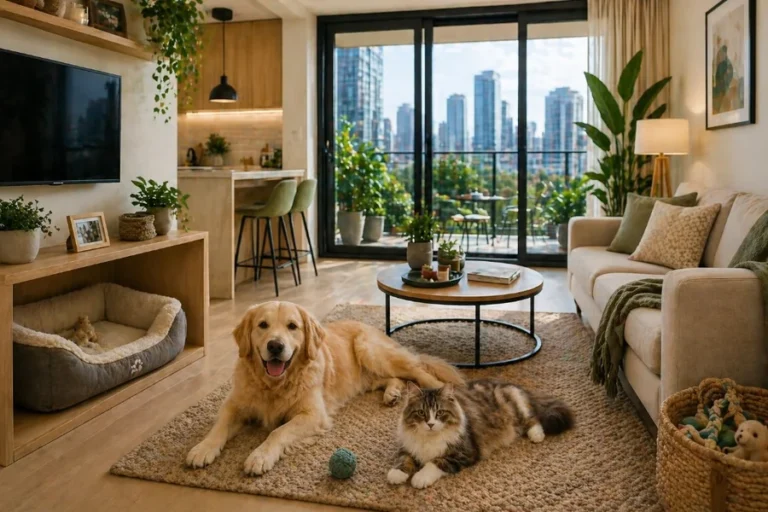
Misreading these signals isn’t just a source of scratches and awkward Instagram captions. Getting it wrong repeatedly can stress the cat out and erode trust, especially in multi-pet households where a cat is already navigating a housemate who communicates in an entirely different dialect. Learning to read tail position, ear posture, and eye behavior on the cat’s terms, rather than translating it through dog instincts, is what actually builds the relationship dog owners are hoping for when they reach out to pet a cat in the first place.
The short version: slow down, watch the tail, and don’t take eye contact personally. Your cat is probably telling you more than you think.