Long Beach Whale Watching: When Should You Go?
Ready to See a Whale? Let’s Talk Timing First
Here’s the thing about whale watching: timing is everything.
You could pick a random afternoon, cross your fingers, and hope a gray whale swims by. Or you could learn what the ocean actually does month to month. One approach leaves it to luck. The other stacks the odds in your favor.
Sound like a smart move?
If you’re staying near Long Beach, Los Angeles, or Anaheim, you’ve probably got a short window to make memories. Every day counts. The last thing you want is a boat ride where nothing shows up.
So let’s fix that. This guide breaks down when to go, what you’ll see, and one detail most visitors miss: where you launch from matters just as much as when.
Why “When” Beats “Where” for Whale Watching
Whales follow food and migration patterns. They don’t check your vacation calendar.
That means the species you’ll see in January looks nothing like what you’ll spot in July. Knowing the seasons changes everything about your trip.
But here’s a tip a lot of folks staying near Long Beach overlook. A short drive south opens up a completely different ocean. Instead of leaving from a working container port, you can depart into a coastal marine protected area. Kelp forest. Sea lions. Resident dolphins. All before you even reach open water.
That’s the difference between a port tour and a real wildlife trip.
The Two Whale Seasons You Need to Know
Southern California has two main seasons. Each brings its own stars.
Winter and Spring: Gray Whale Season (December to April)
This is the big migration. Pacific gray whales travel from Alaska down to Mexico and back, hugging the coast the whole way.
You might catch a cow-calf pair on the return trip, the mother guiding her baby north. It’s one of the longest migrations of any mammal on Earth. Pretty wild when you see it up close.
During these months you can also spot humpback, fin, and minke whales. Sometimes orca pass through. Add bottlenose and common dolphins, plus sea lions, and most trips stay busy.
Summer and Fall: Blue Whale Season (May to November)
Want to see the largest animal on Earth? This is your window.
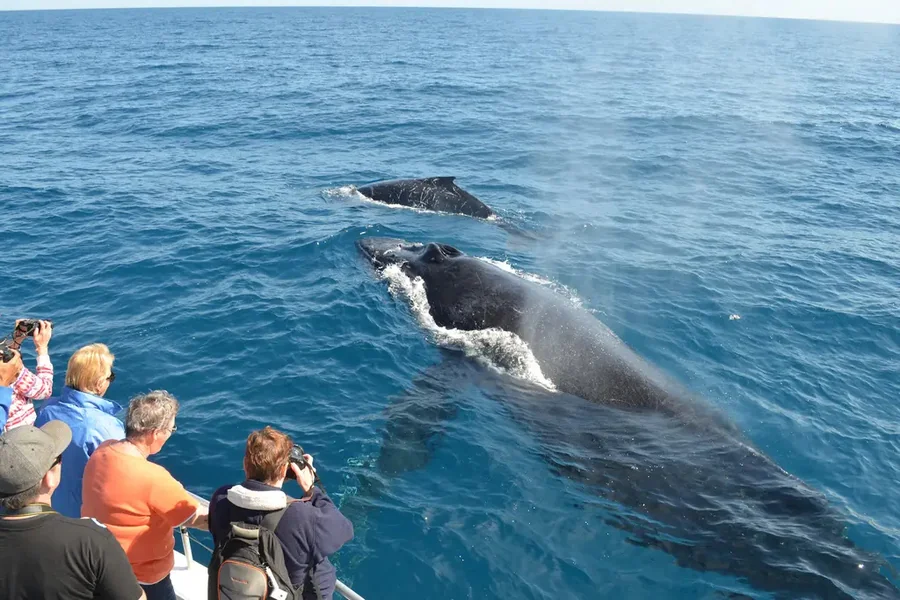
Blue whales show up to feed on krill blooms off the coast. These giants can stretch nearly 100 feet. Watching one surface and blow is something you don’t forget.
Summer also brings humpback, fin, and minke whales, plus common and bottlenose dolphins. You might even see Risso’s dolphins now and then.
Quick Season Comparison
| Season | Months | Star Whale | Also Common | Best For |
|---|---|---|---|---|
| Winter/Spring | Dec–Apr | Gray whale | Humpback, fin, minke, dolphins | Migration, cow-calf pairs |
| Summer/Fall | May–Nov | Blue whale | Humpback, fin, dolphins | Largest animals, warm weather |
Honestly? There’s no bad time. Whales swim these waters year-round. The question is which species you most want to meet.
What Time of Day Should You Book?
Morning or afternoon? People ask this all the time.
Mornings often bring calmer water and softer light, which photographers love. Afternoons tend to warm up and can feel more relaxed for families with kids. Both have their charm.
The real advantage comes from picking an operator that runs multiple trips daily. More departures mean more eyes on the water across the day. Newport Landing runs trips throughout the day, year-round, so you can match the timing to your schedule instead of forcing it.
Got a toddler who naps at noon? Pick a morning slot. Teens who sleep in? Go afternoon. Flexibility takes the stress out of planning.
Why So Many Long Beach Visitors Drive South
Look, Long Beach is convenient. Nobody’s arguing that.
But twenty minutes south sits Newport Bay, and the experience is genuinely different. Boats leave the Balboa Peninsula and head straight into the Newport Coast marine protected area. No industrial cranes. No shipping lanes. Just a beach town and open ocean.
This is where Newport Landing has built its reputation. With more than 20 years running long beach whale watching trips and a large fleet putting multiple boats on the water daily, the sightings record speaks for itself.
It’s also a full day, not just a boat ride. The Balboa Pavilion, the auto ferry, Newport Pier, and Fashion Island all sit within reach. You get whales and a beach-town afternoon you’d want anyway.
The Honest Truth About Sightings
You might feel nervous spending money on something nature controls. That’s fair.
Here’s the deal: no honest operator can guarantee a whale will show up. Anyone who promises one is selling you a fantasy. What a good crew can promise is the trip itself, plus the best possible odds.
That’s where fleet size matters. More boats running more departures means a deeper, more reliable sightings record. When you go out with a crew that’s on the water every single day, your chances jump.
The naturalists on board make the difference too. They name the species. They explain the behaviors. You’ll leave knowing something about the ocean you didn’t know that morning. That beats staring at empty water wondering what you just looked at.
Tips to Make Your Trip Better
A few small things go a long way.
Dress in layers, even in summer. The ocean runs cooler than the shore, and wind picks up once you’re moving. Bring a light jacket you can shed.
Prone to motion sickness? Eat a light meal beforehand and take medication about an hour before departure. Looking at the horizon helps more than staring at your phone.
Bring binoculars if you have them, though they’re not required. And charge your camera. When a blue whale surfaces, you’ll want both hands ready.
Frequently Asked Questions
What is the best month for whale watching near Long Beach?
It depends on what you want to see. For gray whales and their calves, aim for December through April. For blue whales, the largest animals on the planet, come between May and November. Both seasons deliver strong dolphin activity too, so there’s really no off month.
How long does a whale watching trip last?
Most trips run around two to two and a half hours. That gives the crew enough time to reach the feeding and migration zones, spend real time observing wildlife, and head back. Departing from Newport Bay, boats reach the marine protected area quickly, so less time is wasted just getting out there.
Will I definitely see a whale?
No honest operator can promise that, because whales are wild animals. Your best chance is to choose a crew with a large fleet, frequent daily departures, and a long public sightings record. Newport Landing checks all three boxes, which is why so many visitors trust it.
Is whale watching good for young kids?
Yes, with a little planning. Pick a calmer morning departure for little ones, bring snacks, and dress them in layers. The dolphins and sea lions usually keep kids excited even before the whales appear. Just be honest with teens that wildlife runs on its own schedule.
Your Whale Is Waiting
So when should you go whale watching?
The truth is, almost any time works. Gray whales rule the winter. Blue whales own the summer. Dolphins and sea lions show up all year long. The bigger question is who you go with and where you launch from.
Choosing an operator with a real beach-town departure, a marine-protected area, and a deep sightings record changes the whole day. That’s exactly the experience that’s made whale watching los angeles visitors keep driving south to Newport Beach.
Ready to pick your season and get out on the water? Book your trip with Newport Landing and see what the Pacific has waiting for you.