
Top 20 Animals With Horns In The Wild
Animals with horns are found across grasslands, forests, deserts & mountains. Such animals make use of horns to defend themselves, mating & for survival. Most species have horns growing on the skull which never go away. They do not have a similarity with antlers, which fall off annually. A large number of horned animals exist in gangs and depend on numbers and vigilance in order to remain safe against predation.
What Are Animals With Horns?
Animals with horns are mammals that grow permanent horn structures made of bone and keratin. These horns do not fall off. They aid in defense, defending of land and ranking.
Table Of 20 Animals With Horns You’ll Read About In This Series:
| Rank | Animal Name | Scientific Name |
| 1 | African Buffalo | Syncerus caffer |
| 2 | American Bison | Bison bison |
| 3 | Springbok | Antidorcas marsupialis |
| 4 | Black Rhinoceros | Diceros bicornis |
| 5 | White Rhinoceros | Ceratotherium simum |
| 6 | Domestic Goat | Capra aegagrus hircus |
| 7 | Ibex | Capra ibex |
| 8 | Musk Ox | Ovibos moschatus |
| 9 | Water Buffalo | Bubalus bubalis |
| 10 | Saiga Antelope | Saiga tatarica |
| 11 | Wildebeest | Connochaetes taurinus |
| 12 | Greater Kudu | Tragelaphus strepsiceros |
| 13 | Ankole-Watusi | Bos taurus africanus |
| 14 | Yak | Bos grunniens |
| 15 | Markhor | Capra falconeri |
| 16 | Chamois | Rupicapra rupicapra |
| 17 | Oryx | Oryx gazella |
| 18 | Gaur | Bos gaurus |
| 19 | Nilgai | Boselaphus tragocamelus |
| 20 | Highland Cattle | Bos taurus |
List Of 20 Animals With Horns In Details
1. African Buffalo
Scientific Name: Syncerus caffer
Class: Mammalia
Diet: Herbivore
The African buffalo is a powerful, huge herbivore that is distributed in sub-Saharan Africa. These are animals which inhabit grassland, savannas, and woodland. Buffaloes are very social and they normally live in a group of 10 to hundreds of Buffaloes. The lifestyle of the herds offers defense against the predators such as lions, hyenas and crocodiles.
Both the male and female buffalo have horns. The horns of males are thick and turned outwards to provide a tough shield known as a boss at the base. These horns are used by them as a defense mechanism and to engage in fights during the dominance of the herd as well as to push the thick vegetation here and there. Buffaloes can be found browsing on grass only when there is no food, otherwise, they are found grazing.
African buffaloes move around both during the day and night though most during early morning and late afternoons. They are good speakers and capable of going river crossing to access new fields of grazing. The herd speaks snort, grunt and every so now and then a bellows. The calves are shielded at the middle of the herd and the adults the surrounding.
Although they are very huge in size, the buffaloes are however capable of running at a speed of 35 miles per hour in a short burst when they are threatened. This has made them hard to prey on since their actions usually occur in herds and because of their might.
Fun Fact: African buffaloes are one of Africa’s “Big Five” species, known for their size, resilience & unpredictable nature. Their horns can last a lifetime and grow wider with age, signaling dominance among bulls.

2. American Bison
Scientific Name: Bison bison
Class: Mammalia
Diet: Herbivore
The greatest land mammal of North America is the American bison. In the past, they used to graze through the Great Plains in large numbers, either by grazing or walking. Bison can now be found in both national parks and reserves and on private lands today.
During the mating season, bison possess a characteristic of having thick, curved horns to defend and to spar each other. Horns are also useful in digging through the snow to get to grass in winter. Bulls and cows both possess horns, but the ones of bulls are larger and bulker. Bison feed mostly on sedges and grasses. They will be able to travel far off in pursuit of water and food, and adjust to the seasons in the plains.
Bison are seasonal moving to summer and winter habitats. Safety is ensured in herds especially among the calves that are confined in the middle. The dominance of bulls is determined by head-to-head confrontation in which the horns are rammed and pushed. On the one hand, bison speak using grunts, snorts, and even bellows.
Although bison have heavy bodies, they can also run away at a speed of 50km/h (31 mph) when they are being chased by their predators. During migrations, they are good swimmers and are able to cross rivers and streams. Their actions were used in the historical past to fertilize and aerate the Great Plains soil.
Fun Fact: The American bison is considered a symbol of the United States and played a vital role in Native American culture. Its horns are curved and durable, growing wider with age & are used for social signaling among bulls.
Read Also: Most Energetic Animals
3. Springbok
Scientific Name: Antidorcas marsupialis
Class: Mammalia
Diet: Herbivore
The springbok is a medium-sized antelope that is native to the grassland and the semi-arid areas of the southern part of Africa. It grows in plains, scrublands, and savanna areas where it has sparse vegetation. The springboks are quite social and live in herds of between 10 to 100 and this offers protection against the predators like the lions, cheetahs and hyenas.
Both genders possess backward curving, backward-facing horns which are slim and are ringed. The males will fight each other with the help of horns, which will determine dominance and right to females in the season of mating. Horns are also used in protection against predators. The springboks have a unique form of behavior whereby they spring into the air several times. According to scientists, pronking helps to warn predators and to show that the animal is fit to compete with its competitors.
Springboks depend on grasses, leaves and shoots with springboks being mostly grazers. They are very adapted to dry places and can endure prolonged time without water since they get it in plants. Powerful males lead herds and the female and young are second and third respectively. Springboks are speedy animals as well and they can move at a pace of 55 miles per hour thus evading most predators.
Bleats, snousts, and body language are used to communicate in society. During dry periods the herds can break down into small groups in the attempt to minimize resource competition. The springboks are also highly adaptive with regard to changes in seasons as they migrate locally in search of food.
Fun Fact: Pronking is not only a defensive behavior but also a way for springboks to show agility and strength, which is attractive to potential mates and deters predators.
4. Black Rhinoceros
Scientific Name: Diceros bicornis
Class: Mammalia
Diet: Herbivore
The black rhinoceros is a critically endangered animal that is found in eastern and southern Africa. They live in savannas, shrublands and woodlands, and usually prefer the high vegetation cover. Black rhinos are generally solitary with an exception of those with calves. Their visual acuity is not good so they depend on a good sense of smell and hearing.
The black rhinos possess two horns with the anterior being longer. The horns are utilized in the defense, digging water and removing the tree bark. Males also head horn fights when they fight over territory and in mating. Their food mostly includes the leaves, shoots and branches. Black rhinos are not grazers but browsers as they do not like grass, they like to consume the shrubs and bushes.
Rhinos are also territorial and they put marks on places where there is dung and mud wallows. Although they are so large, they are able to move at a speed of up to 30 miles per hour in brief cases in case of threat. Milking cows are maternal and guard them throughout time when moving in rough terrain. Black rhinos are usually nocturnal but can be at work in the early morning hours and in the late afternoons.
Fun Fact: Poaching for rhino horns is the main threat to black rhinos, making conservation efforts essential. Their horns grow continuously throughout life and can reach over three feet in length.
Read Also: Animals That are Skinny
5. White Rhinoceros
Scientific Name: Ceratotherium simum
Class: Mammalia
Diet: Herbivore
The white rhinoceros is the heaviest kind of rhino and the iconic megafauna in Africa. These live in grasslands, savannas, and open plains in the south of Africa. White rhinos are social beings compared to black rhinos because they live in groups known as crashes, and are usually composed of females and calves. Male animals become either solitary animals or loosely shaped social groups.
The horns are two in nature, the front one shorter and tighter. Horns play a defense role, in digging and display of dominance among male counterparts. The white rhinos are grazers, they consume almost all short grasses. They have wide and square-shaped mouths which they make good use of to clip grass near the ground.
The white rhinos are not very aggressive but when threatened may become very aggressive. To cool down, prevent sunburning, and keep away insects, they apply mud wallows. Although huge, they are able to move fast and charge suddenly when attacked by the predators or humans. The social setups are flexed on the basis of age and size where dominant male groups control territories that cross over female groups.
Fun Fact: White rhinos are also called “square-lipped rhinos” because of their broad mouths adapted for grazing. Their horns continue growing throughout life and are used to establish social rank among bulls.
6. Domestic Goat
Scientific Name: Capra aegagrus hircus
Class: Mammalia
Diet: Herbivore
One of the widely kept horned animals that are found in the world is domestic goats. They inhabit farmers, grasslands, hills and even semi arid lands. Goats are very social and they exist in herds and offer protection and maintain social order. They are active and inquisitive, and tend to move on the rocky or steep houses in search of food.
Men have horns, as do women, although the males usually possess larger horns which are curved. They are used to show dominance, sparring, defense as well as balance when climbing being done using horns. Goats are also browsers as opposed to grazers and they consume leaves, grasses, shrubs, trunks and twigs. Their food is seasonal as per the vegetation.
Goats speak through bleats, movements of the head and body language. Daytime is the time when they move around, and in search of food, they tend to visit new territories. Horns are also useful in thermoregulation where it releases heat in warm weather. Domestic goats are versatile and have been released into other climates of the world.
Fun Fact: Goat horns continue growing throughout life, and the size and shape of horns can indicate age, health, and dominance within the herd. Their climbing ability makes them unique among domesticated livestock.

7. Ibex
Scientific Name: Capra ibex
Class: Mammalia
Diet: Herbivore
The ibex, which is also known as the Alpine goat, is a wild animal native to the Alps of Europe, the Middle East and some of North Africa. They also live in the steep and high cliffs areas, which give them security against predators. Ibexes are gregarious and live in groups, generally segregated in the fashion of males and females during the mating period.
Horns belong to both males and females, though the horns of males are long, thick and ridged and this time pointing backwards out of the skulls. Male horns are used in male dominance and right to breed. The horns are also used as a defense mechanism against predators. Women possess less large horns which are slim with protection as the principal use.
Ibexes are herbivores, which feed on grass, leaves, shrubs, mosses, and herbs. Their balance and agility are very high and they tend to go up vertical rock faces in search of the scarce vegetation. Men also engage in ritual combat during mating in which they fight with horns as a way of dominating. The type of herd communication is bleats, body language and scent marking.
Nevertheless, the rugged terrain does not hinder the movement of the ibexes who can even run and jump off new heights, to avoid being caught by predators such as eagles, wolves, and lynx. They are suited to poor climates and can withstand cold winters and the lack of food at high altitudes. In winter, seasonal migrations to lower heights are experienced when high pastures are covered with snow.
Fun Fact: Male ibex horns can grow over three feet long, with visible rings forming each year that indicate age and social rank. These horns are one of the most distinctive features of this mountain species.
Read Also: Animals That Gallop
8. Musk Ox
Scientific Name: Ovibos moschatus
Class: Mammalia
Diet: Herbivore
Musk ox is a large mammal with frizzy hair that comes native to the tundra found in Arctic regions both in North America and in Greenland. Musk oxen do not live singly, they live in groups of 10 to 30. The herding behavior offers her defense against the wolves, bears & other Arctic predators.
Male and female horns of both categories are curved. The lower parts of male horns are deep and they are engaged in a battle of dominance during the rut. It is also possible to defend and dig very deep tunnels in snow to reach plants using horns. The food of the musk oxen includes grass, A. mosses, lichens and wood. They are very much balanced to cold with a waterproof undercoat referred to as qiviut which happens to be one of the warmest natural fibers.
When they are perilous, the musk oxen take the defensive position. There is the herd surrounding the calves and she is standing outwards and with her horns perfectly formed. This scheme protects the youngsters and it brings away the predators. These musk oxen are nomadic seasonally, and go out, in search of food, at the most convenient hours, and are excellent swimmers as regards to crossing rivers or marshy areas.
They employ grunts, snort and body language to guide the herd behavior. There is dominance hierarchy that results due to head to head confrontations between bulls that are ritualized and not harmful.
Fun Fact: The qiviut wool of musk oxen is highly prized for its softness and warmth. Musk oxen shed it naturally in spring, and humans collect it to make clothing.
Read Also: Quiet Animals in the World
9. Water Buffalo
Scientific Name: Bubalus bubalis
Class: Mammalia
Diet: Herbivore
Water buffalo is a horny and massive mammal found in south as well as southeast Asia. They are found in wetlands, rivers, swamps and grasslands. Water buffaloes are gregarious and they live in herds of between 10 and more than 100. The protection against predators and reinforcement of reproductive success are supported by herds.
Both the sexes possess large backward curving horns which are used to protect, show dominance and occasionally at mud digging to reach vegetation. Social hierarchy also has its role in horns as the older bulls determine the dominance by having ritualized clashes. Aquatic herbs, grasses, and water buffaloes are major consumers of water buffaloes and they are grazers.
They are good swimmers, and their fondness of wallowing in mud or water to cool, shield themselves from sun and keep off insects. Their organization is in herds with dominant bulls and females as well as calves. Water buffaloes are peaceful animals that can even charge aggressively in case threatened. They have been extensively domesticated and put to work in the fields where they are used to plow in and haul.
Fun Fact: Horns of large male water buffaloes can span up to six feet across, making them one of the most recognizable features in bovines. Their adaptability allows them to thrive in both wild and farmed environments.

10. Saiga Antelope
Scientific Name: Saiga tatarica
Class: Mammalia
Diet: Herbivore
Saiga antelope lives in the steppes and semi-deserts of Central Asia. They are found as large herds which seasonally move to find food and water. Saigas are very social and this assists them in buffering the risk of predation by the wolves, as well as foxes.
Males possess horns of a unique and upward shape. Females rarely have horns. Dominance by the male during the mating season is achieved by the use of the male horns, whereas it is also used as a mechanism of defense. Saigas are mostly grazers, and their food consists of grasses, herbs, and shrubs and can survive in tough environments that are dry.
The nose of a saigas is unique, and it is flexible and filters dust during summer and warms the cold air during the winter months. Herd dynamics are dynamic as herds dissolve in dry seasons to reduce competition over resources, and run back together in migration. Migratory pathways may go hundreds of miles over the steppe.
They use grunts, snorts and body language in the process of mating as well as territorial conflicts. The herds also act in a strategically planned way of going to water holes and to avoid the over grazed areas. The poaching and loss of habitats leave Saiga populations exposed to active conservation needs.
Fun Fact: Saiga horns are highly sought after for traditional medicine, which has caused severe population declines in recent decades. Conservation programs focus on anti-poaching measures and habitat protection.
11. Wildebeest
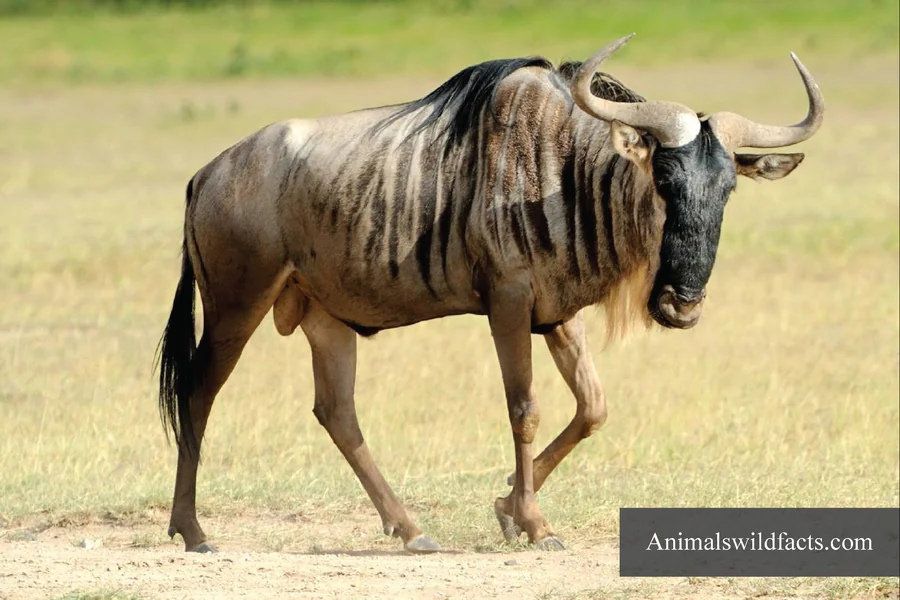
Scientific Name: Connochaetes taurinus
Class: Mammalia
Diet: Herbivore
The wildebeest or gnu is a giant antelope which is indigenous to the grasslands and savannas of Africa. They are nomadic creatures, which move about in huge groups, seasonally, to seek grass and water. Migration gives a shield against predators and enables the herds to use the resources economically.
Both sexes possess curved horns though males possess horns that are sturdier. Horns serve an individual protection in preventing attacks of predators, combat rivals in the mating season, and keeping the calves safe. Wildebeests are grazers that are limited to short grasses, and can live in diverse soils and vegetation categories.
Their survival depends on migration behavior. Herd animals such as herds can move over hundreds of miles per year on the Mara and the Serengeti. Wildebeests are fast runners with a speed of up to 50 miles per hour upon any threat by lions, hyenas, and crocodiles. The herd communication employs grunts, snorts & signals to help coordination of the movements.
Calves are given birth at synchronized times as a way of overpowering the predators. The social structures of herds are also loose, as male dominating herds are formed temporarily to mate.
Fun Fact: Wildebeest migration is one of the largest wildlife events in the world, involving over a million individuals moving together. Horns provide a critical role in social hierarchy and protection.
12. Greater Kudu
Scientific Name: Tragelaphus strepsiceros
Class: Mammalia
Diet: Herbivore
The greater kudu is a big antelope that is indigenous in eastern and southern Africa. They live in woodlands, savannas, and scrublands and like places that have thick plants to conceal themselves. Greater kudus typically are solitary or create small deer groups of females and males but generally adults are solitary except in the mating season.
The males possess long and twisted horns that they utilize in sparring with their competitors thereby determining who is the best. Another way that horns are used is as protection against predators such as lions, leopards and hyenas. Females usually lack horns. Kudus are herbivores, where they feed on leaves, shoots, grasses, and they may at times feed on fruits. Their strength is their height and agility enabling them to access the food that small herbivores cannot.
Greater kudus are vigilant and use camouflage to stay out of the detection of predators. At the approach they will soar over hurdles gracefully or run away into thick bushes. The methods of communication involve bleats, grunts and scent marking. During the rut, males engage in ritual fights that do not result in severe injuries so as to acquire mates.
The dynamics of herds are flexible and females guide calves to the sources of water and food. Kudus are majorly crepuscular and they only feed in the early morning and late afternoons to avoid heat.
Fun Fact: Greater kudu horns can grow up to six feet long, twisting in elegant spirals, making them one of the most visually striking horned species in Africa.

13. Ankole-Watusi
Scientific Name: Bos taurus africanus
Class: Mammalia
Diet: Herbivore
Ankole-Watusi is a big domestic breed of cattle with its home being East Africa. They are found in the savannas, grassland and farm lands. She lives in herds and forms strong bond groups that are headed by the dominant males that provide order and security.
The horns of both sexes are magnificent, and they may be as long as eight feet. The horns are employed to defend, display dominance, and cool. The blood circulates in the in-next to the horns, and it aids in the regulation of the body temperature in hot weather conditions. The Ankole-Watusi mostly feeds on grasses but eats on shrubs and leaves when the grass is not abundant.
These cows are very adaptable and can endure hostile arid conditions with very little water. They are peaceful but will handle the weaker members (calves) and will shield them by standing in the middle of the herd and the animal predators. Herd communication is through vocal tone, body language and movements of the head.
Ankole-Watusi also possesses instincts of defending the herd despite being domesticated. Bulls fight each other in their mating season to gain control over dominance and to have access to females. They can easily survive in a semi-wild environment due to their large size which is complemented with long horns and they can withstand predator attacks.
Fun Fact: The Ankole-Watusi’s horns are among the largest in the animal kingdom relative to body size and serve both practical and social functions.
14. Yak
Scientific Name: Bos grunniens
Class: Mammalia
Diet: Herbivore
The yak is a bovine animal that is long haired, which is found in Himalayan mountains, Tibet and Mongolia. They live in the meadows and heights in the alpine regions. Yaks are herbivores that live in groups of 100 or fewer, which are warm, safe and sociable during unfavorable climates.
Both male as well as female possess curved horns. The horns of the males are heavier and are employed to show dominance in the mating season, calves protection, as well as digging through snow to find vegetation. Yaks live to graze, they feed on grasses, sedges, and herbs. They adapt very well to cold temperatures, have thick coats, dense under fur and have low metabolic rate which ensures that it conserves energy.
Yaks are gregarious and the communication pattern relies on vocalization and placement of body language to express herd dynamics. Seasonally, herds of animals move in search of new pastures and escape deep snow. To assert their dominance, male fight to form a hierarchy which is commonly achieved by horn to horn fights. The Yaks are powerful and can lift heavy weights and this has made it invaluable to the humankind of high mountainous regions.
Fun Fact: Yak horns also help dissipate heat in summer and serve as a visual signal of maturity and strength among bulls. Yaks can survive extreme altitudes where oxygen levels are low, a unique adaptation among bovines.
15. Markhor
Scientific Name: Capra falconeri
Class: Mammalia
Diet: Herbivore
Markhor is a wild mountain goat found in Central Asia mountainous areas in Pakistan, Afghanistan and India in the north parts. They live on the cliffs and slopes, on the edges of forests and they are kept safe against predators like the snow leopards and the wolves.
The spiral horns of male markhors measure up to five feet. Females have smaller horns. Dominance battles, display of mating and defense are done using horns. Markhors are grazers, which feed on grass, leaves, young tree shoots and shrubs. They are able to move high on the steep cliffs in an attempt to get food that other herbivores cannot reach.
Markhors are sociable which means they are grouped into herds of females and young markhors, and as they get older, go to live in bachelor herds. The males also compete in the process of mating by clashing their horns with each other and performing ceremonies before the females. Markhors are very nimble and they can jump and climb up climber rocks in order to evade predators.
Fun Fact: The name “markhor” means “snake-eater” in Persian, referring to the twisted, horn-like shape of their horns. Their spiraled horns are among the most dramatic in the goat family and are used to establish social hierarchy.

16. Chamois
Scientific Name: Rupicapra rupicapra
Class: Mammalia
Diet: Herbivore
The chamois is a small mountain goat-antelope native to the European Alps, Carpathians, and parts of Turkey. They live in rocky slopes, in alpine meadows systems and in forested areas. Chamois are quite nimble and they travel in herds to keep themselves safe against attacks by predators such as lynx, eagles and wolves.
Both male and female bear short hooked horns. The horns of males are somewhat fatter and are sparred over in the rut. Horns are used as defense and help in preserving social hierarchy. Chamois are grazers, and they feed on crayon, grass, herbs, mosses and leaves. They use steep cliffs in order to reach vegetation and avoid predators.
Age and sex normally form the structure of herds. Males make up territories in the mating season and clash with each other with their horns to attain access to females. Chamois use body language, scent marking and bleats to communicate. They can jump and climb very fast, getting out of danger in the rugged landscapes.
Fun Fact: Chamois horns grow continuously but remain relatively short and curved. They are strong climbers and can descend near-vertical slopes without losing balance, which helps them survive in alpine habitats.

17. Oryx
Scientific Name: Oryx gazella
Class: Mammalia
Diet: Herbivore
Oryx is a big antelope which is a desert species occurring in Africa and Arabian peninsula dry savanna region. The habitat that they reside in is open plains that have few vegetation cover and therefore help them to see predators like lions, hyenas, and cheetahs. Oryx is a social animal, and they live in a herd of 10-40.
Both the males and females possess straight long horns that are employed in defense, dominance, and fighting. The length of horns is up to four feet. Oryx is a grass eater, it thrives on grasses, herbs, and shrubs. They are very tolerant to water shortages as they can get their moisture through plants and reduce its activity at the highest temperatures.
Oryx have the ability to be alert and use their eyesight to evade predators. They are hierarchical and the males are dominant, having control over females. Oryx also move locally in order to get seasonal water and food. It is communicated by snorting, grunting as well as the use of the body.
Fun Fact: Oryx horns can be lethal to predators. They can also be used to dig for water in arid habitats, showcasing their adaptation to extreme desert environments.
18. Gaur
Scientific Name: Bos gaurus
Class: Mammalia
Diet: Herbivore
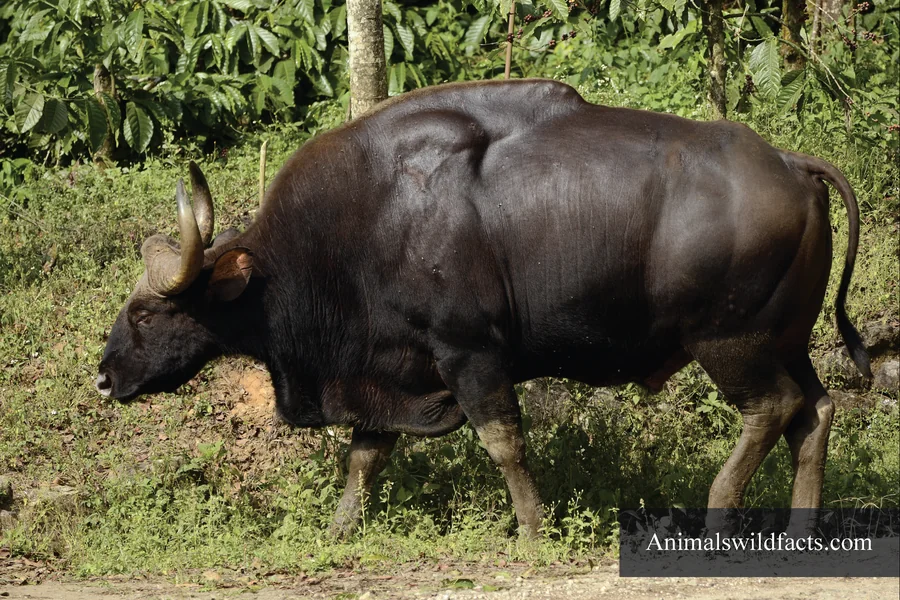
The largest wild cows are called the gaur which is indigenous to south and southeast Asian regions. They are found in the tropical forests, grasslands & hills. Gaurs exist as groups of 10 or 20 animals which are normally headed by the dominant females. The life in the herd offers protection against attack of predators like tigers, leopards and dholes.
The males and females possess large horns which are rounded and used to defend themselves as well as to fight over dominion and grazing. The horns were thickened at the base then tapering to a point. Gaurs are herbivores and have grasses, leaves and shoots as their food. They are mostly grazers and they also browse shrubs when there are dry periods.
Gaurs are predominantly diurnal although they can feed at night in man-disturbed areas. The herds are well organized socially with powerful bulls that guard both females and calves. Communication involves body movements, snorts and grunts. Gaurs are powerhouse and are fast-paced even though they are huge, capable of running faster than average when threatened.
Fun Fact: Gaurs can weigh over 2,000 pounds, making their horns vital for protection and social dominance. They are considered a keystone species, shaping vegetation and ecosystems in their habitats.
19. Nilgai
Scientific Name: Boselaphus tragocamelus
Class: Mammalia
Diet: Herbivore
The nilgai, also known as blue bull, is the heaviest of the native Indian and some areas of Nepal antelopes. They occupy grassland, scrubber forests, and farms. Nilgai are social, and they exist in small groups of 10-20 members in small herds, although males tend to live alone. The calves are covered by herds and coordinated grazing is made possible by woods.
Male and female are similar in horns in size and shape (conical and short) yet male horns are larger to take part in dominance battles, and protection. Another use of horns is during mating season where males fight over females. Nilgai are grazers and browsers and they browse on the available grasses, leaves, shoots, and crops. They are adaptable and can exist in regions where there is a shortage of water.
Nilgai are very vigilant and they depend on their speed and agility to avoid tigers, leopards and jackals. They get in touch with each other in the form of vocalizations, body cues, and scent marking. Movement of herds is common in the morning and evenings so as to avoid heat. Males develop territory in the rut and may compete with their competitors by displaying their horns.
Fun Fact: The nilgai is considered sacred in parts of India, which has helped protect it from hunting. Its horns continue to grow throughout its life and are used to signal strength and maturity to other males.

20. Highland Cattle
Scientific Name: Bos taurus
Class: Mammalia
Diet: Herbivore
The Scottish highland cattle are a domesticated breed of cattle. They live in mountainous areas, grasslands and in frozen and wet areas. The herds are social, they normally have several cows, calves and one or two bulls. The purpose of herding is to safeguard the young animals and uphold social order.
Both the male and the female possess long curved horns. The horns were applied to protect, to show status and to navigate dense vegetation. Highland cattle are herbivores and feed on grass, herbs, and shrubs. The heavy coat keeps them warm in the cold weather and lets them survive in the extreme conditions.
Herd interacts by making sounds, head and body movements. Dominant bulls create order among calves in the herd and guard resources. Highland cattle are docile but will aggressively protect themselves or their young ones in the case of challenges. Horns are needed to clear plants, defend against competitors, and to flaunt.
Highland cattle are very flexible to the extent that they can graze in places where they can never find suitable livestock. They are useful in farming and conservation grazing to preserve natural grasslands.
Fun Fact: Highland cattle horns can grow outward and upward, creating an impressive silhouette. They continue to grow throughout life and serve both functional and social purposes within the herd.
Closing Summary
Animals with horns are found across continents and habitats, from African savannas to Himalayan mountains. Horns are used in various forms which consist of defense, dominance, mating shows, as well as staying alive in hostile environments. The horned animals exhibit great adaptations both in the wild and domestic as seen in the spiraled horns of markhors and heat-controlling horns of Ankole-Watusi.
The horn usage has strong relationships with herd behavior, her social structure and survival strategies. Other species use them to exercise dominance or attract mates and other species use it to protect themselves. Horn evolution is also a factor in grazing and browsing behavior, which make animals get food in different ecological settings.
The study of these species shows the ecological importance and the richness of horned animals. Conservation continues to play an important role in the lives of species like the black rhinos and the saigas that are on the endangered list. Through their observation, habitat and adaptations, we understand what is the significance of horns in animal survival and health of the ecosystems.
FAQs:
What animals have horns?
Other animals such goats, buffaloes, antelopes, rhinos, and cattle among others develop horns to protect themselves, display dominance and stay alive.
Are their horns upon both males and females?
It depends on the species. The horns are common to both the male and the female but in other animals such as African buffalo only the male have horns as is the case with the saiga antelopes.
How does the difference between horns and antlers come about?
Horns are never shed but made of a combination of keratin over bone whereas the antlers are also formed of bone and are shed annually.
Why do animals grow horns?
The horns are used in defense against the predators, attracting the mates, creating the social hierarchy, and in some cases, digging or cooling the body.
What horned animals have been endangered?
Poaching, loss of habitat, and human activity are some of the factors that have contributed to endangering the existence of black rhinoceros, saiga antelope, and markhor.
And are horned creatures able to live without horns?
Horns play a significant role in defense, mating, and in social relations and because of losing them, survival is impacted, yet certain animals can evolve in a few aspects.
How long do horns grow?
Most species grow horns all their lives and the size of the horns varies with age, genetic makeup and diet.


