15 Animals That Live in Tundra: The Toughest Survivors on Earth
The ground barely thaws here. Even in summer, a few inches down, it’s still frozen solid. Wind rips across the land with nothing to slow it. And yet, somehow, life keeps going. Animals that live in tundra deal with months of near-total darkness, brutal cold & long stretches where food just isn’t around. Below are 15 of them, with the real details on how they get by, what they eat & where you’d actually spot one.
Why Animals That Live in Tundra Matters
The tundra might seem like a lifeless, snow-covered landscape, but there’s a lot that’s going on there. The reality is, however, that each of these species on this list has a role that has significance beyond itself and that the loss of any one of these pieces affects the entire picture.
If lemmings are removed, Arctic foxes, snowy owls and skuas all have problems raising young the following year. When caribou are removed, caribou food sources are lost, and other plant species that caribou eat are left to grow without control, disrupting the whole ecosystem of tundra plant life. These animals don’t tell different stories. They’re the links of the chain, and the chain only works as long as all the links remain in place.
But there is a greater reason to be concerned, beyond the tundra itself. Loss of sea ice for polar bears; surviving supercooled hibernation as ground squirrels; and caribou adjusting their migrations around a shrinking window of plant growth — all of these are early warning signs. Animals that live in tundra are some of the first to feel climate shifts, long before those changes show up anywhere else. Their response to these conditions is a good indicator of what is to come and what is to come not only in the Arctic, but anywhere.
Conservation of this biome is not simply to preserve one or two hardy, cold-tolerant species. It’s about sustaining the functioning of an entire ecosystem that has been operating on its own terms for thousands of years, and that still has a lot to teach us.
Quick List: Animals That Live In Tundra
| Number | Animal Name |
| 1 | Polar Bear |
| 2 | Arctic Fox |
| 3 | Caribou (Reindeer) |
| 4 | Snowy Owl |
| 5 | Arctic Wolf |
| 6 | Musk Ox |
| 7 | Arctic Hare |
| 8 | Lemming |
| 9 | Rock Ptarmigan |
| 10 | Snow Goose |
| 11 | Arctic Tern |
| 12 | Wolverine |
| 13 | Ermine (Stoat) |
| 14 | Arctic Ground Squirrel |
| 15 | Beluga Whale |
Detailed Look at the Animals That Live In Tundra
Polar Bear
Scientific Name: Ursus maritimus Class: Mammalia Diet: Carnivore
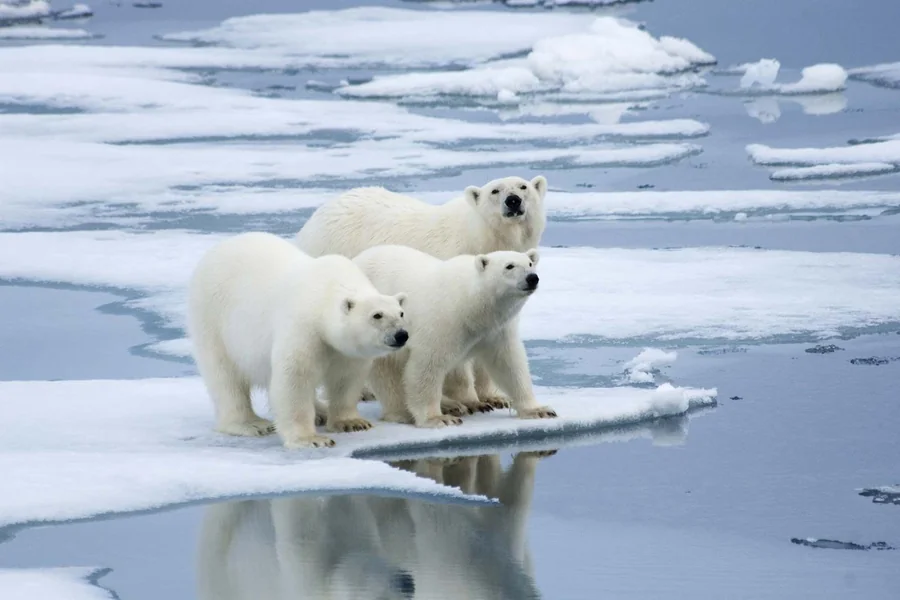
Polar bears rule the sea ice. Most of their life happens out there, waiting at seal breathing holes for hours at a time, then striking in a split second when a seal surfaces for air. A thick fat layer under the skin does most of the heavy lifting against the cold. Weirdly enough, their fur isn’t white at all. Each hair is clear and hollow, and it just scatters light so it looks white to us. Underneath, the skin is black, which soaks up whatever sun there is.
Their nose does a lot of work too. A polar bear can pick up a seal’s scent from nearly a kilometer off, right through snow cover. Cubs stick with mom for about two and a half years before they’re ready to hunt alone. One thing that’s gotten harder lately: sea ice breaks up earlier each year, so bears are swimming longer distances between hunting grounds, sometimes past 100 kilometers in one go. That’s a rough measure of how tied their survival is to ice that keeps shifting under them.
Arctic Fox
Scientific Name: Vulpes lagopus Class: Mammalia Diet: Omnivore
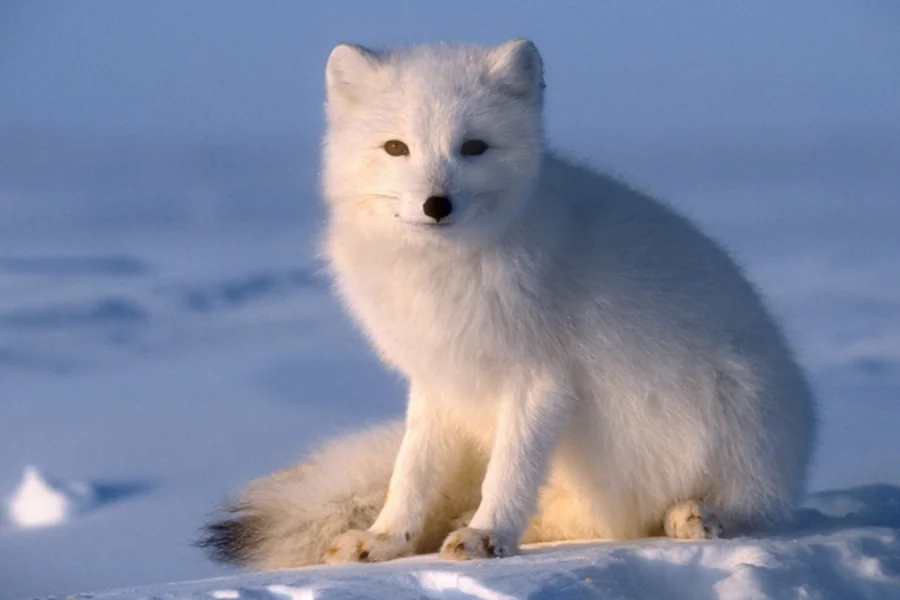
Small animal, huge tolerance for cold. The Arctic fox switches its coat with the seasons — white through winter, then brown or gray once summer opens up the tundra. It’s about as good a camouflage system as you’ll find up north. Even the bottoms of its feet are furred, which stops heat from bleeding out through the paws.
Food-wise, this fox will eat almost anything. Lemmings make up a big chunk of its diet, and honestly, fox numbers rise and crash right along with lemming population swings. When prey gets scarce, foxes trail polar bears around and pick off leftover seal scraps. They dig dens into hillsides, and some of these dens have been reused by generations of foxes for over 300 years — same burrow, different foxes, century after century. On top of that, they can handle temperatures down to minus 70°C without shivering once, thanks to a heat-exchange system running through their legs.
Caribou (Reindeer)
Scientific Name: Rangifer tarandus Class: Mammalia Diet: Herbivore
Caribou — reindeer, if you’re in Europe or Asia — are the long-haul travelers of the tundra. Herds move hundreds of miles between winter range and summer calving grounds, and some cover more ground yearly than any other land mammal on record. Their hooves are wide and work almost like built-in snowshoes, spreading weight over snow, and they double as paddles when the herd has to swim a river.
Winter diet is mostly lichen, dug out from under the snow with those same hooves. Not many large animals can actually digest lichen well, but caribou manage it fine. Come summer, they switch to grasses, sedges, and leaves. Here’s a quirky detail: both males and females grow antlers, unlike most deer species where only males do. Their eyes even shift color with the seasons — gold in summer, blue in winter — to help them see in low Arctic light. Herds can run into the tens of thousands, moving as one huge, shifting mass across open ground.
Snowy Owl
Scientific Name: Bubo scandiacus Class: Aves Diet: Carnivore
Most owls hunt at night. The snowy owl doesn’t have that luxury, since Arctic summers bring almost 24 hours of daylight, so it’s hunted in full sun for generations. Thick white feathers cover nearly its whole body, legs and feet included, leaving just the eyes and beak exposed.
Lemmings are the main course here — a single owl can eat over 1,600 of them in a year, which is a lot of tiny rodents. When lemming numbers crash, owls sometimes push far south hunting for food, something researchers call an irruption. You can tell males and females apart by feather spotting: females carry more dark markings, males are closer to pure white. Nests go right on the ground since there are no trees this far north, usually on a slightly raised patch so the owl can watch for trouble coming. Their hearing is sharp enough to catch prey moving under a layer of snow.
Arctic Wolf
Scientific Name: Canis lupus arctos Class: Mammalia Diet: Carnivore
A subspecies of the gray wolf, built for the far north and rarely bothered by humans since so few live where it does. Its coat stays white all year, unlike other wolf subspecies that shift with the seasons.
These wolves hunt in packs and take down muskoxen and caribou, animals way too big for one wolf to handle solo. Packs tend to run smaller than forest wolf packs, mostly because prey is spread so thin across open tundra. They can go two weeks without eating, then gorge hard once a hunt actually pays off. Temperatures where they live can sit at minus 40°C for months on end, and they get through it on thick double-layered fur plus a diet that’s almost entirely meat, low fat, high protein.
Musk Ox
Scientific Name: Ovibos moschatus Class: Mammalia Diet: Herbivore
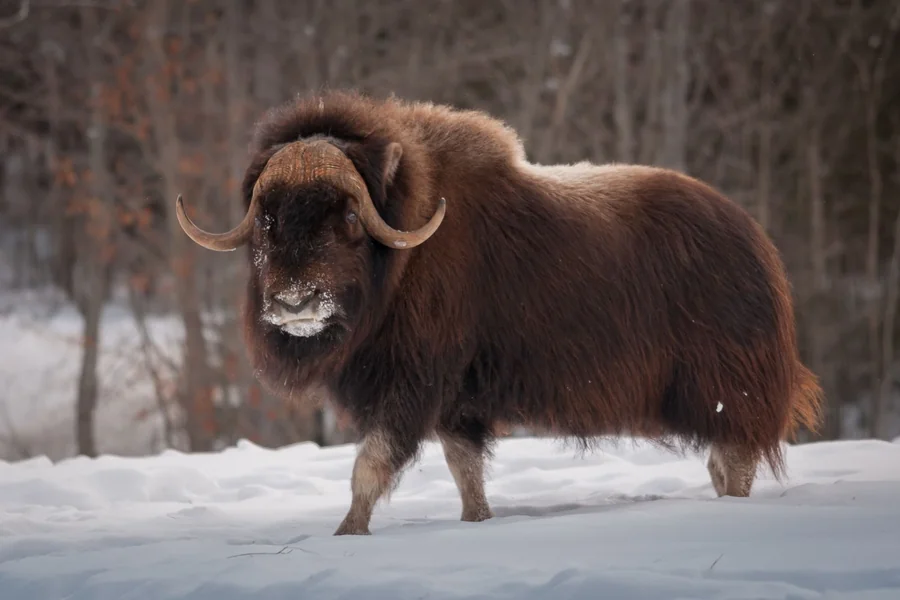
Honestly, the musk ox looks like it wandered out of the Ice Age and never left — and in a way, it did. This shaggy animal has been on the tundra since prehistoric times, barely changed. Its coat runs two layers deep: coarse outer guard hairs and a soft undercoat called qiviut, warmer than sheep’s wool by a good margin.
Musk oxen live in herds, and their defense against wolves is oddly clever. Adults circle up around the calves, horns pointed outward, a formation that’s kept herds alive for thousands of years — though it does nothing against a hunter with a rifle. Both sexes carry horns, though males have a thicker base. For something this bulky, they can still hit 60 km/h if they need to. Diet is grasses, roots, and moss, dug out from under snow with their hooves.
Arctic Hare
Scientific Name: Lepus arcticus Class: Mammalia Diet: Herbivore
Fast and cold-proof, in that order. Arctic hares can hit 60 km/h fleeing foxes or wolves, and they’ll often stand up on their hind legs like a tiny kangaroo just to scan the horizon. Fur turns white for winter, grayish-brown for summer, matching whichever ground cover is around.
Here’s something odd for a hare: in the far north, they sometimes gather in groups of a hundred or more, which is rare for an animal that’s usually solitary. Probably helps with spotting danger early. Short ears, compact body — both trim down heat loss compared to hares living somewhere warmer. They dig shallow shelters in snow to dodge wind chill, and through winter they mostly eat woody plants, mosses, and buds. A thick fat layer carries them through the leanest months.
Lemming
Scientific Name: Lemmus Class: Mammalia Diet: Herbivore
Tiny rodent, outsized influence. Lemming numbers boom one year and crash the next, and that swing ripples through nearly every predator in the region — Arctic foxes, snowy owls, skuas, all of them. Good lemming years mean more chicks and cubs are raised. Bad years, breeding drops across the board.
They stay active all winter, tunneling under the snow for roots, moss, and grass. That snow layer works like insulation, keeping tunnels warmer than the air above. And no, lemmings don’t actually throw themselves off cliffs on purpose — that idea came from an old nature documentary that staged the whole scene. What really happens: populations sometimes outgrow the food supply, triggering mass movement, and some lemmings do drown crossing water while searching for new ground. Fast breeding, several litters a year, keeps this whole cycle turning.
Rock Ptarmigan
Scientific Name: Lagopus muta Class: Aves Diet: Herbivore
This ground bird changes its feathers three separate times a year just to keep pace with the tundra’s shifting look. Pure white for winter. Mottled brown and gray in spring, matching patchy thaw. Darker brown by summer, blending into rock and low plants.
Feathers cover its legs and feet completely — basically built-in snow boots. It rarely flies far, preferring to walk or burrow into snow to dodge predators and wind alike. During breeding season, males grow a bright red patch above each eye, used to attract mates and stare down rivals. Food is buds, seeds, leaves, and berries, shifting with whatever’s actually available each season. In deep winter, they’ll dig straight into a snowbank and sit there, insulated from air temperatures that would otherwise finish them off.
Snow Goose
Scientific Name: Anser caerulescens Class: Aves Diet: Herbivore
Snow geese fly enormous distances just to breed on the tundra each summer, arriving in flocks that can number in the hundreds of thousands. Timing matters a lot here — they land so eggs hatch right as the short Arctic summer brings enough plant growth to feed the chicks.
Two color types exist within the same species: a mostly white form with black wingtips, and a rarer dark “blue” morph. Goslings can walk, swim, and feed themselves within hours of hatching, which they kind of have to, given how brief the feeding window is. These geese graze hard on tundra plants, sometimes stripping whole patches bare, and that can reshape plant growth for years after. Their population has grown so much lately that overgrazing is now a genuine worry for Arctic vegetation recovery. Once the short summer ends, they head thousands of miles south before the ground freezes solid again.
Arctic Tern
Scientific Name: Sterna paradisaea Class: Aves Diet: Carnivore
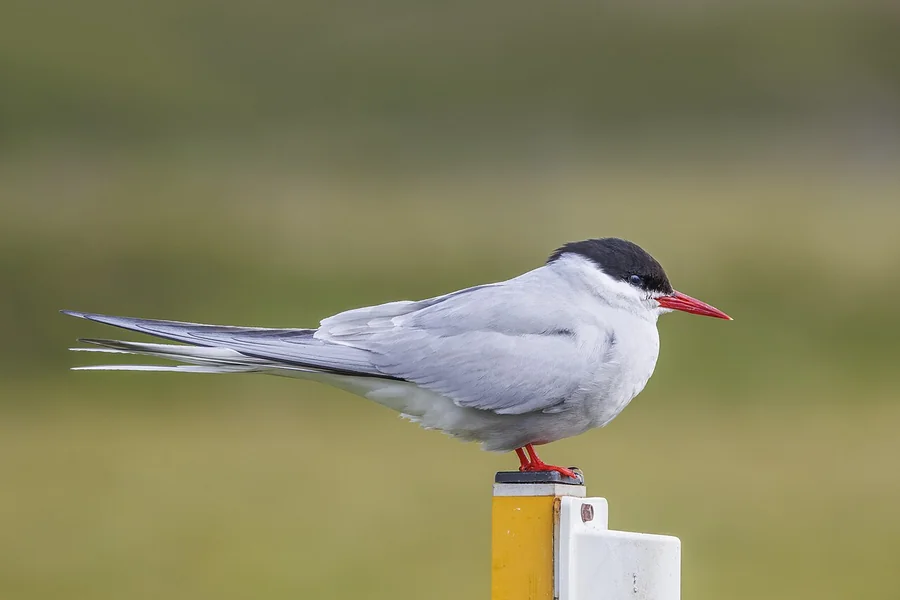
Few animals migrate like the Arctic tern. It breeds on tundra coastlines during Arctic summer, then flies all the way to Antarctica for the southern summer — a round trip close to 70,000 kilometers a year. Because of that, this small bird sees more daylight annually than practically any other creature on Earth.
They’re fierce about their nests, too. Divebomb anything that gets too close, humans included. The diet is mostly small fish and crustaceans, caught by diving into cold coastal water near the surface. Long forked tail, slim wings — built for distance flying, not raw power. Terns can live past 30 years, which means over a lifetime, some may cover a distance equal to flying to the moon and back several times. Nests are nothing fancy, just a bare scrape on open tundra ground.
Wolverine
Scientific Name: Gulo gulo Class: Mammalia Diet: Carnivore
Looks like a small bear, but it’s actually the largest weasel around. Don’t let the size fool you — wolverines have a reputation for taking on animals far bigger than themselves, including caribou that are sick or stuck in snow. Thick, oily fur shrugs off frost, which is exactly why trappers once used it to line coat hoods for extreme cold.
They roam huge territories, sometimes over 500 square kilometers, hunting down scattered food across tundra and boreal edges. Their sense of smell is strong enough to locate a carcass buried under meters of snow. Wide paws spread their weight like snowshoes, so they don’t sink into deep drifts. They also cache extra food in snow and rock crevices — natural refrigeration for leaner days ahead. Solitary animals, mostly, except for a short mating window each year when they’ll tolerate company.
Ermine (Stoat)
Scientific Name: Mustela erminea Class: Mammalia Diet: Carnivore
Small but genuinely fierce. In winter, the ermine’s coat goes snow white except for a black tip on the tail — some researchers think that black tip acts as a decoy, pulling a hawk’s strike away from the body. The summer coat is brown on top, pale underneath.
Size doesn’t stop this animal from killing prey several times its own weight, usually rabbits, with a fast bite to the back of the neck. Long, slender body, built for chasing rodents down narrow tunnels. Ermines stay busy nonstop, since their small frame loses heat fast and they need to eat constantly to keep up. They’ll often move into the burrow of whatever they just killed, using the leftover fur for extra insulation. High metabolism means near-daily hunting just to get through the cold.
Arctic Ground Squirrel
Scientific Name: Urocitellus parryii Class: Mammalia Diet: Omnivore
This one holds a genuinely strange record: it can drop its body temperature below freezing during hibernation without its tissue actually freezing, a state called supercooling. That’s how it survives winters stretching up to eight months, tucked into burrows well below the frozen surface layer.
Before going under, squirrels pack on fat and stash food — seeds, roots, leaves — to snack on during brief waking spells through winter. Come the short summer, they’re nonstop busy: feeding, digging new burrows, watching for foxes and hawks. Often you’ll see them standing upright, giving alarm calls when trouble’s nearby. Old burrows get reused by other tundra animals once abandoned. Males wake before females each spring, giving themselves time to prepare for a mating season that’s short but intense.
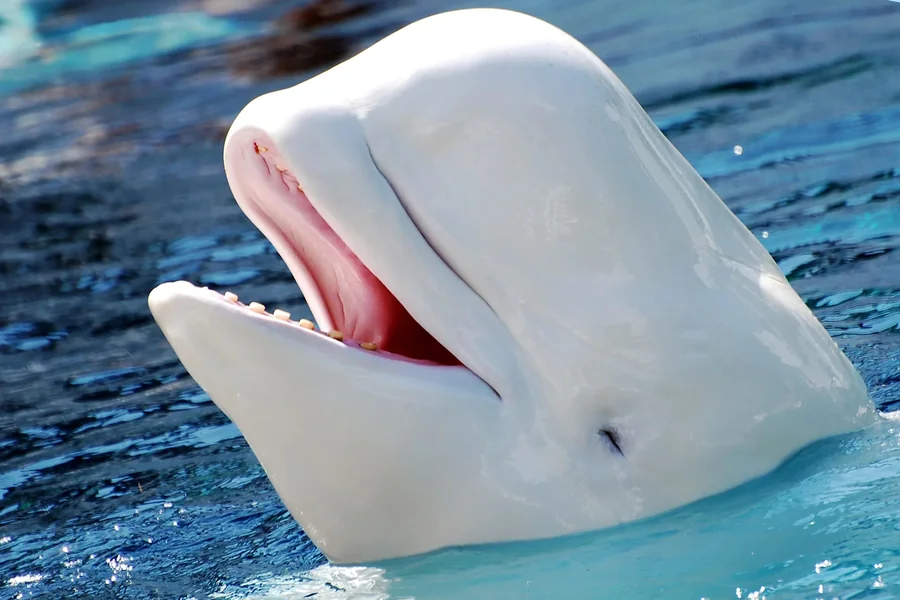
Beluga Whale
Scientific Name: Delphinapterus leucas Class: Mammalia Diet: Carnivore
Beluga whales spend their lives in the cold Arctic and sub-Arctic waters lining tundra coastlines. Bright white, with a rounded forehead called a melon that can actually change shape — the whale uses this to focus sound for echolocation in dark or ice-covered water.
Unusual trait: belugas can turn their heads side to side, since their neck vertebrae aren’t fused together like most whales. They travel in pods, communicating through clicks, whistles, and squeals loud enough to earn them the nickname “sea canaries.” Migration follows breaks in the sea ice, tracking open water for feeding and breathing room. The diet is fish, squid & crustaceans pulled from cold coastal water. Blubber can make up half their total body weight, which is basically the whole reason they stay warm out there.
Final Thoughts
Nothing about tundra life is easy. Every one of these animals that live in tundra has built its body and habits around one job: staying alive through a cold that would kill most species in hours. A polar bear’s fat layer, a ground squirrel dropping below freezing without dying — these aren’t small tricks, they’re the product of a very long, very harsh filter. The tundra looks empty at first glance. It isn’t. Underneath that quiet is one of the tightest food webs on the planet, where every species leans on the next just to make it through the year. Next time someone asks what survives out there, you’ve got fifteen solid answers.
FAQs:
What animals that live in tundra biomes?
Polar bears, Arctic foxes, caribou, snowy owls, musk oxen, Arctic hares, and lemmings are among the main animals in the tundra biome, along with migratory birds like snow geese and Arctic terns.
How do animals survive in the tundra?
They rely on thick fur or feathers, heavy fat layers, seasonal camouflage, burrowing habits, and migration timed around the short summer growing season.
What is the biggest predator in the tundra?
The polar bear, hunting mainly seals along sea ice edges.
Do any animals hibernate in the tundra?
Yes — the Arctic ground squirrel hibernates up to eight months and can drop its body temperature below freezing without its tissue actually freezing.
Why do so few animals live in the tundra?
Extreme cold, short growing seasons, and frozen soil (permafrost) limit food and shelter, so only species built for cold weather can stick it out year-round.