Emu vs Ostrich: Think You Can Tell Them Apart? Most People Can’t
Emu vs ostrich is one of the most common bird mix-ups out there. Both are huge. Neither can fly. Both run fast on long legs. So people lump them together. But these two birds are very different. They live on different continents. They look different up close. Even their eggs and toes don’t match. Here is how to tell them apart in seconds.
What Is the Difference Between an Emu vs Ostrich?
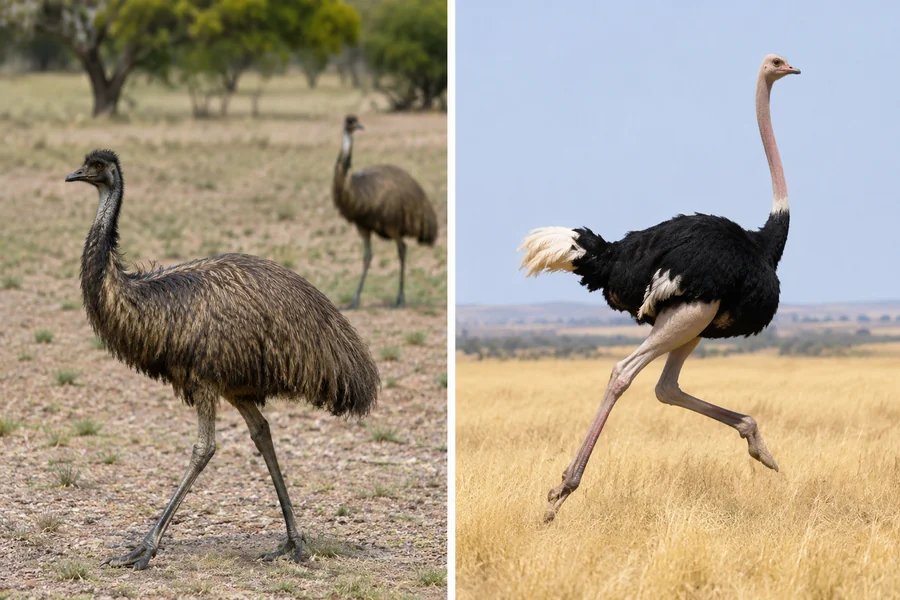
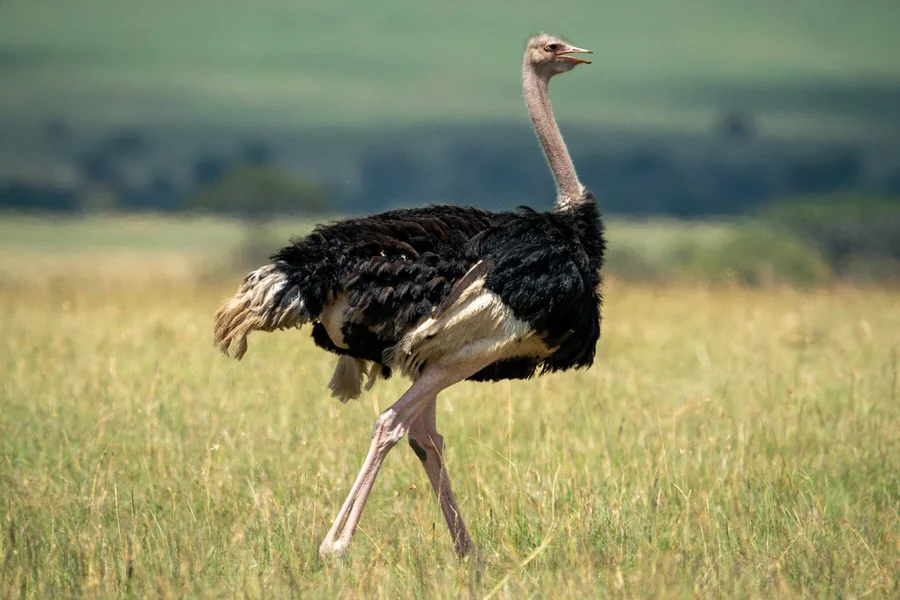
The main difference is size and location. An ostrich is taller and heavier. It lives in Africa. It has two toes on each foot. An emu is shorter and lighter. It lives in Australia. It has three toes on each foot. Ostriches have bare necks and legs. Emus have shaggy brown feathers over most of their bodies.
That is the short version. Now let’s go deeper.
Emu vs Ostrich: Quick Comparison Table
| Feature | Emu | Ostrich |
| Scientific name | Dromaius novaehollandiae | Struthio camelus |
| Native region | Australia | Africa |
| Height | 1.5 to 1.9 m (5 to 6 ft) | Up to 2.7 m (9 ft) |
| Weight | 30 to 60 kg (66 to 132 lb) | 100 to 160 kg (220 to 350 lb) |
| Toes per foot | 3 | 2 |
| Top speed | About 50 km/h (31 mph) | About 70 km/h (43 mph) |
| Feather look | Shaggy brown or gray | Black and white (male) or gray-brown (female) |
| Neck | Feathered and bluish skin | Long and mostly bare |
| Egg color | Dark green | Cream or off-white |
| Egg weight | About 0.7 to 0.9 kg | About 1.4 kg |
| Lifespan (wild) | 10 to 20 years | 30 to 40 years |
| Who sits on the eggs | Male | Both (male at night) |
Save this table. It answers most questions about the topic in one glance.
Size: Which Bird Is Bigger?
The ostrich wins. The biggest bird alive today. The adult male is over 300 pounds and can stand 9 feet tall. This is taller than many basketball hoops.
Emus are the second tallest bird alive. The height is approximately 5-6 feet tall. It’s much lighter than an ostrich. The average weight for adults is 66 to 132 pounds.
If a very large bird is standing over a fence, it’s probably an ostrich bird. When it reaches the adult’s level at the shoulder or chest, it is an emu.
Appearance: How to Spot Each Bird
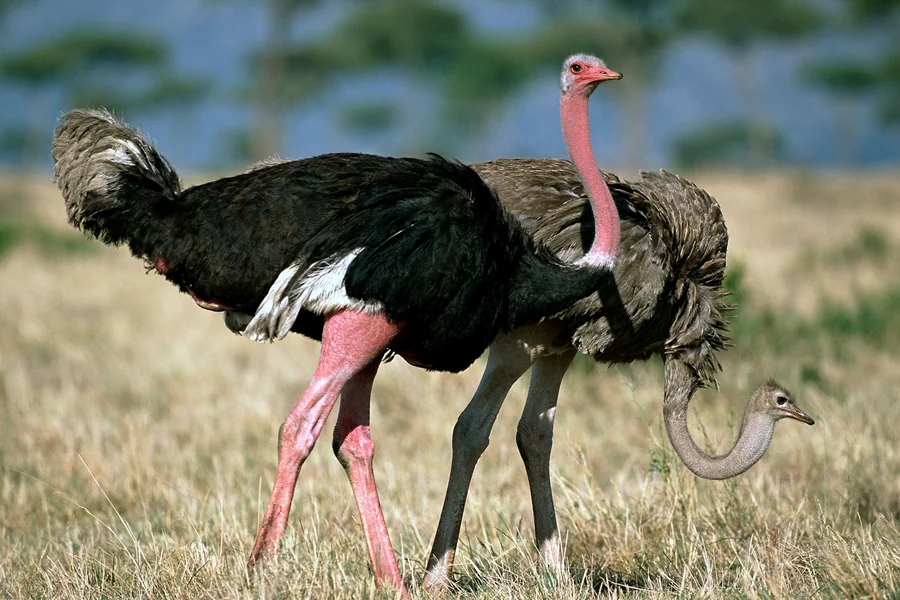
Look at the neck first. The ostrich has a long neck, and it is not well feathered. Skin is pink or gray. The neck of an emu is covered with light feathers, and it is thicker. Some areas of the skin are blue-coloured.
Now check the body. Male ostriches are black with white wing and tail feathers. Females look gray-brown. There is no sexual dimorphism in emu. They have loose, droopy feathers. They resemble shaggy hairs. A shaft is the extension of a feather from its root and each feather has two of these shafts.
The wings are another indicator. Ostrich wings are big. They employ them in their balance and during courtship displays. Emu wings are tiny. They’re just under 20cm long and underneath the feathers.
Feet and Toes: The Easiest Test
It’s always a given. There are 2 toes on each foot of an ostrich. This is the unique characteristic of the bird and is exclusive to the world. The big toe has a thick nail similar to a hoof. A bird called an emu has 3 toes on each foot. It employs them to hold onto the ground while running.
If you can see the feet clearly, then count the toes. Two means ostrich. Three means emu.
Speed: Who Runs Faster?
Both birds are running at speed. However, the ostrich is faster. It can reach a speed of up to 70 km/h (43 mph) and maintain this speed for a long time. This is faster than any other 2-legged animal on land.
The emu tops out near 50 km/h (31 mph). May maintain a consistent speed for extended periods of time. Emus will walk long distances to get food and water.
In a short race, the ostrich gets the victory. The emu withstands a long journey on dry land.
Habitat: Where Do They Live?
Ostriches are found in Africa. They can be found in open grasslands and semi-desert soils. They prefer to be in open areas with a good distance to view a threat.
Emus are endemic to Australia. They live in forests, grasslands and dry plains. They migrate to look for food and water. Some groups migrate over 1000 km per year.
That’s why you will never find wild emus in Africa or wild ostriches in Australia. The zoo and farms are not the same.
Diet: What Do Emus and Ostriches Eat?
Both birds feed on plants and small animals. They offer many of the same foods in their menus.
Ostriches feed on grass, seeds, roots and leaves. They also prey upon insects and small reptiles. They eat tiny rocks to aid in chewing food in the gizzard.
Emus consume seeds, young shoots, flowers and fruit. They also feed on insects. Emus are beneficial creatures in nature. As they migrate they scatter seeds over a great distance.
Both birds do not require a lot of water. However, when they do get a chance, they both drink.
Eggs and Nesting: A Big Gap Between the Two
Eggs show the clearest split in the emu vs ostrich debate.
An ostrich egg is the biggest of any living bird. It weighs about 1.4 kg. That equals around two dozen chicken eggs. The shell is cream or off-white and very hard. Several females may lay eggs in one shared nest. Males and females take turns sitting on them. The eggs hatch after about 42 days.
An emu egg is smaller. It weighs about 0.7 to 0.9 kg. The shell is dark green and sometimes looks almost black. The female lays the eggs and then walks away. The male does the rest. He sits on the nest for about eight weeks. He barely eats or drinks during that time. He can lose a large share of his body weight.
So emu dads do most of the work. Ostrich parents share the job.
Sounds: How Do They Communicate?
Ostriches hiss when they feel threatened. Males also make a deep booming call. It sounds a bit like a lion from far away.
Emus make low drumming and grunting sounds. Females use an inflatable sac in the throat to make deep booming calls. These calls can travel far across open land.
Temperament and Danger
Both birds are NOT pets. Both can cause injuries.
That’s a powerful ostrich boot. Can cause harm or death to an individual. The high risk is compounded by the big toe nail. Ostriches tend to run when threatened. But when cornered, they will kick back.
Emus also kicks. They attack using their legs. They have three-toed feet which are cut and bruised. Emus may be inquisitive and assertive towards individuals. This renders them dangerous by farms and near roads.
Stay away from either. Don’t attempt to touch or feed without a trained handler.
Farming and Uses
Both types are raised. The objectives are different.
Ostrich farms specialize in producing meat, leather, and feathers. Ostrich leather is bumpy in pattern and is used in bags and boots. Ostrich meat is low in fat and red. It is flavorful and looks and tastes like beef.
Emu farms specialize in meat, oil and leather. Emu oil is taken from the fat from the back of the bird. It is present in cosmetics and hair products. Emu meat is also dark and lean.
The two industries are found in the United States and other countries. These birds are domesticated in Texas, Oklahoma and Australia.
Are They Related?
Yes. Or only in a distant manner. Both are known as ratites. They are large, flightless birds with flat breast bones. Other members of the group are the rhea, cassowary, kiwi and the extinct moa.
Despite this, the emu and the ostrich are atop different branches. The emu is nearer to the cassowary. They are both from the same family. The ostrich is a part of a family all its own. Thus, the two birds appear to be similar at first glance, but they are not as closely related to each other as many people believe.
Emu vs Ostrich: Which One Wins?
It depends on the category.
- Bigger: Ostrich
- Faster: Ostrich
- Longer lifespan: Ostrich
- Better dad: Emu
- Easier to spot by toes: Both (two vs three)
- Better swimmer: Emu
Yes, emus can swim. They cross rivers and wade through floods when needed. Ostriches swim less often.
If you want a single winner on raw size and speed the answer is the ostrich. If you care about nesting habits and range across dry land the emu holds its own.
Quick Tips to Tell Them Apart Fast
Use this checklist the next time you see one:
- Check the size. A bird above 7 feet is almost surely an ostrich.
- Look at the neck. Bare and long means ostrich. Feathered and thick means emu.
- Check the feathers. Shaggy and brown means emu. Black and white means male ostrich.
- Count the toes. Two is an ostrich. Three is an emu.
- Look at the egg. Green means emu. Cream means ostrich.
- Think about location. Australia points to emu. Africa points to ostrich.
Final Thoughts
Once you know what to look for, the answer to the emu vs ostrich question is easy to determine. Size, toes, feathers, eggs and location are all tips that go in one direction or the other. The ostrich is taller, faster, and longer-lived. The emu is less tall, less neat and is very much a father.
Next time you watch a nature program or visit a farm, you’ll recognize the tall bird. Pass this along to a friend that still confuses them.
FAQs:
Is an emu bigger than an ostrich?
No. An ostrich is bigger. It can reach 9 feet tall and over 300 pounds. An emu reaches about 6 feet and up to 132 pounds.
Which is faster, an emu or an ostrich?
The ostrich is faster. It can run up to 70 km/h. An emu runs up to about 50 km/h.
Can emus and ostriches fly?
No. Both are flightless birds. Their wings are too small for flight, and their bodies are too heavy.
How many toes does an emu have compared to an ostrich?
An emu has three toes per foot. An ostrich has two toes per foot.
Where do emus and ostriches live?
Emus live in Australia. Ostriches live in Africa.
Which bird lays bigger eggs?
The ostrich. Its egg weighs about 1.4 kg. An emu egg weighs about 0.7 to 0.9 kg and has a dark green shell.
Are emus and ostriches related?
Yes but not closely. Both are ratites. The emu is closer to the cassowary than to the ostrich.
Which bird is more dangerous?
Both can hurt people with strong kicks. Ostriches deliver harder hits because of their size. Emus can also cause serious injury.