Hardik Pandya and the Art of the Comeback: How He Keeps Rebuilding His Career
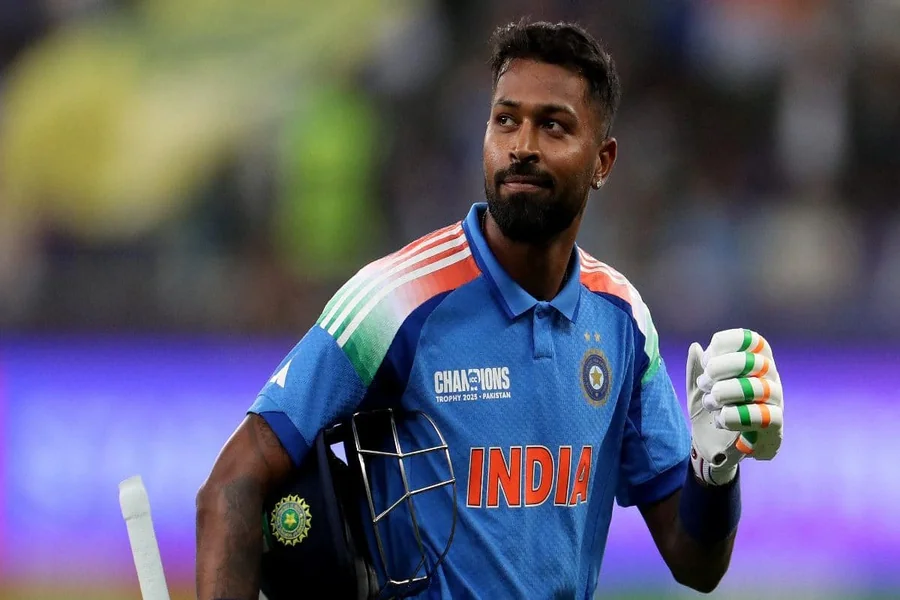
Hardik Pandya’s career has rarely followed a straight line. He emerged as a pace-bowling all-rounder who could change an innings with bat or ball, but injuries repeatedly forced him to reconsider what his body could sustain. Selection debates, changes in responsibility, leadership pressure, and public criticism added further complications. Instead of returning to the same role after each setback, Pandya often returned with a modified version of his game.
That pattern makes his career useful for studying adaptation in professional sport. A comeback is not simply a return to competition; it involves deciding what must change for the next stage to work. Much like the rapid shifts in momentum associated with crazy time live, Pandya’s career has moved through periods when circumstances changed quickly and demanded a response. His defining skill has been finding a new function when the previous one became difficult to maintain.
The All-Rounder Who Gave India Balance
Pandya’s initial value to India came from solving a structural problem. Teams want batters who can bowl and bowlers who can contribute runs because such players create flexibility in selection.
Pandya provided seam bowling while possessing enough power to bat in the middle and lower order. India could use an additional specialist without completely sacrificing either batting depth or bowling options.
His batting was particularly useful when the innings required acceleration. He could attack pace and spin while clearing the boundary without needing a long period to settle.
At the same time, his bowling gave captains overs that could be distributed according to match conditions. This combination made his fitness important not only to his own career but to the balance of the team.
Injury Changed the Original Model
Back problems became a major turning point. Fast bowling places repeated stress on the body, and an all-rounder must combine that workload with batting, fielding, training, and travel.
Following back surgery in 2019, Pandya could not simply resume the same workload immediately. For periods, he played primarily as a batter while his bowling became limited or unavailable.
This created a tactical problem.
If selected only for batting, he had to justify his position against specialist batters. His value had previously come from providing two functions within one selection.
The challenge therefore involved more than rehabilitation. Pandya needed to determine whether he could restore enough bowling capacity to recover his role as an all-rounder.
The 2022 Reinvention
A significant rebuilding phase became visible in 2022.
Pandya returned to regular competition with greater responsibility and demonstrated that his game could operate differently. Rather than functioning mainly as a late-innings hitter, he showed that he could spend more time at the crease and manage an innings.
This mattered because power hitting can become predictable if it is the only route to impact.
A batter capable of entering earlier, absorbing pressure, rotating strike, and accelerating later offers more tactical options. Pandya began showing that range more consistently.
His bowling also returned as part of his competitive identity. He did not need to become a specialist fast bowler. The important point was providing enough controlled overs for the team to treat him as a genuine all-round option again.
Leadership Added Another Dimension
Captaincy created a different test.
Leadership required Pandya to think beyond his own overs or batting position. Bowling changes, field settings, matchups, and communication became part of his responsibility.
This phase challenged perceptions of him as a player defined mainly by explosive moments.
Leadership also required management of his own role. An all-rounder who captains must decide when to bowl himself, where to bat, and how personal decisions affect the structure of the team.
That experience broadened his tactical profile. Even when he was not captaining India, understanding matches from a leadership perspective could influence how he approached pressure situations.
The 2023 Injury and Another Interruption
The 2023 ODI World Cup produced another major setback when Pandya suffered an ankle injury during India’s match against Bangladesh.
His absence affected the team because replacing one all-rounder often requires changing multiple positions. India could replace his batting or his bowling, but reproducing both with one player was more difficult.
For Pandya, the injury created another rehabilitation cycle.
By this point, the pattern had become familiar: regain physical capacity, rebuild match rhythm, determine the appropriate workload, and prove that his combined role remained sustainable.
Each return also carried a question that does not apply in the same way to specialists. Could he still perform both parts of the job?
From Public Criticism to the 2024 World Cup
Pandya entered another difficult period in 2024. His performances and leadership at domestic franchise level attracted criticism, and crowd reactions became part of the discussion surrounding him.
The international season offered a different context.
At the 2024 T20 World Cup, Pandya again became important to India because he could contribute in multiple phases. With the bat, he offered power in the lower middle order. With the ball, he provided pace and tactical flexibility.
The final against South Africa summarized the value of his role. Asked to bowl under pressure near the end of the chase, Pandya delivered the final over as India defended its total and won the tournament.
The significance was not that one match erased previous problems. It showed that his skill set remained relevant when the stakes were highest.
Why Pandya’s Comebacks Keep Working
Pandya’s career demonstrates that successful reinvention usually involves changing responsibilities rather than attempting to restore the past exactly.
After injury, he adjusted his bowling workload. As his batting developed, he became capable of occupying more positions in the order. Leadership experience expanded his understanding of match management. Repeated rehabilitation forced him to treat availability as part of performance.
There is also a psychological component. Returning players face comparisons with earlier versions of themselves. Trying to reproduce a previous peak can become restrictive.
Pandya’s career has instead involved accepting different versions of the same core identity: all-rounder, power hitter, middle-order batter, supporting bowler, captain, and senior player.
A Career Built Through Reconstruction
The central story of Pandya’s career is not uninterrupted success. It is reconstruction.
His value to India has repeatedly depended on balancing two demanding disciplines while managing the physical cost of fast bowling. Injuries have disrupted that balance several times, forcing technical and tactical adjustments.
Yet those interruptions have also expanded his game.
Pandya’s comebacks show that longevity in elite cricket is not always achieved by preserving one successful formula. Sometimes it depends on recognizing when that formula no longer works, identifying what remains valuable, and building a different role around it.
That ability to return without simply repeating the past is what makes his career distinctive.