15 Animals That Live in Freshwater (Number 7 Breathes Air)
Animals that live in freshwater share rivers, lakes, ponds and wetlands with us every day. We just walk past them, unthinking. But these waters feature some of the weirdest animals on any planet! Air-breathing fish. There is one mammal that lays eggs. One rodent is lying beside caimans. Here are 15 species that you’ll meet in this guide. You can observe where each lives and what it eats! You’ll also learn some things to share. Looking to see what’s below the surface?
What Counts as a Freshwater Animal?
A freshwater animal lives for most or all of its life in water of very low salt concentration. This includes rivers, lakes, ponds, streams and wetlands. Works for all fish, frogs, turtles, mammals, and crustaceans. Less than one per cent of the Earth is fresh water. However, it is home to approximately a tenth of all animal species known.
| Habitat Type | Example Animals | Key Trait |
| Rivers and streams | Rainbow trout, river otter, platypus | Fast flow and cold water |
| Lakes and ponds | Common carp, snapping turtle, bullfrog | Calm water and muddy bottoms |
| Swamps and marshes | American alligator, red swamp crayfish, capybara | Shallow and plant-rich |
| Flooded forests | Arapaima, Amazon river dolphin, piranha | Water levels rise and fall each year |
Why Animals That Live in Freshwater Are Important
Animals that live in freshwater are important because they filter and clean water, support the food chain, shape habitats like ponds and wetlands, control pests and feed millions of people. They also signal river health, so their decline warns of pollution or damage.
1. They Keep Water Clean
Many freshwater animals act as natural filters. A single freshwater mussel can filter several gallons of water a day. Crayfish and snails break down dead leaves and waste. This clears the water for fish, plants and people who rely on it.
2. They Support the Food Web
Every level of the chain depends on the one below it. Insects and crayfish feed trout and frogs. Trout and frogs feed herons and otters. Without the small animals the larger ones starve. Remove one link and the others feel it.
3. They Shape the Landscape
Some species build or change their habitat. Beavers make dams that form ponds and wetlands. Alligators dig gator holes that hold water in a drought. Hippos carve channels and move nutrients from land into rivers. Many other animals use what these species create.
4. They Show Us the Health of a River
Scientists call some species indicators. Otters, hellbenders and pearl mussels need clean water. If their numbers drop, something is wrong. Pollution, dams or warming water are common causes. These animals work like an early warning system.
5. They Feed Millions of People
Freshwater fish are a main source of protein for over 200 million people worldwide. Carp, trout and catfish are farmed and caught in huge numbers. Fishing also supports jobs in many river communities.
6. They Support Biodiversity
Freshwater covers less than one percent of Earth’s surface. Yet it holds about ten percent of all known animal species. That makes it one of the most crowded habitats on the planet. Losing it means losing species found nowhere else.
7. They Help Control Pests
Frogs eat mosquitoes and flies. Dragonfly larvae eat mosquito larvae. Fish eat insects that spread disease. This natural pest control reduces the need for chemicals.
Quick Summary Table
| Role | Example Animals | What They Do |
| Water filters | Pearl mussel, snails | Clean the water |
| Habitat builders | Beaver, alligator, hippo | Create ponds, holes and channels |
| Indicators | River otter, hellbender | Signal water quality |
| Food source | Carp, trout, catfish | Feed people and wildlife |
| Pest control | Frogs, dragonfly larvae | Eat mosquitoes and insects |
The Threats They Face
Freshwater animals are declining faster than land or ocean animals. The main causes are:
- Dams that block migration routes
- Pollution from farms and cities
- Overfishing
- Invasive species like the common carp and bullfrog
- Warming water and drought
How You Can Help
- Keep chemicals and trash out of drains and streams
- Pick up litter near rivers and lakes
- Never release pets like goldfish or turtles into the wild
- Choose fish from sustainable sources
- Support local wetland and river protection groups
List of Animals That Live in Freshwater
Below is the list of animals that live in freshwater:
| Number of Animals | Names of Freshwater Animals |
| 1 | Beaver |
| 2 | Platypus |
| 3 | Rainbow Trout |
| 4 | American Alligator |
| 5 | Common Snapping Turtle |
| 6 | Amazon River Dolphin |
| 7 | Arapaima |
| 8 | American Bullfrog |
| 9 | Hippopotamus |
| 10 | Capybara |
| 11 | Red-Bellied Piranha |
| 12 | North American River Otter |
| 13 | Common Carp |
| 14 | Giant Freshwater Stingray |
| 15 | Red Swamp Crayfish |
Detailed Look at Animals That Live in Freshwater
Beaver
Scientific Name: Castor canadensis
Class: Mammalia
Diet: Herbivore
Beavers change the water around them. Hence, they’re referred to as “nature’s engineers. Found throughout North America in streams, ponds and lakes. Beavers use their powerful front teeth to bite into trees. This then piles mud over logs to create a dam. The dam will create a pond and reduce the stream’s flow. The beaver constructs a lodge in the pond and with an underwater opening. This keeps predators out. A beaver may be able to hold its breath for up to 15 minutes. When swimming, its flat tail functions as a rudder. It also waves the water, alerting the family to danger. The voice is loud and clear. Bark, twigs, leaves and water plants are consumed by beavers. They keep branches around the lodge to use in the winter. Here is a fun fact. They continuously grow their teeth. When they chew wood they become the correct size. Beavers are social, living in small family colonies. Parental care with assistance of older siblings. Ponds also provide housing for the fish, frogs, ducks and insects in their home.
Platypus
Scientific Name: Ornithorhynchus anatinus
Class: Mammalia
Diet: Carnivore
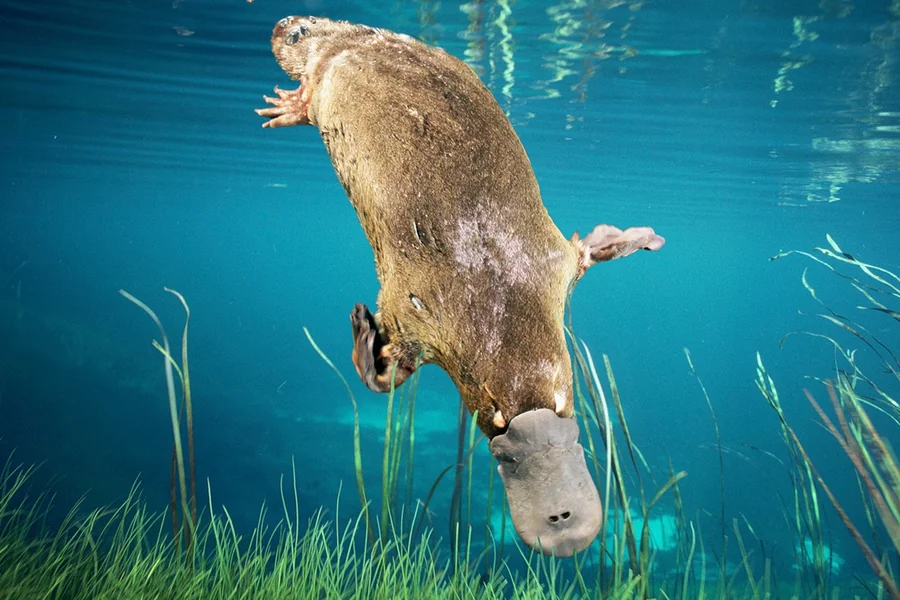
The platypus looks like it was built from spare parts. Has a duck’s bill and a beaver’s tail. It also lays eggs. This animal is found in rivers and creeks in eastern Australia and Tasmania. It is commonly found in a burrow dug into the bank throughout the day. It comes to feed in the water at night. When it is underwater it closes its eyes and ears. How is it able to eat? The bill is able to detect the small electric currents generated by prey in motion. It wags the bill up and down on the bottom of the river. The platypus eats worms, insect larvae, shrimp and small snails. Hides food in cheek pouches and chews on surface. Here is a fun fact. The males have a sharp spur on each hind leg. The venom in the spur is very painful to humans. Females dig a nesting burrow and lay one to three eggs. They then wrap around the eggs to maintain the eggs’ warmth. Healthy rivers are key to this animal’s survival.
Rainbow Trout
Scientific Name: Oncorhynchus mykiss
Class: Actinopterygii
Diet: Carnivore
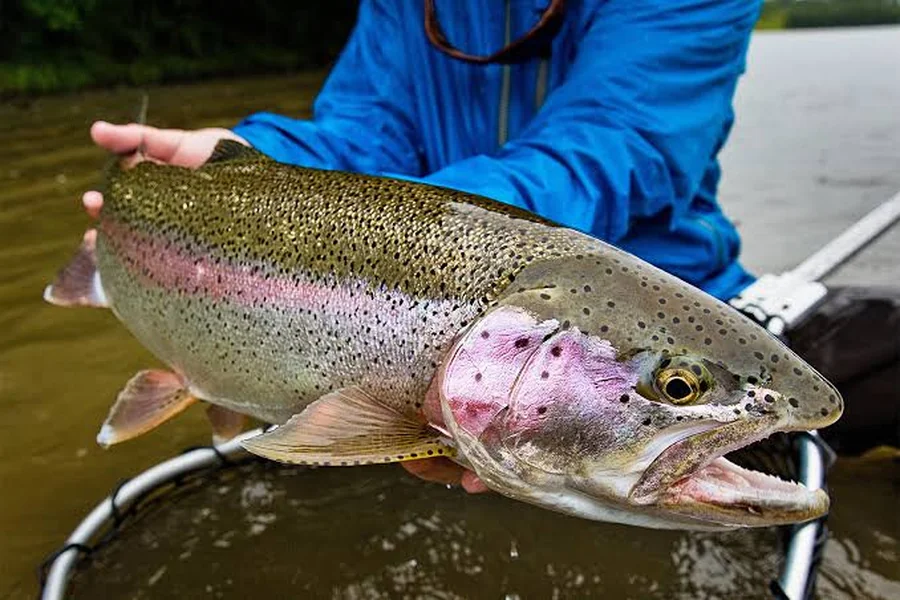
Rainbow trout are fast fish that love cold and clear water. They are native to rivers and streams that flow to the Pacific Ocean in North America. Since that time they have been introduced by man into lakes and rivers throughout the world, excluding Antarctica. The side of a rainbow trout is pink and the back is covered with tiny dark blotches. It is usually found in a backwater behind a rock. It then hastily moves out to feed itself. It will feed on insects, snails, small fish and fish eggs. Tiny insects prove to be the main diet of young trout. Here is a fun fact. A few rainbow trout leave their home stream to swim to the ocean. They are called a steelhead fish. They then head back to freshwater to breed several years later. The female will dig a shallow nest in the gravel and lay her eggs in it. Fresh and cool oxygenated water is necessary for hatching of the eggs. The warm water and silt can kill young. It is because of that that anglers and biologists keep an eye on stream health.
American Alligator
Scientific Name: Alligator mississippiensis
Class: Reptilia
Diet: Carnivore
The American alligator rules the swamps of the southeastern United States. Found in marshes, slow flowing rivers, lakes and ponds from North Carolina to Texas. It will grow well in freshwater but will withstand some salinity. The adult male may reach a length of over 11 ft. Alligators float on the water’s surface with only their eyes and nostrils exposed. They wait for fish, turtles, birds or small mammals to approach them. Then they attack quickly. Insects, snails and small fish are the food of young alligators. Here is a fun fact. During dry seasons alligators put out deep holes known as gator holes. These holes allow water to flow during the drought. Birds, turtles and fish flock there for their sustenance. This concludes that the alligator is a keystone species. In spring males make loud bellows to attract mates. The female creates a pile nest of plants and mud. She keeps it for approximately 2 months. Cooler nests produce females; warmer nests, males. The mother also remains with her chicks for a year or more.
Common Snapping Turtle
Scientific Name: Chelydra serpentina
Class: Reptilia
Diet: Omnivore
The common snapping turtle looks like a rock until it moves. It is found in ponds, lakes, marshes and slow rivers in eastern and central North America. Adults are 10 to 35 lb. in weight. Shell is rough with a long tail with a saw-like edge. Its distribution is in shallow waters most of the year. It is found in mud, only its eyes and nose are above the mud. Then it waits. When a fish, frog or duckling swims by; the head goes out quick. Its jaws have a sharp beak which cuts through meat and plants. Turtle also feeds on insects, snails and dead animals. Here is a fun fact. Neck elongated and sometimes can reach far back along the shell. Landscaped, often in a defensive manner. Typically steers clear of humans in water. Females leave the pond early in the summer in order to nest in the sand. They deposit 25-80 eggs and then come back to the water. The eggs hatch in late summer.
Amazon River Dolphin
Scientific Name: Inia geoffrensis
Class: Mammalia
Diet: Carnivore
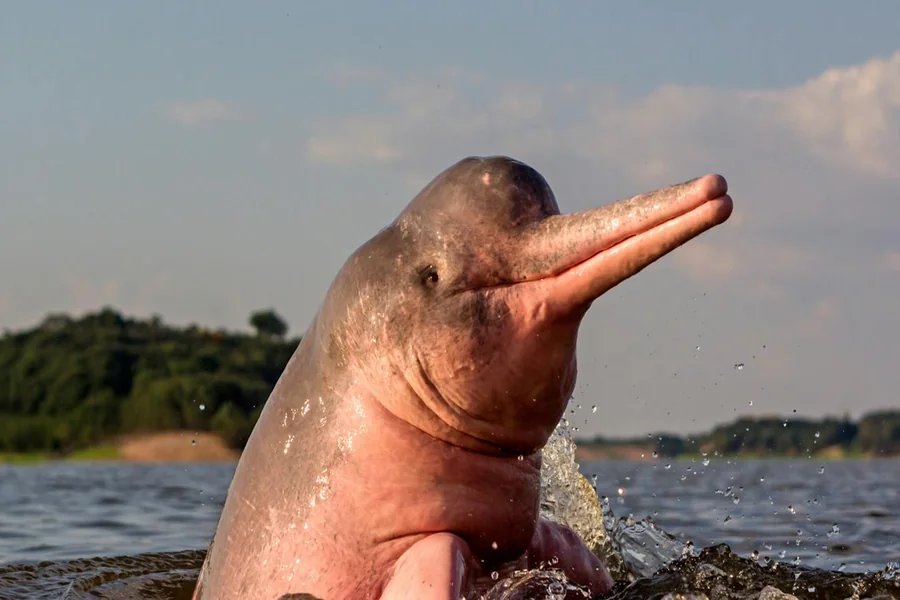
The Amazon river dolphin is also called the boto. It lives in the Amazon and Orinoco river systems in South America. Adults can look pink. Older males are often the brightest. This dolphin has a long snout and a neck that bends easily. That helps it twist through flooded forests and around tree roots. During the wet season the river rises and the boto swims between the trunks to hunt. It eats fish, crabs and small turtles. Its teeth are different shapes. Some are sharp for grabbing and others are flat for crushing. It does not rely much on sight in muddy water. The boto uses echolocation. It sends out clicks and listens for the echoes. Here is a fun fact. Males sometimes carry sticks or plants in their mouths while courting. Botos swim alone or in small groups. Dams, fishing nets and pollution all put pressure on this species. Scientists now list it as endangered. Clean and open rivers give it the best chance to survive.
Arapaima
Scientific Name: Arapaima gigas
Class: Actinopterygii
Diet: Carnivore
The arapaima is one of the largest freshwater fish on Earth. It lives in the Amazon basin in rivers, lakes and flooded forests. Some adults grow longer than eight feet. They can weigh over 200 pounds. This fish has a trick that sets it apart. It breathes air. Every 5 to 15 minutes it rises to the surface and gulps air into a lung-like swim bladder. This lets it live in warm water with little oxygen. The arapaima hunts fish near the surface. It also eats crustaceans and small animals that fall into the water. Its mouth opens wide and sucks prey in. Here is a fun fact. Its scales are tough and layered. They resist bites from piranhas. People in the region also use its dried scales as nail files. Males guard the nest and stay close to the young. Young fish swim near the father’s head. Overfishing has cut wild numbers in many areas. Local fishing rules and managed lakes now help the species recover.
American Bullfrog
Scientific Name: Lithobates catesbeianus
Class: Amphibia
Diet: Carnivore
The American bullfrog is the biggest frog in North America. It lives in ponds, lakes, marshes and slow streams. Adults can reach eight inches in body length. They sit at the water’s edge with only their eyes above the surface. Then they wait. A bullfrog eats almost anything it can fit in its mouth. That includes insects, crayfish, fish, small snakes, mice and even other frogs. Here is a fun fact. Males call at night to claim territory. The deep sound carries across the water and gives the frog its name. Each male defends a small patch of shoreline. Females lay thousands of eggs in a floating film. The tadpoles can take up to two years to change into frogs in cooler regions. Bullfrogs are native to the eastern United States and parts of Canada. People moved them to many other places. In some areas they now push out local frogs. Wildlife agencies work to limit their spread.
Hippopotamus
Scientific Name: Hippopotamus amphibius
Class: Mammalia
Diet: Herbivore
The hippopotamus spends its days in rivers and lakes across sub-Saharan Africa. The water keeps its skin cool and moist. A hippo cannot swim well. It walks along the bottom or floats. It can hold its breath for about five minutes. Its eyes, ears and nostrils sit on top of the head so it can stay almost fully under water. At dusk hippos leave the water to graze. They can travel several miles in one night. Each one eats about 80 pounds of grass. Here is a fun fact. Hippos are among the most dangerous animals in Africa. They defend water territory and attack boats that come too close. Males fight with large tusk-like teeth. A calf is born in the water and can move through it right away. Mothers keep the calf close for protection. Hippos change the shape of rivers by making paths and spreading nutrients with their dung. The species is vulnerable because of hunting and habitat loss.
Capybara
Scientific Name: Hydrochoerus hydrochaeris
Class: Mammalia
Diet: Herbivore
The capybara is the largest rodent in the world. Adults weigh up to 140 pounds and stand about two feet tall. This animal lives in South America near rivers, lakes, ponds and marshes. It is always close to water. Its toes are partly webbed and its eyes, ears and nose sit high on the head. That lets it swim with most of its body hidden. A capybara can stay under water for several minutes. It dives to escape jaguars, caimans and other predators. Capybaras eat grasses and water plants. They also eat their own soft droppings to get more nutrients from food. Here is a fun fact. Capybaras live in groups of 10 to 20 animals. In the dry season groups can grow to 100. They make barks, whistles and purrs to stay in touch. Birds often sit on their backs and eat insects off their skin. They are calm around other species. Monkeys and ducks have been seen relaxing nearby.
Red-Bellied Piranha
Scientific Name: Pygocentrus nattereri
Class: Actinopterygii
Diet: Omnivore
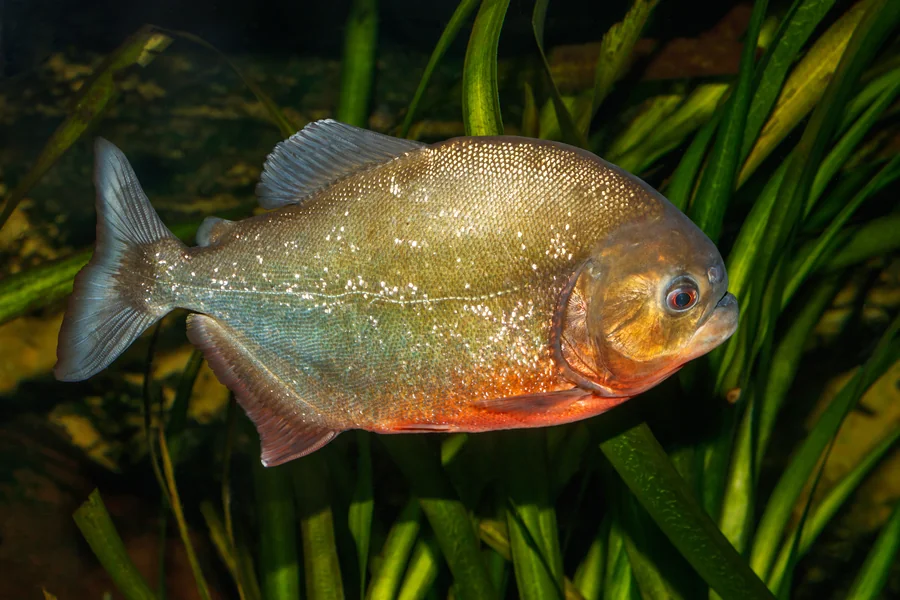
The red-bellied piranha has a bad name. It does not deserve all of it. This fish lives in rivers and floodplain lakes across much of South America. Adults reach about 12 inches. They move in schools. A school gives each fish a better chance of avoiding predators like caimans and birds. The teeth are sharp and shaped like triangles. They lock together like blades. A piranha uses them to bite chunks from fish. It also eats insects, seeds, fruit and dead animals. So it is an omnivore and a scavenger. Here is a fun fact. Piranhas make barking sounds to warn others. They bark during fights over food. Attacks on people are rare. Most bites happen when fish are stranded in shrinking pools during the dry season. In the wet season the fish spread into flooded forest to feed and breed. The male guards the nest of eggs in plants near the shore. He protects it from other fish until the young hatch.
North American River Otter
Scientific Name: Lontra canadensis
Class: Mammalia
Diet: Carnivore
The North American river otter looks like it is always having fun. It is found in rivers, lakes, marshes and coastal streams throughout Canada and the USA. It has a long, narrow, slender body. Thick fur holds in the air and helps to insulate skin and keep it dry. It has thick tail and webbed feet that propel it through the water quickly. Otter can hold its breath for up to 8 minutes. When diving, it closes its ears and nose. In the dark water, Whiskers detects the small movements of the fish. It primarily eats fish. Crayfish, frogs, turtles and occasionally birds are also eaten by the otters. Here is a fun fact. River otters come down muddy banks and snowy hills crawling on their bellies. The scientists believe that the play helps to develop skills and enhances familial relationships. Otters are living in family groups consisting of mother and her pups. At about the age of two months, pups are able to swim. Otters require clean water and lots of food. As a result they serve as an acceptable indicator of rivers’ health.
Common Carp
Scientific Name: Cyprinus carpio
Class: Actinopterygii
Diet: Omnivore
The common carp is one of the most widespread freshwater fish on the planet. It comes from Europe and Asia. People have carried it to lakes and rivers on almost every continent. It lives best in slow and warm water with soft mud on the bottom. Adults often reach two to three feet. Some live for more than 20 years. Carp feed near the bottom. They suck up mud and sort out snails, insect larvae, worms, seeds and plants. Two small barbels near the mouth help them find food by touch. This feeding habit has a cost. Carp stir up the sediment and uproot plants. The water turns cloudy and local fish lose their food and cover. That is why carp count as an invasive species in North America and Australia. Here is a fun fact. Koi are a colored form of this same fish. Breeders in Japan spent generations selecting patterns. In spring they gather in shallow water to spawn. A single female can release hundreds of thousands of eggs.
Giant Freshwater Stingray
Scientific Name: Urogymnus polylepis
Class: Chondrichthyes
Diet: Carnivore
The giant freshwater stingray is one of the biggest freshwater fish in the world. It lives in large rivers in Southeast Asia. Known homes include the Mekong and the rivers of Thailand and Borneo. The body is a flat disc and the tail is long and thin. The disc can grow about six feet wide. Some animals weigh several hundred pounds. The ray spends most of its time on the muddy river bottom. It buries itself in sand and silt and watches for food. Its eyes sit on top of the head and its mouth sits underneath. It feeds on small fish, shrimp, crabs and snails. A sharp spine on the tail has venom. It is used only for defense. Here is a fun fact. Females give birth to live young. They have few young at a time. The species grows slowly. So numbers drop fast when too many are taken. Fishing nets catch many by accident. Dams and pollution add more pressure. It is listed as endangered.
Red Swamp Crayfish
Scientific Name: Procambarus clarkii
Class: Malacostraca
Diet: Omnivore
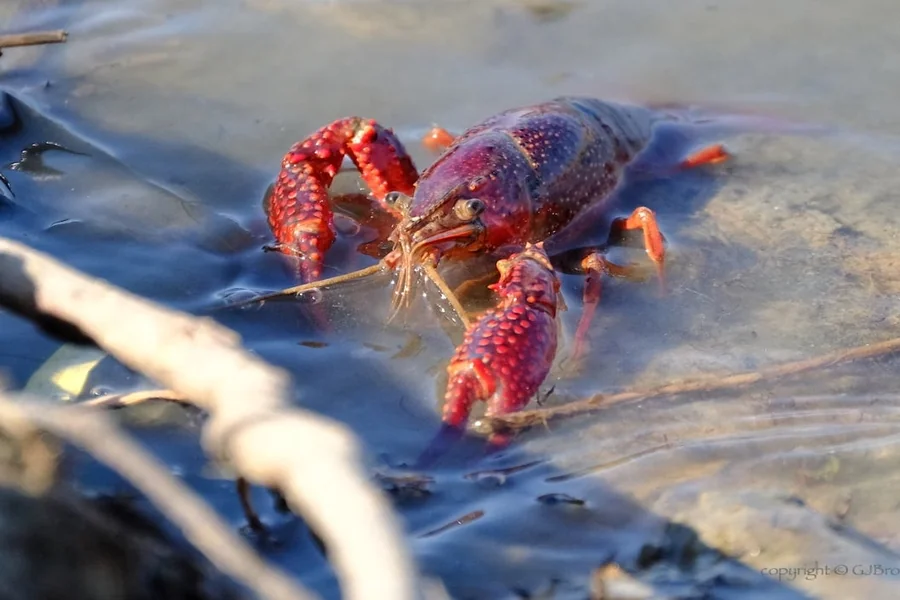
The red swamp crayfish is a small freshwater crustacean with a big reach. It is native to the south central part of the U.S. and north eastern Mexico. Today, it is also found in Europe, Africa and Asia. It inhabits swamps, ditch, ponds, rice fields and slow streams. They reach a length of five inches when they are adults. It is dark red, rough shelled. Two big claws that capture food and fend off attacks. Crayfish feed on plants, algae, dead leaves, snails, insects and small fish. Forages primarily during the night. Here is a fun fact. The crayfish burrow when the pond goes dry and await the rain. They can remain in the soil for several months. The eggs are carried underneath the belly by the females until they hatch. Young remain for some time around her. Fast-growing and adaptable species. This aids its dispersion. Where not native, it will compete with native crayfish and harm banks and plants. It also has a disease that is detrimental to other crayfish. It is now under the control of many countries.
Where to Find Them: Habitat Map
| Region | Freshwater Animals | Common Water Type |
| North America | Beaver, rainbow trout, American alligator, snapping turtle, bullfrog, river otter, red swamp crayfish | Rivers, lakes, swamps |
| South America | Amazon river dolphin, arapaima, capybara, red-bellied piranha | Amazon and Orinoco basins |
| Africa | Hippopotamus | Rivers and lakes south of the Sahara |
| Asia | Giant freshwater stingray, common carp (native range) | Large rivers and lakes |
| Australia | Platypus | Eastern rivers and creeks |
More Animals That Live in Freshwater (Quick List)
- West Indian Manatee (Trichechus manatus) | Class: Mammalia | Diet: Herbivore
This slow swimmer lives in rivers, springs and coastal waters. It eats up to 10 percent of its body weight in plants each day. - Axolotl (Ambystoma mexicanum) | Class: Amphibia | Diet: Carnivore
It comes from lakes near Mexico City and keeps its gills for life. It can regrow lost limbs. Wild numbers are very low. - Mekong Giant Catfish (Pangasianodon gigas) | Class: Actinopterygii | Diet: Herbivore
This is one of the largest freshwater fish. It can reach nine feet. Adults have no teeth and eat algae. - Mallard (Anas platyrhynchos) | Class: Aves | Diet: Omnivore
Mallards live on ponds and lakes across the Northern Hemisphere. They tip forward to feed on plants, seeds and insects. - Nile Crocodile (Crocodylus niloticus) | Class: Reptilia | Diet: Carnivore
It lives in rivers, lakes and marshes across Africa. It ambushes fish and animals that come to drink. - Electric Eel (Electrophorus electricus) | Class: Actinopterygii | Diet: Carnivore
This fish lives in the Amazon and Orinoco basins. It stuns prey with shocks of over 600 volts. It also comes up to breathe air. - Goldfish (Carassius auratus) | Class: Actinopterygii | Diet: Omnivore
Goldfish come from East Asia. They live in slow ponds and can survive for more than 10 years. - Lake Sturgeon (Acipenser fulvescens) | Class: Actinopterygii | Diet: Carnivore
It lives in the Great Lakes region and nearby rivers. It can grow seven feet long and live over 100 years. - Muskrat (Ondatra zibethicus) | Class: Mammalia | Diet: Omnivore
Muskrats build lodges from cattails and mud. They eat roots, stems and the occasional mussel. - Great Blue Heron (Ardea herodias) | Class: Aves | Diet: Carnivore
This tall bird stands still in shallow water. Then it spears a fish with a fast strike. - Painted Turtle (Chrysemys picta) | Class: Reptilia | Diet: Omnivore
Painted turtles bask on logs in ponds and slow streams. In winter they rest in the mud under the ice. - Northern Pike (Esox lucius) | Class: Actinopterygii | Diet: Carnivore
Pike hides in weeds and strikes at passing fish. They live in cold lakes and rivers across the Northern Hemisphere. - Freshwater Pearl Mussel (Margaritifera margaritifera) | Class: Bivalvia | Diet: Filter feeder
This mussel cleans river water as it feeds. It can live over 100 years. Numbers are falling fast. - Chinese Giant Salamander (Andrias davidianus) | Class: Amphibia | Diet: Carnivore
It is the largest amphibian on Earth. It hunts at night in cold mountain streams. It is critically endangered. - Siamese Fighting Fish (Betta splendens) | Class: Actinopterygii | Diet: Carnivore
Bettas come from rice paddies and shallow ponds in Southeast Asia. They gulp air at the surface. Males build bubble nests for eggs. - Gharial (Gavialis gangeticus) | Class: Reptilia | Diet: Carnivore
This crocodilian has a long and thin snout built for catching fish. It lives in rivers in India and Nepal. - Giant Water Bug (Lethocerus) | Class: Insecta | Diet: Carnivore
It lurks in ponds and slow streams. It grabs tadpoles, small fish and insects with strong front legs. - Freshwater Jellyfish (Craspedacusta sowerbii) | Class: Hydrozoa | Diet: Carnivore
This jellyfish is about the size of a coin. It appears in lakes and quarries in summer and eats tiny plankton. It is harmless to people. - Eastern Hellbender (Cryptobranchus alleganiensis) | Class: Amphibia | Diet: Carnivore
It lives under rocks in clean streams in the Appalachians. It takes in oxygen through its wrinkled skin. - Green Anaconda (Eunectes murinus) | Class: Reptilia | Diet: Carnivore
This heavy snake spends most of its time in swamps and slow rivers in South America. It eats fish, birds and capybaras.
Final Thoughts
Animals that live in freshwater keep rivers, lakes and wetlands working. They purify the water and nourish the food chain. They construct nests and provide food for millions of people. They also alert us to the problem of a river.
Each species has a role to play, from the beaver to arapaima. Today many are faced with dams, pollution and overfishing. Small steps help. Don’t dump trash into waterways. Do not let pets go off into the wild. Help local river and wetland associations.
Protect these animals and you protect the water we all rely on.
FAQs:
What animals that live in freshwater?
Fish, frogs, turtles, alligators, otters, beavers, hippos and crayfish all live in freshwater. Each one uses rivers, lakes, ponds or wetlands for food, shelter or breeding.
What is the largest animal that lives in freshwater?
The hippopotamus is the heaviest. It can weigh over 3,000 pounds. Among fish, the giant freshwater stingray and the arapaima rank among the largest.
What is the difference between freshwater and saltwater animals?
Freshwater animals live in water with very little salt. Their bodies keep salt in and push extra water out. Saltwater animals do the reverse.
Can saltwater animals live in freshwater?
A few can. Bull sharks and salmon move between salt and fresh water. Most ocean animals cannot survive the change.
Which freshwater animal is the most dangerous?
The hippopotamus is among the most dangerous. It defends its territory and can attack boats and people.