Extinct Animals With Names and Pictures: How AI Fills the Gap When No Photo Ever Existed
Look up almost any extinct animal and the same problem shows up. There’s a name, a fossil record, maybe a few scientific measurements, and then a picture that’s either a museum diorama shot from an awkward angle or the exact same recycled illustration every other site is already using.
Why Do Extinct Animal Pages Almost Never Have a Real Photo?
Most extinct species died out long before photography existed, or before anyone happened to photograph that specific animal, so a page covering one has nothing to work with but bones, fossils, or a scientific illustration.
A species that went extinct thousands or millions of years ago was never going to be caught on camera. Even more recently extinct animals, ones that disappeared within the last century or two, often have only a handful of surviving photos, sometimes just one. That leaves anyone writing about them with a real gap: the content exists, the facts exist, but the visual almost never does.
What’s Actually Wrong With Reusing the Same Museum Illustration Every Site Uses?
The same small pool of paleoart illustrations gets recycled across nearly every site covering a given extinct species, so the image stops functioning as a real asset and becomes generic, uncredited filler repeated everywhere.
Search for almost any well known extinct animal and the visual results start repeating within the first few pages. The same reconstruction, the same museum render, the same decades old illustration shows up on site after site. It’s not that these images are wrong, exactly. It’s that they were made once, for a specific museum or documentary, and then copied endlessly afterward, which means a page using one doesn’t actually offer anything visually distinct from every competitor covering the same species.
How the Higgsfield AI Image Generator Creates an Original Visual From a Description Alone
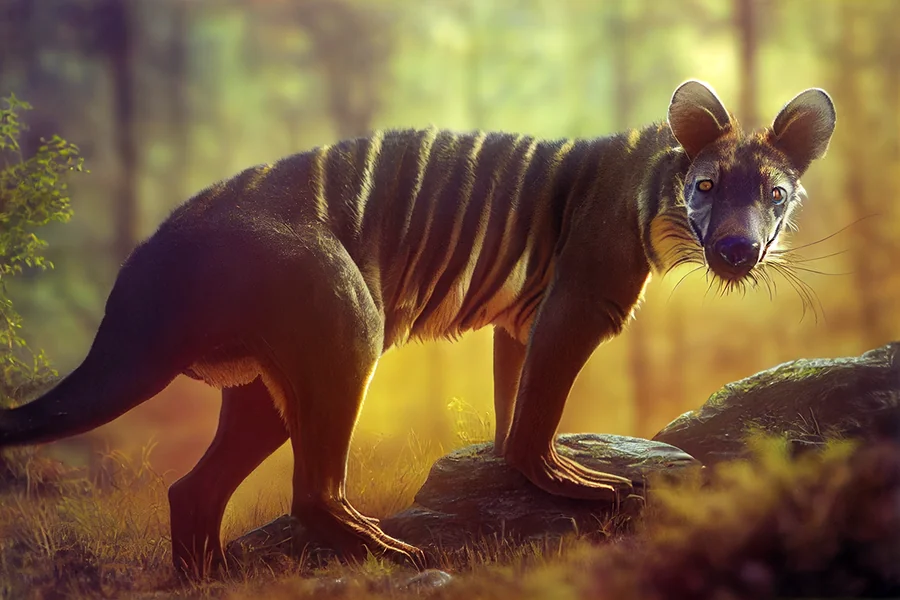
The Higgsfield AI image generator lets anyone describe an extinct animal’s known size, coloring, and features from the fossil record and generate an original visual built around that description, instead of reusing the same recycled illustration every other site already has.
Higgsfield’s platform runs on multiple underlying models, including Nano Banana Pro, GPT Image, Seedream, FLUX, and Kling O1, which matters here because a feathered prehistoric bird and a large extinct mammal call for very different visual treatments. One model might handle a detailed, textured rendering convincingly, while another produces something closer to a clean scientific illustration style, depending on what a specific species page actually needs. Generation happens natively at 2K resolution with intelligent 4K refinement applied on output, useful for an image meant to anchor a page rather than sit as a small thumbnail. Soul ID keeps a consistent visual style across a whole run of extinct species pages, relevant for a site covering dozens of species that should all look like they belong to the same collection. Non destructive editing through Nano Banana Pro Inpaint allows one detail, a coloring choice, a feature, a background element, to be adjusted afterward without regenerating the whole image.
What About Old Nature Documentary or Museum Footage Covering These Species?
Archival nature documentary clips, museum exhibit recordings, and old fossil dig footage often exist alongside extinct species coverage, and that footage is usually degraded from years of re-encoding and reposting.
A documentary segment on a prehistoric species, a recorded museum exhibit walkthrough, or footage from an old dig site sometimes survives and gets reused as supporting material. The problem is that this kind of footage has typically been converted, reshared, and recompressed multiple times since it was first recorded, and what was clear when it was filmed now looks soft and pixelated sitting next to newer content.
How the Higgsfield AI Video Upscaler Restores Old Wildlife and Documentary Footage
The Higgsfield AI video upscaler applies super resolution, denoising, and stabilization together, reconstructing detail in old documentary or archival footage instead of simply enlarging the existing frame the way basic resizing does.
Denoising clears out compression artifacts that build up across repeated re-encodes and platform reposts, while stabilization corrects shake in footage that was never filmed on stable equipment to begin with. Super resolution then rebuilds detail the original recording lost somewhere along the way, bringing an old documentary clip or museum recording back to something worth including next to a species page again.
Anyone researching animalswildfacts.com’s own extinct and prehistoric species coverage has likely run into this exact gap already, a name, a fact sheet, and no real photo to go with either.
What Should You Check Before Using AI to Depict an Extinct Species?
Prioritize a genuine free tier to test accuracy against the known fossil record first, consistent results across repeated generations, and no steep learning curve, since a visual claiming to represent a real extinct species needs to hold up to scrutiny.
A tool that produces one convincing, fossil accurate image and then something noticeably off on the next attempt isn’t reliable enough for content that’s making a factual claim about what an animal actually looked like. The same goes for anything that locks meaningful use behind a paywall before accuracy can actually be judged. What matters most here is being able to check a result against the actual fossil record or existing scientific reconstructions before publishing it as fact.
Frequently Asked Questions
Is there a free way to test the AI image generator before using it on an extinct species page?
Yes, Higgsfield offers a free tier with daily generation credits, enough to test a sample visual before committing to a full series of species pages.
Can the same extinct species look consistent across a whole site’s worth of pages?
Yes, Soul ID helps maintain a consistent visual style across a series of generated images, which matters for a site covering many species that should feel like one collection.
Can old documentary or museum footage be restored regardless of its original source?
Yes, the video upscaler works on existing footage regardless of whether it came from a broadcast documentary, a museum recording, or an older camcorder clip.
How is this different from reusing an existing paleoart illustration?
Reusing an illustration means using the exact same image every other site already has, while describing the animal and generating a new visual produces something original, built specifically for that page.
Can something usable be produced without illustration or design skills?
Yes, describing the animal’s known features and proportions is enough to generate a usable visual, without requiring illustration or paleoart experience.