
Top 20 Animals With Big Ears In The Natural World
Animals with big ears live in many parts of the world. Some walk across hot deserts. Some of them travel through forests or the grassland. Big ears are not mere show-offs. They assist animals to hear danger at an early stage. They also serve the purpose of keeping numerous species cool in hot areas. In this guide, we explore how animals with big ears use sound, heat control & awareness to survive in the wild.
Table: 20 Animals With Big Ears
| No. | Animal Name |
| 1 | African Elephant |
| 2 | Fennec Fox |
| 3 | Black‑tailed Jackrabbit |
| 4 | Bat‑eared Fox |
| 5 | Kangaroo Rat |
| 6 | Red Kangaroo |
| 7 | Serval |
| 8 | Asian Elephant |
| 9 | Meerkat |
| 10 | Caracal |
| 11 | Desert Hedgehog |
| 12 | Pallid Bat |
| 13 | Hare (various species) |
| 14 | Oryx |
| 15 | African Wild Dog |
| 16 | Jerboa |
| 17 | Long‑eared Owl |
| 18 | Bobcat |
| 19 | Coyote |
| 20 | Greater Bilby |
Detailed Look At Animals With Big Ears
1. African Elephant
Scientific Name: Loxodonta africana
Class: Mammalia
Diet: Herbivore
The African elephant is found in sections of sub-Saharan Africa. It is found in grasslands, forests and around water. It has broad and fan-like shaped ears. These ears have a lot of blood vessels in the skin. It works the blood nearer to the air when the ear is flapped by the elephant and this makes it very warm. This assists in cooling the body during hot weather.
Elephants are found in groups known as herds. A herd consists of females and new. Male ones usually live in singles, or mini bachelons. Elephants in Africa never stop. They have to walk miles in search of food and water. They feed on grass, leaves, bark and fruit. Their large ears are used to detect the sounds that are far. One of the members of the herd can trumpet and its sound goes a long distance. The calls are heard to ensure that the herd remains together and out of danger.
Elephants too, communicate using their ears. Ears are loose when they are relaxed. And when frightened the ears spread widely. They could look directly with open ears to appear bigger. These are cues that are important in the life of elephants.
Habitat map (in words): Central and East Africa from savanna grasslands to forest edges.
Fun fact: African elephant ears are as big as small shields and help the animal stay cool.
2. Fennec Fox
Scientific Name: Vulpes zerda
Class: Mammalia
Diet: Omnivore
Fennec fox is a species of fox that resides in the Sahara Desert and other arid areas of North Africa. The ears of this fox are very large when compared to its size. These ears make it hear insects and small animals in the sand. They also allow the heat to escape to ensure that the fox will be cool in the high desert heat.
The fennec foxes are the most active at night. Evenings in the desert are less hot. They prey on ants, beetles, rodents and eggs at night. They feed on fruit, also, when they can get it. By day they rest in burrows. These holes are deep sandy tunnels. The family of foxes can excavate and have an elaborate burrow.
Both ears are natural microphones. The fox has the ability to hear a small movement of prey. When danger falls it listens soon, and flees away. Fennec foxes are found in small families. They care for pups together. Hunting is done by observing the adults.
Habitat map (in words): Sahara Desert and scattered dry plains in North Africa.
Fun fact: A fennec fox can hear a beetle crawl under sand from far away.

3. Black‑tailed Jackrabbit
Scientific Name: Lepus californicus
Class: Mammalia
Diet: Herbivore
The black-tailed jackrabbit is found in the west of North America. You can find it in deserts, grass lands and open fields. Its ears are long and thin. They aid the jackrabbit in hearing the predators such as coyotes and hawks. The same ears are useful in letting the jackrabbit cool down in hot places. Thin skin around the ears releases the warm air out of the body.
This animal is a fast runner. It is able to run at zig-zag turns avoiding danger. Jackrabbits do their feeding at night, and in the morning and evening. They consume grasses, leaves & twigs. Occasionally they would stand and take a listen. Large ears discern even the most distant sounds. When danger is close they tie away in lightning bounds.
Jackrabbits do not make deep burrows as rabbits do. They lie in bushes or in shallow depressions in the ground. These are places of shadow and partial concealment by sky hunters.
Habitat map (in words): Southwestern United States into Mexico across deserts and plains.
Fun fact: A jackrabbit can detect a predator before its eyes see it.
4. Bat‑eared Fox
Scientific Name: Otocyon megalotis
Class: Mammalia
Diet: Insectivore
Bat-eared foxes are found in eastern and southern Africa. It favours grasslands, open plains and savannas. Its ears are big and pointed. These ears are very sensitive to hearing insects in the underground. This fox eats mostly insects. Primary foods are termites and beetles. It hearkens to movements beneath soil and digs with his paws.
The bat-eared foxes are known to live in families or in pairs. They have common responsibilities such as the guarding and tending of pups. By night they hunt insects and little things. During the day they sleep in dens. Their large ears ensure that they perceive danger in time. Examples of predators are jackals, eagles and large snakes.
Bat-eared foxes are attracted in when the insects are swarming. They have the ability to hunt and kill numerous insects within a given time by use of speed and sharp teeth. Their largest implement is hearing. They are able to detect tiny insect small calls in the grass.
Habitat map (in words): Eastern and southern African grasslands and open savanna.
Fun fact: Bat‑eared fox ears can pick up tiny sounds of insects moving underground.
5. Kangaroo Rat
Scientific Name: Dipodomys (genus)
Class: Mammalia
Diet: Herbivore/Granivore
Kangaroo rats inhabit arid regions of the Americas, particularly deserts of the southwestern United States and Mexico. With small bodies and big ears they bear. These ears aid them in hearing the predators at night. They are preyed upon by owls, snakes and foxes. The kangaroo rat hearkens, and pricks up his ears.
These rodents are kangaroo-like hoppers. They possess great leaping hind feet. They primarily emerge during the evening time. In the desert at night it is cooler and safer. They feed on seeds, roots and plants. Kangaroo rats do not consume a lot of water. Food they take provides them with moisture.
They bore burrows in the ground. These holes assist them to be safe and cool during the day. When danger strikes they stand still and listen. Big ears pick up soft sounds. Then they make a leap to some other entrance of a burrow.
Habitat map (in words): Deserts and dry plains in the southwestern United States and Mexico.
Fun fact: Kangaroo rats can survive without drinking water for most of their lives.

6. Red Kangaroo
Scientific Name: Macropus rufus
Class: Mammalia
Diet: Herbivore
The red kangaroo inhabits the arid and semi arid parts of Australia. It has long and flexible ears. They turn around in order to hear the sounds in a different direction. This assists the kangaroo to notice its predators like dingoes or eagles when grazing on the open plains.
Most of the time red kangaroos are also active in the morning and in the evening. They make use of grasses and shoots. Water is scarce, thus they are able to go without drinking for long. Large ears are used to help control the body temperature by emitting excess heat. Kangaroo also has the ability of twitching its ears to communicate with other people.
Social life is interesting. The males are organized into groups referred to as mobs. Such mobs might have some females and young. Male sizes and strength are used in sparring competitions to dominate. Their primary mode of movement is by hopping. Balance is ensured by long back legs and strong tails. Hopping causes ears to be vigilant to distant sounds, so predators can hardly get close without the ear detecting them.
Habitat map (in words): Central and western Australia, mostly dry plains and deserts.
Fun fact: A red kangaroo can move its ears independently to listen in two directions at once.
7. Serval
Scientific Name: Leptailurus serval
Class: Mammalia
Diet: Carnivore
The few inhabit the wetlands, the savannas and grasslands of Africa. It possesses big, round ears having black and white spots. These ears are very sensitive to the noise of small rodents below the ground.
Servals are primarily loners. They hunt through stealth and ambush. Their legs are very long and are useful to jump up and hit exactly. They consume mice, birds, frogs and insects. Large ears are used to sense motion even in thick grass. A serval is able to detect prey that is digging underground or rustling the leaves over a distance.
They work at night and daybreak, and sleep in high grasses. Their habitat may include several square kilometers. Serval can extend his back, display teeth and flick his tails when he is threatened. During these shows, the ears are on the alert.
Habitat map (in words): Sub-Saharan Africa from savannas to reed beds.
Fun fact: Servals can leap over 3 meters in a single bound to catch birds in flight.
8. Asian Elephant
Scientific Name: Elephas maximus
Class: Mammalia
Diet: Herbivore
The South and Southeast Asian ecosystem is the home of the Asian elephant. It has small ears that are large in comparison with African elephants. They assist in cooling the animal and also picking up the sounds at a distance. Asian elephants enjoy forests, grasslands and the valleys of rivers.
They also exist in smaller groups than the African elephants. Families bear females and calves, whereas males tend to stay alone. Elephants are very social and use low-frequency rumbles in communication. Their foods are grasses, leaves, fruits, and bark. Ears are used to hear signals of the members of the herd that are far away. The elephant is also cooled by flapping ears during hot seasons.
Asian elephants represent emotions through their ears. Ears that are alert are forward-spread whereas relaxed ears are an indicator of calm. Elephants go a long way to get water and food. Their memory and ear sensitivity assist them in the locating of resources.
Habitat map (in words): India, Sri Lanka, Thailand, Malaysia, and Indonesia’s forests and grasslands.
Fun fact: Asian elephant ears are shaped like India on a map.
9. Meerkat
Scientific Name: Suricata suricatta
Class: Mammalia
Diet: Omnivore
Meerkats inhabit the grasslands and the deserts of southern Africa. They have small but mobile ears. When digging, they put caps in them to avoid sand intrusion. Meerkats are social predators and they occur in groups of 20 or more mobs. Large ears assist in sensing the presence of predators, such as eagles, jackals and snakes.
Meerkats prey on small lizards, plants and insects. They forage in the mornings and in the late afternoons. Such that one meerkat is usually on guard and the other feeds. The ears of the guard are sensitive to slight noises of imminent danger. The group will move in search of the burrows when attacked by a sharp call.
Burrows consist of extensive underground systems. They protect the group against the sun and creatures. Meerkats also dig to reach the scorpions and insects. They are intelligent, friendly, and they share food and duties.
Habitat map (in words): Kalahari Desert, Namibia, Botswana & South Africa.
Fun fact: Meerkats can rotate ears to hear predators while keeping most of their head underground.
10. Caracal
Scientific Name: Caracal caracal
Class: Mammalia
Diet: Carnivore
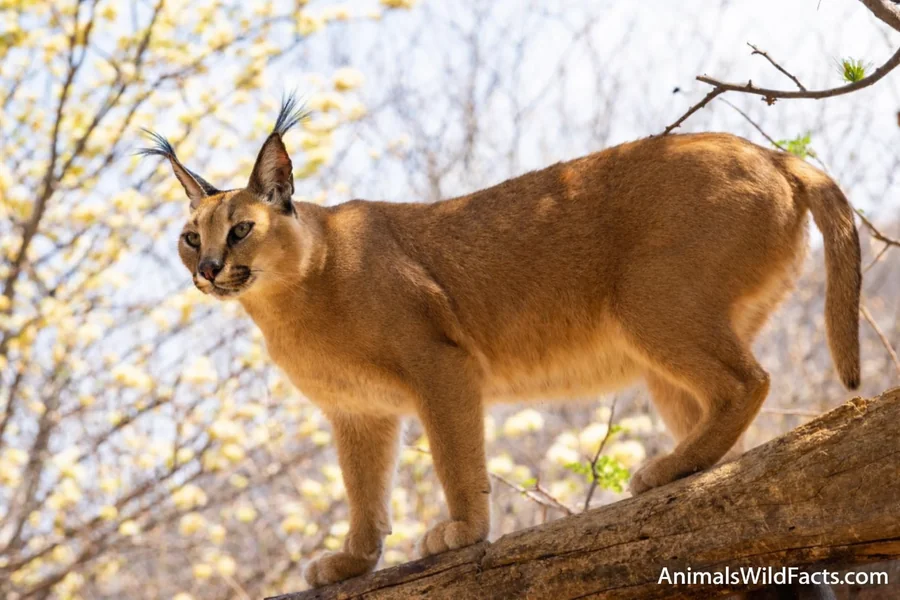
Caracal is a medium size wild cat in Africa, Middle East and Central Asia. It has tall, pointed and black-tufted ears. These tufts enhance sound and aid in the location of prey both in the grasslands and forests.
Caracals feed on rodents, birds and small mammals. They are isolated and reclusive. They strike by stealth, cowering in the bushes and then they leap. Large ears enable them to track the movements of prey over a long distance. They are also excellent jumpers, they can jump and get a bird out of the air.
Caracals are nocturnal creatures and sleep in the shade during the day. They depend on ears with respect to hunting and communication. The caracals have an ears flick when they are dangerously related and they move quietly to evade their enemies such as the lion and hyena.
Habitat map (in words): Africa south of the Sahara, Middle East, and parts of Central Asia.
Fun fact: Caracals can leap up to 3 meters to snatch birds in flight using only their ears to locate them first.
11. Desert Hedgehog
Scientific Name: Paraechinus aethiopicus
Class: Mammalia
Diet: Insectivore
The hedgehog of the desert inhabits the North African continent, as well as the Middle East. Its ears are made quite large in reference to its tiny body. Large ears assist it in seeing predators and prey in the dark. They also aid in cooling. Hedgehogs are nocturnal animals, they appear after the sun sets and feed on insects, small invertebrates and in some cases vegetation.
Hedgehogs that live in the desert take a step silently. Listening and digging with sharp claws they are able to find the insects that are buried underground. When they feel threatened they roll into a ball and shield their vulnerable belly with spines. Even when the body is covered, big ears are always on guard and this is able to pick up predators at an early stage.
They dig simple burrows or spend their time in deserted dens in the daytime to keep cool. Ears are important in avoiding peril and getting around. The desert hedgehogs are able to endure tough environments and water scarcity by obtaining water through food.
Habitat map (in words): North African deserts and semi-arid regions of the Middle East.
Fun fact: Desert hedgehogs’ ears can move independently to pick up sounds in multiple directions at once.
12. Pallid Bat
Scientific Name: Antrozous pallidus
Class: Mammalia
Diet: Insectivore
The pallid bat is found in western North America. Its ears are very big in relation to its head and this assists in preys on the ground. It is not a typical echolocating bat; instead, it listens to the movement of insects and small lizards.
Pallid bats are nocturnal. They come out at night with the aim of getting a meal out of beetles, crickets, scorpions and small vertebrates. Their large ears enable them to detect minute rustling of their prey in the dark. They also fly or fly by gliding near the ground hitting swiftly with their claws.
They nest in caves, old buildings or hollows of the trees. Large ears are also used to sense the approaching predators. Pallid bats are light and agile in spite of their size. They are different among bats only because they have the capacity to use sound to identify their prey.
Habitat map (in words): Western U.S., Mexico, and parts of Central America, usually deserts, grasslands, and open forests.
Fun fact: Pallid bats can catch scorpions without being stung, using only their hearing to locate them.
13. Hare (Various Species)
Scientific Name: Lepus (genus)
Class: Mammalia
Diet: Herbivore
Hares can be found in Europe, Asia, Africa and North America. Their ears are long and usually black tipped. Large ears enable hares to detect their predators at a distance as well as cool down in hot weather.
Hares are quick in running and run zigzag to get away. They are grass, herb and bark eaters. They are more active during the evening and morning hours where they use their ears to keep them alert when they are feeding. The Hares sleep in shallow depressions (forms) throughout the day.
These animals do not dig holes as rabbits. They are instead dependent on speed and alertness. Large ears keep on turning in order to sense slight sounds. Hares are predominantly solitary although they can form small groups in open fields where they can be safe.
Habitat map (in words): Open fields, deserts, and meadows across multiple continents.
Fun fact: Hares’ ears can detect a predator from more than a kilometer away in open terrain.
 Jerboa
14. Oryx
Scientific Name: Oryx gazella (example: gemsbok)
Class: Mammalia
Diet: Herbivore
Oryx inhabit African deserts and dry savannas. It has long and pointed ears that assist it to monitor predatory creatures and manage heat. The oryx has large ears which enable it to hear the lions, the cheetahs and the hyenas in the open areas.
Most of the time Oryx are active in cooler periods of the day. They consume grasses, leaves and roots, extracting water from plants. A male will tend to be dominant in herds and have multiple females. The ears turn round to hear danger as the oryx grazes.
They walk long distances to seek food and water. When they are frightened, they put up heads, open ears, and flee away. Great ears and good eyesight make them hard to get.
Habitat map (in words): Deserts and arid regions of southern and eastern Africa.
Fun fact: Oryx ears act like natural radar, helping the herd detect predators early.
15. African Wild Dog
Scientific Name: Lycaon pictus
Class: Mammalia
Diet: Carnivore
African wild dogs are sub-Saharan African animals. The ears are round and quite big and these are used to find the prey and also to communicate over a long distance. Packs are dependent on auditory and visual coordination.
Cooperative hunting is practiced by wild dogs. They feed on antelope, rodents and other medium sized mammals. Large ears enable them to sense any motion of prey and cues of other members of the pack. They are stamina hunters, who pursue the prey at kilometer lengths, until it gets exhausted.
Packs have areas where they rest and breed. Ears play a key role in the social structure, by warning the members of danger and organizing hunts. African wild dogs are very social and intelligent.
Habitat map (in words): Savannas, woodlands, and semi-deserts in sub-Saharan Africa.
Fun fact: African wild dog ears are so sensitive they can hear prey from more than 5 km away.
16. Jerboa
Scientific Name: Jaculus (genus)
Class: Mammalia
Diet: Herbivore/Insectivore
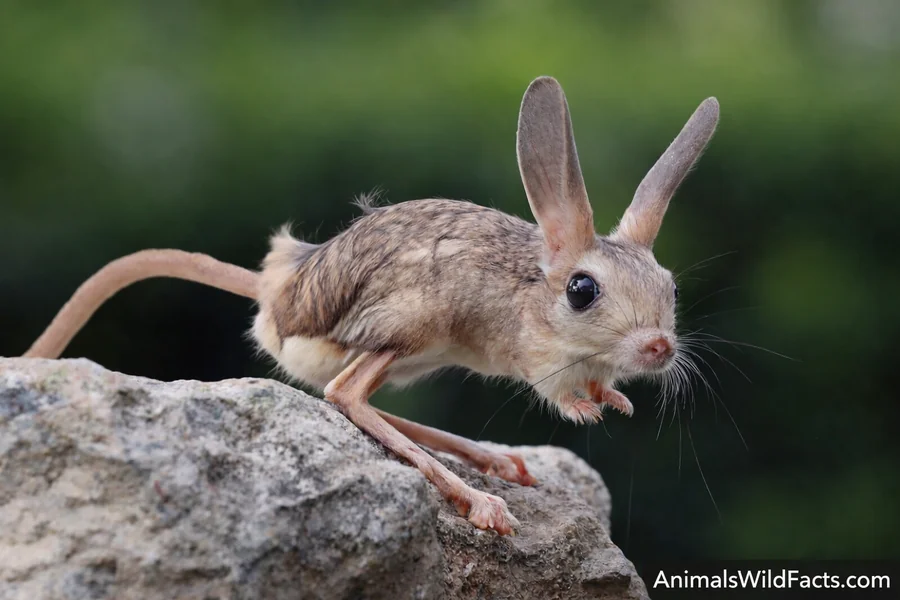
Jerboas are found in the desert of North Africa and Asia. Their bodies are too small with huge ears. Large ears are used to sense any threat by predators such as snakes, owls, and foxes, as well as dissipate the heat in hot deserts.
Jerboas are nocturnal. On their long hind legs they stand upon their tails. At night they scavenge on seeds, plants and insects. Burrows excavated in the day are a source of protection and cover against heat and predators.
They have an independent ear rotation searching the desert with faint sounds. The jerboas stand still in defense of themselves when attacked by a predator, relying on silence and immobility. With continued threat they take a flight to another hole or run away in a series of rapid zigzags.
Habitat map (in words): Deserts and semi-arid regions of North Africa, the Middle East & Central Asia.
Fun fact: Jerboas’ large ears let them hear an owl approaching from hundreds of meters away while keeping hidden in sand burrows.
17. Long-eared Owl
Scientific Name: Asio otus
Class: Aves
Diet: Carnivore
We have a long-eared owl that inhabits Europe, Asia and North America. Its large ear tufts do not serve the purpose of hearing but are a way of camouflage. Real ears are located on the sides of the head and are highly sensitive. The owl has big ears that enable it to locate prey even when the light is low.
They hunt mostly at night. Their food consists of mice, voles and little birds. Owls with long ears sit in silence and use their ears to hear the rustling of their prey. After finding them, they fly down silently due to feathered wings.
During the day these owls rest in trees usually forming protection in colonies. Ears are used to identify predators and competitors and communicate with mates in the form of tiny sounds.
Habitat map (in words): Forest edges, open woodlands, and grasslands across the Northern Hemisphere.
Fun fact: Long-eared owls can hear a mouse moving under snow from more than 30 meters away.
18. Bobcat
Scientific Name: Lynx rufus
Class: Mammalia
Diet: Carnivore
Bobcats are North American animals. They have tufted ears that assist them in identifying their prey such as rabbits, birds and rodents. Forests, brushlands, swamps have big ears that increase the volume of sound.
Bobcats are loners and they are territorial. They to-hunt primarily in the dawn, and in the evening and conceal and wait. Ears are free to move so as to track the movement during stalking. They sleep in thick bushes during the day with their ears always on alert of danger.
Bobcats use verbal cues, scent, and ear placement. They are flexible and can live in the wild forests as well as around man.
Habitat map (in words): Across North America from southern Canada to Mexico, in forests, swamps & deserts.
Fun fact: Bobcat ears help detect prey beneath thick undergrowth without moving a muscle.
19. Coyote
Scientific Name: Canis latrans
Class: Mammalia
Diet: Omnivore/Carnivore
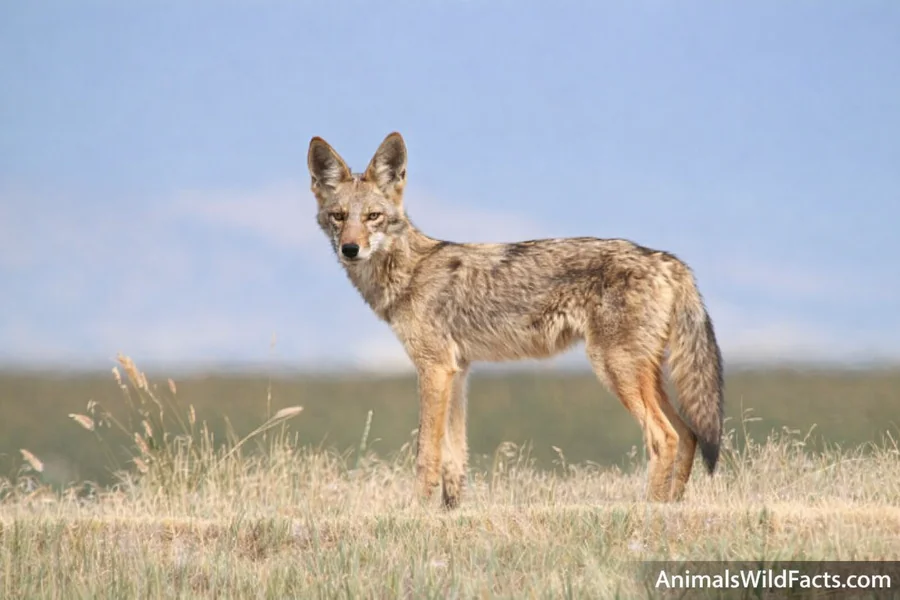
Coyotes are found in North and Central America. Their extensive, sharp ears aid in the location of food such as rodents, rabbits, birds and perceive competitors or predators. Coyotes may occur in the forest, plains, deserts, and even the city.
Coyotes are very flexible. They either hunt singly or in small family groups. They depend on cunning and shrewd listening. Large ears hear weak noises as distant as tens of meters. They are opportunistic, feeding on plants, insects or garbage when necessary.
The coyotes use howls, yips and body language as a means of communication. Their ears are large to enable them to locate the sounds that are far and coordinate with others when hunting.
Habitat map (in words): Across North and Central America, from forests to urban areas.
Fun fact: Coyotes can hear a mouse moving under snow from more than 50 meters away.
20. Greater Bilby
Scientific Name: Macrotis lagotis
Class: Mammalia
Diet: Omnivore
The greater bilby is a species in arid areas of Australia. It possesses gigantic ears that aid in the detection of predators and locating insects in the ground. They also give out heat in hot desert conditions.
Bilbies are nocturnal. They cover themselves in holes in the daytime and in the night, they come out and feed on insects, seeds, and fungi. Big ears play a role in detecting the slightest motions of the prey or danger. They are like small kangaroos with long hind legs.
Bilbies live alone though they have scented territories. The burrows may be as long as 3 meters long, which offers them protection against predators and unfavorable climatic conditions.
Habitat map (in words): Arid and semi-arid deserts of central and western Australia.
Fun fact: Greater bilby ears can detect insects moving underground before the bilby even digs.
Final Words
Big-eared animals demonstrate the way evolution can form and work. Ears do have a lot of uses and applications, be it elephants bathing, bats and foxes hunting with sound, or a range of similar applications. They sense predators, communicate, control heat & find food. Large ears are not alone impressive, but they are necessities to life. When they are studied, one can find out how intelligent animals can be in the way that they adapt to their environment.
FAQs:
Why would animals with big ears?
Large ears serve to detect sound, temperature and communicate.
Aren’t big-eared animals more likely to hear?
As a rule, bigger ears are better at detecting sound, however, sensitivity is also ear specific.
What is the animal with the largest ears?
The elephant of Africa possesses the biggest ears in the zoo.
Do big ears help in hunting?
Yes, other animals such as the foxes, bats and wild dogs do use ears to find their prey accurately.
Do big ears make animals survive in hot environments?
Absolutely. They dissipate heat and cool the body particularly in desert species.