How Animals Make Decisions Under Uncertainty: The Evolutionary Logic Behind Risk-Taking Behaviour
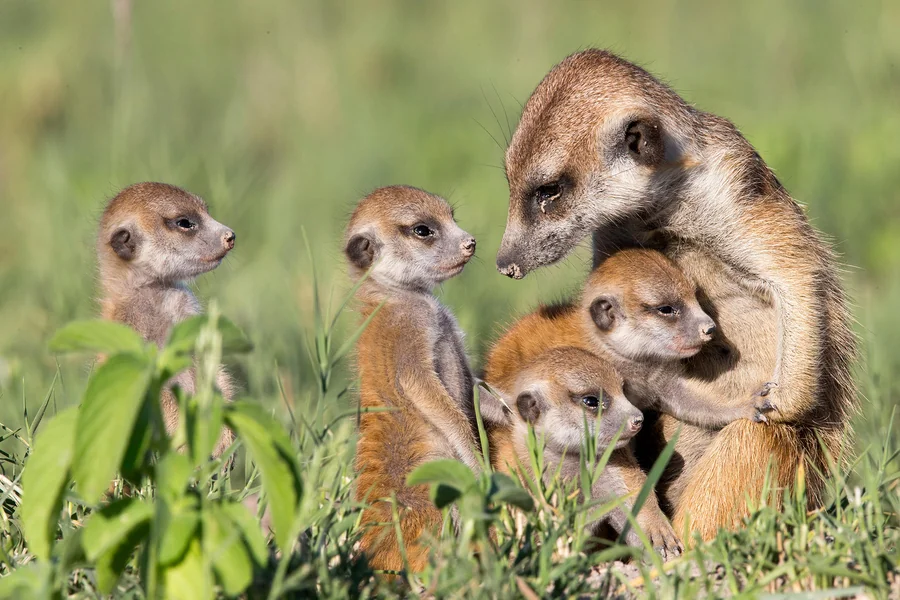
When a meerkat sentinel at the edge of a Kalahari desert colony spots a martial eagle circling overhead and decides whether to call an alarm that will send the group underground, it is making a decision under uncertainty with asymmetric consequences: a false alarm costs the colony foraging time; a missed alarm costs lives. The meerkat does not deliberate consciously in the way a human decision-maker might, but the neural and behavioural systems it uses to make this assessment are the product of millions of years of evolutionary refinement — and they are considerably more sophisticated than the word “instinct” implies. The study of animal decision-making under uncertainty is one of the most active areas of behavioural ecology, and its findings are reshaping how scientists understand the evolution of cognition, the neural basis of risk assessment, and the deep commonality between animal and human decision systems.
The Architecture of Animal Risk Assessment
How Different Species Calibrate Risk and Reward
The fundamental challenge that all animals face in decision-making is the same one that all rational decision theory attempts to address: how to choose between options with uncertain outcomes when the available information is incomplete and the consequences of different errors are asymmetric. The solutions that different species have evolved to this problem reflect both the specific risk environments they inhabit and the more general principles of how nervous systems process probabilistic information under time pressure.
Foraging theory, which models how animals decide where to search for food, how long to stay in a given location, and when to abandon a depleted resource for an uncertain alternative, provides the most mathematically developed framework for understanding animal risk decisions. The optimal foraging model predicts that animals will leave a food patch when the rate of return from that patch drops below the average rate available in the environment as a whole — a prediction that has been tested across hundreds of species and confirmed with surprising accuracy, suggesting that animals are performing something functionally equivalent to marginal rate calculations without conscious arithmetic.
What is particularly striking about foraging research is how precisely animals track environmental statistics even without conscious awareness of doing so. Bumblebees foraging across a field of flowers update their probability estimates of which flower types are most likely to be rewarding based on their recent experience, and these updates follow Bayesian probability principles — the mathematically optimal approach to incorporating new evidence into prior beliefs. The bee has no brain capable of conscious probabilistic reasoning, but its neural architecture implements something functionally equivalent to it, because the evolutionary pressure to efficiently extract resources from uncertain environments has converged on the same computational solutions that probability theory describes from first principles.
The parallel between animal foraging optimization and the reward systems in human-designed games of chance is more than metaphorical. The variable reward schedule — the pattern of delivering rewards unpredictably rather than on a fixed schedule — is the most powerful reinforcement pattern identified in both animal learning research and game design. Slot machines are effective precisely because they implement the same variable reward schedule that produces the most persistent foraging behaviour in animals: the uncertainty about when the next reward will arrive creates a sustained engagement that fixed-interval rewards do not. A desi indian slot game catalogue that organises titles by volatility — the frequency and size of reward events — is reflecting this same understanding of how variable reward schedules produce different engagement patterns: high-volatility games with infrequent large rewards activate the same neural persistence systems as low-probability, high-value foraging events in the wild, while low-volatility games with frequent small rewards mirror the sustained engagement of resource-rich, predictable foraging environments. The game designers and the evolutionary process have arrived at the same fundamental insight about how reward uncertainty shapes decision-making persistence through entirely different routes.
The Risk Sensitivity Hypothesis and What It Explains
One of the most significant theoretical advances in behavioural ecology over the past three decades is the risk sensitivity hypothesis, which explains why animals sometimes prefer variable, uncertain food sources over equivalent fixed ones — and sometimes strongly prefer the fixed option. The prediction is counterintuitive to anyone who assumes that uncertainty aversion is universal: under certain conditions, animals should actively prefer riskier options, and this preference should be rational rather than pathological.
The logic of risk sensitivity is based on the relationship between an animal’s current energetic state and the energetic threshold below which survival becomes impossible. An animal that is well-fed and comfortably above the survival threshold should prefer a fixed, certain food source because variability adds risk without adding expected value in a situation where additional risk is not necessary. An animal that is energy-stressed and at risk of falling below the survival threshold should prefer a variable food source — even one with a lower expected value — because the variable source offers the possibility of a windfall that might bring the animal above the survival threshold, while the fixed source guarantees the animal will remain in the danger zone.
This energy-budget theory of risk sensitivity has been confirmed across an extraordinarily diverse range of species, from bumblebees to starlings to rats, suggesting that it reflects a deep evolutionary principle rather than a species-specific adaptation. The practical implication is striking: risk preference is not a fixed trait but a dynamic state that changes as the animal’s circumstances change, and the direction of change is precisely what a rational model of decision-making under scarcity would predict.
What Animal Decision Research Reveals About Cognition
The Neural Systems Underlying Risk Assessment
The behavioural evidence for sophisticated animal decision-making has been accompanied by increasing understanding of the neural systems that implement it. Dopamine, long understood as a reward signal, is now understood more precisely as a prediction error signal — it fires not simply when an animal receives a reward but when the reward is better than expected, and its firing is suppressed when the reward is worse than expected. This prediction error system is the neural implementation of the probability updating that Bayesian foraging models describe behaviourally.
What is remarkable about this system is its conservation across evolutionary history. The dopaminergic prediction error system is present in insects, fish, reptiles, birds, and mammals, including humans — suggesting that this approach to learning under uncertainty evolved very early in animal evolutionary history and has been maintained because it solves the problem of learning from experience in uncertain environments with unusual effectiveness. The neural mechanism that drives a rat to press a lever for variable food rewards and the neural mechanism that drives a human to check their phone for variable social rewards are not analogous systems that happen to produce similar behaviour — they are the same system, inherited from a common ancestor and deployed in environments that evolutionary history never anticipated.
The characteristics of animal cognition that most clearly demonstrate the sophistication of evolutionary decision systems are:
- Temporal discounting that adjusts to environmental predictability — animals in environments where future resources are unreliable discount delayed rewards more steeply than animals in predictable environments, a calibration that is adaptive given the specific uncertainty of each animal’s situation
- Reference point sensitivity — animals assess outcomes relative to a reference point rather than in absolute terms, the same psychological structure that prospect theory describes in human economic behaviour, suggesting a deep evolutionary origin for what behavioural economists treat as a specifically human cognitive bias
- Probability weighting — evidence from several species suggests that animals overweight small probabilities and underweight large ones in ways that parallel human probability distortion, which may reflect a shared neural mechanism for processing extreme probability values
The numbered insights from animal decision research that have the most significant implications for understanding human cognition are as follows:
- Risk preferences are state-dependent rather than fixed traits — the finding that animals shift from risk aversion to risk seeking based on their energetic state suggests that human risk preferences may be more contextually variable than standard economic models assume, and that assessing risk tolerance as a fixed individual characteristic may systematically misrepresent how people actually make decisions under varying circumstances
- Variable reward schedules produce qualitatively different learning than fixed schedules — the animal learning literature’s consistent finding that variable rewards produce the most persistent behaviour has direct implications for how human motivation and engagement systems work, and explains why unpredictability is so consistently effective as an engagement mechanism across contexts from game design to social media
- Prediction error signals drive learning more powerfully than reward signals — the finding that dopamine encodes prediction error rather than reward magnitude means that learning is driven by surprises rather than by outcomes, which suggests that environments with appropriate levels of uncertainty produce more learning than either completely predictable or completely random environments
Conclusion: Evolution’s Solutions to Decision Problems Are Our Solutions Too
The animal decision-making research of the past half century has produced a finding that is both humbling and illuminating: the neural and behavioural systems that humans use to make decisions under uncertainty are not uniquely human innovations but evolutionary inheritances shared with an enormous range of other species. The dopamine system that produces human motivation, risk sensitivity, and reward learning is the same system that drives a bumblebee’s foraging choices and a rat’s lever-pressing behaviour — conserved across hundreds of millions of years of evolutionary history because it solves the problem of how to behave adaptively in an uncertain world with unusual effectiveness. Understanding these systems in the animals where they can be studied most directly provides a window into the evolutionary logic of decision-making that the study of human behaviour alone cannot offer — and that window reveals that what we call rationality, irrationality, and cognitive bias in human decision-making are, in many cases, adaptive solutions to evolutionary problems that our nervous systems are still optimised to solve.