12 Black Bugs You’ve Probably Seen but Never Named (Which Ones Bite?)
Black bugs are small insects and other arthropods with dark or black bodies. Common examples include carpenter ants, ground beetles, field crickets and black flies. Some harm plants or homes. Others help your garden. This guide covers 12 of them with scientific name, class, diet, habitat and one fun fact each.
Found one and not sure what it is? Start with the tables below.
List of Black Bugs
Below is the list of black bugs covered in this article:
| Number | Names of Black Bugs |
| 1 | Black Carpenter Ant |
| 2 | Southern Black Widow |
| 3 | Darkling Beetle |
| 4 | Black Carpet Beetle |
| 5 | Black Blister Beetle |
| 6 | Black Vine Weevil |
| 7 | Black Fly |
| 8 | Black Soldier Fly |
| 9 | Field Cricket |
| 10 | Oriental Cockroach |
| 11 | Black Bean Aphid |
| 12 | Black Ground Beetle |
Quick Habitat Guide
| Bug | Where It Lives | Common Spot | Harm Level |
| Black Carpenter Ant | Eastern US and Canada | Damp wood | Pest |
| Southern Black Widow | Southern and eastern US | Sheds and woodpiles | Venomous bite |
| Darkling Beetle | Worldwide | Deserts and stored grain | Mostly harmless |
| Black Carpet Beetle | Worldwide | Closets and rugs | Fabric pest |
| Black Blister Beetle | Eastern and central US | Flowers and hay | Skin irritant |
| Black Vine Weevil | Europe and North America | Pots and greenhouses | Plant pest |
| Black Fly | Every continent except Antarctica | Fast streams | Biting pest |
| Black Soldier Fly | Warm regions worldwide | Compost bins | Helpful |
| Field Cricket | North America | Lawns and garages | Minor pest |
| Oriental Cockroach | Worldwide | Basements and drains | Germ spreader |
| Black Bean Aphid | Europe, North America and Asia | Bean and beet plants | Crop pest |
| Black Ground Beetle | Europe and North America | Gardens and farms | Helpful |
Detailed Look at the Black Bugs
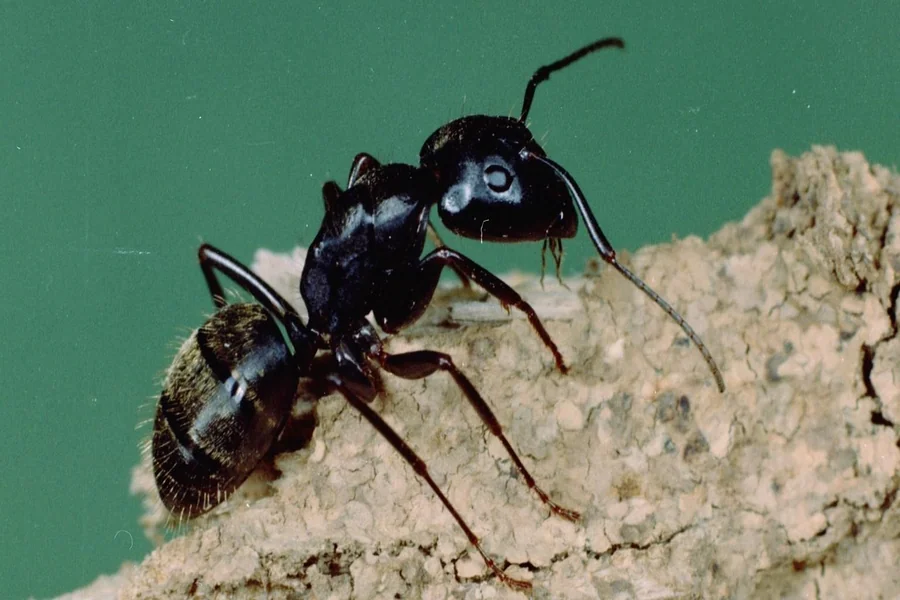
Black Carpenter Ant
Scientific Name: Camponotus pennsylvanicus
Class: Insecta
Diet: Omnivore
The black carpenter ant is a large species of ant found throughout North America. Workers are up to ½ inch long. Queens are bigger. These ants will not harm wood. Their mouth parts are used to chew and build nests. This ‘sawdust’ they ‘push’ out is called frass. When a pile of frass is found close to a window or a beam, it’s a common sign of trouble. They are found throughout the eastern United States and Canada, in forests and yards. Frequently colonies begin in wet or decaying wood. Others then dispersed in adjacent dry wood. The workers are nocturnal foragers. They search for sugars and insects that are killed. They also eat honeydew excreted by aphids. Thousands of workers can be found in a mature colony. Satellite nests can be built in adjoining trees or walls. Ants could be seen crawling around in lines. Follow it. It typically comes out to the nest. Did you know that carpenter ants can spray formic acid upon threat! Maintaining waterproofing and pruning branches in close proximity to a home can help prevent them from entering the home.
Southern Black Widow
Scientific Name: Latrodectus mactans
Class: Arachnida
Diet: Carnivore
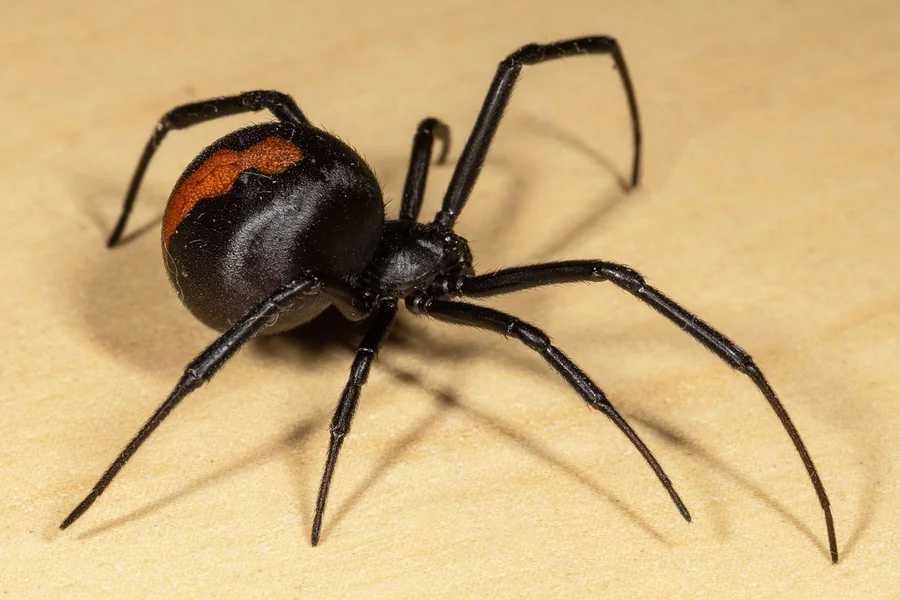
Although the southern black widow is a spider, a lot of people categorize it as an insect. The females are all black. Most have a red hourglass on their bellies. The are approximately one inch long and with legs spread. Males are smaller and are not likely to bite. These spiders are found in the southern and eastern parts of the United States. Search in piles of wood and sheds. Even garages and old tires will do. They like dark and quiet corners. The web appears in a cluttered format. Strong and sticky. It catches prey quickly if it comes in contact with it. The spider then wraps it up in its web and bites it. The venom affects the nervous system. Bites may result in cramps and sweating. Most healthy adults will recover. A bite must be treated, even if the animal is not a dog. Black widows are shy. They bite when squeezed or pinched. Use gloves when moving boxes or wood. Fun fact: females may eat the male after mating but it does not happen every time. A female will produce multiple egg sacs during a season.
Darkling Beetle
Scientific Name: Tenebrionidae (family)
Class: Insecta
Diet: Omnivore
Darkling beetles are part of a very large family of beetles of over 20,000 species. Most have a black or dark brown color. Adults are oval and hard. Many cannot fly. They walk instead. They can be found in deserts and grasslands. Some live in the forest. Others turn up in stored grain and flour. The larva of one darkling beetle is called a mealworm. It is used for bait and as a pet food. Darkling beetles eat plant matter and dead insects. Fungi are also a food source for them. They come out in the evening in dry areas. They take shelter under rocks and logs during the day. This will keep them cool. The one thing that Namib Desert species has is a neat trick. It is upside down and fogs its body. Water is falling all the way to its mouth. This fog basking is a term used by biologists. Some are so foul smelling when touched that they spray it out. This is why some are referred to as stink beetles. They’re not dangerous to humans. They can bite in homes but will not be able to spoil food.
Black Carpet Beetle
Scientific Name: Attagenus unicolor
Class: Insecta
Diet: Detritivore (feeds on fur, wool and dried animal matter)
The black carpet beetle is a small insect that can be an issue in homes worldwide. The adults measure about a quarter of an inch in length. They are black and oval in shape. It’s the larvae that are the real culprit. They are similar to brown carrots with hair attached to the end. They will eat wool and fur. They also feed on silk and feathers. Pet hair and dust are on the menu, too. Larvae nest in such locations as under rugs, inside closets. They can be found in air vents and baseboards. Adults feed on pollen outside the nest area. They have the ability to fly inside through open doors and windows. They lay eggs in the vicinity of fabric and lint. Larvae can live for up to a year or more. They moult as they mature. Those skins will help you locate them. Damage is manifested as small round holes in garments. Vacuum often. Wash stored fabric. Pack seal wool products in packaging bags. No, these aren’t beetles, but rather they’re fungus beetles that infest museum specimens of other beetles. They are closely monitored by the curators.
Black Blister Beetle
Scientific Name: Epicauta pennsylvanica
Class: Insecta
Diet: Herbivore (adults) and Predator of grasshopper eggs (larvae)
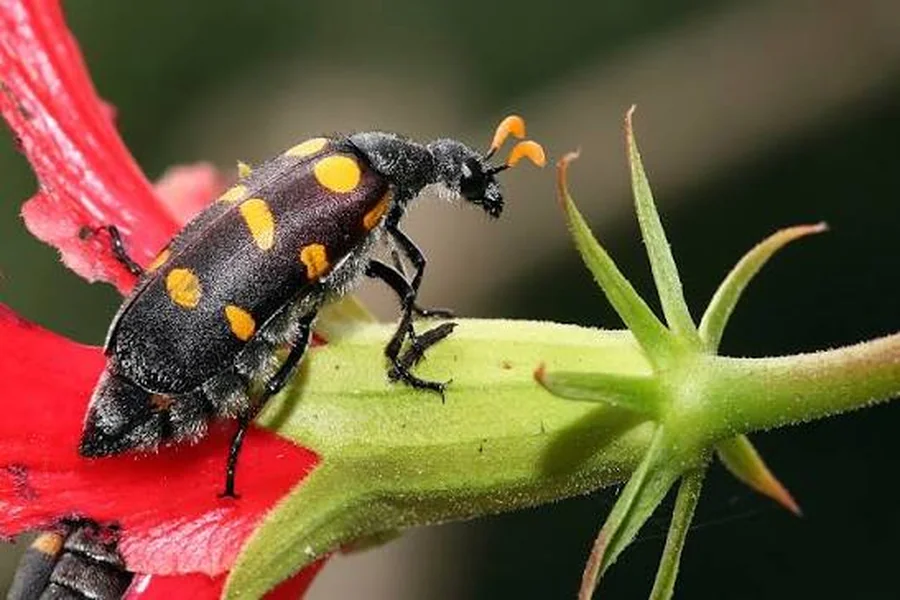
Black blister beetle is elongated with a narrow body. They grow to about half an inch when they are adults. The body is dark gray to black in color. Has a narrow neck and soft wing covers. It’s found on goldenrod and other late summer flowers. It is found throughout the eastern and central part of the U.S. This one is highest during the months of August to October. Leaves and flowers are eaten by adults. They can defoliate a garden plant quickly. Larvae feed on different food. They feed on grasshopper eggs in the ground. This makes them beneficial in some years. The beetle makes a chemical called cantharidin. It may cause blistering on skin if it comes into contact with it. Do not crush using hands. If you come in contact with one, wash with soap. Horses are also sensitive to the effects of cantharidin. They can be damaged by dried beetles in the hay. It is a serious issue for farmers. Did you know that the larvae will change their body form as they grow? This is hypermetamorphosis, a term used by biologists. It is uncommon in beetles.
Black Vine Weevil
Scientific Name: Otiorhynchus sulcatus
Class: Insecta
Diet: Herbivore
The black vine weevil is a garden pest in Europe and North America. Adults are about 0.4 inch long. They have a short snout and a rough black body. They cannot fly. Nearly all adults are female. They reproduce without mating. That lets numbers climb fast. Adults feed at night. They chew notches along leaf edges. The notches look like small bites from a hole punch. The larvae do more harm. They are white grubs with brown heads. They live in soil and eat roots. Plants in pots and greenhouses suffer most. Rhododendron and yew are common targets. So are strawberries. A plant that wilts for no clear reason may have grubs at its base. Gardeners use beneficial nematodes to control them. These tiny worms are sold at garden stores. Fun fact: adults hide in leaf litter by day and play dead if you disturb them. They tuck in their legs and drop to the ground.
Black Fly
Scientific Name: Simuliidae (family)
Class: Insecta
Diet: Hematophagous (females) and Nectarivore
Black flies are small biting flies that breed in fast running water. Adults measure less than one fifth of an inch. They have a hunched back and short wings. Most are dark gray or black. Females need blood to make eggs. Both sexes also drink nectar. Females lay eggs on rocks and plants in streams. Fast streams with clean water support the most larvae. The larvae cling to rocks and filter food from the current. They live there for weeks. Then they pupate and rise to the surface. Black flies live on every continent except Antarctica. Peak season in northern forests runs from late spring to early summer. They bite in daylight and tend to go for the head and neck. The bite is painful and can swell. Some people react strongly. In parts of Africa and Latin America one species spreads river blindness. Repellent and light clothing help. Fun fact: large swarms have harmed livestock in parts of Europe.
Black Soldier Fly
Scientific Name: Hermetia illucens
Class: Insecta
Diet: Detritivore (larvae) and Nectarivore (adults)
The black soldier fly is a slender wasp that is harmless. Adults are about 0.6 inch long. Are black with two whitish spots on the abdomen. Adults have a life span of approximately a week. Do not consume a lot of food. Water and nectar is what they consume. The larva stage is of major importance. They eat rotting food and manure. They have a rapid clearance of waste. A pile of kitchen waste can be consumed by a large group of larvae in a day or two. They are now being raised for animal feed at farms. Larvae are high in protein and fat. They also produce a soil stimulant called frass. The fly is of American origin. It is now found throughout warm parts of the world. It can be found in close proximity to compost heaps. No disease spreading is known. Home composters sometimes establish compost piles solely to their benefit. Did you know that the larvae eat up food waste in no time at all? This makes them useful in recycling.
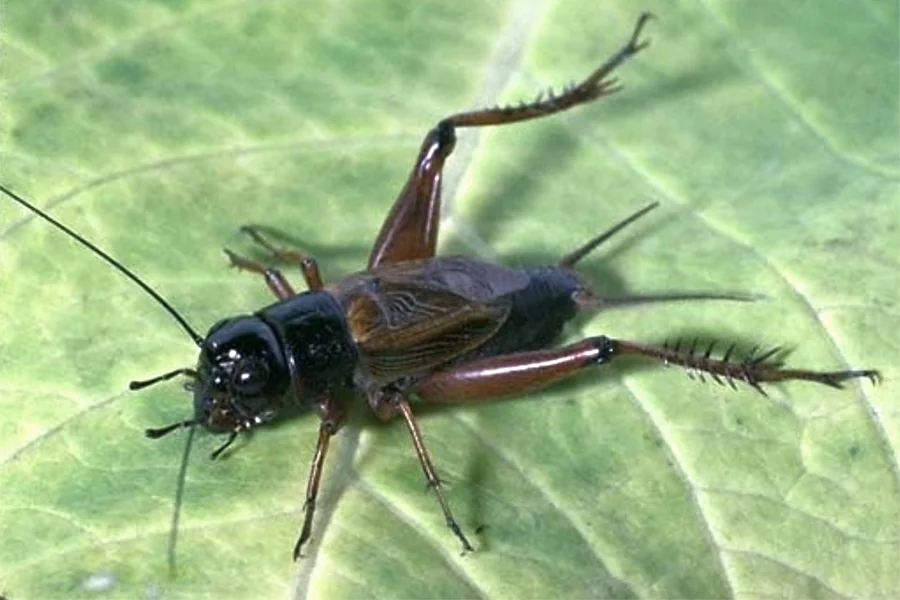
Field Cricket
Scientific Name: Gryllus (genus)
Class: Insecta
Diet: Omnivore
Field crickets are heavy-bodied and black, and are nocturnal singers. Adults reach 1″ in length. Have a flattened shape to the wings and long antennae. The sound is produced by the males. Rubbing the wings together. This is known as stridulation. The song is used for attracting females and to indicate to rivals that the singer is occupied. The chirp rate is accelerated with warm nights. The number of chirps can be used to estimate the temperature. Field crickets are present throughout North America in lawns and fields. Under rocks and in crevices. They migrate to buildings in the fall. Some are stored in the basement and garages. They feed on plants and seeds. They’ll also consume dead insects and fabric. Crop damage can occur from large group activity. Females lay eggs in the soil with a long tube called an ovipositor. The eggs hatch in spring or early summer. Did you know that crickets are able to hear through slits on their front legs? These small ears are located below the knee. A cricket may hear another cricket’s call from a distance.
Oriental Cockroach
Scientific Name: Blatta orientalis
Class: Insecta
Diet: Omnivore
Oriental cockroaches are dark brown to black. It is known as the water bug. Adults are about one inch long. Females have small wing stubs. The males are smaller and don’t fly very well. This roach is found in cool and moist environments. Look in basements and drains. These are typical areas in which they are found: crawl spaces and sewers. It moves slowly. Has a mousy odor. Feeds on garbage and decay. It will also munch on pet food and starchy food. Germs are transferred to roaches by their legs. They can place them on counter tops and surfaces in the kitchen. Females carry an egg case for about a day. They then leave it in a secret location. There are approximately 16 eggs in each case. Young roaches mature in several months or even a year. The species is probably of Middle Eastern or North African origin. It was transported throughout the world on ships. Fun fact: it will tolerate cooler temperatures than most roaches will tolerate. Repair any leaks and plug holes.
Black Bean Aphid
Scientific Name: Aphis fabae
Class: Insecta
Diet: Herbivore (plant sap feeder)
The black bean aphid is a small sap feeder. Adults range in size from 0.1 inches in length. They have a dark body and are soft and round. These form clusters at the end of the stem. Find them on beans and beets. They also feed on sugar beet and a number of weeds. They inhabit Europe and North America, and part of Asia. Aphids feed on the plant and consume the plant sap. The leaves become curled and the growth is reduced. They excrete a sticky substance known as honeydew. It is affected by sooty mold. Ants love honeydew. Some of the ants even protect aphids from predators. They also transplant them on new plants as well. In spring females give birth to live young. No mating is needed. Colonies can grow quickly, doubling in size within days. When plants are overcrowded, winged forms will occur. They fly to new hosts. They are a food source for ladybugs and lacewings. They are blown off plants by a powerful stream of water. Did you know? One aphid can give birth to dozens of new aphids during its life cycle.
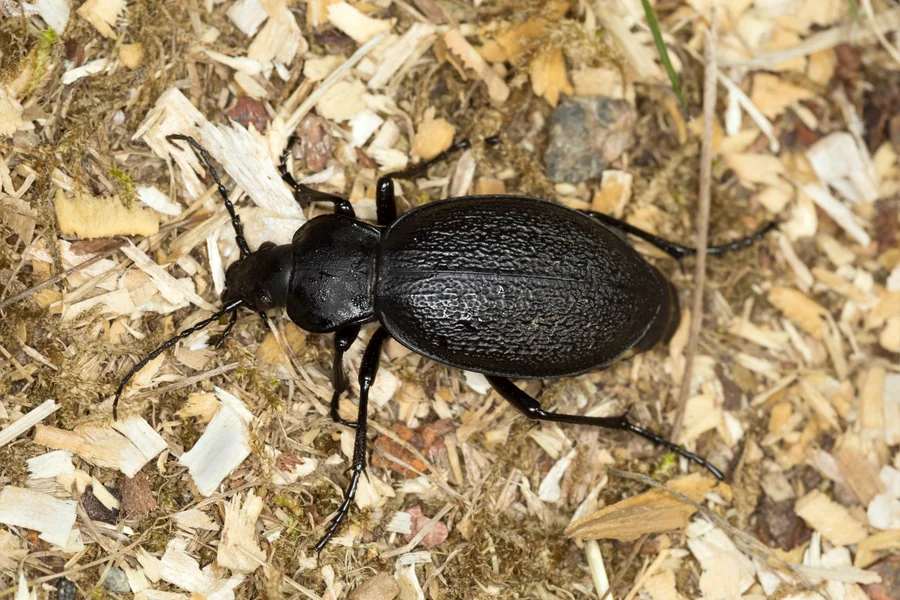
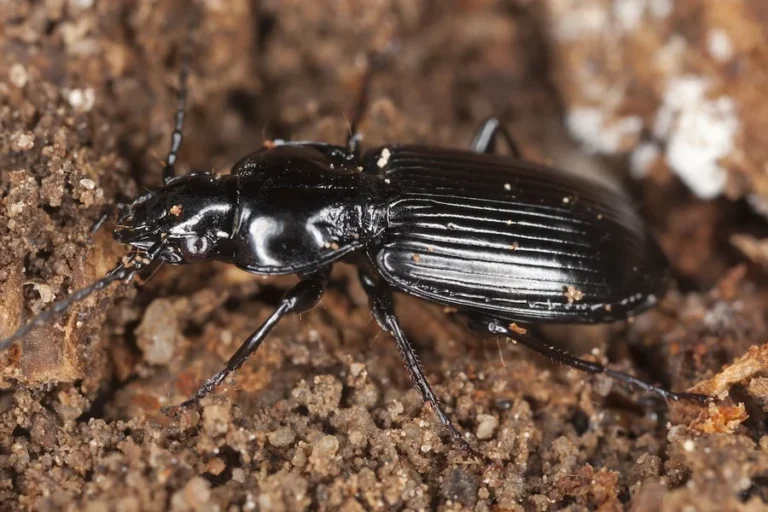
Black Ground Beetle
Scientific Name: Pterostichus melanarius
Class: Insecta
Diet: Carnivore
The black ground beetle is a gardener’s friend. Adults are about half an inch long. It has a dark hard body. Legs have a long length suitable for running. It rarely flies. It is active on the ground during the night. Primary slug control is slugs. It also preys on snails and fly larvae. Cutworms and weed seeds are included as well! The beetle is of European origin. It is now widely used in North America. It is located in farm and gardens. Burrows under logs and stones during the day. Don’t remove all ground cover and mulch. Minimize use of pesticides. The beetle has powerful jaws for catching its food. It will chew it up and spit out digestive juices. Eggs were laid in the soil by females. Larvae are predators, as well. They make their home in the ground and prey on small insects. Fun fact: when scared the beetle can spray a foul liquid from its rear end. The purpose of the smell is to repel birds and mice.
Final Thoughts
Not every black bugs in your home or yard is a threat. Damage is caused by carpet beetles and carpenter ants. Black flies and widow spiders bite. However, aphid predators such as ground beetles, soldier flies and ladybugs serve a beneficial purpose in nature. Where you find a bug is important. Look at the size, the habitat and what it is eating. Next, determine whether it needs to be removed or given a little breathing room. Know the signs and take action early, but without panic.
FAQs:
What are the little black bugs in my house?
Common ones are black carpet beetles, carpenter ants and darkling beetles. Check for holes in fabric, sawdust piles or spoiled grain. Where you find the bug often points to the species.
Do black bugs bite?
Some do. Black flies and black widow spiders bite people. Blister beetles irritate skin if crushed. Ants and ground beetles rarely bite unless handled.
Are black bugs harmful?
Some are. Carpet beetles damage fabric. Carpenter ants damage wood. Others help. Ground beetles eat slugs and soldier fly larvae break down waste.
Which black bug has a red mark on it?
The black widow spider. Females usually have a red hourglass on the underside of the belly.
How do I get rid of black bugs in my house?
Find the source first. Fix leaks, seal gaps, vacuum often and store food in sealed containers. For carpenter ants and roaches call a pest control service.