
Best Beginner Corals for a Reef Tank
Adding your first coral is one of the most exciting moments in reef keeping. It is also where a lot of new hobbyists lose confidence, because they start with the wrong animals. Delicate, demanding coral placed in a young tank tends to die, and a few failures in a row is enough to make anyone wonder if the hobby is worth it.
The good news is that plenty of beautiful, colorful corals are genuinely forgiving. They tolerate less than perfect water, adapt to a range of lighting and flow, and bounce back from beginner mistakes. Start with these, get your husbandry dialed in, and build toward the harder species later.
Here are the best beginner corals for a reef tank, plus what makes each one a good first choice.
What Makes a Coral “Beginner Friendly”
Before the list, it helps to understand what you are actually looking for. A good beginner coral shares a few traits, says Matt’s Corals & Service. It tolerates a wide range of water parameters rather than crashing the moment alkalinity swings. It does well under moderate lighting and flow, so you do not need a top-tier light or perfectly tuned pumps. It recovers from stress, including the stress of shipping and being moved around your tank while you figure out placement. And ideally it grows quickly enough that you get the satisfaction of watching it spread.
Almost everything on this list is a soft coral or a hardy LPS (large polyp stony) coral. SPS corals, the small polyp stony types like Acropora, are best saved for later once your tank is mature and your parameters are stable.
1. Green Star Polyps (GSP)
Green star polyps are often the very first coral a reef keeper owns, and for good reason. This encrusting soft coral spreads across rock as a mat of bright green polyps that sway beautifully in the current. It tolerates low light, high light, weak flow, strong flow, and water conditions that would stress more delicate animals.
The only real caution with GSP is that it grows aggressively. Many hobbyists keep it on an isolated rock or island so it does not overtake the rest of the tank. That same vigor, though, is exactly what makes it so rewarding for a beginner.
2. Zoanthids and Palythoas (Zoas)
Zoanthids are colonies of small, button-like polyps that come in an almost unlimited range of colors and patterns. They are hardy, fast-growing, and endlessly collectible, which is why so many reef keepers develop a serious “zoa addiction.” They handle moderate light and flow well and are very forgiving of beginner water quality.
One important safety note: zoanthids and palythoas can carry palytoxin, which is dangerous if it contacts broken skin or gets in your eyes. Always wear gloves when handling them and never boil or scrape rock with zoas on it. Handled sensibly, they are one of the best and most beautiful beginner corals available.
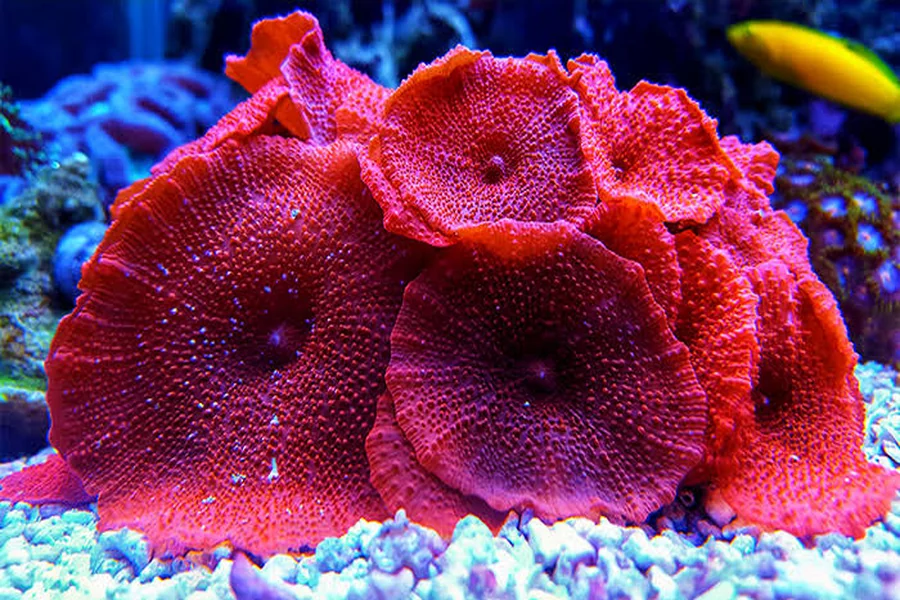
3. Mushroom Corals (Discosoma and Rhodactis)
Mushroom corals may be the single most bulletproof coral in the hobby. They thrive in low to moderate light, prefer gentle flow, and actually tend to do better in tanks with slightly higher nutrients, which describes a lot of beginner setups. They come in a huge variety of colors and textures, from smooth red discosoma to bumpy, metallic rhodactis and hairy mushrooms.
They also propagate easily, often splitting on their own or dropping small daughter colonies. For a new reef keeper who wants near-guaranteed success, mushrooms are hard to beat.
4. Kenya Tree Coral
Kenya tree is a soft coral that looks like a small, swaying tree with fuzzy branches. It is extremely undemanding, tolerating a wide range of lighting and flow, and it does not require any special feeding. It gets much of its energy from light and from absorbing nutrients directly from the water.
Like GSP, Kenya tree grows fast and drops frags readily, so it can spread. That makes it a great confidence builder for anyone worried they cannot keep coral alive.
5. Pulsing Xenia
Few corals are as mesmerizing as pulsing xenia, which rhythmically opens and closes its polyps as if it is breathing. It is a hardy soft coral that grows quickly and, notably, often prefers the higher-nutrient conditions of a newer tank.
The trade-off, again, is growth. Xenia can spread rapidly, so keep it contained on its own rock. But watching those polyps pulse is a genuinely magical part of the hobby, and it costs very little to get started.
6. Leather Corals (Sarcophyton, Sinularia, Lobophytum)
Leather corals are large, soft-bodied corals with a leathery texture, available as toadstools, finger leathers, and other forms. They are tough, adaptable, and impressive once they reach size, often becoming a centerpiece in a reef tank. They handle a range of light and flow and are not fussy about parameters.
Leathers periodically shed a waxy film to clean themselves, during which they may look closed up for a day or two. This is completely normal and not a sign of trouble.
7. Hammer Coral (Euphyllia)
Hammer coral is one of the best LPS corals for a beginner ready to move slightly beyond soft coral. Its long, flowing tentacles with hammer-shaped tips move gorgeously in the current, and it comes in striking colors including gold, green, and purple. It does well under moderate light and moderate flow.
Hammers do have sweeper tentacles that can sting nearby corals, so give them room. But their hardiness and dramatic movement make them a favorite first LPS.
8. Torch Coral (Euphyllia)
A close relative of the hammer, torch coral has longer, more flowing tentacles that give it a soft, glowing appearance under blue light. It shares the same forgiving care requirements, thriving in moderate light and flow. Torches are slightly more sensitive than hammers but still well within reach for an attentive beginner.
Like hammers, they can sting neighbors, so plan your placement with some spacing in mind.
9. Duncan Coral
Duncan coral is a fantastic beginner LPS because it is hardy, colorful, and one of the most food-motivated corals you can keep. It readily accepts feedings of meaty foods like mysis shrimp, which speeds up its growth and lets you watch it respond to feeding, a satisfying experience for a new hobbyist. It does well in moderate light and gentle to moderate flow.
Duncans form clusters of heads that multiply over time, so a single starter colony can grow into an impressive show piece.
A Few Tips for Success With Your First Corals
Start slow. Add one or two corals at a time so you can watch how your tank responds rather than overwhelming a young system. Dip every new coral before it goes into your display to remove hitchhiker pests, even if it came from a trusted source. Place new corals lower in the tank at first and move them up gradually if they seem to want more light, since it is easier to acclimate a coral upward than to recover one that got burned.
Give your parameters time to stabilize before reaching for the harder species. Alkalinity swings are the most common killer of coral in new tanks, so aim for consistency over chasing perfect numbers. And do not get discouraged by a loss or two. Every reef keeper has lost coral, and the ones who stick with it are simply the ones who kept learning.
Where to Start Your Coral Journey
One of the best things you can do as a new reef keeper is buy your first corals from people who actually keep reef tanks and can steer you toward the right beginner species for your setup. A knowledgeable saltwater store will tell you honestly whether a coral suits your lighting, your flow, and your experience level, rather than just ringing up a sale.
If you are looking to shop online or local in the Columbus area, Matt’s Corals & Service in Gahanna is a specialty saltwater shop focused on coral, quality livestock, and reef tank maintenance. Whether you are picking out your very first zoanthid or building toward a full reef, having a local source that knows their corals makes the learning curve a lot friendlier.
Matt’s Corals & Service
265-B Lincoln Circle
Gahanna, OH 43230
Phone: (614) 532-8699
Website: https://mattscorals.com


