Bonsai Tree Watering: Why Your Tree Keeps Dying (And How to Actually Fix It)
Bonsai tree watering is the single biggest reason bonsai trees live or die. Not sunlight. Not the soil blend. Not even the pot you spent too much on. Water. Most beginners either drown their tree or let it go thirsty, then spend weeks confused about why the leaves are dropping. This guide clears that up for bonsai care watering. You’ll know exactly when to water, how much & how to read your tree so it basically tells you what it needs.
Let’s get into it.
What Bonsai Tree Watering Actually Means (And Why It’s Different)
The one thing most people overlook is the fact that bonsai trees have very little soil to work with in their pots. It’s a small soil sample and dries out much quicker than a normal pot plant. A houseplant can do without watering for a few days, and hardly notice. That’s not what a bonsai can do. It’s for this reason that bonsai tree watering is not a “water it Sunday” type of task. An on-going check-in and daily routine – much like feeding the pet.
You can see it after a couple days. Leaves curl up. Tips go brown. Growth just stops. If you nail it, however, you’ll have a tree that is lush and full-fledged in no time.
So How Often Should You Actually Water?
Honestly, there’s no fixed schedule, and that trips up a lot of beginners who want a clean answer. It depends on the species, the pot, the soil mix, the season, even which room the tree sits in.
Forget the calendar. Use your finger instead. Push it about half an inch into the soil. Dry? Water it. Still damp? Leave it another day and check again.
In warmer months, a lot of bonsai want water once a day, sometimes more. Cooler months, that can drop to two or three times a week. Outdoor trees in summer heat might need it twice a day. There’s no trick to shortcut this — you check the soil, and the soil does the talking.
How to Water a Bonsai Tree the Right Way
Most people water bonsai the same way they’d water a windowsill plant, and that’s the mistake. Here’s what actually works.
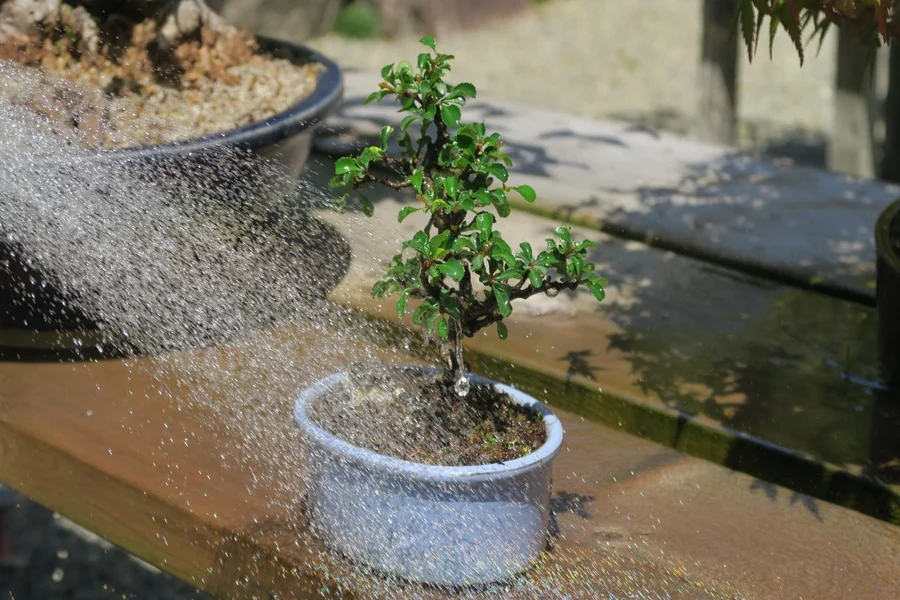
- Soak it until water runs out the bottom. A quick splash on top barely reaches the roots deep in the pot. Pour slowly; keep going until you see water draining freely.
- Give it a second pour. Wait about thirty seconds, then water again. That second round hits pockets the first one missed, especially with tightly packed roots.
- Skip cold water. Straight from the tap in winter, it can shock the roots. Let it sit out for an hour if your water runs cold.
- Water the soil, not the leaves. A light mist looks nice on camera but does almost nothing for the roots that actually need it.
A real soak-and-drain beats a light daily sprinkle every single time. Roots need actual moisture, not a damp top layer.
Overwatering vs Underwatering: How to Tell
Your tree will show you what’s wrong, if you know what you’re looking at.
| Sign | Overwatering | Underwatering |
| Leaves | Yellow, soft, drooping | Brown, dry, crispy at the edges |
| Soil | Always wet, kind of musty smell | Pulling away from the pot edges |
| Roots | Dark, mushy, rotten smell | Dry and brittle |
| Growth | Stalls out, leaves fall off | Slows down, tips curl inward |
Catch overwatering early and just back off, let the soil dry between waterings. Catch underwatering early and soak the pot in a shallow tray for about ten minutes so it can rehydrate properly.
Watering Changes With the Seasons
Treating every month the same is a trap a lot of people fall into.
Spring — growth picks up, so water needs go up too. Check daily.
Summer — heat and sun pull moisture out fast. Outdoor trees might need water twice a day. Indoor ones still need a daily look.
Fall — growth slows down. Ease off the watering, but don’t let the soil go bone dry either.
Winter — a lot of bonsai go semi-dormant. Water way less, maybe once or twice a week, but don’t stop. Even dormant roots need some moisture to stay alive.
Does the Soil Mix Actually Matter?
Yes, more than people would expect. Bonsai soil is not an ordinary potting soil. It is typically a blend such as akadama, pumice, and lava rock, designed to drain rapidly and yet still retain some water in the root zone.
If it drains too quickly, water is not retained and will pass through the mix regardless of how much water you put on the soil. When it is overfilled, the roots will lie in soft soil and begin to rot. A good mix makes bonsai tree watering actually work the way it’s supposed to.
That’s probably more of a problem with regular potting soil than watering habits.
Tools That Make This Easier
You don’t need much, but a few things help.
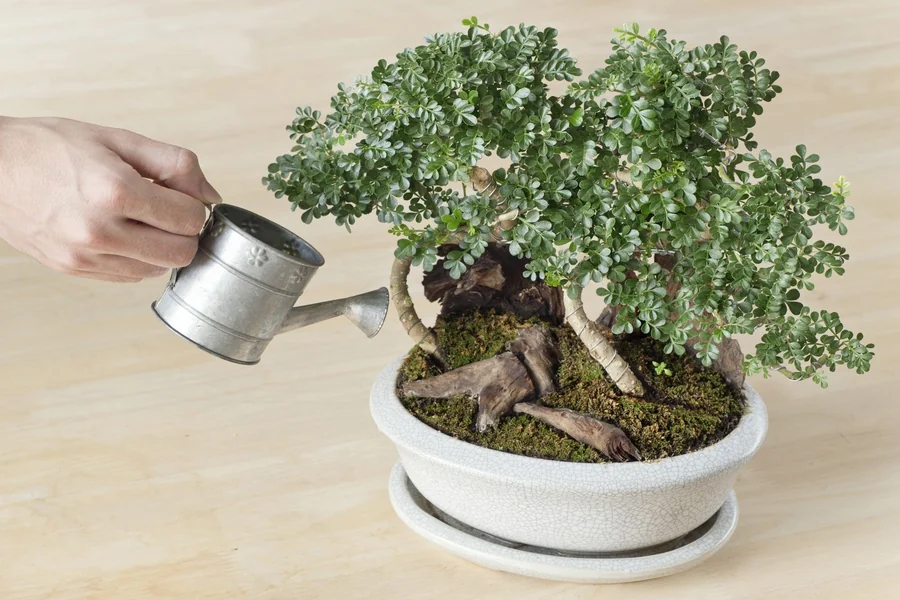
- Watering can with a fine rose head — spreads water gently so soil doesn’t wash out of the pot.
- Moisture meter — good for beginners who don’t trust the finger test yet.
- Humidity tray — a shallow tray with pebbles and water under the pot, raises humidity without overwatering the roots.
- Chopstick or skewer — push it in, pull it out. Damp soil clings to it. Dry soil doesn’t.
Mistakes People Keep Making
Watering on a fixed schedule. Trees don’t check calendars. Weather and humidity change how fast soil dries out.
Only wetting the top layer. This trains roots to stay shallow instead of growing deep and strong.
Cold tap water. Can stress roots, especially in winter.
Ignoring pot size. Small pots dry out way faster. A tiny mame bonsai might need water more often than the big tree sitting right next to it.
Letting the pot sit in standing water. Keeps roots wet around the clock and basically invites root rot.
Indoor vs Outdoor Watering
Indoor bonsai live in a steadier environment, but indoor air runs drier than you’d think, especially with heating or AC running. Check indoor trees daily, and pay extra attention if they’re near a vent or radiator.
Outdoor bonsai deal with sun, wind, and actual rain. Wind and direct sun dry soil out fast, so outdoor trees often need more water during the growing season. And rain doesn’t always let you off the hook — a light drizzle rarely makes it down to the roots in a shallow pot, so check the soil even after it rains.
Short Answers
| Question | Short Answer |
| How do I know when to water my bonsai? | Push a finger into the soil. Dry half an inch down? Water it now. |
| Can I overwater a bonsai tree? | Yes, easily. It’s the most common cause of bonsai death, usually root rot. |
| How often should indoor bonsai be watered? | Roughly every one to two days, but always check the soil first. |
| Is tap water safe for bonsai? | Mostly yes. Let it sit for an hour so it reaches room temperature. |
| Should I mist my bonsai every day? | Misting helps humidity but doesn’t replace watering the soil itself. |
| Why are my bonsai leaves turning brown? | Usually underwatering, though too much sun or low humidity can do it too. |
| Can I use ice cubes to water bonsai? | No. Cold shock can hurt the roots. Stick to room temperature water. |
Final Thoughts
Bonsai tree watering stops being confusing the second you stop guessing and start checking. Touch the soil. Water deep when it’s dry. Let it fully drain. Adjust as the seasons shift. That’s really the whole system, and it works for almost any species you’re growing.
Your tree’s already telling you what it needs. You just have to actually check in.
FAQs:
How much water does a bonsai tree need?
Enough to fully soak the root ball until it drains from the bottom. Depends on pot size and soil.
What happens if I underwater my bonsai?
Leaves go brown and crispy, growth slows down, and the tree may drop leaves to save moisture.
What happens if I overwater my bonsai?
Roots start to rot, leaves turn soft and yellow, and the tree can die within weeks if it’s not caught.
Do all bonsai species need the same watering routine?
No. Juniper, ficus, and maple all want different moisture levels. Look up your specific species.
Can I just set a daily reminder to water it?
You can, but check the soil first anyway. Watering by feel beats watering by clock, always.