Wisconsin Deer Hunting Zones: Complete Guide for Seasons, Maps, Rules & Best Areas
Knowing the system of wisconsin deer hunting zones is important for anyone planning on hunting whitetails in the state. Wisconsin is divided into management zones within each management unit, to regulate the harvest of the animals, promote a balance of the deer herd, and provide a better opportunity for hunting on both public and private lands.
As a new hunter or as a returning resident hunter, familiarizing yourself with the Wisconsin deer zones will help you select which season, tag, and hunting area you may want to hunt in.
In this guide, you will learn:
- How Wisconsin deer hunting zones work
- Zone maps and county structure
- The difference between units and zones
- Season dates and weapon types
- Public land opportunities
- Rules for antlerless deer tags
- Tips for choosing the best hunting area
What Are Wisconsin Deer Hunting Zones?
The Wisconsin deer hunting zones refer to the management areas that have been established by the Wisconsin Department of Natural Resources (DNR).
Each zone may have:
- Different deer densities
- Separate season structures
- Unique tag availability
- Specific weapon regulations
- Public and private land rules
The state uses these zones to balance:
- Deer populations
- Crop damage concerns
- Forest regeneration
- Hunting pressure
- Conservation goals
Hunters must know the exact zone and unit where they plan to hunt before buying licenses or applying for permits.
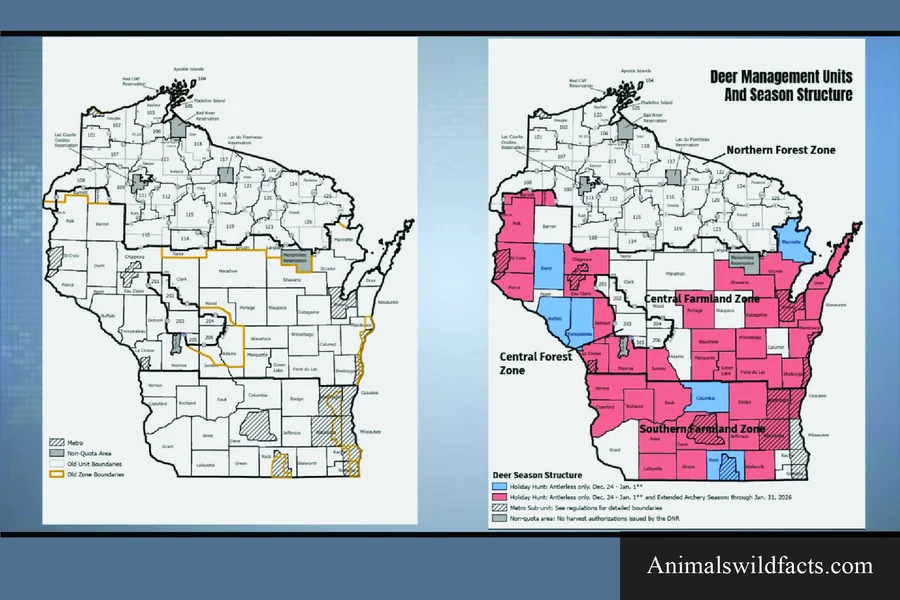
Wisconsin Deer Hunting Zones Overview
Here is a simplified breakdown of the main deer hunting zones in Wisconsin.
| Zone Type | Main Purpose | Common Hunting Methods |
| Northern Forest Zone | Population control in forest regions | Gun, bow, crossbow |
| Central Forest Zone | Mixed forest and farmland hunting | Archery and firearm |
| Central Farmland Zone | Higher deer density management | All legal methods |
| Southern Farmland Zone | Intensive population control | Extended opportunities |
| Metro Sub-Units | Urban deer control | Archery-focused hunting |
These zones are divided into Deer Management Units (DMUs).
Wisconsin Deer Management Units Explained
Wisconsin also uses Deer Management Units within the larger zone structure. Most DMUs follow county boundaries.
A Deer Management Unit determines:
- Antlerless tag availability
- Harvest quotas
- Season restrictions
- Bonus permit rules
For example:
| County | Zone | Typical Deer Density |
| Adams | Central Farmland | Moderate |
| Buffalo | Southern Farmland | High |
| Sawyer | Northern Forest | Lower |
| Dane | Southern Farmland | High |
| Marathon | Central Forest | Moderate |
Hunters often search county-specific regulations because deer activity and permit availability can change every season.
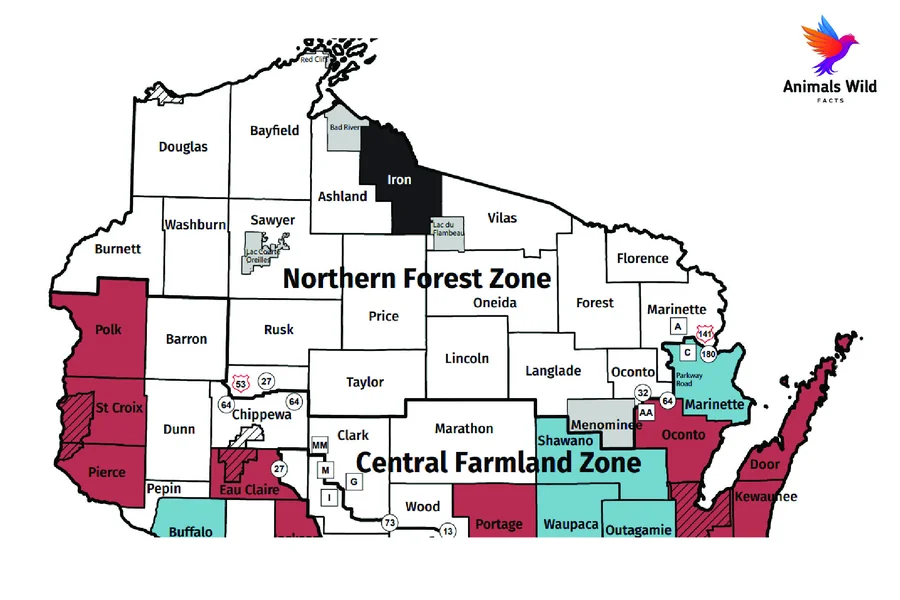
Wisconsin Deer Hunting Zones Map Basics
When reading a Wisconsin deer hunting map, you will usually see:
- County outlines
- Public hunting land
- State forests
- Wildlife areas
- Metro hunting subzones
- Public access routes
Most hunters use the Wisconsin DNR online map before the season begins.
Read More: Animals With Big Ears
Important Map Features
| Feature | Why It Matters |
| Public Land Boundaries | Prevent trespassing |
| DMU Numbers | Needed for tags |
| Road Access | Easier scouting |
| Water Sources | High deer activity |
| Forest Cover | Bedding areas |
Understanding maps early can save time during scouting season.
Wisconsin Deer Hunting Seasons by Zone
Different zones can have different seasonal opportunities.
| Season | Common Timing |
| Archery and Crossbow | September to January |
| Youth Hunt | October |
| Gun Deer Season | November |
| Muzzleloader | Late November to December |
| Antlerless Hunt | Select periods |
| Holiday Hunt | Late December in some zones |
Season dates may change each year slightly.
Always verify official regulations before hunting.
Northern Forest Zone Hunting
The Northern Forest Zone covers large wooded areas in northern Wisconsin.
What Makes It Different?
- Lower deer density
- Larger forest blocks
- Harder tracking conditions
- Mature buck potential
Hunters here often rely on:
- Scouting
- Bedding area identification
- Travel corridor setups
- Snow tracking during late season
Popular Counties in the Northern Forest Zone
| County | Known For |
| Sawyer | Public land access |
| Vilas | Thick forest habitat |
| Ashland | Remote hunting |
| Iron | Mature buck potential |
This zone is popular with hunters looking for a traditional Northwoods experience.
Southern Farmland Zone Hunting
The Southern Farmland Zone usually holds the highest deer numbers in Wisconsin.
Why Hunters Like This Zone
- Better deer visibility
- Strong food sources
- Agricultural fields
- High antlerless opportunities
Common food sources include:
- Corn
- Soybeans
- Alfalfa
- Winter wheat
Top Southern Counties
| County | Hunting Reputation |
| Buffalo | Trophy bucks |
| Grant | Consistent harvests |
| Iowa | Farmland deer patterns |
| Dane | Strong deer population |
This zone is often considered the best for seeing multiple deer per hunt.
Central Wisconsin Deer Hunting Areas
Central Wisconsin offers a mix of farmland and forest.
Hunters often choose this area because it provides:
- Balanced deer numbers
- Public land options
- Easier travel access
- Diverse terrain
Common Hunting Locations
| Area | Terrain Type |
| Adams County | Pine and farmland |
| Juneau County | Mixed forest |
| Wood County | Marsh and timber |
| Jackson County | Hills and woods |
Many hunters consider central Wisconsin underrated compared to southern trophy areas.
Metro Sub-Units in Wisconsin
Metro sub-units exist near populated areas where deer populations remain high.
These areas often allow:
- Longer archery seasons
- Additional antlerless permits
- Special access programs
Metro Hunting Advantages
- Reduced hunting pressure
- Higher deer density
- Longer season access
However, hunters must follow local firearm and safety restrictions carefully.
Best Public Land for Wisconsin Deer Hunting
Public land hunting remains popular across the state.
| Land Type | Description |
| State Forests | Large wooded areas |
| Wildlife Areas | Managed habitat |
| County Forests | Public access hunting |
| Federal Land | National forest access |
Popular Public Hunting Locations
| Property | Region |
| Chequamegon-Nicolet National Forest | Northern Wisconsin |
| Black River State Forest | Central Wisconsin |
| Kettle Moraine State Forest | Southeast Wisconsin |
Scouting public land early gives hunters a major advantage.
Wisconsin Deer Hunting Regulations
The Wisconsin DNR updates regulations every year.
Important regulations include:
- Blaze orange requirements
- Weapon restrictions
- Shooting hours
- Tag validation rules
- Chronic wasting disease (CWD) regulations
Hunters should always review current rules before opening day.
Bonus Antlerless Tags in Wisconsin
One major topic tied to wisconsin deer hunting zones is bonus antlerless tags.
Some zones offer:
- Unlimited bonus permits
- Limited county permits
- No extra permits
Availability depends on deer population goals.
Why Bonus Tags Matter
- Help manage herd size
- Increase meat harvest opportunities
- Encourage population balance
Hunters in farmland zones often have more bonus tag opportunities than forest zones.
Best Time to Hunt Wisconsin Deer
Timing can matter as much as location.
| Timeframe | Why It Works |
| Early October | Predictable feeding patterns |
| Late October | Pre-rut movement |
| Early November | Rut activity |
| Gun Opener | Increased movement |
| Late Season | Food-focused deer |
Weather changes can also affect deer movement significantly.
Cold fronts often increase daytime activity.
How to Choose the Right Wisconsin Deer Hunting Zone
Choosing the right zone depends on your goals.
If You Want Higher Deer Numbers
Choose:
- Southern Farmland Zone
- Agricultural counties
- Metro sub-units
If You Want Remote Hunting
Choose:
- Northern Forest counties
- Large public forests
- Lower-pressure areas
If You Want Public Land Access
Focus on:
- County forests
- State wildlife areas
- National forest land
Wisconsin Deer Hunting Zone Strategy Tips
Scout Food Sources
In farmland areas deer often feed near crops before dark.
Hunt Funnels
Natural travel routes improve shot opportunities.
Use Wind Direction
Wisconsin deer react quickly to scent pressure.
Watch Rut Timing
The rut changes buck movement dramatically.
Study Hunting Pressure
Public land deer move differently after opening weekend.
Common Mistakes Hunters Make
| Mistake | Result |
| Ignoring DMU rules | Tag violations |
| Poor scouting | Fewer sightings |
| Hunting wrong wind | Deer detect hunters |
| Overhunting stands | Reduced activity |
| Not checking maps | Property line issues |
Preparation matters more than expensive gear.
Wisconsin Deer Hunting Zone License Requirements
Most hunters need:
- Wisconsin hunting license
- Deer license
- Appropriate tags
- Hunter education certification
Nonresidents may need additional permits.
Always carry proof of licensing while hunting.
Wisconsin Deer Population Trends
Wisconsin continues to maintain one of the strongest deer hunting traditions in the United States.
Population trends vary by region:
| Region | Current Trend |
| Northern Forest | Stable to lower |
| Central Areas | Stable |
| Southern Farmland | Higher density |
Weather, winter severity, predators, and habitat changes all affect annual numbers.
Public vs Private Land Hunting in Wisconsin
Public Land Pros
- Lower cost
- Large access areas
- Flexible hunting locations
Public Land Cons
- More pressure
- Harder deer patterns
- Competition during gun season
Private Land Pros
- Better deer consistency
- Lower pressure
- More control over habitat
Private Land Cons
- Limited access
- Leasing costs
- Permission challenges
Many hunters combine both strategies during the season.
Wisconsin Deer Hunting Zones and CWD
Chronic Wasting Disease remains an important issue in Wisconsin deer management.
Some counties require:
- Mandatory testing
- Carcass transport restrictions
- Special harvest rules
Hunters should check local CWD regulations before transporting harvested deer.
Wisconsin Deer Hunting Zones Quick Answers
| Question | Short Answer |
| What are Wisconsin deer hunting zones? | They are state-managed hunting regions used for deer population control and season regulations. |
| How many deer zones are in Wisconsin? | Wisconsin has multiple management zones divided into Deer Management Units by county. |
| Which Wisconsin zone has the most deer? | Southern Farmland zones usually have the highest deer densities. |
| Can nonresidents hunt Wisconsin deer? | Yes. Nonresidents can buy hunting licenses and deer permits. |
| Where is the best public land deer hunting in Wisconsin? | Northern forests and central state lands offer strong public hunting opportunities. |
| What is a Wisconsin DMU? | A Deer Management Unit controls harvest quotas and permit rules. |
| Are bonus antlerless tags available statewide? | No. Availability depends on deer population goals in each county. |
| When is Wisconsin gun deer season? | It usually begins in November each year. |
| Is baiting legal in Wisconsin? | Rules vary by county and disease management regulations. |
| What zone is Buffalo County in? | Buffalo County is in the Southern Farmland Zone. |
Related terms for Wisconsin Deer Hunting Zones
- Wisconsin deer hunting map
- Wisconsin DMU map
- Wisconsin hunting regulations
- Wisconsin deer season dates
- Wisconsin public hunting land
- Wisconsin whitetail hunting
- Wisconsin buck hunting
- Wisconsin DNR deer hunting
- Wisconsin antlerless tags
- Wisconsin hunting units
- Wisconsin deer management zones
- Wisconsin archery deer season
- Wisconsin firearm deer season
- Wisconsin hunting permits
- Wisconsin hunting counties
Final Thoughts
Knowing Wisconsin deer hunting zones is a big step towards hunting success. Differences in terrain, deer numbers, deer pressure and deer permits exist between the regions.
In general, the deer are more actively seen and active in the farmland counties of the south. Northern forest areas are a good place for remote hunting and mature bucks. Central Wisconsin provides a balance for hunters with an interest in both.
Before the season starts:
- Review current Wisconsin DNR regulations
- Study maps carefully
- Scout early
- Check DMU rules
- Confirm tag availability
The more you understand Wisconsin deer hunting zones, the easier it becomes to choose the right location and hunt with confidence.
FAQs:
What are Wisconsin deer hunting zones?
Wisconsin deer hunting zones are state-managed regions used to control deer populations and hunting regulations.
What is a Wisconsin DMU?
A Wisconsin DMU is a Deer Management Unit that sets harvest limits and permit rules by county.
Which Wisconsin deer zone is best?
Southern Farmland zones are often considered the best because they have higher deer populations and better visibility.
Where can I find Wisconsin deer hunting maps?
Wisconsin DNR deer hunting maps are available online and show DMUs, public land, and hunting boundaries.
Are bonus antlerless tags available in Wisconsin?
Yes. Some Wisconsin deer hunting zones offer bonus antlerless permits based on deer population goals.
Can nonresidents hunt deer in Wisconsin?
Yes. Nonresidents can purchase Wisconsin hunting licenses and deer permits.
When does Wisconsin deer season start?
Archery season usually starts in September while the gun deer season typically begins in November.