Top 20 Animals With Long Neck: A Wildlife Guide To Nature’s Tall Lookouts
Animals with long neck stand out because their height changes how they live, eat, and survive. These animals have necks that they use to access food, survey danger and move in balance as they navigate across open savannas to wetlands and mountain grasslands. Others use them, with the help of long necks, to browse leaves high in the air, others to hunt, to scan broad areas, or to feed in the water, and so forth.
This article explores 20 animals with long neck, covering mammals and birds from different parts of the world. Every animal is described in terms of its day-to-day activity, its natural environment and diet, with language that is easily understandable and the facts are easily amusing. This guide is written in a tranquil wildlife tone, and it dwells on actual motion, routines of nature and the supportive role in which the long necks assist animals to adjust to their surroundings. It is simple to read and contains information and written in a way that it does not appear to be a technical report, but more like an article on nature.
???? Top 20 Animals With Long Neck
| No. | Common Name | Scientific Name |
| 1 | Giraffe | Giraffa camelopardalis |
| 2 | Swan | Cygnus olor |
| 3 | Camel | Camelus dromedarius |
| 4 | Okapi | Okapia johnstoni |
| 5 | Llama | Lama glama |
| 6 | Alpaca | Vicugna pacos |
| 7 | Emu | Dromaius novaehollandiae |
| 8 | Ostrich | Struthio camelus |
| 9 | Heron | Ardea cinerea |
| 10 | Flamingo | Phoenicopterus roseus |
| 11 | Turkey | Meleagris gallopavo |
| 12 | Black-necked Stork | Ephippiorhynchus asiaticus |
| 13 | Mute Swan | Cygnus olor |
| 14 | Black Stork | Ciconia nigra |
| 15 | Horse | Equus ferus caballus |
| 16 | Zebra | Equus quagga |
| 17 | Peacock | Pavo cristatus |
| 18 | Turkey Vulture | Cathartes aura |
| 19 | Anhinga | Anhinga anhinga |
| 20 | Great Blue Heron | Ardea herodias |
Detailed Look At Animals With Long Neck
???? Giraffe
Scientific name: Giraffa camelopardalis
Class: Mammalia
Diet: Herbivore
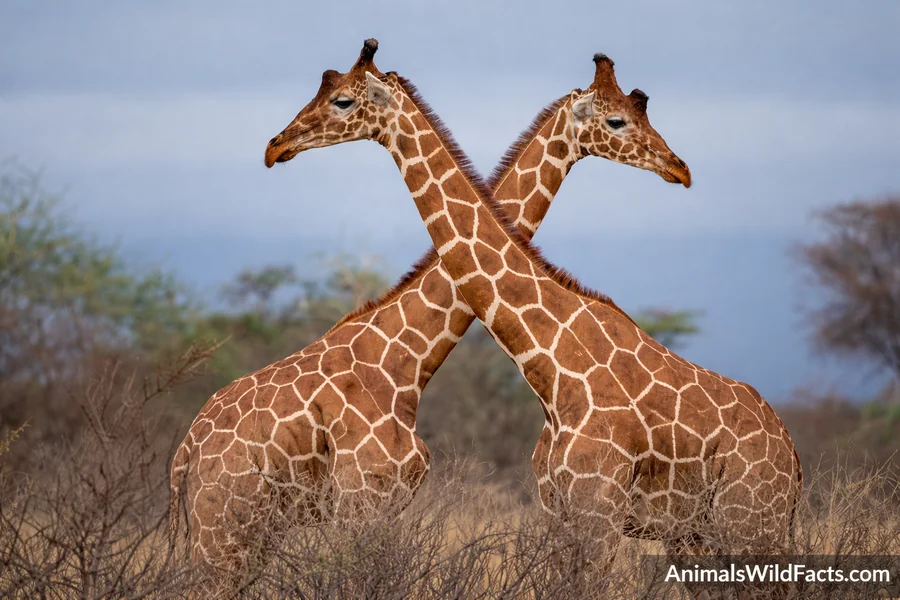
Giraffes are plains giants in Africa. They inhabit free woodlands and grasslands in Kenya and South Africa. They walk with long strides. Their necks are elevated above trees. This provides them with an access that few animals can access. They feed on leaves and buds. Their favourite trees are acacia trees.
Giraffe behavior is gentle. They move in loose herds. There is no single group that remains unaffected. Mothers care for calves. The infant can stand after an hour of birth. It is that speed of strike in a lion and hyena land. Giraffes that are adults stare at each other with cool eyes. They maintain a wide perspective of the environment.
Giraffes drink water either by getting their legs wide or kneeling. This looks awkward. But they manage. Unless food is moist, they may go days without drinking. A giraffe heart works hard. It circulates the blood to the head using a long neck. To be able to do that, it is high blood pressure.
Giraffes are found in a large area of sub-Saharan Africa. They like open spaces where the tall lacy trees are found. You will find them standing in the heat of the day. They seem still. But they are always alert.
Fun fact: Giraffes only need to drink once every few days. They get most water from leaves.
— Their tongue can be nearly 20 inches long.
Read Also: Top 25 Animals With Long Legs
???? Swan
Scientific name: Cygnus olor
Class: Aves
Diet: Omnivore (plants, small aquatic life)
Swans are long-necked curved water birds. You find them in lakes and slow rivers in Europe and Asia. They are like silent boats that oar on water. Their necks have curvy S-shapes. They get their food by plunging those necks in water.
Swans feed on water plants, roots, pieces of insects or small fish. On land, they can be seen walking along the edge of the water. During spring, swans nest in great nests around reeds. Parents of both sexes are involved in the protection of eggs and offspring. Cygnets stay close to adults. His parents flap their wings and hiss. They can be protective.
In flight, swans are strong. Their wings swing lethargically and broad. They are long distance migrators. Some flocks fly at night. They form a V shape. This saves energy.
The swans are found in various locations. Cold winters are experienced in Northern Europe and Asia. During winter swans congregate on open water which remains free of ice. During summer they nest in shallow marshes. Individuals are aware of their calls. They are loud. Their songs echo over water.
Fun fact: Swans can travel hundreds of miles in migration.
— Their wingspan can be over 2 meters wide.
???? Camel
Scientific name: Camelus dromedarius
Class: Mammalia
Diet: Herbivore
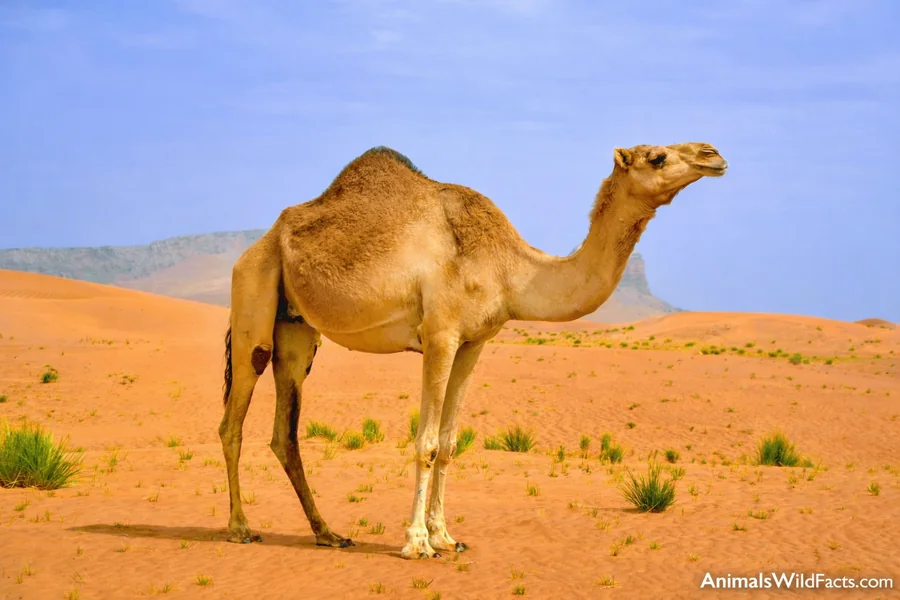
Camels are desert animals with long necks that help them reach sparse food. The camel of the dromedary has a single hump. These are located in the Middle East and North African deserts. Their necks are gilled and mobile. This allows them to access thorny bushes and dry grass.
Camels eat tough plants. They are able to consume what other animals do not consume. Their body manages adverse environments. Their fat is stored in their hump and not water. That assists them in starving or thirsting. The length of their legs and neck ensures that they are not touching hot sand.
Camels move in caravans. They can walk for hours. Their feet are sprawled out in the sand. They blink to keep out dust. When they are resting they sit with legs crossed. They become spectators of heat waves ascending over the dunes.
When possible, camels drink water quickly. A single beverage can keep them going days. They sleep standing or lying. They cool themselves after allowing blood to flow about the skin on legs and neck.
Another animal that does not prosper is the camel. They deal with hot, cold, wind and hunger. They are connected with life in the desert.
Fun fact: A camel can drink over 100 liters of water in one session.
— Their long neck helps them reach food others can’t.
Read Also: Top 20 Animals With Short Legs
???? Okapi
Scientific name: Okapia johnstoni
Class: Mammalia
Diet: Herbivore
The okapi inhabits the rain forests of central Africa. Its neck is longer than a majority of the forest mammals. This aids it in accessibility of leaves in tall trees. Okapis are shy. They hide in the shade. It is a quiet walk on spongy ground.
Okapis consume fruit, leaves and buds. They browse low and high. Their tongues are long. It reaches between thorns. They can strip leaves clean.
Okapis identify tracks in the woods. They make trails. These paths are followed by other animals. They rest in cool shade by day. At night they move. They have large ears. These help them hear danger.
The forest keeps them hidden. They avoid open spaces. They breed slowly. Mothers keep one calf close. The young hide takes his stand alone. They come back to the mother to suckle.
The Okapis inhabit rainy environments. Brooks flow over moss trees. Ferns cover the ground. Life here is quiet. Few animals cross their path.
Fun fact: Okapi tongues are so long they clean their eyes and ears.
— They were unknown to science until the 20th century.
???? Llama
Scientific name: Lama glama
Class: Mammalia
Diet: Herbivore
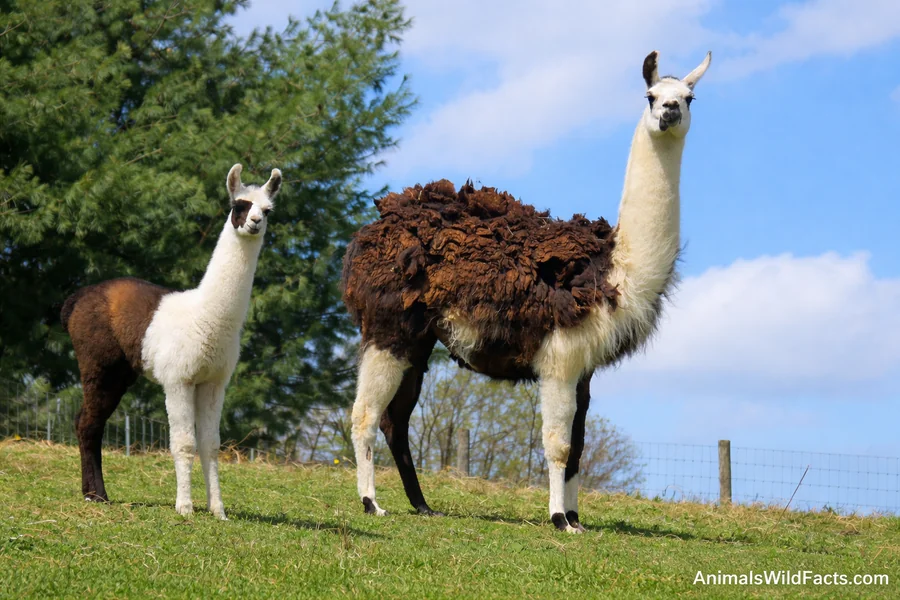
Llamas live in the high Andes. They have long necks and are on the alert. They feed on rolling hill sides and mountainous plateaus. Llamas consume herbs, grass, and leaves. They select plants which grow in thin mountain air.
Llamas are calm but watchful. They move in groups. They communicate with hums. A humming llama has nothing to worry about. It is calm. Llamas when frightened call out in a high voice. They spit whenever they are threatened.
Llamas carry loads. They have been in use by people since time immemorial. The padded feet of them grasp mountain rocks. They ascend huge mountainous paths with lightness.
Llamas inhabit places that are not conducive to other animals. It is natural to have frost, wind, and cold. They are warm with their thick wool. They nestle close at night. Through day-time they feed in open grass.
Llamas are curious. They come in a gradual and gentle manner. Their noses are sniffing tenderly.
Fun fact: Llamas can learn names and respond to them.
— Their necks give them a wide view of mountain slopes.
Read Also: Top 20 Animals With Big Ears
???? Alpaca
Scientific name: Vicugna pacos
Class: Mammalia
Diet: Herbivore
Alpacas are mountain animals with long necks and calm behavior. They inhabit the elevated areas of South America principally Peru, Bolivia, and Chile. They are surrounded by open grassland. It is a cold wind blowing over the hills. Alpacas graze near each other.
Their neck is long hence they can reach grass without moving too far. They eat slowly. They chew for long periods. This conserves energy at high-altitude. Alpacas are social. They live in herds. Another alpaca will be on guard when the other alpacas are feeding.
The Alpacas talk in whimpering tones. The meanings of these sounds are comfort or slight worry. In case of danger they raise their heads and gaze. They may move as one group. Their fleece keeps them warm. Human beings have been raising alpacas to get wool.
They sleep in short periods. At night, they gather close. They rest and graze throughout the day. Alpacas avoid conflict. They do not argue much when they are not in distress. Mothers stay close to young. Babies learn fast in the herd.
Alpacas inhabit mountain valleys and open plains which are dry. Rain is low. Vegetation is short. They have a long neck that provides a stable sight of a large territory.
Fun fact: Alpaca fleece has no lanolin and is safe for people with allergies.
— Their neck posture helps them watch for predators.
???? Emu
Scientific name: Dromaius novaehollandiae
Class: Aves
Diet: Omnivore
The emu is a long-necked, tall bird having strong legs. It lives across Australia. It is found in grasslands, open forests and dry plains. Emus cannot fly. They run fast instead. When they move, their neck remains erect.
Emus consume seeds, plants, insects and small animals. They ingest stones so that they can assist in grating food. Their lengthy neck allows them to access low plantations and high leaves. They walk great distances to seek food and water.
Emus tend to move in poor groups. They follow rain patterns. Emus appear when the food grows following rain. The male constructs a nest during the breeding season. He hatches the eggs and takes care of the chicks. This is rare among birds.
Emus handle heat well. They are active at the beginning of the day. At midday they rest. They become inanimate and decrease movement. Their transport of temperature is through feathers.
you will see emus going over open country by regular strides. Their heads move back and forth walking. They are inquisitive yet cautious.
Fun fact: Male emus raise the chicks alone for months.
— Their neck helps them spot danger from far away.
???? Ostrich
Scientific name: Struthio camelus
Class: Aves
Diet: Omnivore
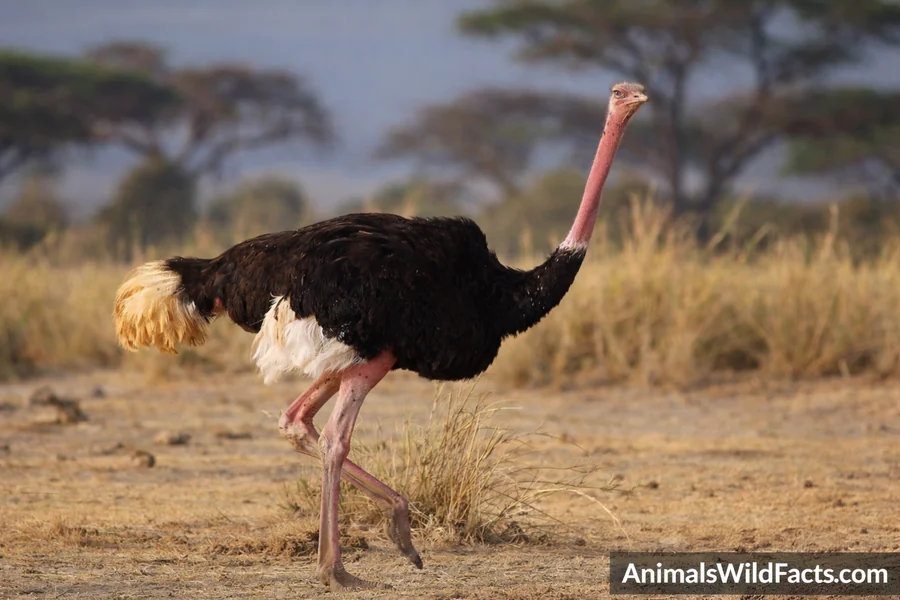
Ostrich is the tallest bird in existence. It stretches with a long neck above grass and shrubs. Ostriches live in Africa. They like open savanna and dry plains. Their elevation enables them to have a clear view of the predators.
Ostriches are seed predators, plant predators, insect predators and small animal predators. Their neck is bent to feed and is up in no time to survey the land. They ingest stones in order to digest food. They are able to spend days without drinking.
Ostriches live in groups. A single male serves a number of females. They have one nest ground scraped. Eggs are large. The male guards them at night.
Ostriches run when danger is at hand. They can reach high speeds. Their legs are strong. One kick is enough to stop a predator. They do not hide their heads. That is a myth.
Ostriches inhabit hot and dry areas. Releasing heat through the naked skin of legs and neck cools their bodies.
Fun fact: Ostrich eyes are larger than their brains.
— Their neck acts like a lookout tower.
Read Also: Top 20 Animals With Small Ears
???? Heron
Scientific name: Ardea cinerea
Class: Aves
Diet: Carnivore
Heros are long necked water birds with sharp beaks. They inhabit around rivers, lakes and wetlands. You find them standing in shallow water. Their neck has a shape of S. This helps them strike fast.
The herons feed on fish, frogs and insects. They wait. They watch. then in a single swing they attack. Their patience is famous. A heron can wait several minutes in the same place.
They nest in trees near water. Where food is near, colonies are formed. The herons fly slowly plodding along. Their neck is drawn back when they are flying.
The herons are found in Europe, Asia and Africa. They prefer calm waters. Feeding time is during the morning and evening.
Fun fact: A heron’s strike is faster than a blink.
— Their neck works like a spring.
???? Flamingo
Scientific name: Phoenicopterus roseus
Class: Aves
Diet: Omnivore
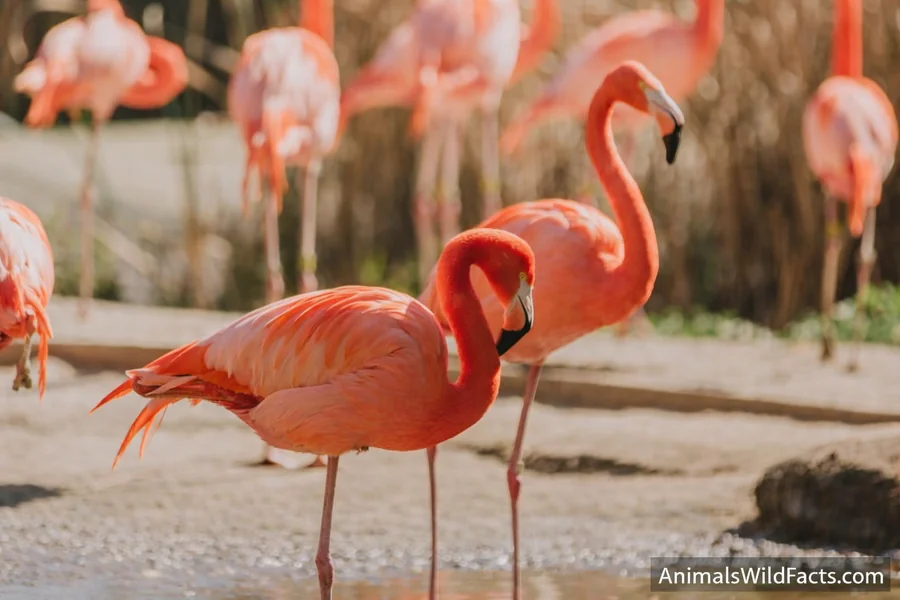
The flamingos are characterized by long necks and slender legs. They inhabit shallow lakes and salty wet lands. Large flocks are found in Africa, Asia and southern Europe.
Flamingos feed with their necks bent over. They sieve water from algae and animals. The bill is just in the right place with their neck. They often feed in groups. Many heads move together.
Flamingos breed in colonies. They build mud nests. Feedback of chicks is carried out by parents. Chicks become gray and then pink.
They inhabit open wet lands that have minimal trees. Water levels change often. Flamingos change with the change of conditions.
Fun fact: Flamingos get their pink color from food.
— Their neck lets them feed in water others avoid.
Read Also: Top 20 Animals With Long Tail
???? Turkey
Scientific name: Meleagris gallopavo
Class: Aves
Diet: Omnivore
The turkeys are long necked alert birds. Their distribution is in North America. They are well adapted to forest fringes, open woodland and grassland. As they walk, their neck is stretched forward. It withdraws as they feel threatened.
Turkeys feed on seeds, berries, insects and small reptiles. They forage on the ground. Their neck assists them in searching for food and danger simultaneously. Wild turkeys are good runners. They are also able to travel short distances in order to avoid danger.
Turkeys live in flocks. Women and young remain together. Men especially tend to make groups. In the season of mating, males are showcased. They blow up feathers, and wave tails. The color of their neck skin alters. This shows strength.
At night the turkeys roam in trees. This ensures that they are not preyed on. They proceed at a slow pace during the day through forest trails. They scratch leaves as a means of food.
Turkeys are acclimated to new land. Large urban areas are now their neighbors. Nonetheless, they like to hang around places where there is cover.
Fun fact: A turkey can run faster than a human.
— Their long neck helps them detect danger early.
???? Black-necked Stork
Scientific name: Ephippiorhynchus asiaticus
Class: Aves
Diet: Carnivore
The turkeys are long necked alert birds. Their distribution is in North America. They are well adapted to forest fringes, open woodland and grassland. As they walk, their neck is stretched forward. It withdraws as they feel threatened.
Turkeys feed on seeds, berries, insects and small reptiles. They forage on the ground. Their neck assists them in searching for food and danger simultaneously. Wild turkeys are good runners. They are also able to travel short distances in order to avoid danger.
Turkeys live in flocks. Women and young remain together. Men especially tend to make groups. In the season of mating, males are showcased. They blow up feathers, and wave tails. The color of their neck skin alters. This shows strength.
At night the turkeys roam in trees. This ensures that they are not preyed on. They proceed at a slow pace during the day through forest trails. They scratch leaves as a means of food.
Turkeys are acclimated to new land. Large urban areas are now their neighbors. Nonetheless, they like to hang around places where there is cover.
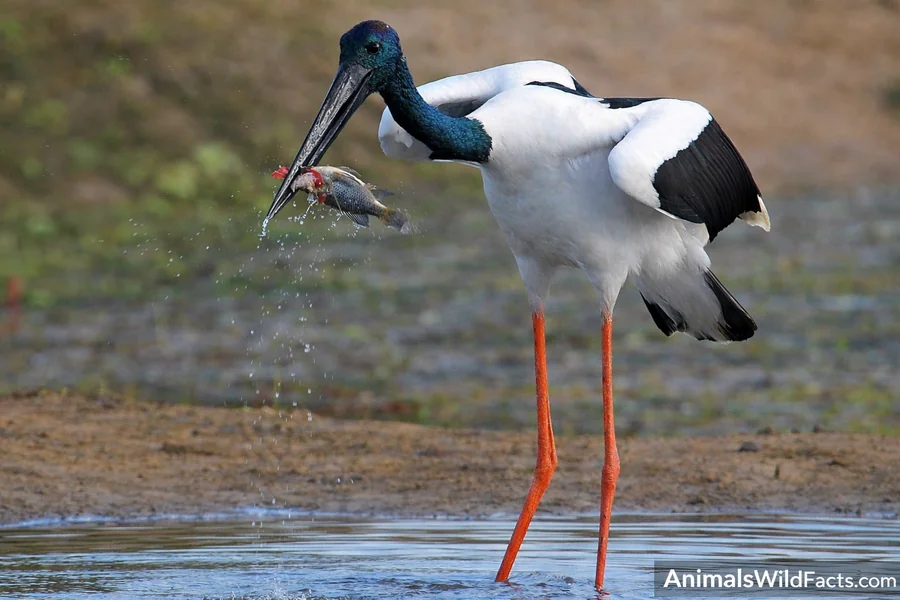
Fun fact: The Black-necked Stork is one of the largest storks in the world, with some adults reaching over 5 feet tall.
— Their long neck lets them hunt efficiently in deep water.
???? Mute Swan
Scientific name: Cygnus olor
Class: Aves
Diet: Herbivore
Mute swans are huge birds of water with long curved necks. They inhabit lakes, rivers and marshes. Their primary range is Europe and areas of Asia. They are also introduced to other areas.
they have a strong and flexible neck. It assists them in accessing sub-water plants. They feed on roots and stems. Their food-eating is apt to disturb the mud.
Mute swans form strong pairs. They protect the territory in the breeding time. Parents guard nests closely. They may chase intruders.
They swim quietly on water with grace. On land, they walk slowly. They are strong and bulky when in the sky.
Mute swans remain close to water all year round provided it is not frozen. In cold areas, they travel within a short distance.
Fun fact: Mute swans are called “mute” but they still hiss loudly.
— Their neck shape is key to feeding.
Read Also: Top 25 Animals That Eat a Lot
???? Black Stork
Scientific name: Ciconia nigra
Class: Aves
Diet: Carnivore
Black storks are timid/long-necked birds. They reside on the rivers and wetlands in a forested area. They mostly reside in Europe and Asia.
They are fish and frog and insect hunters. When hunting their neck is stretched forward. They are walking slowly over shallow water. Quick strikes bring food.
Black storks avoid people. They make nests in high trees or cliffs. They cover a long distance when migrating.
They prefer quiet habitats. Clean water matters to them. Their numbers are subject to loss of habitat.
Fun fact: Black storks avoid cities and human noise.
— Their neck helps in precise hunting.
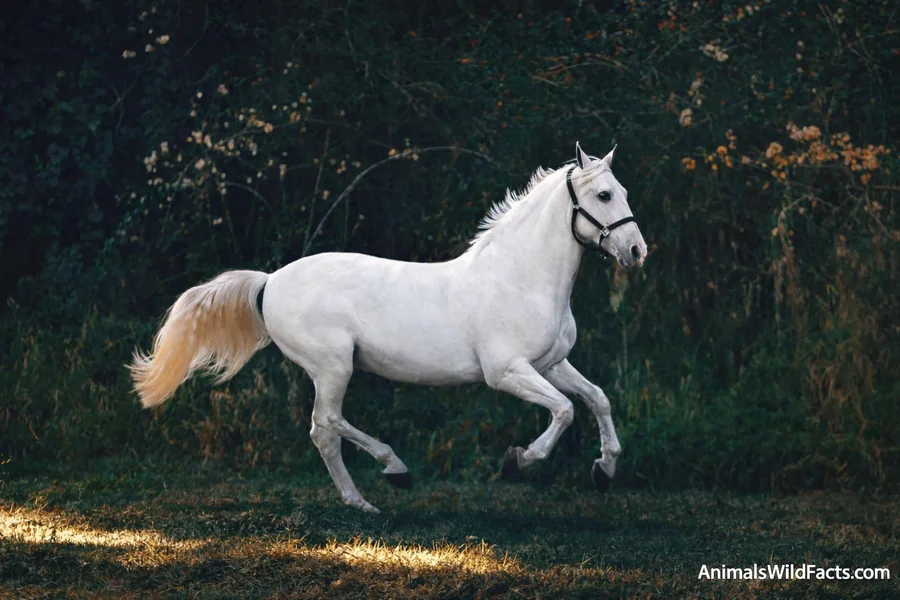
???? Horse
Scientific name: Equus ferus caballus
Class: Mammalia
Diet: Herbivore
Horses have long necks that help with balance and grazing. They live on plains, grasslands, and farms worldwide. Wild horses still roam open land.
Their neck allows them to graze low grass and lift heads fast. This helps them spot danger. Horses are social. They live in herds with clear roles.
They run to escape predators. Speed and awareness keep them safe. Their neck muscles support movement and control.
Horses sleep standing or lying down. They rest in short periods. Their neck stays relaxed but ready.
Fun fact: Horses can sleep standing due to leg locking joints.
— Their neck helps balance at high speed.
Read Also: Top 17 Striped Animals in the World
???? Zebra
Scientific name: Equus quagga
Class: Mammalia
Diet: Herbivore
Zebras are long-necked and strong-bodied grassland animals. They occupy eastern and southern Africa. They mostly live in open plains and savannas. Their neck assists them to graze and watch simultaneously.
Zebras eat mostly grass. They bent down to feed. Then they would pick them frequently to look about. Their neck movement is fast and fluent. This assists them in the detection of lions and other predators at an early age.
Zebras live in groups. These groups offer safety. One of the zebras is looking as others eat. They express themselves through phone, body language, and movement of ears. They present mood and caution in the position of their neck.
Zebras are also able to go miles in search of new grass. They follow seasonal rains. When dry periods strike, they migrate to the water points. Their bodies are heat adaptable. They sleep in the hottest hours.
Zebras sleep in short bursts. One or two remain alert. Even when they have to rest, their neck remains straight. This provides them with extensive land sight.
Fun fact: Every zebra has a unique stripe pattern.
— Their neck helps them watch while grazing.
???? Peacock
Scientific name: Pavo cristatus
Class: Aves
Diet: Omnivore
Peacocks are long necked, and strong legged birds. They occupy forests and open forests in South Asia. You always find them around villages and farms.
They have a slender upright neck. It assists them to search the ground for insects and seeds. Plants and small animals are also their food. When eating, the neck is oscillating up and down.
Display is a characteristic of male peacocks. They develop tail feathers during the breeding season. The neck remains erect during posture. This demonstrates well-being and wellness. Females watch closely.
Trees have peacocks which rest at night. This protects them against terrestrial predators. They walk a great distance in the day in search of food.
They are alert birds. Some sharp sound causes them to pause and raise their heads. Their call is loud and sharp. It warns others.
Fun fact: Peacocks can fly short distances despite long tails.
— Their neck posture is part of courtship.
???? Turkey Vulture
Scientific name: Cathartes aura
Class: Aves
Diet: Carnivore
The necks of turkey vultures are long and most of its wings are wide. They reside in the Americas. Their range includes open fields, deserts and forests.
Their neck has no feathers. This is to keep it clean during feeding. They feed on dead animals. Their olfactory sense is high. They get food high above.
The turkey vultures fly in the hot air. Their wings rarely flap. During flight, their necks shrink. It extends itself forward when it is feeding.
They roost in groups. This offers safety. They shun war and instead they fly.
The role of these birds is significant. They clear the ground by extracting the carcasses. This limits disease spread.
Fun fact: Turkey vultures can smell food hidden under trees.
— Their bare neck is a hygiene tool.
Read Also: Top 10 Animals Like Mongoose
???? Anhinga
Scientific name: Anhinga anhinga
Class: Aves
Diet: Carnivore
The anhinga is a bird with a long thin neck. It inhabits warm areas like near lakes, rivers and swamps. You see it rising above water frequently only at the head.
Its neck acts like a spear. It hunts fish underwater. A quick thrust catches prey. Then it picks the fish and flies away and eats it.
Anhingas swim low in water. Their feathers absorb water. This assists in diving and limits flight. When they get full they flutter their wings to dry.
They nest in trees near water. They coexist in colonies with other birds. They are most comfortable in a quiet environment.
Fun fact: Anhingas are called “snake birds” for their neck shape.
— Their neck is built for underwater hunting.
???? Great Blue Heron
Scientific name: Ardea herodias
Class: Aves
Diet: Carnivore
The great blue heron is a long-necked tall bird. It is distributed throughout North America. Its home is wetlands, lakes and rivers.
Its neck folds into an S shape. This allows fast strikes. It preys on small mammals, frogs and fish. It preys individually most of the time.
Herons are very long-standing. Then they give a blow in a motion. Their patience saves energy.
Their nest is in high trees along the water. When food is stable, colonies are formed. In flight, the neck pulls back.
Fun fact: Great blue herons can swallow large fish whole.
— Their neck works like a loaded spring.
Read Also: Top 13 Animals That Live in Prairies
Final Words
Animals with long necks demonstrate the way nature finds solutions to simple things. Some use height to eat. Some make use of reach to go hunting or keep watch. Far across plains to wetlands and mountains, these animals use their necks on a daily basis. They all have a different story of survival. The two of them demonstrate together how form and function are at work in nature.
FAQs:
What do we have with long-necked animals?
The long-necked animals are species which have developed a long neck to access food, scan danger or better hunt in their habitat.
Why do there exist animals with long necks?
Long necks enable animals to access higher food, observe predators at an early stage, feed underwater, or increase their balance during movement.
What is the longest bodied animal?
The giraffe has the longest neck of the living animals and has only seven neck bones as compared to most mammals.
Do long necks belong to mammals only?
No. Long necks are also used by birds like swans, herons and ostriches to feed and be aware.
Are the long necks useful to help animals?
Yes. Long necks enhance access to food sources, perception of dangers and hunting success which enhances survival.
Do long necked animals live in cold places?
Some can. Swans, storks, llamas inhabit cold climates and employ some body adaptations to keep them warm.
Do long-necked animals tend to be fast?
Many are. Long necks are combined with speed to flee predators among ostriches, zebras, and horses.