Working Line German Shepherds: History, Traits, and What Sets Them Apart
The German Shepherd is one of the most recognised dog breeds in the world, but not all German Shepherds are the same. Within the breed there is an important distinction between show lines and working lines, and the working line dog is a different animal in purpose, temperament, and physical build. Bred for capability rather than appearance, working line German Shepherds are the dogs behind much of the breed’s reputation for intelligence, drive, and protective instinct. This guide explores their history, traits, and what makes them distinct.
The Origins of the Working German Shepherd
The German Shepherd was developed in Germany in the late nineteenth century, with the goal of creating an intelligent, versatile working dog. From the outset the breed was intended to work, originally herding and guarding, and later moving into police, military, and protection roles as its abilities became clear. The founder of the breed prized utility and character above looks, a principle that working line breeders still follow today.
Over time the breed diverged. Show lines were bred increasingly for conformation and appearance in the show ring, while working lines continued to be bred for the traits that made the German Shepherd valuable as a working animal, including drive, nerve strength, trainability, and physical soundness. This divergence is why a working line German Shepherd can look and behave quite differently from the show line dogs many people picture.
What Makes a Working Line Dog Different
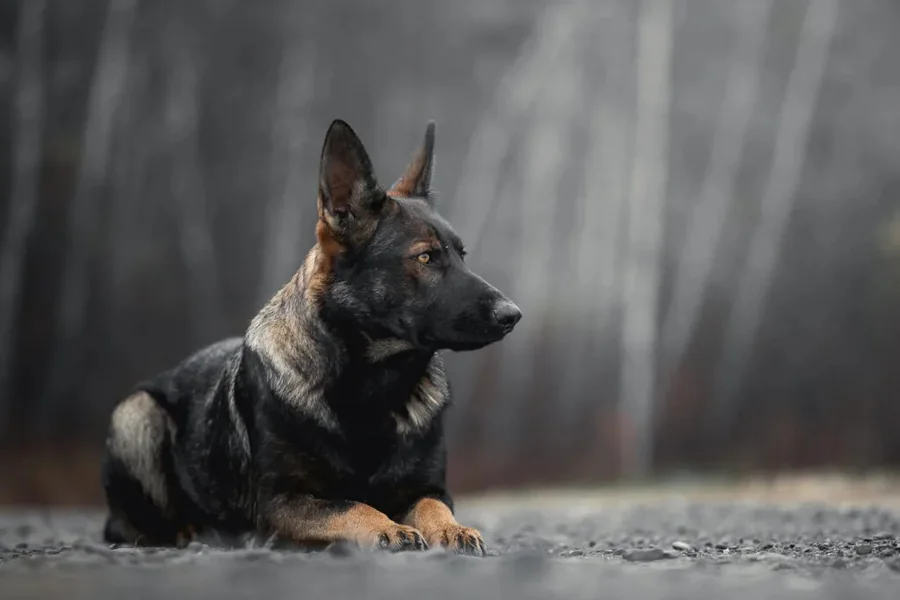
Working line German Shepherds are bred first and foremost for function. Physically, they tend to have a straighter back, a more athletic and balanced build, and the structure needed for sustained physical work. This contrasts with some show line dogs bred for a more sloped appearance. The working build is about durability and movement, reflecting the breed’s original purpose.
Temperamentally, working line dogs are known for high drive, strong focus, and a willingness to work. They are intelligent and highly trainable, which is exactly what makes them suited to demanding roles. These are dogs that thrive on having a job to do and a handler to work with. That same drive means they need proper training, mental stimulation, and an owner who understands the breed, which is an important consideration for anyone drawn to them.
The Czech and DDR Lines
Within working line German Shepherds there are recognised bloodlines, including Czech and DDR lines, which carry their own history and reputation. DDR lines trace back to East German breeding programmes that selected rigorously for working ability, producing dogs known for strong bone, dark pigment, and firm temperament. Czech lines developed from border patrol breeding programmes and are similarly prized for working drive and soundness.
These lines are valued by enthusiasts and working dog handlers because of the careful, purpose driven selection behind them. Breeders who specialise in these lines, such as Great North Kennels, focus on producing dogs with the pedigrees, temperament, and health suited to sport, protection, and capable family companionship. The emphasis is on breeding dogs that are both driven and stable.
The Importance of Temperament and the Off Switch
A capable working German Shepherd is not simply a high energy dog. The best working line dogs combine drive with what handlers call an off switch, the ability to settle and be calm when not working. This balance is crucial, because a dog with drive but no ability to switch off is difficult to live with, while a dog with an off switch but no drive lacks the capability the breed is known for.
Good breeders select for this balance deliberately. A working line German Shepherd that can engage fully in training and protection work and then relax calmly at home is the result of careful breeding for temperament, not chance. This is why bloodline and breeder matter so much with working dogs.
Health and Responsible Breeding
Like all large breeds, German Shepherds can be prone to certain health issues, including hip and elbow dysplasia and, in some lines, degenerative myelopathy. Responsible working line breeders screen for these conditions and select breeding dogs to reduce the risk, often backing their puppies with health guarantees. This focus on health is part of what separates a serious breeder from a casual one.
For anyone considering a working line German Shepherd, the breeder’s approach to health screening, temperament selection, and pedigree is central. A well bred working line dog from a breeder who understands the lines and screens carefully is far more likely to be the sound, capable companion the breed promises.
Frequently Asked Questions
What is the difference between working line and show line German Shepherds?
Working lines are bred for function, with an athletic build and high drive, while show lines are bred more for appearance. The two can differ noticeably in structure and temperament.
Are working line German Shepherds good family dogs?
They can be, with the right owner. They are loyal and protective, but their high drive means they need training, mental stimulation, and an owner who understands the breed to thrive in a family setting.
What are Czech and DDR lines?
Recognised working bloodlines with their own histories. DDR lines come from rigorous East German working programmes, and Czech lines from border patrol breeding, both prized for drive, soundness, and firm temperament.
What is an off switch in a working dog?
The ability to be fully engaged in work and then settle calmly at home. Good breeders select for this balance, which makes a driven dog also livable as a companion.
What health issues affect German Shepherds?
Large breeds can be prone to hip and elbow dysplasia and, in some lines, degenerative myelopathy. Responsible breeders screen for these and often provide health guarantees.
Final Thought
Working line German Shepherds embody the breed as it was originally intended, capable, driven, intelligent, and sound. Understanding the distinction from show lines, the significance of bloodlines like Czech and DDR, and the importance of temperament and health screening helps anyone appreciate what goes into a good working dog. For the right owner, a well bred working line German Shepherd is one of the most capable and rewarding companions in the canine world.