Jamaican Boa: The Complete Guide to Jamaica’s Largest Native Snake
Most Jamaicans never get to see a Jamaican boa and that’s the point! Most people never notice this snake’s work, which involves quietly living in caves, wrapping around tree branches or maintaining a low profile on the forest floor, reducing the populations of rodents and bats. It is harmless and does not have venom. Does not seek out trouble. But it’s vanishing and that’s why it is worth studying.
Here’s what this snake looks like, where it resides, the food it eats & why it is disappearing from year to year.
What Is a Jamaican Boa?
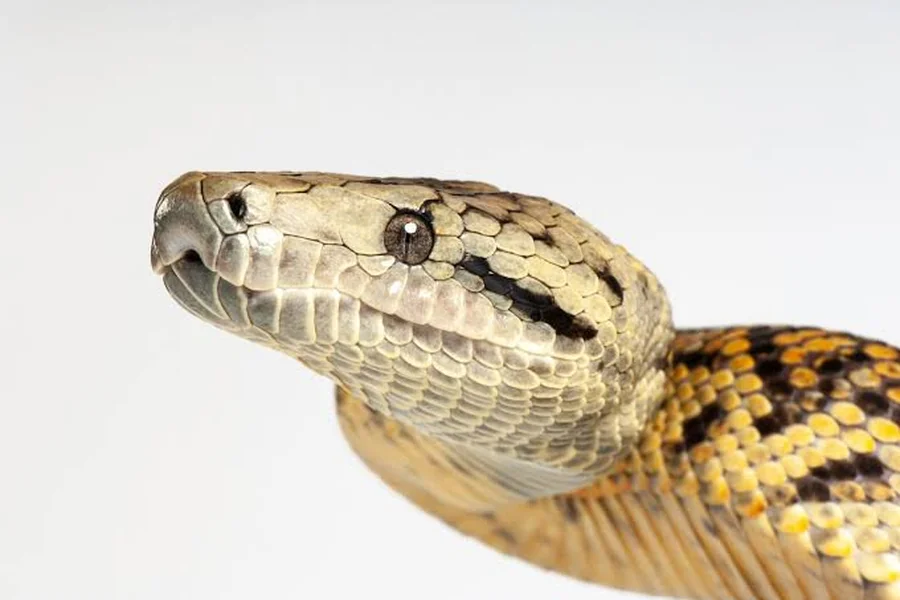
The Jamaican boa is a constrictor that is not venomous and is found only in Jamaica, and nowhere else on Earth. It is commonly referred to as the “yellow snake” due to its light, yellowish-brown coloration of its skin, but this may vary depending on the light it receives and the age of the snake. It’s a relation to other West Indian boas, but still genetically and geographically it is different.
Species such as these are described as “endemic. It means that the snake did not leave the island, but evolved here. There are no other populations to look to for backup. No Second Chance Across the Ocean. Once this snake leaves Jamaica, it’s never coming back.
Adults can grow up to 6 feet and up to 7 feet in some cases. This is the biggest land predator in Jamaica. No other game on the island hunts at that size.
Quick Facts About the Jamaican Boa
| Feature | Detail |
| Scientific name | Chilabothrus subflavus |
| Common name | Jamaican boa, yellow snake |
| Length | Up to 7 feet (2.1 meters) |
| Weight | Roughly 4-5 kg in large adults |
| Diet | Bats, rodents, birds, lizards |
| Venom | None — it’s a constrictor |
| Habitat | Forests, caves, limestone terrain |
| Range | Jamaica only (endemic) |
| Conservation status | Vulnerable (IUCN) |
| Lifespan | 20-30 years in the wild |
What Does the Jamaican Boa Look Like?
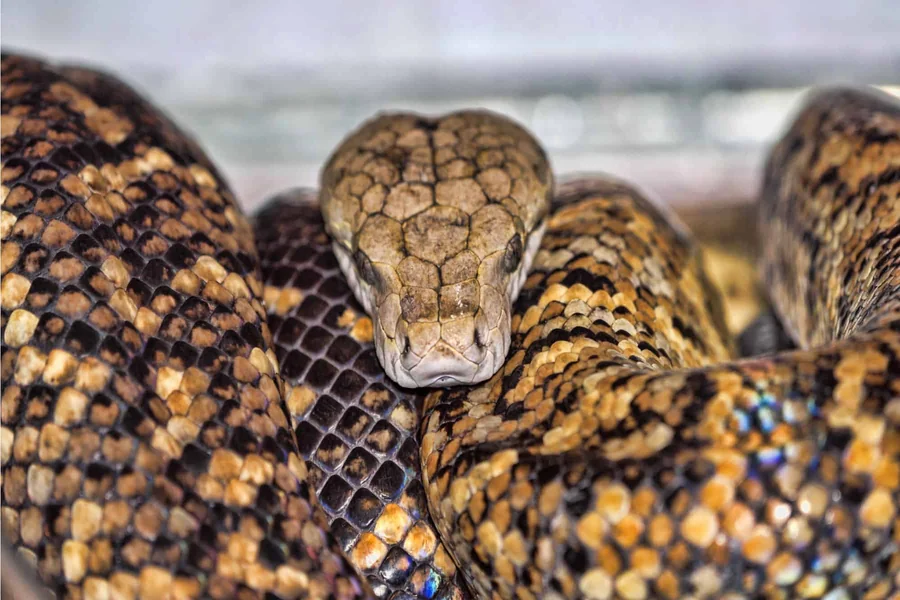
Color is light yellow to dull olive-brown and often lightly blotched down the back. That patterning is seen more in younger snakes. After a couple of years, the color softens and seems to fade on its own.
The body is stocky and muscle laden: made for squeezing, not sprinting. The head is slightly wider than the neck and a careful examination of the eyes reveals that they are vertical slits typical of snakes, which are mostly nocturnal.
| Trait | Description |
| Color | Yellow to olive brown |
| Pattern | Faint blotches, fade with age |
| Body shape | Thick, muscular, built for constriction |
| Head | Slightly wider than the neck |
| Eyes | Vertical pupils for night hunting |
| Scales | Smooth with a slight sheen |
Where Does the Jamaican Boa Live?
Forests, hillsides, and limestone cave systems — that’s boa territory. Caves aren’t just shelter here; they’re basically a dinner table. Bats roost in these caves by the thousands, and bats happen to be one of the boa’s favorite meals, so it makes sense the snake sticks close.
You’ll typically find them in:
- Wet limestone forest
- Dry forest edges
- Rocky hillside cover
- Farmland bordering forest
They move between trees and ground depending on what they’re chasing. Younger, lighter boas climb more. Once a boa puts on some size and weight, though, climbing gets harder, so older individuals tend to stay lower, closer to the ground where gravity isn’t working against them.
What Does the Jamaican Boa Eat?
Diet changes as the snake matures — which is pretty normal for boas in general.
Younger Jamaican boas go after:
- Lizards
- Small birds
- Frogs
Adults shift toward:
- Bats
- Rats and other rodents
- Birds
The bat-hunting part is honestly the most fascinating detail about this species. A boa will position itself at a cave mouth or on a branch right where bats stream out at dusk, then strike as they fly past. Researchers studying predator behavior around bat colonies have taken a real interest in this hunting style, since it’s not something every constrictor does.
And here’s the practical upside: because Jamaican yellow boas eat so many rodents, they’re doing pest control work for farmers whether anyone’s paying them to or not.
Is the Jamaican Boa Dangerous to Humans?
Not really. There’s no venom involved. It kills the way constrictors do — by wrapping around prey and tightening until breathing stops. Could it bite if it feels cornered? Sure, any wild snake might. But it’s not looking for a confrontation, and most encounters end with the snake trying to get away, not attack.
Rural residents and farmers who run into one usually walk away with a good story and nothing worse.
Jamaican Boa vs Other Caribbean Boas
| Feature | Jamaican Boa | Cuban Boa | Puerto Rican Boa |
| Max length | ~7 ft | ~16 ft | ~7 ft |
| Range | Jamaica only | Cuba only | Puerto Rico only |
| Diet | Bats, rodents, birds | Rodents, birds, bats | Rodents, bats, birds |
| Conservation status | Vulnerable | Near Threatened | Vulnerable |
| Color | Yellow-brown | Dark brown/black | Brown, mottled |
Each island produced its own version of a boa, evolving in isolation, which explains why cousins from the same family tree can look and behave so differently.
Why Is the Jamaican Boa Endangered?
The IUCN currently lists the Jamaican boa as Vulnerable, and the decline hasn’t slowed much over the last hundred years. A few things are driving it.
Mongoose introduction. Small Indian mongooses arrived in Jamaica in the 1800s to deal with rats on sugar plantations. That plan backfired badly — mongooses turned out to be one of the biggest threats to native snakes, picking off young boas and raiding their nests.
Habitat loss. Every acre of forest cleared for farming or housing is one less patch of ground where a boa can hunt, breed, or hide from predators. The range keeps getting smaller.
Fear-based killing. A lot of people still assume any large snake must be dangerous and kill it before asking questions. This happens constantly, despite the boa posing almost no real threat.
Slow reproduction. Boas don’t bounce back fast. Females give birth to live young rather than laying eggs, and litters aren’t huge to begin with. When a population takes a hit, recovery takes a while.
How Is the Jamaican Boa Being Protected?
A few efforts are underway, and they’re worth knowing about:
- Protecting known cave and forest habitat
- Public education to cut down on fear-driven killings
- Mongoose control in key breeding zones
- Ongoing population monitoring and tracking
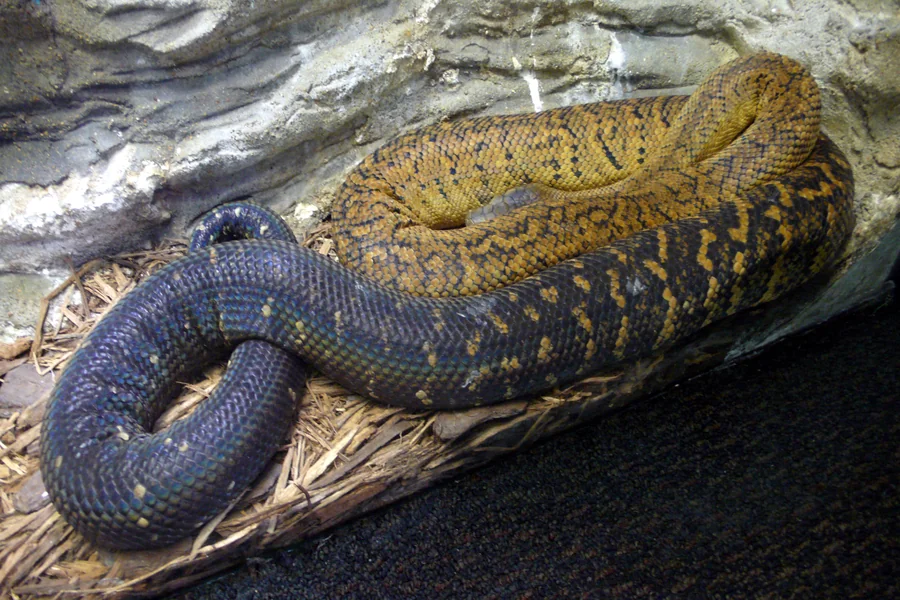
Some zoos and breeding programs outside Jamaica also keep small populations going as a kind of insurance policy. It’s not a substitute for protecting wild boas, but it does lower the odds of the species vanishing entirely if things get worse on the ground.
Fun Facts About the Jamaican Boa
- It’s Jamaica’s largest native land predator, full stop.
- It can snatch bats out of the air near cave entrances.
- It gives birth to live young instead of laying eggs.
- No venom — constriction does all the work.
- It exists nowhere on Earth except Jamaica.
Final Thoughts
The Jamaican boa isn’t the kind of animal that gets its own documentary or a spot on a tourist brochure. However, it’s all a function of how the Jamaican ecosystem operates and quietly hunts bats near the mouths of their caves as well as controls rodents without taking a credit card out. As long as you lose this snake, you’ll be losing something you never could find elsewhere.
So if you do stumble upon one out there, do the easy thing and just walk away, let it be, and allow it to do its job.
FAQs:
Is the Jamaican boa venomous?
No. It has no venom and kills prey through constriction instead.
How big does a Jamaican boa get?
Most adults reach 5 to 7 feet, making it the largest snake native to Jamaica.
What does the Jamaican boa eat?
Bats, rodents, birds, and lizards, with the diet shifting as the snake gets older.
Is the Jamaican boa endangered?
Yes. It’s listed as Vulnerable due to mongoose predation, habitat loss, and human killing.
Where is the Jamaican boa found?
Only in Jamaica, mostly in forests and limestone cave regions.
Can a Jamaican boa hurt a human?
It’s not aggressive and carries no venom, but like any wild snake, it may bite if it feels threatened or handled.