10 Dog Breeds Originally Bred to Hunt — And What They Hunt Today
Long before dogs curled up on the couch with their owners, most dog breeds had a job to do. For many breeds, that job was hunting. Some of the oldest dog breeds were bred for hunting tasks – from the type of dog that had to be small enough to move through the underbrush to the giant breeds used to hunt down deer. A few of these breeds are still hunting companions today. Others may not run through the woods as often as they used to, but their hunting instincts remain.
Keep reading to discover 10 dog breeds that were bred for hunting, what types of game they were bred to hunt, and how that impacts those dogs today.
1. Dachshund (Weiner Dog)
The breed’s name literally translates from German as “badger dog,” which is exactly what it was built for. Dachshunds have body and leg structures that were designed for digging into badger burrows and fighting with the badger to flush it out, while its loud and deep bark (which is surprisingly strong for such a small dog) would alert the hunters above the ground of its location in the ground.
Although modern Dachshunds typically hunt for the last biscuit in the pantry, their instinctive hunting traits are still exhibited in these dogs; they all have strong digging instincts, a tendency to bark at strange noises, and their inherent independent nature that makes them effective in searching for badgers in burrows with no humans around to provide directions.
Thus, those interested in adding a Dachshund to their family should read up on the breed to ensure that they are aware of the temperament of the breed, any health considerations for Dachshunds, and how to find a responsible breeder for the breed with its distinct physical characteristics.
2. Beagle
Beagles were bred to hunt hare and rabbit by scent, working in packs and following a trail for hours without losing it. Their nose is still considered one of the best in the dog world, second only to the Bloodhound.
Today, that nose is put to work in airports and border facilities detecting food, drugs, and other contraband, as well as in search-and-rescue. At home, it means a Beagle will happily follow a scent trail across the yard, the neighbor’s yard, and possibly a few suburbs over if you let it.
3. Bloodhound
Bloodhounds were bred to track large game such as deer and boar over long distances by using only their sense of smell. Their physical features of loose, wrinkled skin and long ears allow for their scent to become trapped near their nose, allowing them to track scents that are hours or even days old.
Modern bloodhounds are the standard for search and rescue and tracking tasks for the police – their sense of smell is often accepted in court cases to establish the location of a missing person. Additionally, their powerful sense of smell means that it is near impossible to distract a Bloodhound once they have tracked a scent.
4. Weimaraner
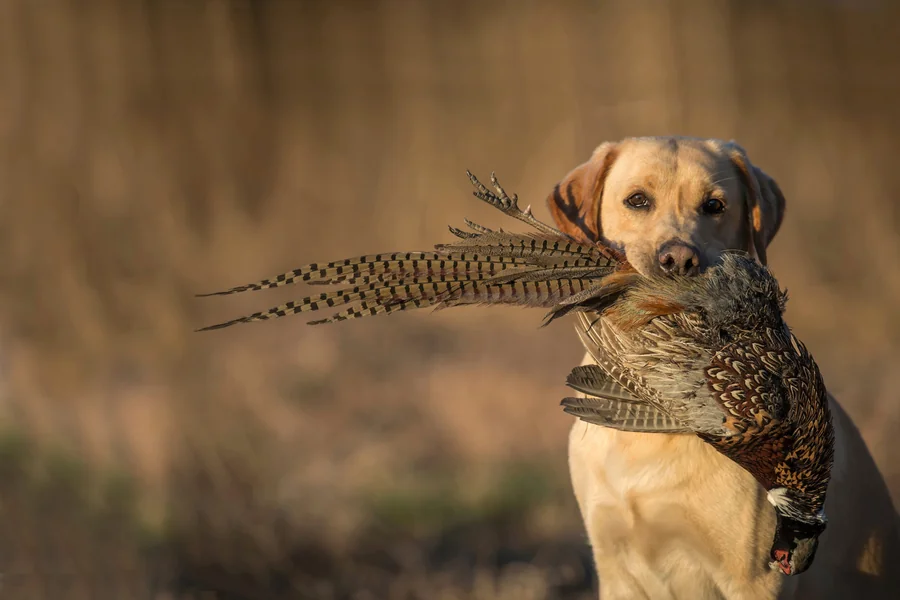
Bred in Germany for the nobility, Weimaraners were originally used to hunt large game such as boar, bear, and deer. As big game became scarcer, they were retrained as versatile bird dogs, pointing and retrieving game like pheasant and quail.
Their sleek grey coat and striking pale eyes earned them the nickname “the Grey Ghost.” Today’s Weimaraners are still high-energy, alert, and need serious daily exercise — a dog bred to run down a boar doesn’t switch off just because the boar is gone.
5. Rhodesian Ridgeback
Developed in southern Africa, the Ridgeback’s original job was hunting lions — not to kill them, but to track, bay, and hold a lion at a distance until the hunter arrived. This earned them the nickname “African Lion Hound.”
That heritage shows up in their courage, independence, and the distinctive ridge of backward-growing hair along their spine. Today’s Ridgebacks are loyal family dogs, but they retain a strong prey drive and a natural wariness of unfamiliar animals.
6. Basset Hound
These dogs were bred in France to hunt rabbits and hares on foot, at a pace that the hunters could keep up with. Their short legs will keep their nose close to the ground, as their long ears (similar to the Bloodhound’s) will help them to track their scents.
While Bassets are well known for their laid-back and easy-going nature today, their sense of smell is still remarkable. If a Basset Hound finds an interesting smell, they will become deaf to the rest of the world around them.
7. Vizsla
The Vizsla is a Hungarian dog breed that was bred to point to, freeze in a point to show where the game birds were, then go get the birds after the shot. They needed to be fast and strong, but also very attached to their handlers to perform these duties.
These dogs are still used for hunting today, and tend to have a “velcro” attachment to their owners when they are not hunting – which is likely due to their histories of working alongside only one hunter at a time.
8. Norwegian Elkhound
Despite the name, Elkhounds weren’t bred to hunt “elk” in the American sense — they were used in Scandinavia to track and hold large game like moose and bear, barking to alert the hunter to the animal’s location while keeping it at bay.
Elkhounds are naturally vocal, bold, and independent as a result. Today they’re a rarer sight outside Scandinavia and hunting circles, but their thick double coat and sturdy build are a direct legacy of working in freezing Nordic forests.
9. Plott Hound
The Plott Hound was developed in the United States specifically for hunting wild boar and bear, prized for its endurance and its willingness to hold large, dangerous game at bay in rough terrain. It’s the state dog of North Carolina.
Unlike scent hounds bred for rabbits or hare, the Plott Hound needed real toughness and tenacity, and that grit is still a defining trait of the breed. They’re still actively used by hunters today, more so than many breeds on this list.
10. Jack Russell Terrier
Jack Russells were bred in England to go to ground after foxes, chasing them into their dens and either flushing them out or holding them in place until the hunter dug down to reach them. This required a small, fearless dog that wouldn’t hesitate underground.
Their fearlessness is what makes these dogs such a handful (and so entertaining) as pets. They are diggers, lovers of toys, and have a prey drive that is larger than their physical size suggests.
The Takeaway
Despite having never hunted professionally in generations, each of these dog breeds has a physical and instinctual design that allows them to perform the tasks for which they were bred. The purpose for which a dog breed was originally created is the best indication of their behavior in the living room. Yet if you are interested in any of the breeds listed, it is up to you to research their care and needs, as well as how to find a reputable breeder if you plan to purchase one of these dogs.